

In July 2025 the United States approved the sale of nine HH-60W Jolly Green II combat rescue helicopters to Norway. It was a specialised, expensive, superbly capable machine built for one demanding job: going into hostile territory to bring downed aircrew home.
Norway has now walked away from it. On 21 August 2026 the State Department approved something rather different instead: up to 21 UH-60M Black Hawks, worth $2.3 billion.
Fewer specialists. Far more helicopters. For a country whose defence problem is measured in Arctic kilometres, that trade tells you something.
Quick Facts
| What was approved | Up to 21 Sikorsky UH-60M Black Hawk helicopters |
| Value | $2.3 billion (U.S. Foreign Military Sale) |
| Approved | 21 August 2026, U.S. Department of State |
| Engines | 46 × General Electric T700-GE-701D |
| Self-protection | 25 sets AN/AAR-57 CMWS, CIRCM, AN/APR-39E(V)2 radar warning receivers |
| Arctic equipment | Snow skis for the landing gear, external fuel tanks |
| Other kit | Bambi buckets, casualty litters, fast-rope insertion equipment, MX-10D EO/IR turrets, M240H machine guns, M134 miniguns |
| Datalink | Link 16 |
| Likely replaces | 18 Bell 412s, in service over 30 years |
| Next step | 15-day Congressional review, then contract negotiation |
What Norway Gave Up, and What It Bought
The HH-60W is a combat search and rescue aircraft in the purest sense. The UH-60M is a utility helicopter, which sounds like a downgrade until you look at what Norway actually has to do with it.
Norway is a long, thin country with a great deal of territory north of the Arctic Circle and a land border with Russia. Moving soldiers, equipment and special operations teams across that terrain quickly is the daily problem. Rescuing downed aircrew is an occasional one. Twenty-one general-purpose helicopters solve the daily problem; nine specialised ones do not.
The Arctic reality shows up in the shopping list. Among the additional equipment specified in the approval are snow skis for the landing gear.

The Engine Is the Clever Part
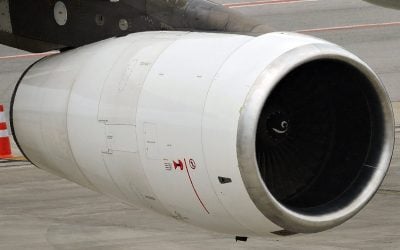
The T700-GE-701D powerplant is the detail that makes this more than a helicopter purchase. Norway’s AW101 Merlins, used for search and rescue, run on the same basic engine. So do the Royal Norwegian Navy’s MH-60R Seahawks. If the long-rumoured additional AW101 buy in an anti-submarine configuration goes ahead, that would use the T700 as well.
One engine line. One spares pipeline. One set of technicians. For a small air force, commonality is not an accounting detail, it is the difference between a fleet that flies and a fleet that waits for parts.
The State Department was explicit about what Washington gets out of it.
A Nordic Black Hawk Bloc
Sweden already flies the UH-60M, having bought 15 and then added 12 more in 2024. Finland and Sweden are now both in NATO. If Norway’s 21 arrive, the Nordic countries will operate a substantial common fleet of the same airframe along Russia’s northern flank, with the same training, the same maintenance, and crews who can move between them.
The Black Hawk first flew more than 50 years ago. The U.S. Army is already looking past it to the MV-75 Cheyenne II. None of that has stopped the type from attracting continued investment, and none of it has stopped a NATO member from spending $2.3 billion on a fresh fleet in 2026.
One caution: this is an approval, not a contract. Congress has 15 days to review it, and Norway has not yet publicly acknowledged the decision. The final numbers can move.
Sources: U.S. Department of State approval notice, 21 August 2026; Defense Security Cooperation Agency; The Aviationist; Army Recognition.

0 Comments