
Somewhere in San Diego there were two MQ-9A Reapers that nobody had bought. They are Italian now.
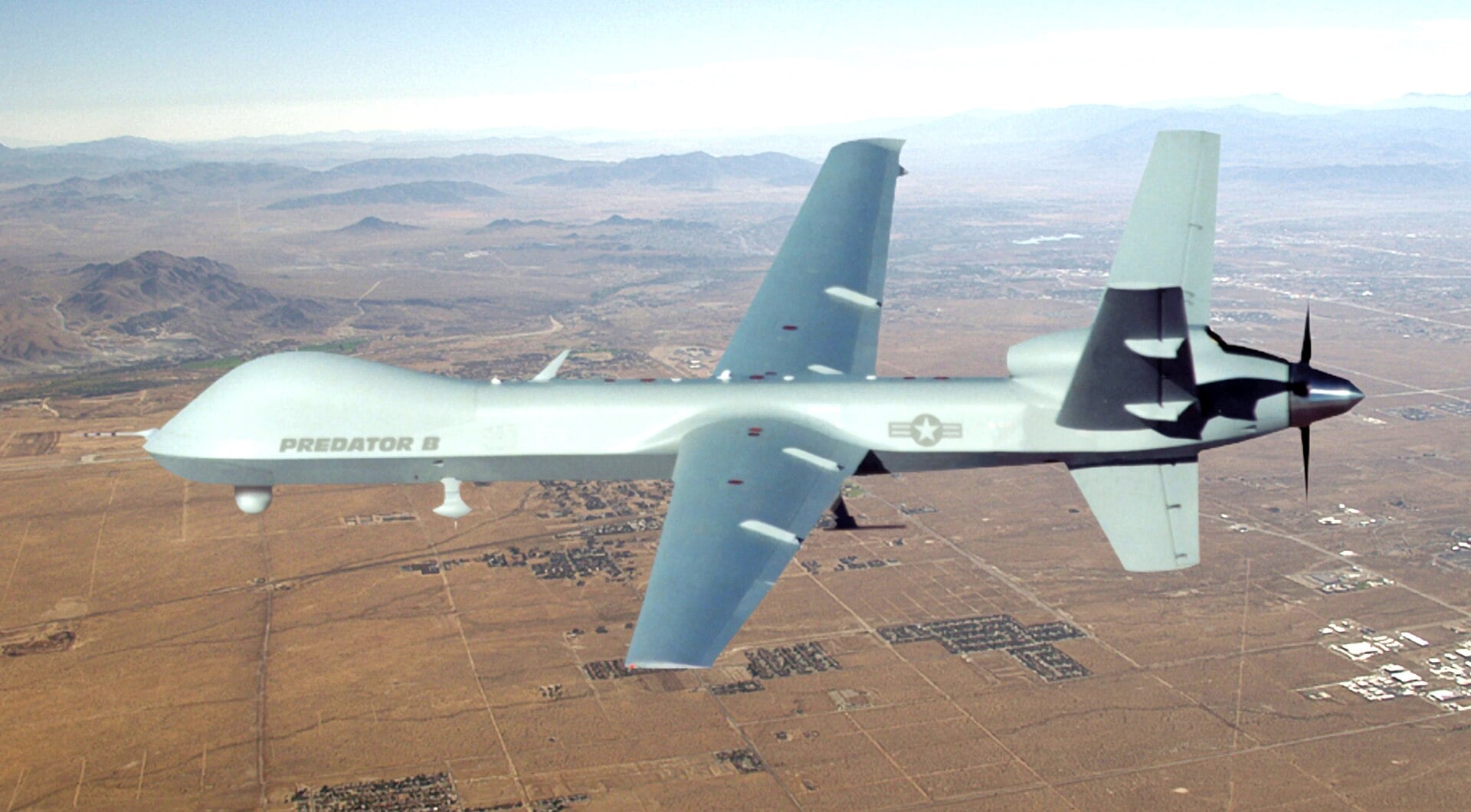
A note on the pictures: no photograph of an Italian Air Force MQ-9 is available under a licence we can use, so the aircraft shown here are US Air Force Reapers of the same type, except where the caption says otherwise.
General Atomics Aeronautical Systems announced on 8 September 2026 that the Italian Air Force has ordered two new MQ-9A Block 5 Reapers, with delivery at the end of 2027. The purchase is a Foreign Military Sale through the US Air Force and includes ground control stations. Aviation Week subsequently identified the pair as two previously unsold aircraft — airframes General Atomics had built without a customer attached.
That is a small story with a large amount of context behind it, because Italy has been flying these things for more than twenty years and its fleet has been quietly shrinking towards irrelevance.
Quick Facts
Announced: 8 September 2026, by General Atomics Aeronautical Systems in San Diego
Order: Two MQ-9A Block 5 Reapers plus ground control stations
Route: Foreign Military Sale through the US Air Force
Delivery: End of 2027
Endurance: Up to 26 hours
Ceiling: 45,000 ft (13,716 m)
Payload: 4,600 lb (2,087 kg) total, including 3,750 lb (1,701 kg) of external stores
Notable: Aviation Week reports these are two aircraft General Atomics had built but not previously sold
What a Block 5 is
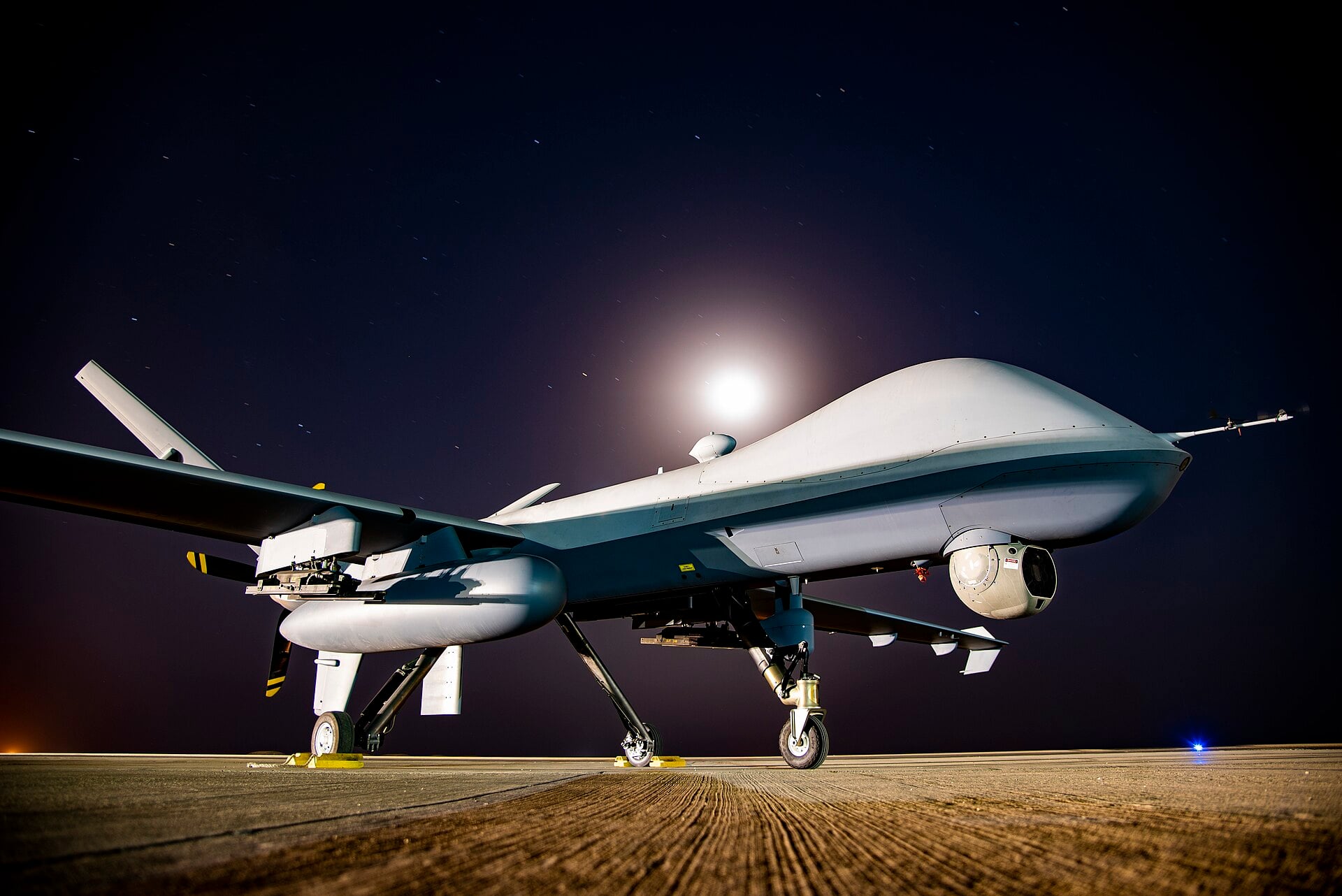
The Block 5 looks like every other Reaper. The changes are underneath: a significant increase in electrical power generation — which is what actually limits how many sensors you can hang on a drone — automatic take-off and landing with improved landing gear and datalinks, and the latest version of General Atomics’ Lynx multi-mode radar.
On paper it is a 26-hour aircraft with a 45,000-foot ceiling and 4,600 lb of payload capacity, of which 3,750 lb can hang externally. It carries full-motion video, synthetic aperture radar with moving target indication and a maritime mode, and it flies with a fault-tolerant flight control system and triple-redundant avionics, which the manufacturer says is engineered to meet and exceed crewed-aircraft reliability standards.
For Italy, the maritime radar is the point. The Italian Air Force flies these over the Mediterranean, which is a large body of water with a great deal happening on it.
How the MQ-9 is actually flown — the ground control station is as much the aircraft as the airframe is.
A fleet that had got very small

Italy was one of the earliest European Predator operators and has been a General Atomics customer for over two decades. But by the end of 2023, after a Mid-Life Modernization programme, the Italian Air Force’s General Atomics fleet consisted of four Block 1 aircraft and two Block 15 mobile ground control stations.
Four aircraft is not a fleet. It is a rotation with no slack in it: one in deep maintenance, one on a training task, and you are down to two for everything else — Mediterranean surveillance, national tasking, and NATO commitments, none of which pause for a scheduled inspection.
In November 2023 the ItAF flew its first new Block 5, delivered with a new mobile ground control station under the same modernisation effort. These two are the follow-on, and they take a very thin fleet and make it slightly less thin.
The unsold aircraft detail
The most interesting line in this whole story is Aviation Week’s: that the two aircraft were previously unsold. General Atomics builds MQ-9s on a production line that does not stop while it waits for signatures, and occasionally that leaves finished airframes looking for a home.
For a customer, that is a bargain of a particular kind: the aircraft exist, so the delivery date is a shipping question rather than a manufacturing one. End of 2027 for an order placed in September 2026 is quick by the standards of anything else in defence procurement.
It also says something about where the Reaper sits in 2026. This is a twenty-year-old design in a market moving hard towards cheaper, more attritable aircraft — the US Air Force is openly shopping for a $10 million Reaper replacement, and lost a significant number of MQ-9s in operations against Iran. The Reaper is not the future. But it is available, it is proven, and if what you need is 26 hours of radar over the Mediterranean next year rather than in 2032, it is still the thing that does that.
Frequently Asked Questions
How many MQ-9A Reapers did Italy order?
Two MQ-9A Block 5 Reapers, together with ground control stations, announced by General Atomics Aeronautical Systems on 8 September 2026. The purchase is part of a Foreign Military Sale through the US Air Force, with delivery at the end of 2027.
What is the MQ-9A Block 5?
The Block 5 is the current production standard of the MQ-9A Reaper. Compared with earlier blocks it offers a significant increase in electrical power generation, automatic take-off and landing with improved landing gear and datalinks, and the latest version of General Atomics’ Lynx multi-mode radar. It has an endurance of up to 26 hours, a ceiling of 45,000 ft (13,716 m), and 4,600 lb (2,087 kg) of payload capacity including 3,750 lb (1,701 kg) of external stores.
How many Reapers does the Italian Air Force have?
The fleet has been small. As of December 2023, following a Mid-Life Modernization programme, the Italian Air Force’s General Atomics fleet consisted of four Block 1 aircraft and two Block 15 mobile ground control stations, with its first new Block 5 aircraft flown in November 2023. The two aircraft ordered in September 2026 will increase the fleet size when they arrive at the end of 2027.
Were these Reapers already built?
According to Aviation Week, the two aircraft Italy has bought are two previously unsold MQ-9As — airframes General Atomics had produced without a customer attached. That is one reason the delivery date, the end of 2027, is relatively quick for a defence order placed in September 2026.
What does Italy use its MQ-9 Reapers for?
Intelligence, surveillance and reconnaissance: over Italy itself, across the Mediterranean, and in support of NATO operations. The Block 5’s synthetic aperture radar with moving target indication and a maritime mode is particularly relevant to Mediterranean surveillance.
Is the MQ-9 Reaper being replaced?
The design dates from the early 2000s and the market is moving towards cheaper, more attritable uncrewed aircraft. The US Air Force is pursuing an MQ-9A successor at a target price of around $10 million per aircraft, having accelerated those plans after heavy Reaper losses in operations against Iran. The Reaper remains in production and in demand, but it is no longer the direction of travel.
Sources: General Atomics Aeronautical Systems press release of 8 September 2026; EDR Magazine; FlightGlobal; Aviation Week; GA-ASI release of 5 December 2023.



0 Comments