
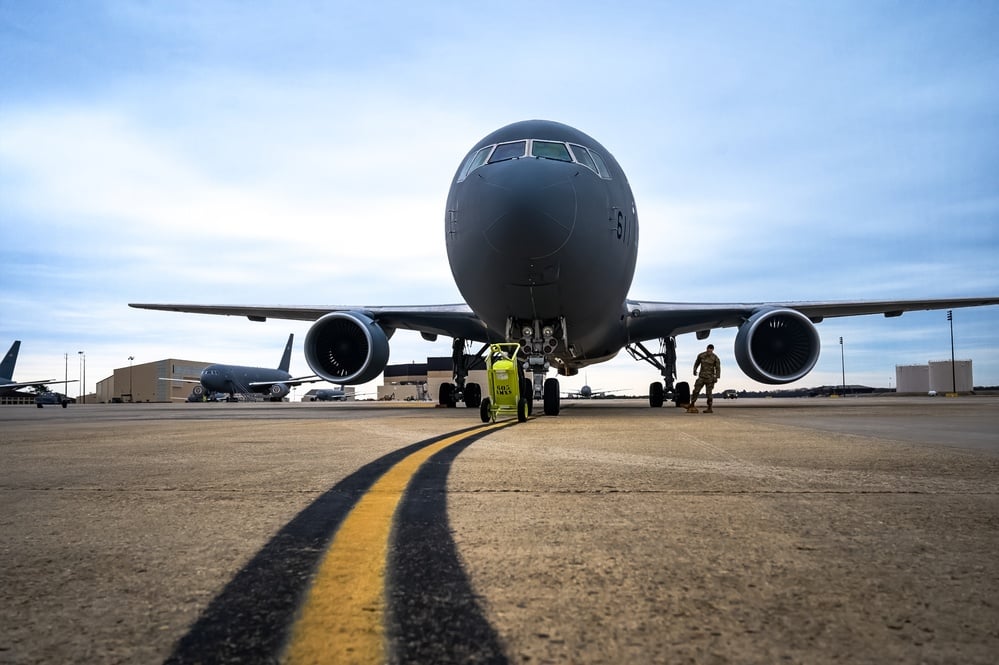
The US Air Force has just raised the spending ceiling on its Boeing KC-46A export contract from $5.7 billion to $19.1 billion. No aircraft were ordered. No money changed hands. It is, on paper, one of the least dramatic $13.4 billion announcements you will ever read.
It is also a fairly loud signal about where air forces think their next problem lies.
Aerial refuelling is the least glamorous capability in military aviation and the one that quietly determines whether any of the rest of it works. A fighter without a tanker is a short-range interceptor. And the countries that have spent the last few years watching long-range operations play out in Ukraine, the Red Sea and the Pacific have all reached the same conclusion.
Quick Facts
What happened: A contract modification worth $13.4 billion raised the ceiling on an existing KC-46A Foreign Military Sales contract
New ceiling: $19.1 billion, up from $5.7 billion — more than tripled
Aircraft ordered: None. The modification adds capacity, not airframes
Existing customers on the contract: Japan and Israel
Future buyers: Capacity added for unnamed future country partners
Original contract: Awarded to Boeing in 2019, designation FA8609-19-D-0007
Work location: Seattle, Washington
Expected completion: 28 April 2035
What a Ceiling Increase Actually Means
Foreign Military Sales contracts are plumbing. Rather than negotiating a fresh agreement every time a country wants tankers, the Air Force keeps a standing vehicle with a maximum value, and orders flow through it. When the ceiling gets close, you raise the ceiling.
The tell is the size of the increase. Going from $5.7 billion to $19.1 billion is not housekeeping for one more order from an existing customer. It is making room for business that has not been announced.
The Air Force left the door open for what it described as future country partners, without naming any. The completion date on the contract is 28 April 2035, which gives a sense of how long Washington expects this sales pipeline to keep running.
Who Is Already On It, and Who Might Be Next
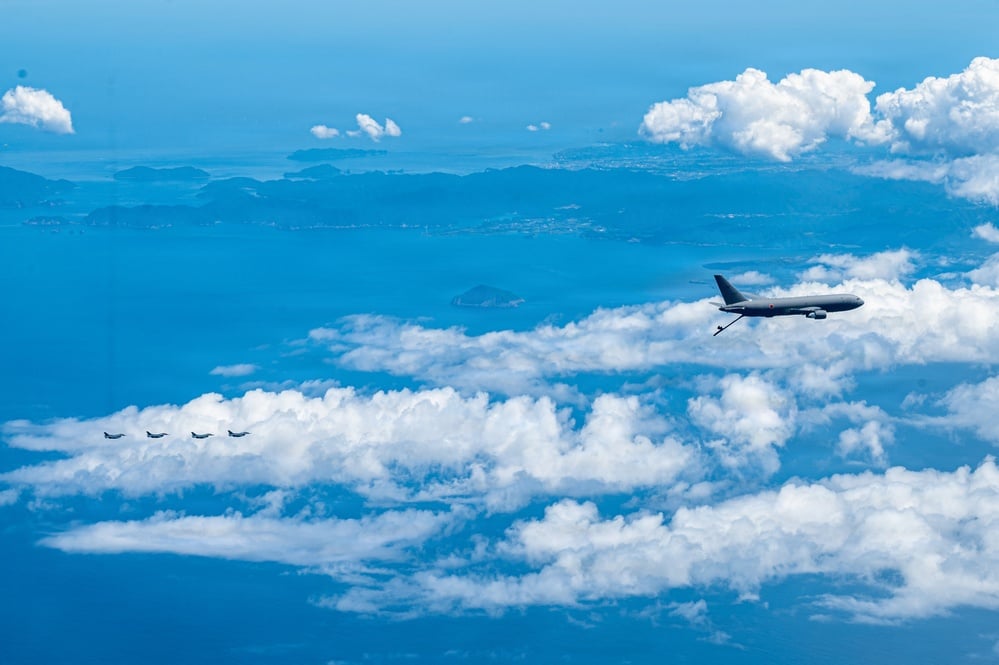
The contract currently covers sales to Japan and Israel. Japan’s KC-46As fly with the 3rd Tactical Airlift Wing, and Japanese crews have been exchanging procedures with US KC-46A units to make the two fleets interoperable — which is rather the point of buying the same tanker your main ally flies.
Israel’s interest is more pointed. A tanker fleet is what converts a regional air force into one that can operate at genuine distance, and Israel has spent recent years demonstrating exactly why that matters.
There is a recent data point for where else this is heading. In August, Qatar lined up a KC-46 purchase reported at around $4.5 billion. Raising the ceiling now means that if Qatar, or Japan, or Israel, or somebody not yet named wants more aircraft, the paperwork already exists to process it.
The Unglamorous Bottleneck
It is worth being clear-eyed about the limits of this news. A ceiling increase is not a sale. Nothing here guarantees a single additional tanker gets built, and the KC-46A programme has had a long, well-documented history of technical problems on its way into service.
But procurement paperwork is a leading indicator, and this particular piece of paperwork says that the people who sell American tankers expect to sell a great many more of them. In a decade where everyone is talking about sixth-generation fighters and autonomous wingmen, the thing quietly tripling in value is a converted airliner that carries fuel.
What the aircraft at the centre of all this paperwork actually does:
Frequently Asked Questions
What did the US Air Force actually approve for the KC-46A?
Which countries are covered by the KC-46A export contract?
Does a ceiling increase mean more tankers are being built?
Why do air forces want aerial refuelling tankers so badly?
When was the original KC-46A export contract awarded?
What is the KC-46A Pegasus?
Sources: The Defence Blog (Colton Jones), ClearanceJobs, Investing.com, U.S. Air Force contract announcements, DVIDS.
Related Posts



0 Comments