
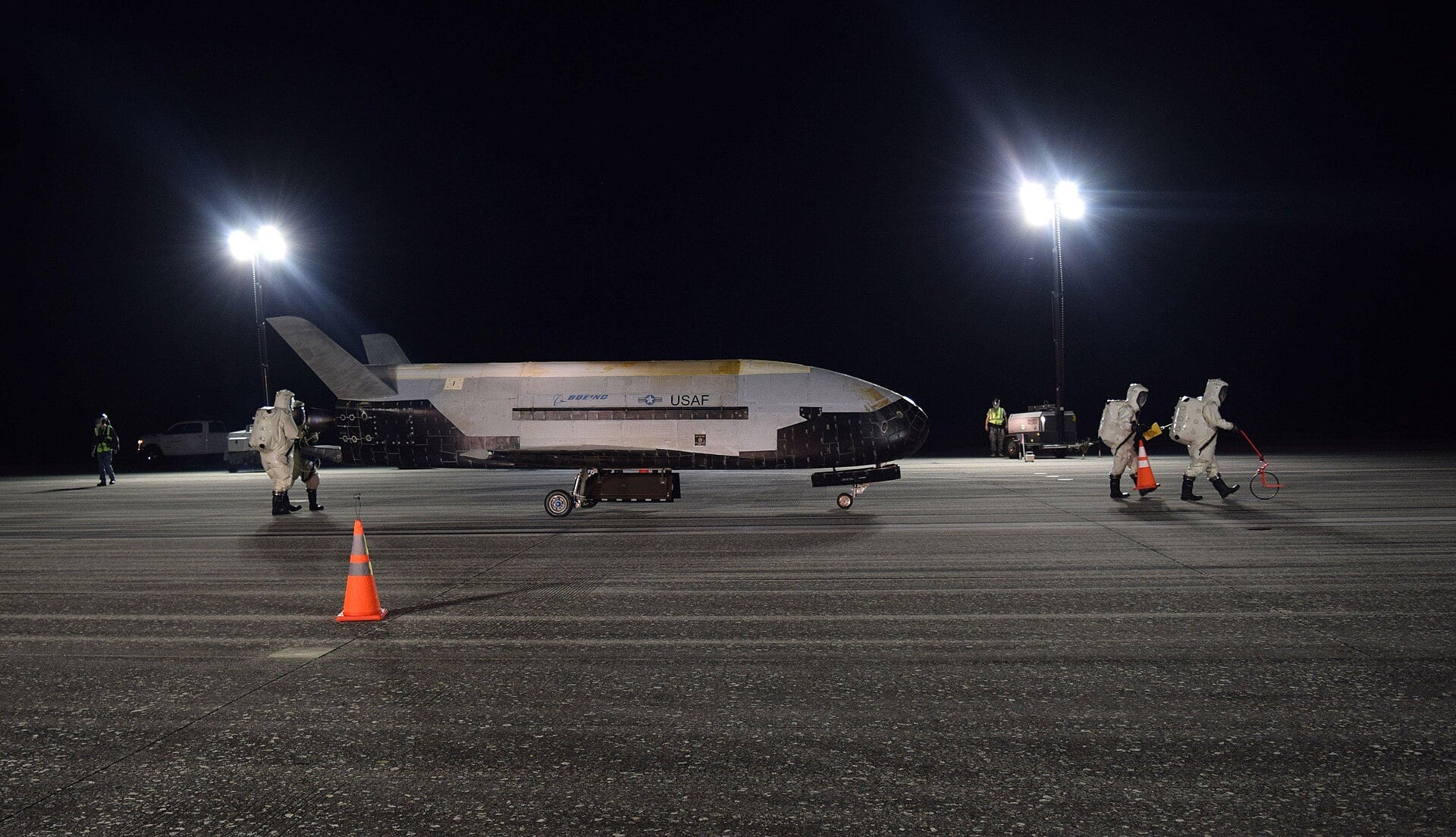
For decades the American position on weapons in orbit was a careful non-answer. Officials talked about resilience, about protecting assets, about counter-space capability in the abstract. Nobody said the United States had put weapons up there.
On Monday morning at National Harbor, the Secretary of the Air Force said it in one sentence, from a podium, on the record.
And then he confirmed the wording had been chosen on purpose.
Quick Facts
| What happened | US Air Force Secretary Troy Meink confirmed the Space Force has weapons on orbit |
| When | 14 September 2026, opening keynote, AFA Air, Space & Cyber Conference, National Harbor, Maryland |
| Why it matters | First direct public acknowledgement by a Pentagon official that the US operates on-orbit space weapons |
| What was not said | Type, number, or launch date of the weapons |
| Legal position | The 1967 Outer Space Treaty bans weapons of mass destruction in orbit, not conventional ones |
| Related programmes | Space-Based Interceptor and Space-Based AMTI, both part of Golden Dome |
| SpaceX contract | $4.2 billion awarded in May 2026 for the Space-Based AMTI constellation; first satellites launch this month |
The sentence that was “very well thought out”
Meink was thirty minutes into the opening keynote of the Air & Space Forces Association’s conference, running through a familiar list about evolving threats, when he dropped the line.
In the question-and-answer session afterwards he was asked whether he had meant to say it. He had. Meink told the room the acknowledgement was deliberate and the phrasing “very well thought out”, which is about as close as a service secretary gets to saying yes, that was the news.
He then declined to say anything else useful. Not what the weapons are. Not how many. Not when they went up. Reporters pushed at a media roundtable afterwards and got nothing.
So what is actually up there?
Nobody outside the programme knows, and the people inside it are not saying. What is on the record is the doctrinal definition. A Space Force spokesperson told TWZ that space control involves both kinetic and non-kinetic means, used to disrupt, degrade or destroy, offensively as well as defensively.
That range is enormous. Non-kinetic covers jamming, dazzling, cyber effects and electronic warfare against a satellite’s links. Kinetic covers hitting the thing. Both are legal: the 1967 Outer Space Treaty prohibits placing weapons of mass destruction in orbit and nothing else. A conventional interceptor parked in geosynchronous orbit breaks no treaty at all.
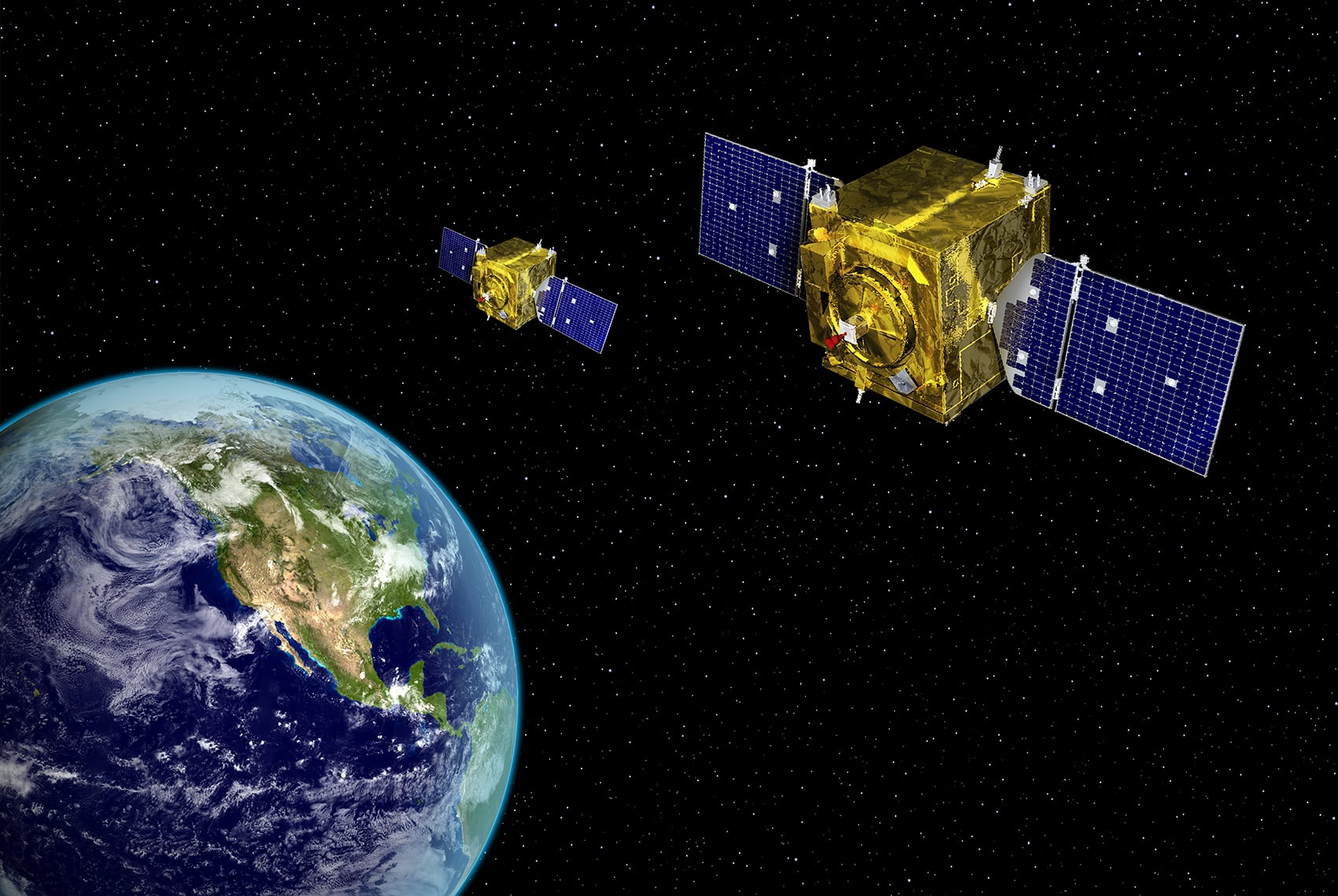
None of this arrived out of nowhere. The Space Force started talking openly about fighting in the domain in 2025. In December of that year an executive order spelled out the service’s role in attack, not just defence. In August, the head of US Space Command said new anti-satellite weapons were a top priority. Monday was the moment the euphemisms stopped.
Golden Dome is the reason you are hearing it now
Meink did not linger on the weapons. He moved straight to two programmes that sit inside Golden Dome, the administration’s layered missile-defence shield, and that is probably the real reason the admission was made when it was.
The first is the Space-Based Interceptor, a missile-killer that lives in orbit. Meink said the programme went from initial contract to flight-ready hardware in under a year, which for a Pentagon space programme is close to miraculous, and that an initial capability could be fielded by 2028. Golden Dome director Gen. Michael Guetlein said in August that the contractor pool had cleared Gate One, the design and component-testing stage. Gate Two builds prototypes. Gate Three has to prove the thing works in space.
The second is Space-Based Air Moving Target Indication, which takes a job aircraft have done since the E-3 Sentry and moves it into orbit, where anti-access weapons cannot reach it. SpaceX won a $4.2 billion contract in May to start building the constellation. Meink said the first satellites go up this month, and would not say how many.
Saying it is the point
There is a reading of Monday that has nothing to do with hardware. Deterrence only works if the other side knows. A weapon nobody has been told about deters nobody, and the United States has spent years watching Chinese and Russian satellites perform manoeuvres that look a great deal like rehearsals.
Seen that way, the disclosure is the weapon system doing its job. Which is also why the follow-up questions went nowhere: the useful part was the existence, not the details.
The awkward part is what happens next. Every capability the United States acknowledges becomes a capability somebody else can justify building. Space has been militarised since Sputnik and weaponised quietly for years. As of Monday, one of the three countries that matters has stopped pretending otherwise.
Frequently Asked Questions
Has the United States admitted it has weapons in orbit?
What kind of weapons does the US Space Force have in orbit?
Are weapons in space legal?
Is this the first time the US has confirmed space weapons?
What is Golden Dome and how does it relate to this?
Why would the Pentagon announce this now?
Sources: Air & Space Forces Magazine, TWZ, Defense News, DefenseScoop, Breaking Defense, NBC News.

0 Comments