
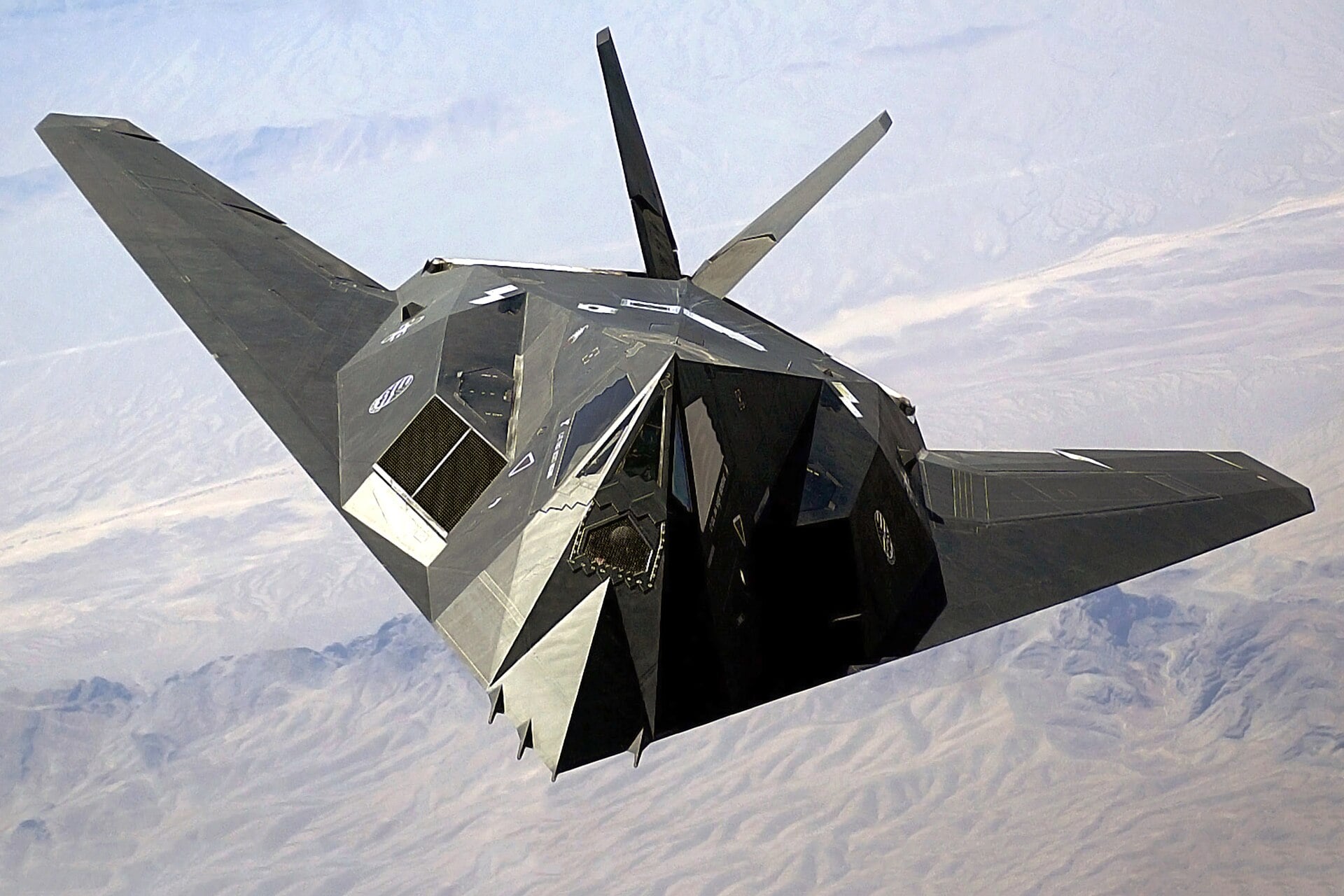
The Smithsonian National Air and Space Museum has the 1903 Wright Flyer. It has the Spirit of St. Louis, the Apollo 11 command module, a Concorde, a Space Shuttle and an SR-71 Blackbird. What it has never had, in all the years since the aircraft’s existence was publicly admitted, is an F-117 Nighthawk.
That changes in late October. And the particular aeroplane they are getting is the one you would choose if you were allowed to choose.
F-117A 85-0818. They call it The Overachiever.
Quick Facts
| Aircraft | Lockheed F-117A Nighthawk, serial 85-0818, nicknamed “The Overachiever” |
| Announced | 14 September 2026, AFA Air, Space & Cyber Conference |
| Destination | Steven F. Udvar-Hazy Center, Smithsonian National Air and Space Museum, near Washington Dulles |
| First flight | 1986; withdrawn from service 2007 |
| Combat record | The only F-117 to fly in all four acknowledged campaigns: Just Cause, Desert Storm, Allied Force and Iraqi Freedom |
| Wartime unit | 37th Tactical Fighter Wing during Desert Shield and Desert Storm |
| Delivery | Partially dismantled, by USAF C-5 Galaxy to Dulles |
| Public debut | Late October 2026, after reassembly in the Mary Baker Engen Restoration Hangar |
| Display number | The 16th YF-117 or F-117 gifted for public display, out of 64 built |
Four wars, one airframe
The F-117 fleet was small. Sixty-four aircraft in total, five of them YF-117A prototypes, built between 1981 and 1990. From that pool, exactly one airframe flew combat in every campaign the type is publicly acknowledged to have fought.
Panama, December 1989: the Nighthawk’s combat debut, when two aircraft of the 37th Tactical Fighter Wing bombed the airfield at Rio Hato. Iraq, January 1991: the opening night of Desert Storm, when 42 F-117s went into the most heavily defended airspace on earth and came home without a loss. Yugoslavia, 1999: Allied Force, the campaign that also produced the type’s only combat loss. Iraq again, March 2003: two Nighthawks dropped the first bombs of the war on Dora Farms.
85-0818 was there for all four. One of its Desert Storm missions, a double run against an ammunition bunker west of Baghdad and a chemical bunker north of the city, was later recounted by the pilot who flew it, Lt Col Barry Horne.
One correction worth making
The Smithsonian’s announcement lists the fourth campaign as “Operation Enduring Freedom (Iraq, 2003)”. That parenthetical is doing a lot of work, because those are two different wars.
Enduring Freedom was Afghanistan, beginning in October 2001. The March 2003 invasion of Iraq was Operation Iraqi Freedom. There is no documented record of F-117s flying combat sorties over Afghanistan, and every substantive detail in the US Air Force’s own 2003 coverage of the returning Nighthawks is about Iraq: Dora Farms, Baghdad, more than 80 missions, nearly 100 EGBU-27 bombs.
The aircraft’s record is remarkable enough without the wrong label on it.
Why a museum F-117 needs Skunk Works first
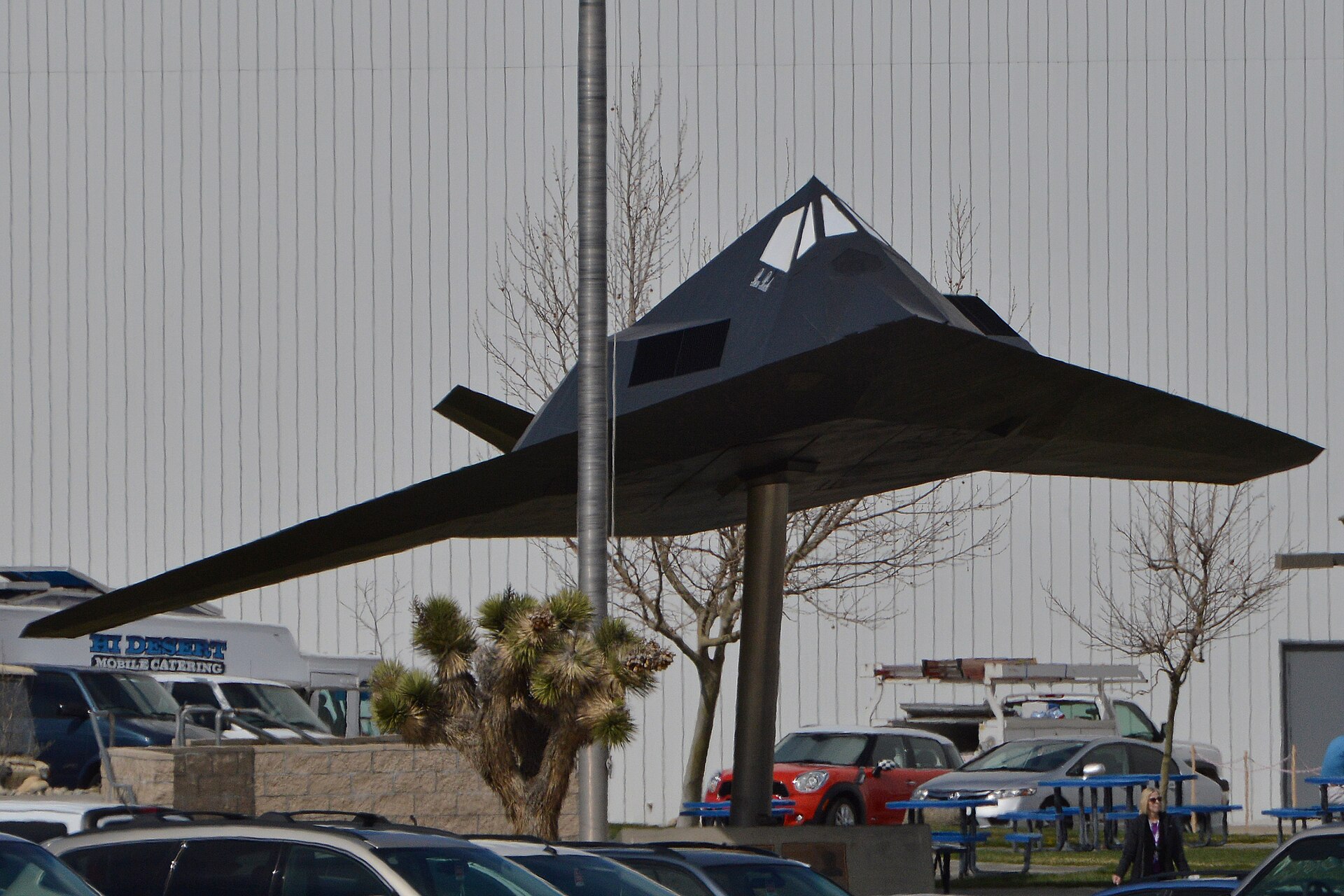
You cannot simply tow a Nighthawk into a museum. The exact geometry and construction of its leading-edge structures, and the composition of its radar absorbent coating, remain classified decades after the aircraft entered service and long after it left front-line duty.
So Lockheed Martin’s Skunk Works division prepares each display aircraft: the sensitive structures come off and reproduction leading edges go on in their place. Some preserved Nighthawks have gone on show without their leading edges at all, which tells you how carefully that line is drawn.
85-0818 will arrive at Dulles in pieces, carried by a C-5 Galaxy that can put it down a short taxi from the museum door, thanks to a dedicated taxiway linking the Udvar-Hazy site to the airfield. Reassembly happens in the Mary Baker Engen Restoration Hangar, and the public can watch it through the observation glass over the coming weeks.
The retirement that never quite happened
Here is the part that makes a Nighthawk in a museum slightly surreal: the F-117 is a retired aircraft that is still flying.
The type was withdrawn in waves between March 2007 and April 2008. But the 2007 National Defense Authorization Act required the fleet to be held in recallable condition, so most jets went into their original climate-controlled hangars at Tonopah with the wings removed, rather than out to the desert boneyard. A significant number have since gone back into the air as stealthy aggressors and test platforms, appearing at Northern Edge, over Fresno, over Los Angeles behind a tanker. The Air Force expects to keep flying them until at least 2034, demilitarising a handful each year.
85-0818 was never one of those. It has sat in storage since 2007, which is precisely why it was available to give away.
There is something fitting about the aircraft that flew in every war the Nighthawk fought ending up under the same roof as the Wright Flyer. Both are aeroplanes that made everything after them different.
Frequently Asked Questions
Which F-117 is going to the Smithsonian?
Why is F-117A 85-0818 special?
Did the F-117 Nighthawk fly in Afghanistan?
When can the public see the Smithsonian F-117?
Why does a museum F-117 need work by Lockheed Martin first?
Are any F-117s still flying?
How many F-117 Nighthawks were built?
Sources: Smithsonian National Air and Space Museum, US Air Force, Air & Space Forces Magazine, Wikipedia.
0 Comments