
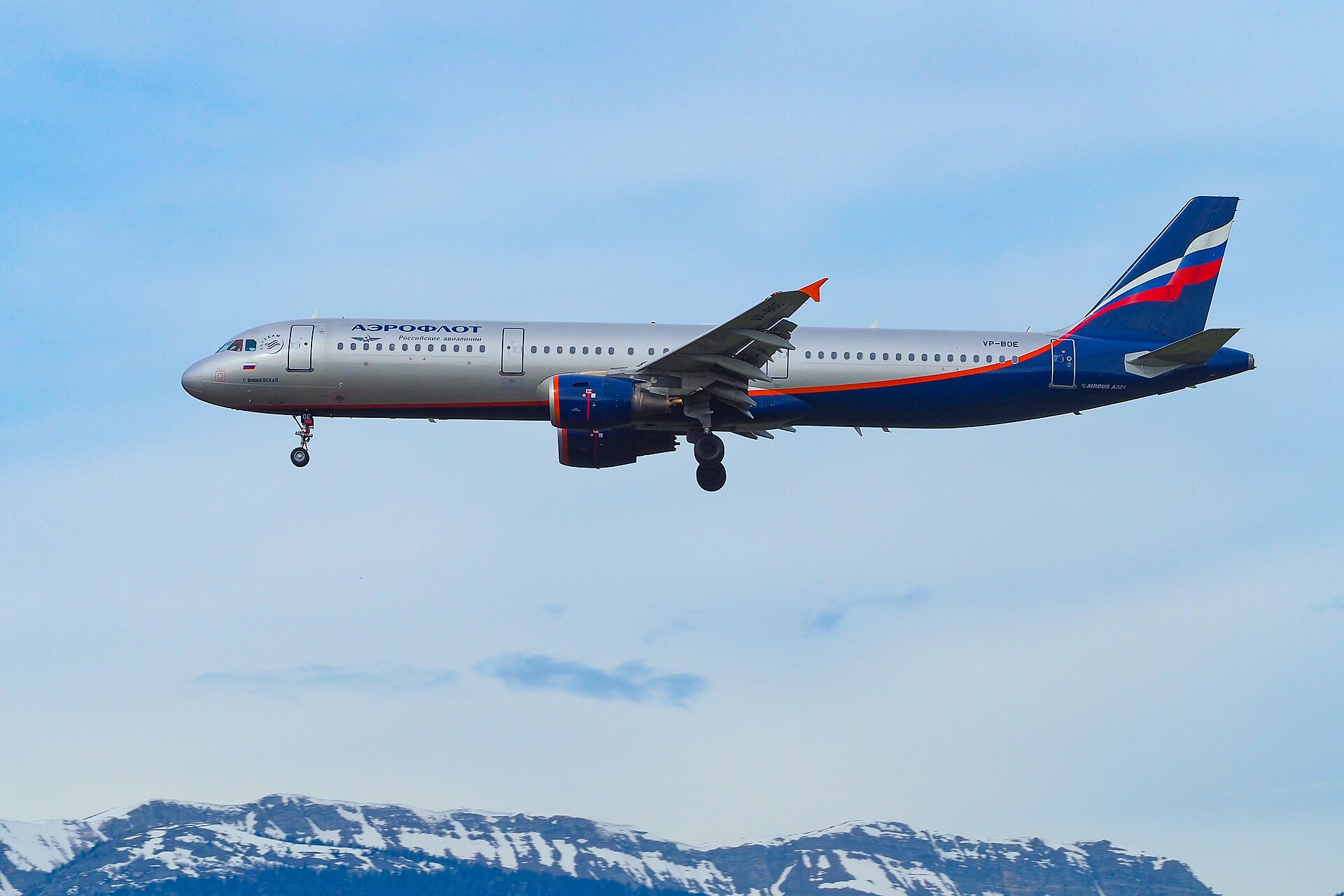
The aeroplane was ready to go. Fully fuelled, passengers in their seats, catering loaded, doors about to close. It was a Sunday afternoon in Geneva and the Aeroflot A321 had landed from Moscow only a couple of hours earlier.
Then the European Union closed its airspace to Russian airlines, effective immediately, and the Swiss authorities stopped the aircraft at the end of the runway.
Everyone got off. That was 27 February 2022. The aeroplane is still there.
Quick Facts
| Aircraft | Airbus A321-211, registration VP-BOE, MSN 5755, built 2013 |
| Name | «Г. Вишневская» — after the soprano Galina Vishnevskaya |
| Stranded since | 27 February 2022, Geneva-Cointrin, stand P48 |
| Days parked | More than 1,650 as of mid-September 2026 |
| Parking cost | About CHF 984 per day, roughly CHF 30,000 a month |
| Total accrued | More than CHF 1.6 million |
| Times moved | Once, in June 2022, when the Swiss Air Force needed the stand |
| Owner | GTLK, via GTLK Europe DAC in Dublin, in liquidation in Ireland since May 2023 |
Nine hundred and eighty-four francs a day
Geneva Airport charges by the day for a stand, and an A321 at Cointrin works out at roughly CHF 984 of it. That is about CHF 30,000 a month, for a piece of concrete, indefinitely.
Over more than 1,650 days that comes to over CHF 1.6 million. The airport would not tell Le Temps whether the bills have been settled continuously, which is its own kind of answer.
In four and a half years the aircraft has moved exactly once. In June 2022 the Swiss Air Force needed stand P48 for a United Nations conference, so VP-BOE was towed to the spot where it sits today.
Two of its sisters got out. This one cannot.
Here is what makes the Geneva case different from the other Russian jets caught out that week.
VP-BAC, an Aeroflot A320 stuck at Amsterdam, left in March 2024. VP-BET, stranded at Munich, flew out in June 2024 after 834 days and something in the order of EUR 460,000 in parking charges. Both of them escaped for the same reason: their ownership had been transferred to a non-Russian lessor, which made them legal to move.
VP-BOE was owned by GTLK, the Russian state leasing company, through its Dublin subsidiary GTLK Europe DAC. In May 2023 the Irish High Court put that subsidiary into liquidation, handing liquidators at Teneo roughly 70 aircraft and 19 vessels spread across some 70 companies. Filings last year suggested the process needs another two and a half years.
So the aircraft cannot be sold quickly, cannot be flown while it remains Russian-held under Swiss sanctions rules, and cannot simply be thrown away by an airport that does not own it. It sits in a legal cul-de-sac with the meter running.
It is dying where it stands
Four and a half winters outdoors with no maintenance does things to an airliner. The engines have never been covered. The fuel is reportedly still in the tanks. The catering loaded on 27 February 2022 is, in some accounts, still on board.
Swiss reporting puts the bill for returning VP-BOE to airworthy condition somewhere between CHF 8 and 10 million, against an aircraft that might have been worth around CHF 20 million the day it arrived. That maths only gets worse. Whatever happens to this aeroplane, it is overwhelmingly unlikely to involve it taking off from Geneva.
Abandoned airliners are not rare
An aeroplane left to rot at an international airport feels like it should be a one-off. It is not. The usual reason is money rather than politics: when there is no cash for fuel, handling and departure fees, an aircraft simply stops being moved, and nobody with authority wants to inherit the bill.
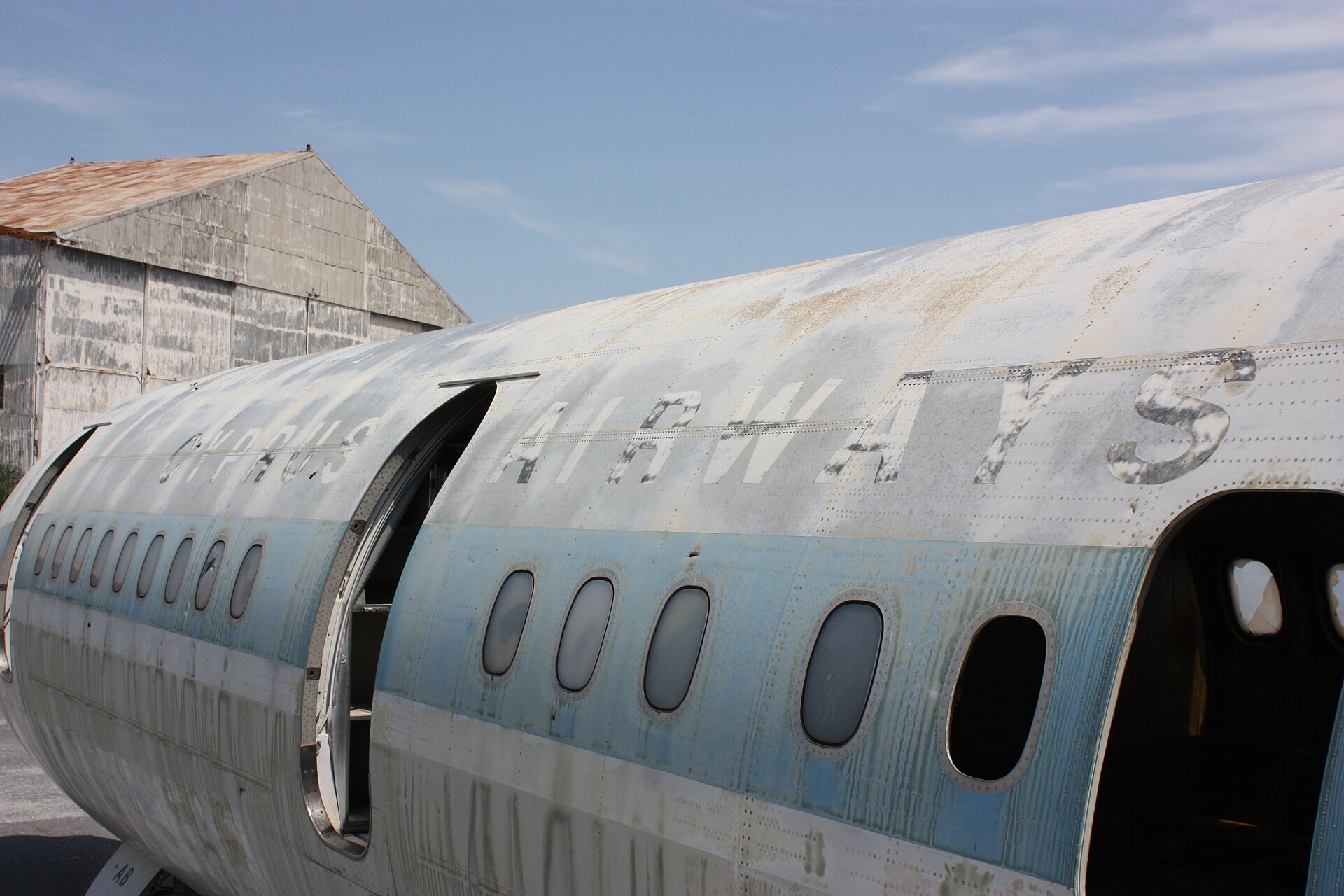
Nicosia, since 1974. Cyprus Airways Hawker Siddeley Trident 2E 5B-DAB was four years old when it was damaged beyond repair on 22 July 1974, as the Turkish invasion reached the airport. Nicosia International has been closed ever since, sitting inside the United Nations buffer zone, and the Trident is still on the apron: engines gone, fuselage holed, livery bleached. It is not even alone there; a second Trident was destroyed on the ground alongside it.
Antarctica, since 1970. Not abandoned so much as unrecoverable. On 8 October 1970 a US Navy Lockheed C-121J Super Constellation named Pegasus, flying the first mission of the season for squadron VXE-6 on Operation Deep Freeze, hit a snowbank in a whiteout near Williams Field. Eighty people were on board. There were no fatalities and five minor injuries. The wreck is still there, periodically buried and periodically dug out by visitors, and Pegasus Field was named after it. The airfield itself closed in December 2016.
Kuala Lumpur, 2015. Three Boeing 747-200 freighters sat at KLIA long enough that in December 2015 Malaysia Airports took out newspaper advertisements addressed to their untraceable owner, giving 14 days before disposal. A cargo company came forward claiming ownership. The aircraft never flew again: all three were broken up on site around 2020 and 2021, with the fuselages shipped onward to China and to a retail development in Melaka.
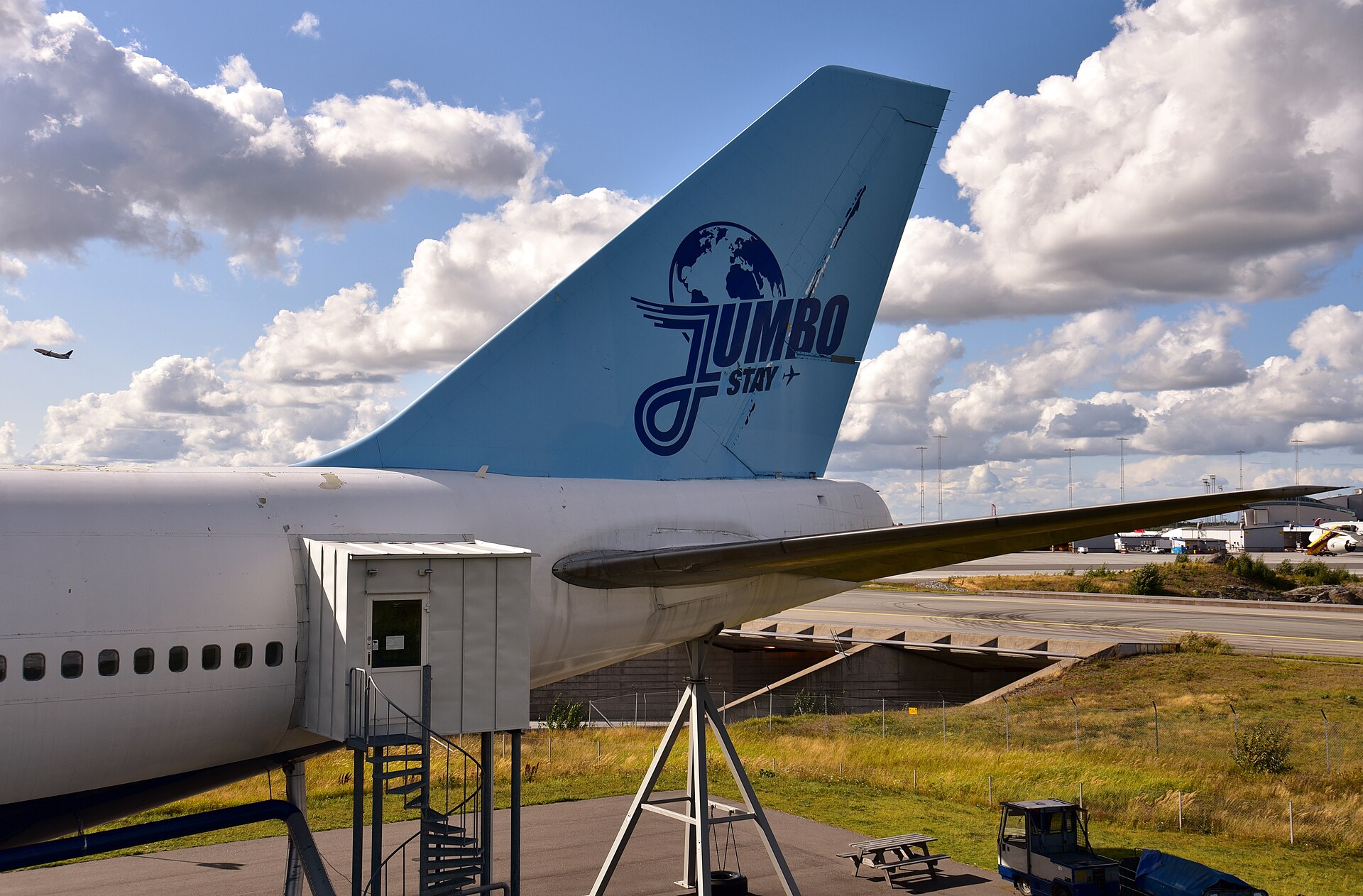
Stockholm, since 2002. A Boeing 747-212B that had flown for Singapore Airlines and Pan Am ended up with the Swedish charter carrier Transjet, which went bust the same year. In January 2009 it reopened as the Jumbo Stay hostel, which is the happiest ending on this list until you reach the present tense: the operator filed for bankruptcy in March 2025, the hotel closed, and the airframe is now Swedavia’s problem. Scrapping looks likely.
The difference at Geneva
Every other aeroplane on that list was abandoned by somebody who ran out of money. VP-BOE was abandoned by a border closing.
That distinction matters, because it means there is nothing anybody at Geneva Airport can do. The owner is an Irish company in liquidation, controlled from Moscow before it was sanctioned, holding an asset that Swiss law forbids from flying. The liquidator can sell it. A creditor can force a sale. Nobody can start the engines.
In the meantime an Airbus named after one of the great Russian sopranos stands on a Swiss apron with a full load of four-and-a-half-year-old fuel, running up about a thousand francs a day, slowly turning into the kind of thing people take photographs of from the terminal window.
Frequently Asked Questions
Why is an Aeroflot Airbus stuck at Geneva Airport?
How much does it cost to park an airliner at Geneva?
Who owns the stranded Aeroflot A321?
Why did other stranded Aeroflot jets escape and this one did not?
Could the aircraft ever fly again?
What is the aircraft named?
Are there other airliners abandoned at airports around the world?
Sources: 20 Minuten, Le Temps, Corriere del Ticino, watson.ch, Wikipedia, airfleets.net.

0 Comments