
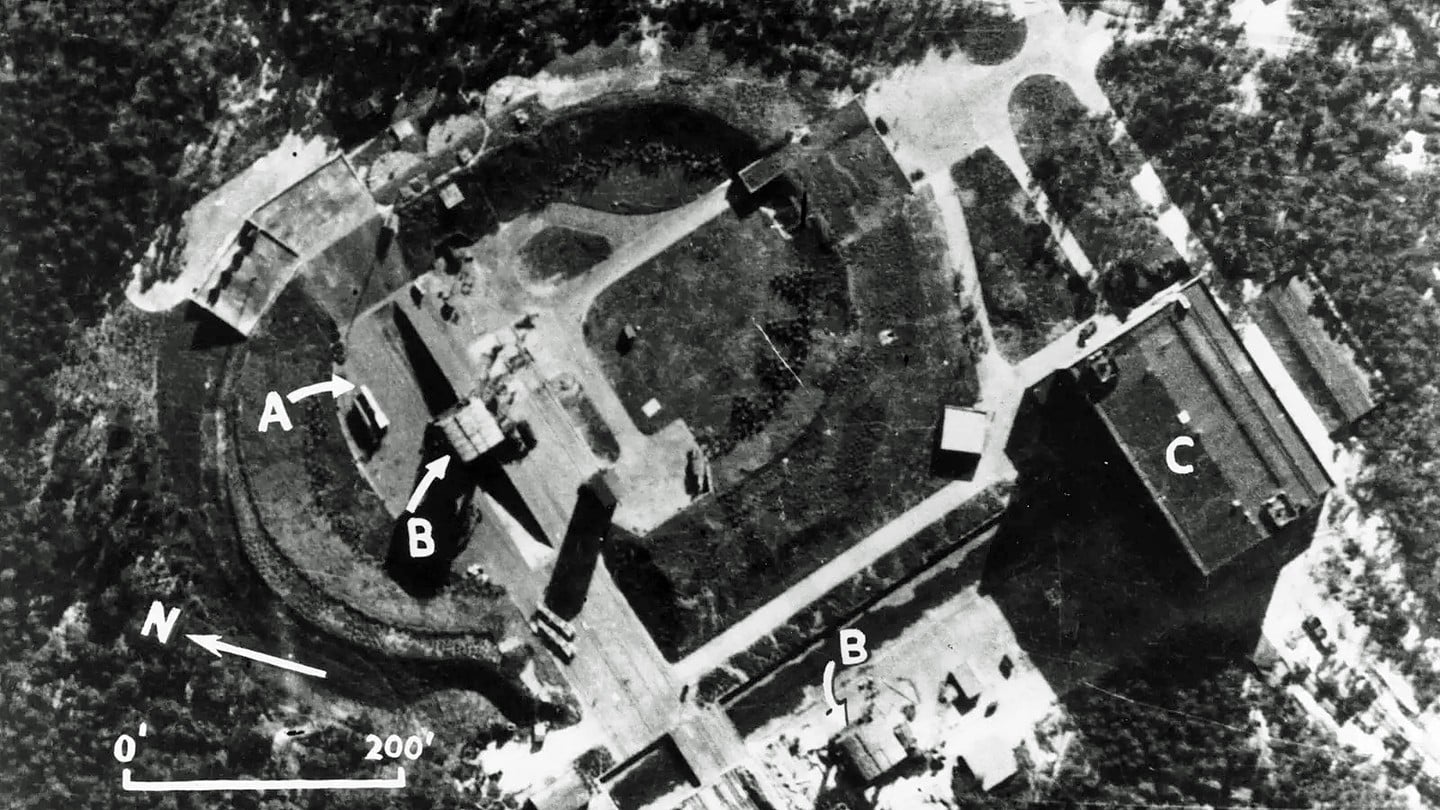
The object was less than a millimetre long on the print. It sat on a photograph of a sandy peninsula in the Baltic, among thousands of other specks, and a woman in a Buckinghamshire country house looked at it through a magnifying glass and worked out that its wings spanned about twenty feet.
Britain had heard rumours of a flying bomb. Constance Babington Smith was the first person to actually see one.
Quick Facts
| Who | Constance Babington Smith (1912–2000), known as “Babs” |
| Before the war | Staff journalist and photographer for the British aviation journal The Aeroplane |
| Service | Women’s Auxiliary Air Force; rose to Flight Officer, the WAAF equivalent of Flight Lieutenant |
| Unit | L Section, Central Interpretation Unit, RAF Medmenham |
| Brief | Find “anything queer” at Peenemünde |
| First discovery | Four tailless aircraft she logged as P-30 — the Messerschmitt Me 163 Komet |
| Second discovery | A cruciform object under a millimetre long on the print — the V-1 flying bomb |
| Honours | Mentioned in despatches 1942; MBE 1945; US Legion of Merit |
The journalist who could read an aeroplane
She came to the job with an unusual qualification. Before the war Babington Smith was a staff journalist and photographer for The Aeroplane, at a time when almost none of her colleagues were women. She had spent years looking at aircraft professionally and knowing what each one was.
When war came she was commissioned into the WAAF and asked to set up an aircraft interpretation section. That became L Section within the Central Interpretation Unit at RAF Medmenham, and its work was exactly what her old job had trained her for: spot new types in reconnaissance photographs, often while they were still prototypes, track where they went, and predict when they would be ready to fight.
Burn marks in the grass
Her brief for Peenemünde was to look for “anything queer”. What she noticed first was not an aircraft at all. It was scorching: tiny burn marks in the grass around the airfield, the signature of engines that did not behave like propellers. She had identified what became known as jet marks.
Then she found four tailless aircraft she had never seen before. In a second set of photographs one of them had moved, which meant they were already flying rather than sitting as mock-ups. She logged the type as P-30, P for Peenemünde and 30 for the wingspan in feet. It was the Messerschmitt Me 163 Komet, the only rocket-powered fighter ever to reach operational service.
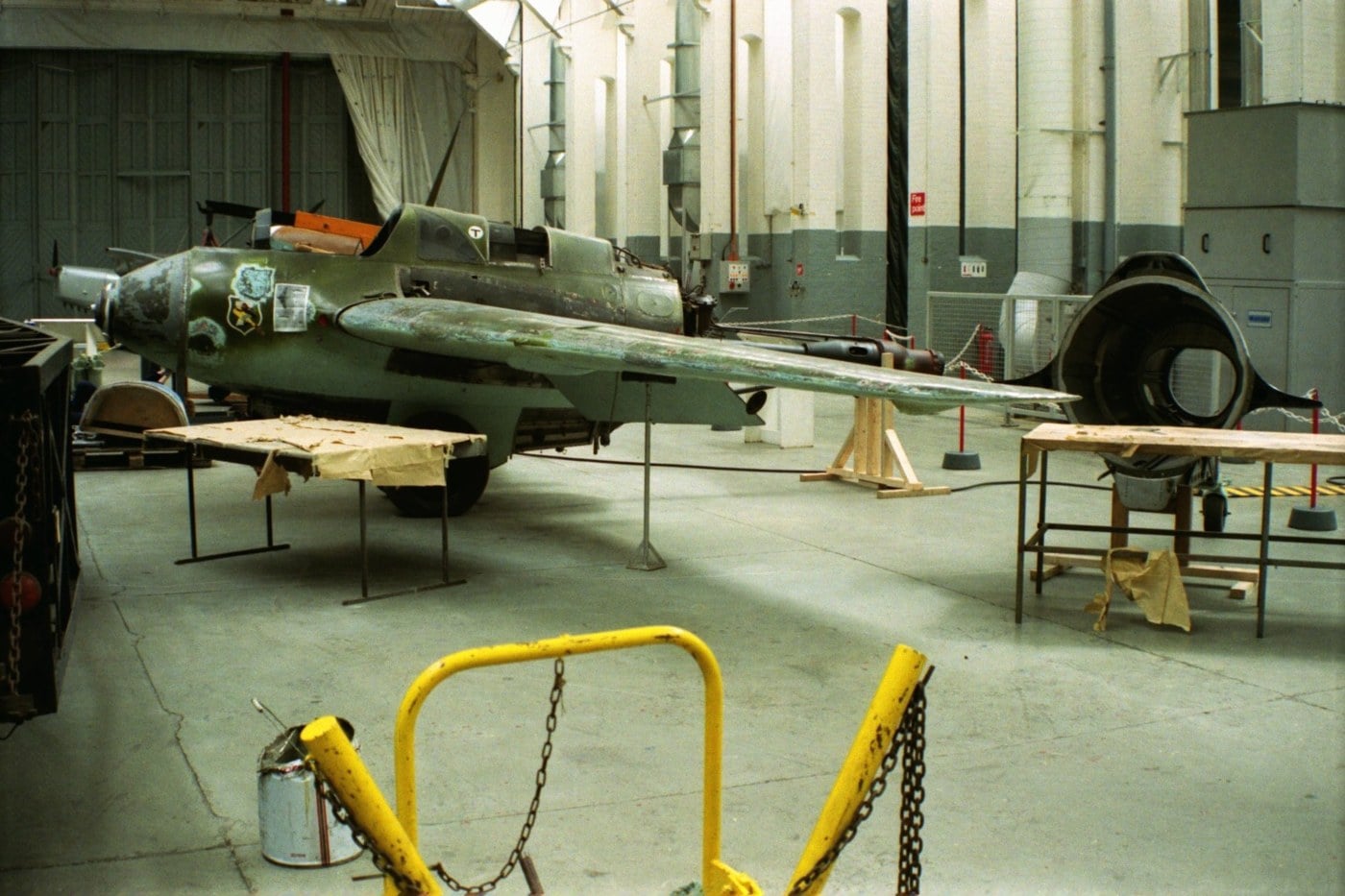
Her reward was to be told she was wrong. Lord Cherwell, Churchill’s scientific adviser and the author of the area-bombing “de-housing” paper, rejected the idea of a rocket fighter outright and suggested the objects were torpedoes, or a hoax. Other scientists overruled him and ordered more work. It is worth sitting with that for a moment: the interpretation was correct, the evidence was on the desk, and the most senior scientist in the room simply did not believe it.
What the Me 163 Komet was actually like to fly — the aircraft she identified from scorch marks and a moved shadow.
Something smaller than P-30
She was sent back to the same photographs with a harder question: was there anything there smaller than the rocket fighter? Day after day, past her usual twelve-hour shifts, she worked across the Peenemünde coverage with a stereo viewer and a magnifying glass.
Then she saw it. A tiny cruciform shape, under a millimetre long on the print. She scaled it and calculated a wingspan of roughly twenty feet. British intelligence had heard the flying bomb existed. She was the first person to look at one.
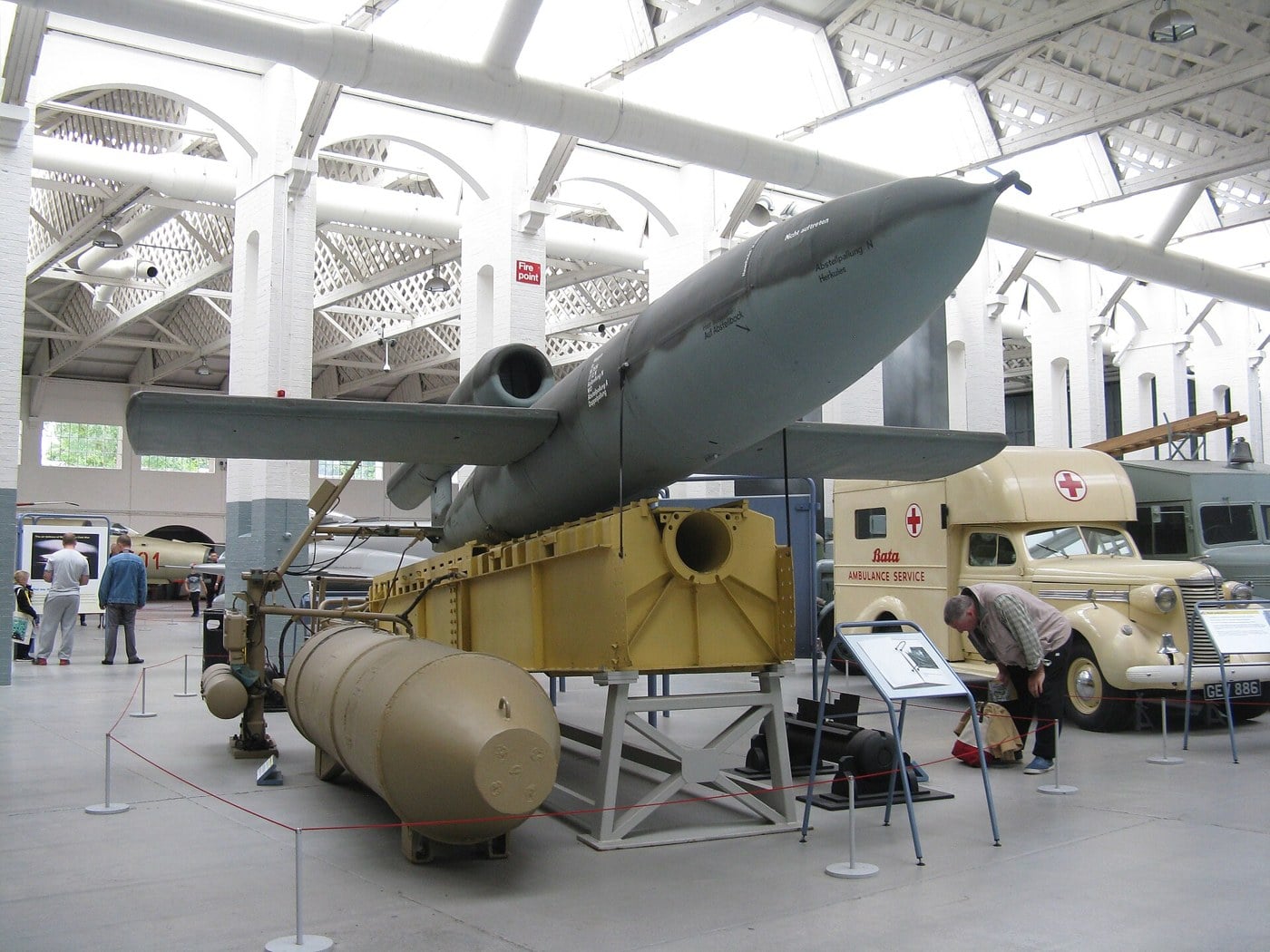
That is the part that mattered. A single identification is intelligence; a recognised pattern is a target list. Once L Section knew what to look for, they started finding more of them, and then the launch ramps being built in France and aimed at London. Those ramps became the target set for Operation Crossbow, the bombing campaign that blunted the V-1 offensive before it properly began.
How British photographic interpreters worked the Peenemünde and northern France coverage with stereo viewers.
“An intense interest in aircraft”
Her reputation inside the RAF grew, and it collected the period’s casual condescension along the way. Frank Whittle, who had just invented Britain’s jet engine, met her and was sufficiently taken that he asked what scent she wore.
The perfume, for the record, was Guerlain’s L’Heure Bleue. She later wrote that she wore it to counteract the masculinity of her uniform, which is a better line than anything written about her at the time.
The Americans were less circumspect about what she was worth. After the war she helped the USAAF with photographic interpretation and was given the Legion of Merit.
The V-weapons programme she was reading, from Peenemünde to the attacks on London.
She never knew what it meant
Babington Smith reached Flight Officer, was mentioned in despatches in 1942 and appointed MBE in 1945. She spent a few years in the United States working as a researcher for Life, then wrote Evidence in Camera, the first full account of British wartime photographic intelligence, and later a biography of Amy Johnson.
What she did not have, at the time, was any sense of scale. Her job was to report what she could see; what was done about it belonged to other people in other rooms. She identified an object less than a millimetre long and went back to the next photograph.
Every targeting cell and every satellite imagery analyst working today is doing a version of her job. The tools changed completely. The skill — knowing what a thing is because you have looked at ten thousand of them — has not changed at all.
Sources: RAF Museum, National Geospatial-Intelligence Agency, Constance Babington Smith, Evidence in Camera (1957), Imperial War Museums collections records.
0 Comments