
Somewhere on every long-haul flight there is a passenger explaining to a neighbour that the trip is about the same as a chest X-ray. It is one of aviation’s most durable pieces of received wisdom, and it turns out to be roughly right for slightly the wrong reasons.
The reason anyone can check is that the FAA publishes the numbers. Advisory Circular 120-61B contains a table of computed doses for 27 specific airline routes, and it is the single most useful document on this subject that almost nobody reads.
Here is what it says, what the exposure limits actually are, and what the research does and does not show about cancer in aircrew.
Quick Facts
London to New York, one way: 27.3 microsieverts (FAA, CARI-7)
Longest route on the FAA table: New York to Tokyo, 55.1 µSv over 13 hours at FL430
Single chest X-ray: about 20 µSv (0.02 mSv), per the FDA
Annual cosmic dose at ground level: about 0.33 mSv (NCRP Report 160, via the FAA)
Occupational limit the FAA recommends: 20 mSv/year averaged over 5 years, max 50 mSv in one year
Polar versus equator: roughly twice the dose at the same altitude
Pregnancy: FAA recommends under 0.5 mSv per month to the conceptus; the EU limit is 1 mSv for the remainder of the pregnancy
What a flight actually delivers
Dose is measured in sieverts, and at these levels in microsieverts — millionths of a sievert. The FAA computed the following with its CARI-7 program, under quiet solar conditions.
| Route | Max flight level | Air time (h) | Effective dose (µSv) |
|---|---|---|---|
| New York – Tokyo | 430 | 13.0 | 55.1 |
| Tokyo – New York | 410 | 12.2 | 50.7 |
| London – Los Angeles | 390 | 10.5 | 44.6 |
| Los Angeles – Tokyo | 400 | 11.7 | 35.1 |
| Dallas/Ft Worth – London | 370 | 8.5 | 29.7 |
| London – New York | 370 | 6.8 | 27.3 |
| Washington DC – Los Angeles | 350 | 4.7 | 15.1 |
| Seattle – Anchorage | 350 | 3.4 | 12.4 |
| New York – Chicago | 390 | 1.8 | 6.60 |
| Miami – Tampa | 240 | 0.6 | 0.41 |
Selected rows from FAA Advisory Circular 120-61B, Table 2, computed with CARI-7 for ICRU mean solar activity (January 2000) under quiet solar conditions (Kp=0), using ICRP Publication 103 weighting. Doses are one way.
The pattern is exactly what the physics predicts. Dose scales with time aloft, with altitude, and with latitude. A short hop at FL240 delivers a rounding error. New York to Tokyo, thirteen hours at FL430 over high latitudes, delivers 55.1 microsieverts — the highest number on the FAA’s table and the honest answer to “how much radiation is in a twelve-hour flight”.
For scale, the FAA’s own background table, drawing on NCRP Report 160, puts the cosmic contribution to natural background at about 0.33 mSv a year at ground level. That transpacific flight is therefore roughly a sixth of a year’s worth of cosmic radiation, collected in an afternoon and an evening.
The chest X-ray comparison, done properly
The FDA benchmarks medical imaging against a posteroanterior chest X-ray, which it puts at 0.02 mSv — 20 microsieverts. Set that beside London to New York at 27.3 microsieverts and the famous comparison holds up: one crossing is about one and a third chest films.
Two caveats stop it being a clean equivalence. The first is that people often mean the round trip, which roughly doubles the figure. The second is that “chest X-ray” is ambiguous: a two-view series, front and side, is conventionally quoted nearer 0.1 mSv, and against that a transatlantic crossing is about a quarter of one. So the comparison is right, approximately, for the single-film version and wrong for the other.
Either way the passenger is not the interesting case. Somebody doing that crossing twice a week for twenty years is.
Why the poles are different
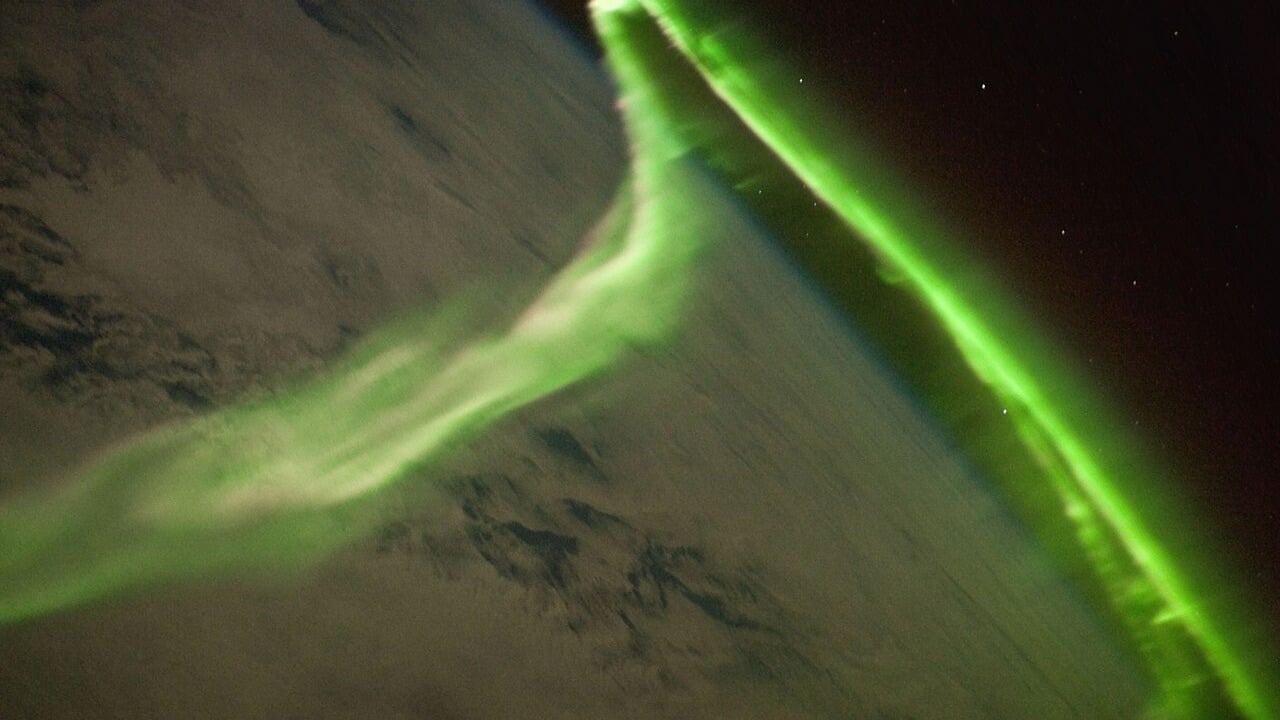
Earth’s magnetic field deflects charged particles, and it does so most effectively where the field lines run horizontally across the equator. Near the poles the field lines plunge downward and funnel particles in, which is why the aurora is a polar phenomenon and why polar routes carry a dose penalty. The FAA states it without hedging.
Galactic cosmic radiation is the steady background, arriving from outside the solar system. Solar particle events are the spiky part: a large flare or coronal mass ejection can raise dose rates sharply for hours, and high-latitude flights are the most exposed. This is why operators reroute or descend during major solar events rather than treating the published averages as the worst case.

The limits, and a transatlantic disagreement nobody notices
The FAA recommends a 5-year average effective dose of 20 mSv per year, with no more than 50 mSv in a single year. The EU sets the same numbers in law: Article 9 of Council Directive 2013/59/Euratom limits occupational exposure to 20 mSv in any single year, with up to 50 mSv authorised in one year provided the five-year average stays within 20.
The FAA attaches a sentence to its limits that defuses most of the alarm written about this subject.
Where the two regimes genuinely part company is pregnancy, and the difference is easy to miss because the two rules are not measuring the same thing. The FAA recommends that a pregnant crewmember limit exposure of her conceptus to no more than 0.5 mSv per month. The Euratom directive requires that the equivalent dose to the unborn child be as low as reasonably achievable and unlikely to exceed 1 mSv during at least the remainder of the pregnancy.
One is a monthly rate; the other is a cumulative total across the whole remaining term. A monthly figure of 0.5 mSv sustained across a full pregnancy would add up to several times the European ceiling. That is not a claim that one regulator is careless — the two documents are constructed differently and a crewmember at either limit is far below the occupational limits above — but it does mean the two sides of the Atlantic are not protecting pregnant aircrew to the same standard, and it is almost never mentioned.
The cancer question
This is what most people are actually asking, so it deserves a careful answer rather than a reassuring one.
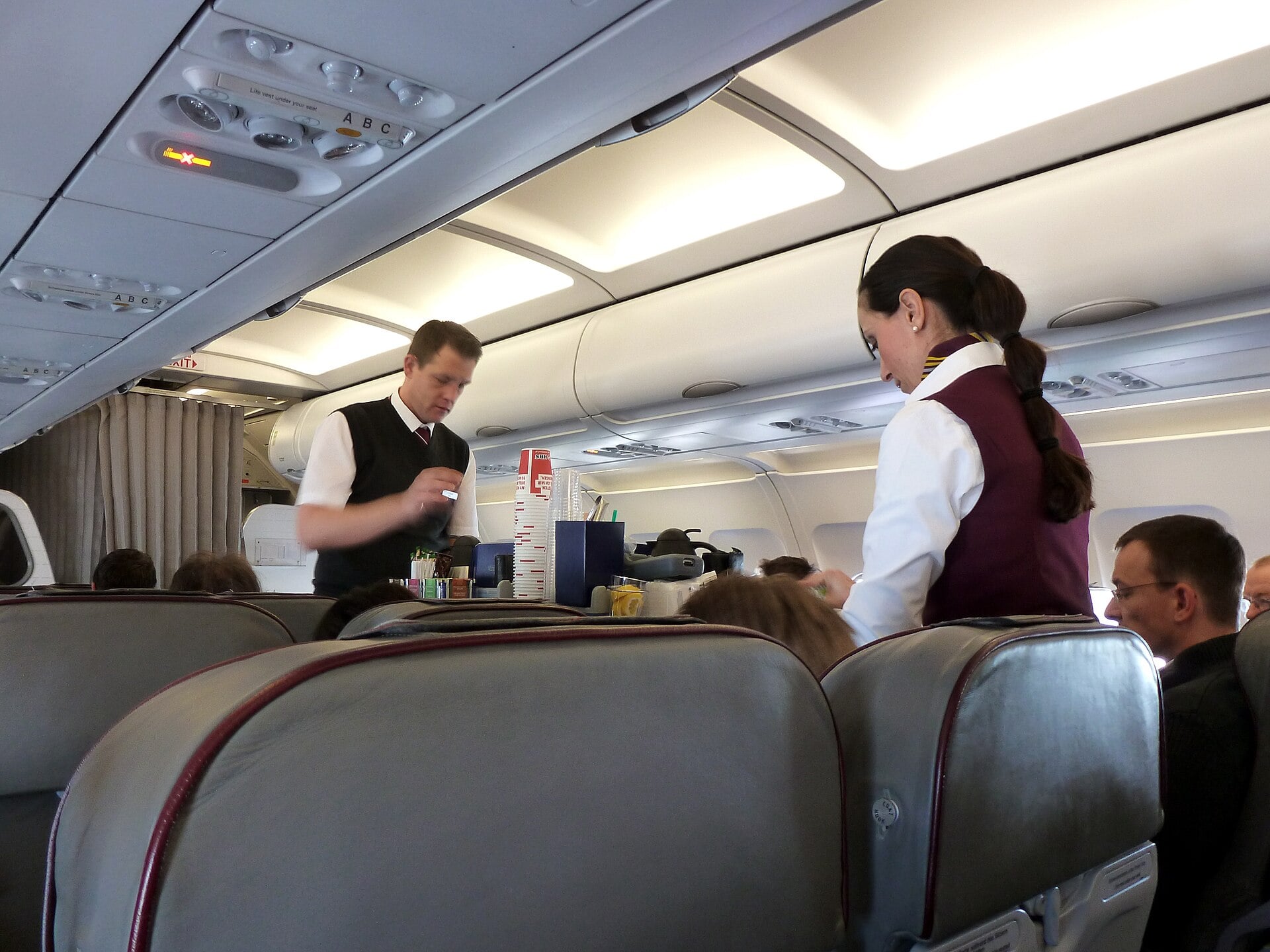
The best-known study is the Harvard Flight Attendant Health Study, published by McNeely and colleagues in Environmental Health in 2018. It enrolled 5,366 US flight attendants and compared self-reported cancer prevalence against a matched slice of the NHANES general-population survey.
It found elevated prevalence in three places, and only three reached statistical significance: breast cancer in women, with a standardised prevalence ratio of 1.51; melanoma in women, at 2.27; and non-melanoma skin cancer in women, at 4.09. Uterine, cervical, gastrointestinal and thyroid cancers, and both male results, did not reach significance and should not be reported as findings.
The authors are careful about what this means, and so should anyone quoting them be. The study is cross-sectional, which they say plainly precludes inferences about causality. Outcomes were self-reported rather than taken from medical records. Diagnosis dates were not recorded, so some cancers may predate the person’s flying career entirely.
They also name their own confounders: cosmic ionizing radiation at flight altitude, circadian rhythm disruption from night work and repeated time-zone crossing, cabin air quality, and the fact that many flight attendants working today spent years breathing secondhand smoke before in-flight smoking bans. Untangling radiation from shift work in that list is not something a cross-sectional survey can do.
One widely circulated quotation should be retired: the line that the study found a higher prevalence of every cancer it examined does not appear in the paper. What the authors wrote is that flight attendants show elevated rates of several cancers, especially breast, melanoma and non-melanoma skin cancers, despite low smoking and obesity levels.
It is also worth keeping two different hazards apart. Skin cancer in aircrew is at least partly a question of ultraviolet light through cockpit and cabin windows, which is a different mechanism from the galactic cosmic radiation this article is about — a distinction that matters when reading the recent study on skin cancer in military aviators. The authors themselves note that ionizing radiation is an established causal factor for non-melanoma skin cancer and breast cancer, while the evidence on melanoma is more conflicted.
A Scripps News investigation into how US flight crews are, and are not, monitored for radiation exposure.
The defensible summary: aircrew receive more ionising radiation than people who work on the ground, the doses are well inside the recommended occupational limits, the epidemiology shows real associations for a small number of cancers in female cabin crew, and nobody has yet separated the radiation from the night shifts. Neither the reassuring version nor the alarming version of this story is supported by the evidence.
Sources: FAA Advisory Circular 120-61B, In-Flight Radiation Exposure; NCRP Report 160 as tabulated by the FAA; UNSCEAR 2000 report; FAA CAMI CARI-7; Council Directive 2013/59/Euratom, Articles 9 and 10; U.S. Food and Drug Administration, Initiative to Reduce Unnecessary Radiation Exposure from Medical Imaging; McNeely et al., Cancer prevalence among flight attendants compared to the general population, Environmental Health 17:49 (2018).



0 Comments