

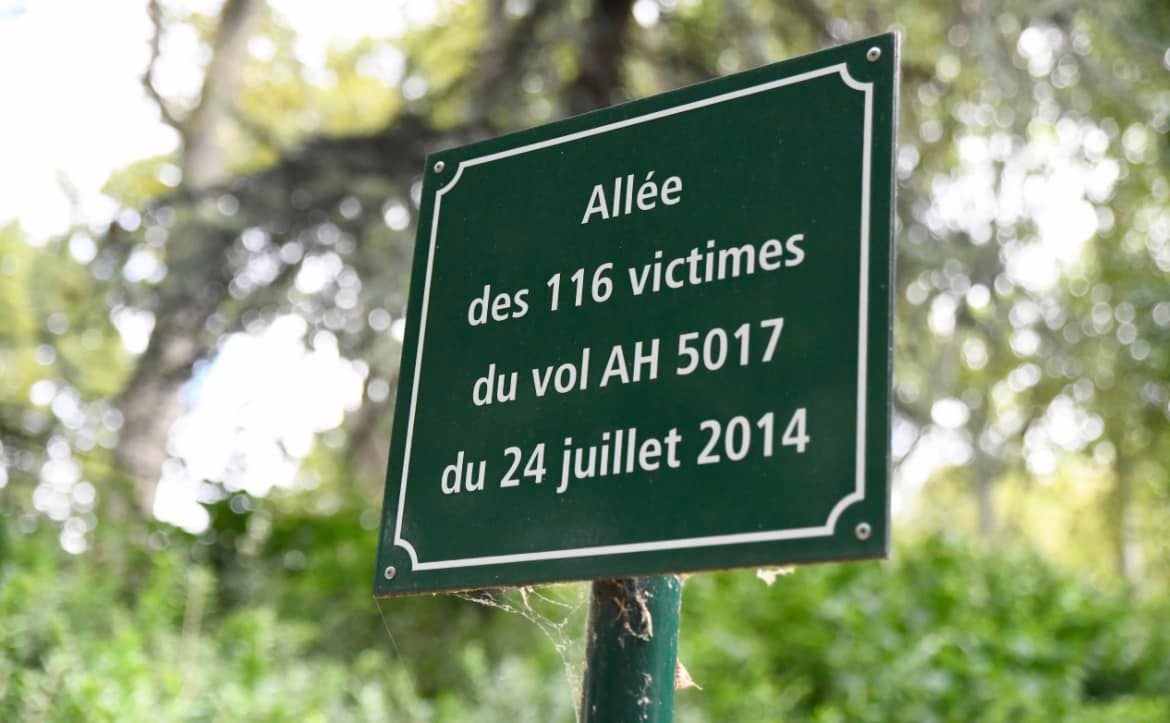
Twelve years after Air Algérie flight 5017 fell out of the sky over northern Mali, a French court has named someone responsible.
On 28 September 2026, the Paris Criminal Court found Spanish charter airline Swiftair guilty of involuntary manslaughter and fined it €225,000, the maximum the law allows for a company. Swiftair operated the McDonnell Douglas MD-83 for Air Algérie under a wet lease. All 116 people on board died.
Quick Facts
- Crash: 24 July 2014, near Gossi, Mali
- Flight: Air Algérie AH5017, Ouagadougou (Burkina Faso) to Algiers
- Aircraft: McDonnell Douglas MD-83, EC-LTV, operated by Swiftair under wet lease
- Killed: All 116 on board: 110 passengers and 6 crew, including 52 French citizens
- Cause (BEA): Ice crystals blocked engine pressure sensors, thrust was limited, the aircraft stalled and was not recovered
- Verdict: 28 September 2026, Paris Criminal Court: Swiftair guilty of involuntary manslaughter
- Penalty: €225,000 fine, the maximum for a company
What Happened on 24 July 2014
AH5017 left Ouagadougou for Algiers. The flight climbed to 31,000 feet into an area of storms, where the air was full of ice crystals. According to France's air accident investigation agency, the BEA, those crystals blocked the pressure sensors on the engines, which then gave false readings.
The autothrottle trusted the bad data and held the engines at too little thrust. The airspeed bled away. The autopilot kept pitching the nose up to hold altitude, until the MD-83 stalled. The BEA found that the crew had not switched on the engine anti-icing systems, reacted late to the falling speed, and did not attempt to recover from the stall. The jet hit the desert at high speed.
Associated Press footage from the AH5017 crash site in Mali, July 2014.
Why the Court Blamed the Airline
The trial opened in Paris on 9 March 2026. The court focused on how the airline had prepared its crew. According to Air Journal, neither pilot had received training in approaching or recovering from a stall since joining Swiftair. A session to fill that gap had been scheduled for November 2014, four months too late.
Prosecutors had asked for the maximum fine and got it. Swiftair's lawyers had asked for an acquittal. For the families, the size of the fine was never the point. It is a symbolic figure against 116 deaths, but it is a conviction, and it took twelve years.
The Lesson of AH5017
AH5017 was one of several accidents in the 2000s and 2010s in which an airliner stalled at cruise altitude after bad sensor data and an automation-dependent crew. Air France 447 over the Atlantic in 2009 is the best known. Since then, regulators on both sides of the Atlantic have made upset prevention and recovery training a requirement for airline pilots.
The Paris verdict adds a legal point to that technical one. Training is not paperwork. If an airline lets it lapse, the airline answers for it.
Sources: Paris Criminal Court verdict as reported by Air Journal, AeroTime and Al Jazeera; BEA final report on AH5017; Wikipedia (Air Algérie Flight 5017). Featured image: Curimedia / CC BY 2.0


0 Comments