

Germany builds a great deal of aircraft structure. Fuselage sections, wings, cabins and engines leave German factories every day. What it has not done for a very long time is design, certify, assemble and support a complete airliner of its own. On 29 September 2026, Deutsche Aircraft opened the building that is supposed to change that: the final assembly line for the D328eco regional turboprop at Leipzig/Halle Airport.
The numbers are precise. The hall covers 60,500 square metres, roughly eight football pitches. The investment exceeds €100 million. At full rate the line can deliver up to 48 aircraft a year, and the ramp-up is expected to create around 250 new direct jobs, according to the company.
Chief executive Nico Neumann framed it as a return. For the first time in more than 60 years, he said, every phase of an aircraft’s lifecycle will be integrated under a German programme.
Quick Facts
- Company: Deutsche Aircraft GmbH, owned by Sierra Nevada Corporation
- Aircraft: D328eco, 40-seat regional turboprop derived from the Dornier 328
- Engines: Two Pratt & Whitney Canada PW127XT-S turboprops
- Opened: 29 September 2026, Leipzig/Halle Airport
- Hall size: 60,500 m²
- Investment: More than €100 million
- Capacity: Up to 48 aircraft per year
- Jobs: About 250 new direct jobs during ramp-up
From Oberpfaffenhofen to Leipzig
Deutsche Aircraft splits the work across two sites. Its headquarters at Oberpfaffenhofen near Munich handles engineering, certification and component manufacturing. Leipzig now takes over final assembly. Saxony’s Minister-President Michael Kretschmer sent a video message, and both Federal Transport Ministry state secretary Christian Hirte and Saxony’s economy minister Dirk Panter spoke at the opening.

The aircraft itself is an evolution rather than a clean sheet. The original Dornier 328 first flew in December 1991, and production ended after Fairchild Dornier collapsed in 2002. Deutsche Aircraft’s version stretches the fuselage by about two metres to 23.3 metres, raises capacity to up to 40 seats, about 20 per cent more than the original and swaps the engines for 2,750-horsepower PW127XT-S turboprops. The cockpit and avionics are new.
The first D328eco test aircraft was rolled out at Oberpfaffenhofen in May 2025. At that point the company was aiming for certification and entry into service in the fourth quarter of 2027. The launch customer is the German charter operator Private Wings, with five aircraft.
Why a turboprop, and why now
Regional turboprops are unglamorous but essential. They serve short runways, islands and remote communities where jets are too thirsty or too big. For decades that market has belonged almost entirely to ATR, the Franco-Italian joint venture, since De Havilland Canada paused production of the Dash 8-400 in 2021. Deutsche Aircraft is betting there is room for a smaller, 40-seat alternative.
It is also betting on fuel. The D328eco is designed to fly on up to 100 per cent synthetic fuel, and Deutsche Aircraft is pitching it as the first step towards cleaner regional flying rather than waiting for hydrogen or electric aircraft that are still years away.
The German angle
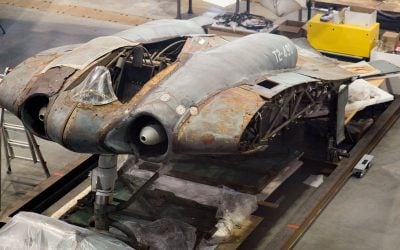
The last time an entirely German airliner programme was built in Saxony, it ended badly. The East German Baade 152, the first German jet airliner, flew from Dresden in 1958 and crashed on its second flight. The programme was cancelled in 1961. Leipzig lies roughly 100 kilometres from Dresden.
This time, the aircraft is based on a type with three decades of service behind it, and the certification work is already under way. Whether Leipzig becomes a genuine airliner factory now depends on the test campaign, and on orders.
Deutsche Aircraft’s own introduction to the D328eco.
Sources: Deutsche Aircraft press release (29 September 2026), FlightGlobal, AeroTime, Deutsche Aircraft newsroom


0 Comments