
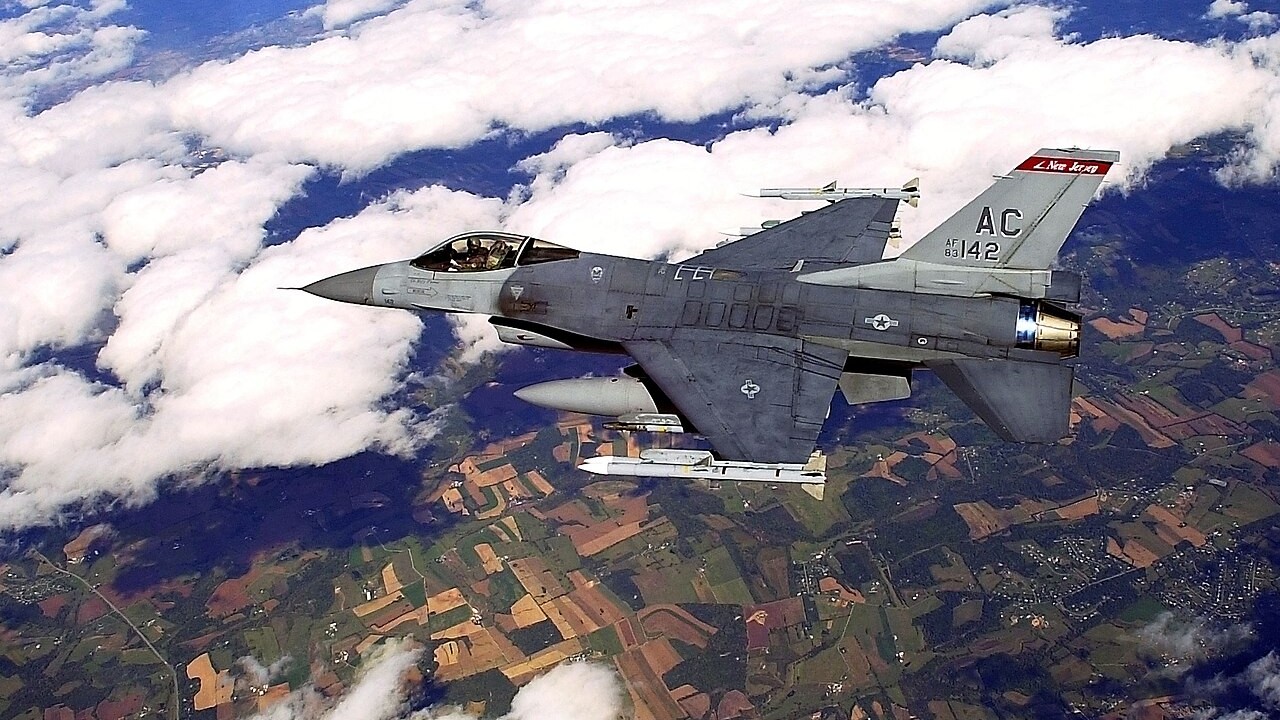
Not every fighter mission is a dash to a target. A lot of the time, fighter pilots fly in circles. They take off, climb to a patch of sky, and orbit there for hours, burning fuel, refuelling from tankers and watching their radar. Nothing happens, and that is exactly the point.
This is the combat air patrol, or CAP, one of the oldest and most important jobs a fighter does. Its purpose is simple: be in the right place before the enemy arrives, so that anything hostile can be intercepted long before it reaches whatever you are protecting.
Quick Facts
- What it is: A fighter patrol positioned to intercept hostile aircraft before they reach their target
- Origins: Carrier operations, where fighters protected the fleet from air attack
- Common types: BARCAP, TARCAP, HAVCAP, MiGCAP, RESCAP, FORCAP
- Control: Ground-controlled interception (GCI) radar or airborne early warning such as AWACS
- Enablers: Aerial refuelling tankers keep a CAP on station for hours
- Famous example: The CAPs flown over US cities in Operation Noble Eagle after 11 September 2001
Be there first
Air defence is a race against time. A fighter sitting on alert on the ground needs minutes to scramble, take off and climb, and by then a fast attacker may already have released its weapons. A fighter already airborne, in the right place, can turn towards a threat the moment it appears. A CAP buys that time.
The idea grew out of carrier warfare, where fighters had to protect a fleet that could not hide. It has since become a generic term used by air forces and navies alike, over land and sea. A CAP is usually flown by a pair or two of fighters on a racetrack-shaped orbit, with others rotating in as fuel runs low, so that the station is never empty.
The Ops Center explains combat air patrols as part of defensive counter-air.
An alphabet soup of CAPs
Because CAPs protect different things, US military shorthand has grown a whole family of names. The most common include:
- BARCAP, or barrier CAP: a screen placed between a carrier group or a base and the direction an attack is expected from.
- TARCAP, or target CAP: fighters over a strike target, protecting the aircraft working there.
- HAVCAP: protection for high-value airborne assets such as AWACS radar aircraft and tankers.
- MiGCAP: a Vietnam War term for fighters assigned specifically to engage North Vietnamese MiGs threatening a strike package.
- RESCAP: cover for downed aircrew and the rescue forces trying to reach them.
- FORCAP: a force CAP escorting and covering a strike group.
The names change with the job, but the principle never does: put fighters between the threat and the thing that matters.
The eyes behind the CAP
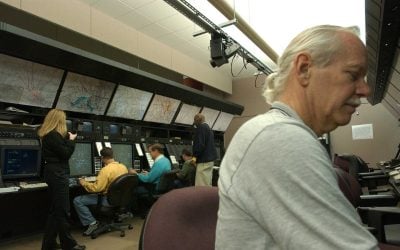
A CAP is only as good as the information it gets. A fighter's own radar sees a limited slice of sky, so CAPs work with controllers who have the bigger picture: ground-controlled interception radar on land, or airborne early warning aircraft such as AWACS. The controller spots the threat, assigns it to a CAP and talks the fighters into position for the intercept.
Modern CAPs often stack fighters at different altitudes to cut response times, and they depend completely on tankers. Without aerial refuelling, a fighter can stay on station for perhaps an hour or two before it has to go home. With tankers, a CAP can be held around the clock. During Operation Linebacker over North Vietnam, MiGCAP forces of eight to twelve fighters covered the ingress, target and egress phases of a raid, with tanker support.
Noble Eagle: CAPs over America
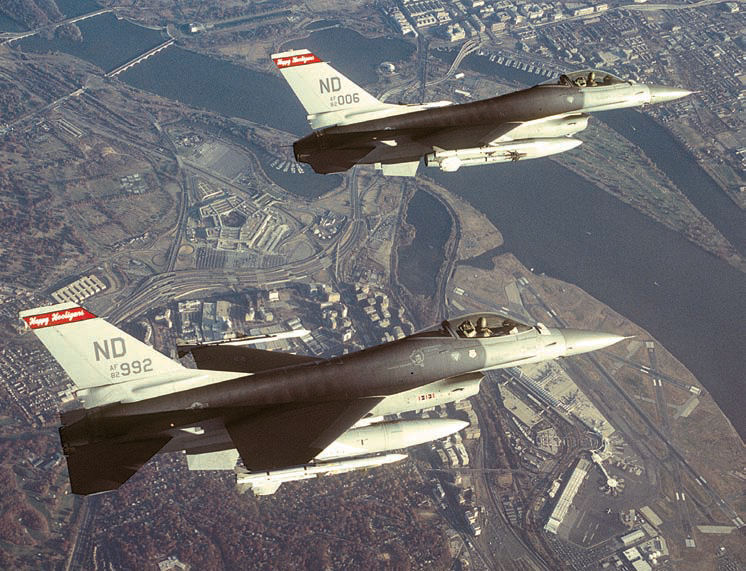
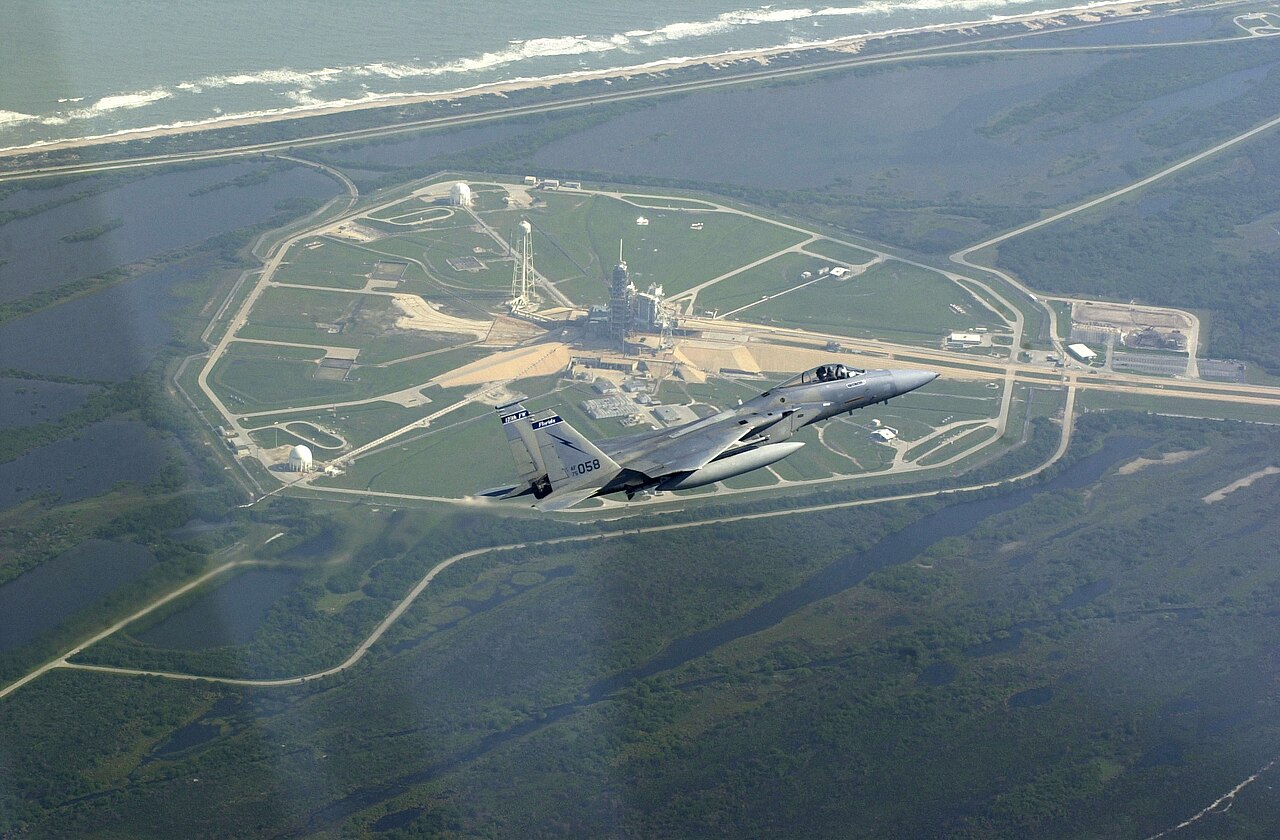
The most unusual CAPs of modern times were flown over the United States itself. After the attacks of 11 September 2001, the US launched Operation Noble Eagle, and fighters from the Air National Guard and active-duty units flew combat air patrols over American cities, including Washington and New York, around the clock for months. F-15s and F-16s orbited over the capital with live missiles, backed by tankers and AWACS.
Those patrols eventually gave way to ground alert, which is far cheaper to sustain. But Noble Eagle never formally ended, and fighters still launch to intercept aircraft that stray into restricted airspace or stop answering the radio.
Boring is the goal
For the crews, a CAP often means hours of orbiting, watching the radar picture and planning the next refuelling, broken by a few minutes of intense activity if anything shows up. Many CAPs end with nothing happening at all.
That is not failure. It is deterrence working. An enemy who knows there is a pair of armed fighters sitting between him and his target has a very good reason to stay at home.
Airman Magazine on how the US Air Force intercepts unresponsive aircraft, a core part of homeland air defence today.
For a flavour of what the mission looked like in the 1990s, here is footage of a USAF F-16 squadron flying combat air patrol in 1999.
The aircraft and the radars have changed since then. The orbit has not.
Footage of 510th Fighter Squadron F-16s on combat air patrol in 1999.
Sources: Wikipedia (Combat air patrol, Operation Noble Eagle), US Air Force, Air National Guard, The Ops Center, Airman Magazine

0 Comments