
When United Airlines flight UA946 had an engine problem over the North Atlantic last weekend, early reports could not agree on whether the engine was shut down for the rest of the flight or restarted on the way to Newfoundland. Either outcome is possible, because a jet engine that stops in flight can often be started again.
Whether it should be is a different question. Restarting an engine in the air is one of the procedures airline pilots train for and hope never to use. Sometimes it saves the day. Sometimes the right answer is to leave a damaged engine well alone. And in rare cases the engine physically cannot be restarted at all.
Tomorrow is the anniversary of an accident that showed exactly that. Here is how in-flight restarts work.
Quick Facts: Restarting a Jet Engine in Flight
Flameout: The combustion flame goes out and the engine runs down
Windmill start: Airflow from forward speed spins the engine fast enough to relight
Assisted start: The starter turns the engine using bleed air from another engine or the APU
Relight envelope: The altitude and airspeed range in which a restart is approved
Example (A320): Relight approved up to 30,000 ft; windmill starts above 260 kt (per Wikipedia)
Do not restart if: Fire, severe damage, out-of-limits vibration, oil loss, or no rotation
Danger: Core lock: a hot engine that stops can seize and refuse to turn
Why Engines Stop
A jet engine keeps running because fuel burns continuously in its combustor. If that flame goes out, the engine flames out and runs down. Causes include fuel starvation, ingesting volcanic ash, heavy rain or hail, birds, compressor stalls, mechanical failure and flying beyond the engine's limits at very high altitude.
Modern engines with digital controls are much better at avoiding flameouts than early jets, and many can switch on their igniters automatically to relight instantly if the flame wavers. When an engine is shut down deliberately because of a fault, though, getting it going again is a decision for the crew.
Windmill or Starter
There are two ways to restart. In a windmill start, the aircraft's forward speed forces air through the engine and spins it fast enough for the igniters and fuel to relight it. That needs plenty of speed. SKYbrary notes that windmill starts typically require at least 250 to 300 knots, which may mean diving to build speed.
In an assisted start, the engine's starter does the work, driven by compressed bleed air from a running engine or from the auxiliary power unit, the small turbine in the tail. Assisted starts work at lower speeds, which is why the APU becomes so important if every engine has stopped.
Every aircraft type has a relight envelope, a chart of the altitudes and airspeeds where a restart is approved. Wikipedia gives the Airbus A320 as an example: certified to fly above 39,000 feet, but approved for relights only up to 30,000 feet, with windmill starts above 260 knots and starter-assisted starts below that. Above the envelope, the air is too thin for a reliable relight, so a crew must first descend.
When It Works: British Airways Flight 9
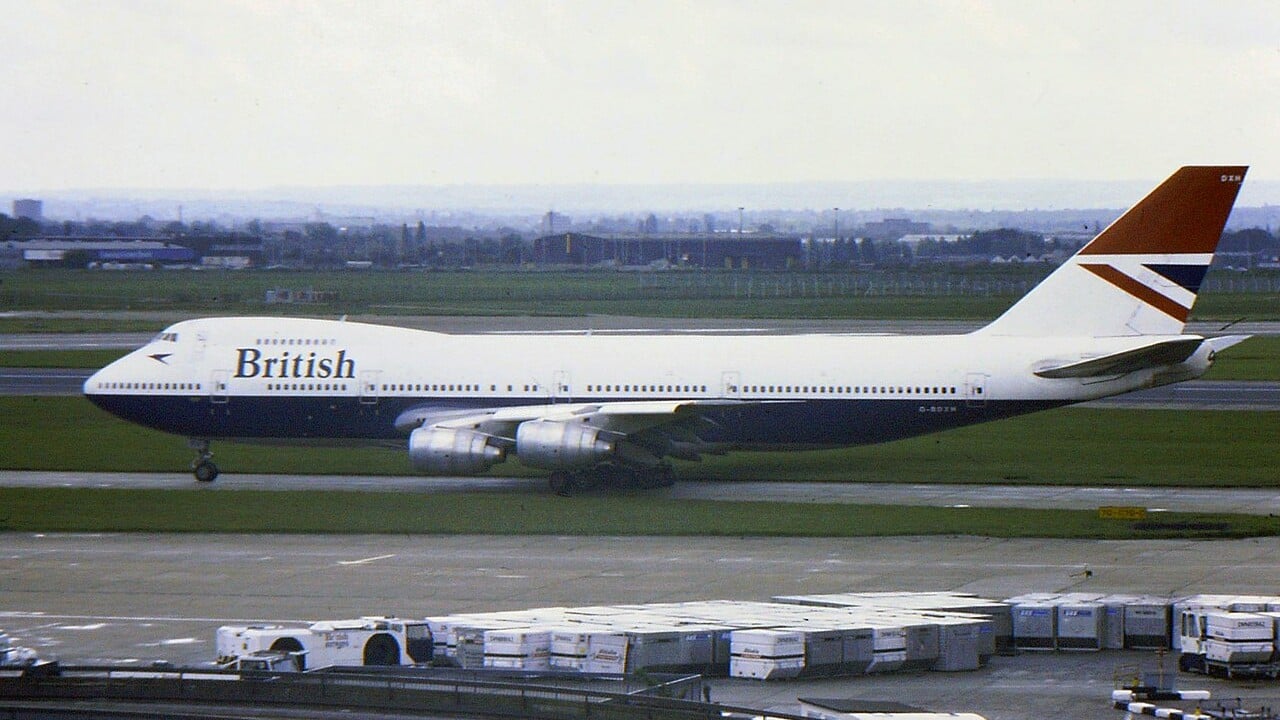
On 24 June 1982, a British Airways Boeing 747 flying at 37,000 feet south-east of Jakarta flew into a cloud of ash from the erupting Mount Galunggung. One after another, all four engines flamed out. The crew calculated they could glide for about 23 minutes.
They kept trying to restart. At about 13,500 feet, with the crew preparing to ditch, engine number four relit, then the others. The 747 landed safely in Jakarta. The ash had damaged the engines, but repeated restart attempts as the aircraft descended into denser air eventually worked. SKYbrary notes this is one of the cases where a restart is worth trying even if damage is suspected.

Mayday: Air Disaster on British Airways Flight 9, the 747 that lost all four engines to volcanic ash.
When It Doesn't: Core Lock
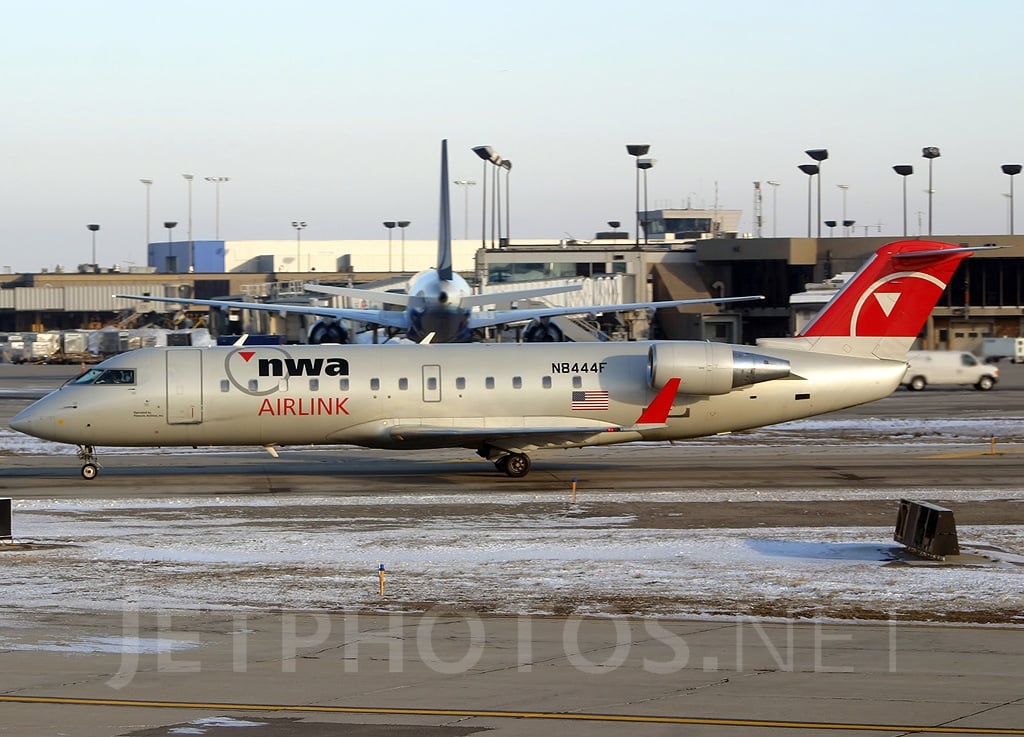
On 14 October 2004, the crew of Pinnacle Airlines Flight 3701, an empty CRJ-200 repositioning from Little Rock to Minneapolis, climbed to 41,000 feet, the aircraft's maximum certified altitude. The NTSB later concluded the climb was made for fun rather than for any operational reason. The captain told air traffic control as much.
At that height the jet's speed decayed, it stalled, and both engines flamed out. The crew recovered from the upset but let the engines spin down too far. Hot engines that stop turning quickly after running at high power can suffer core lock: parts contract at different rates, a seal binds against the rotating core, and the engine will not turn. Four attempts to restart using the APU failed. The checklist called for at least 240 knots to keep the cores turning, a speed the crew never reached.
The CRJ glided towards Jefferson City, Missouri, and crashed short of the airport. Both pilots were killed. The NTSB blamed their unprofessional conduct and poor airmanship, and cited core lock, together with manuals that did not explain why the minimum airspeed mattered, as contributing factors.
When Not to Restart
Restarting is not always the right move. If an engine has failed because of a fire, an obvious mechanical breakdown, oil loss or severe vibration, crews secure it and leave it off. SKYbrary describes a simple memory aid, V-O-R: vibration out of limits, oil quantity lost, or no rotation of the engine, and a restart is not advisable.
On a twin-engine airliner that has shut an engine down over an ocean, the crew's priority is to fly the aircraft, follow the checklist and reach the nearest suitable airport. That is why twins crossing oceans fly under ETOPS rules that keep a diversion airport within reach on one engine. A successful restart is a bonus, not a requirement.
It all comes back to the oldest rule in the cockpit, which SKYbrary repeats in its guidance on restarts: aviate, navigate, communicate. Fly the aircraft first. The engine can wait.
Mentour Pilot's analysis of Pinnacle Airlines Flight 3701.
Green Dot Aviation on the night all four engines of a 747 failed over the ocean.
Sources: SKYbrary, Engine Restart in Flight: Guidance for Flight Crews; Wikipedia (Flameout; British Airways Flight 9; Pinnacle Airlines Flight 3701); NTSB report AAR-07-01.
0 Comments