
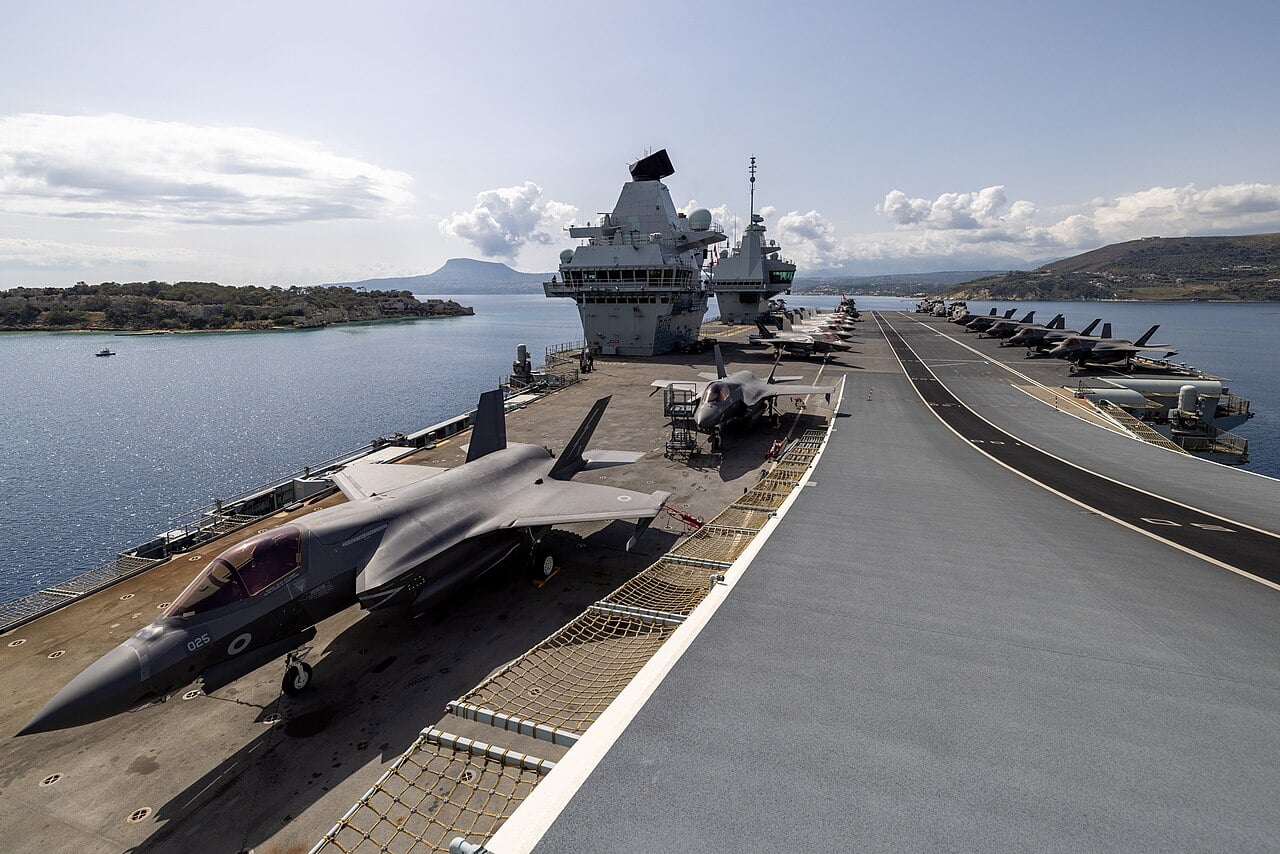
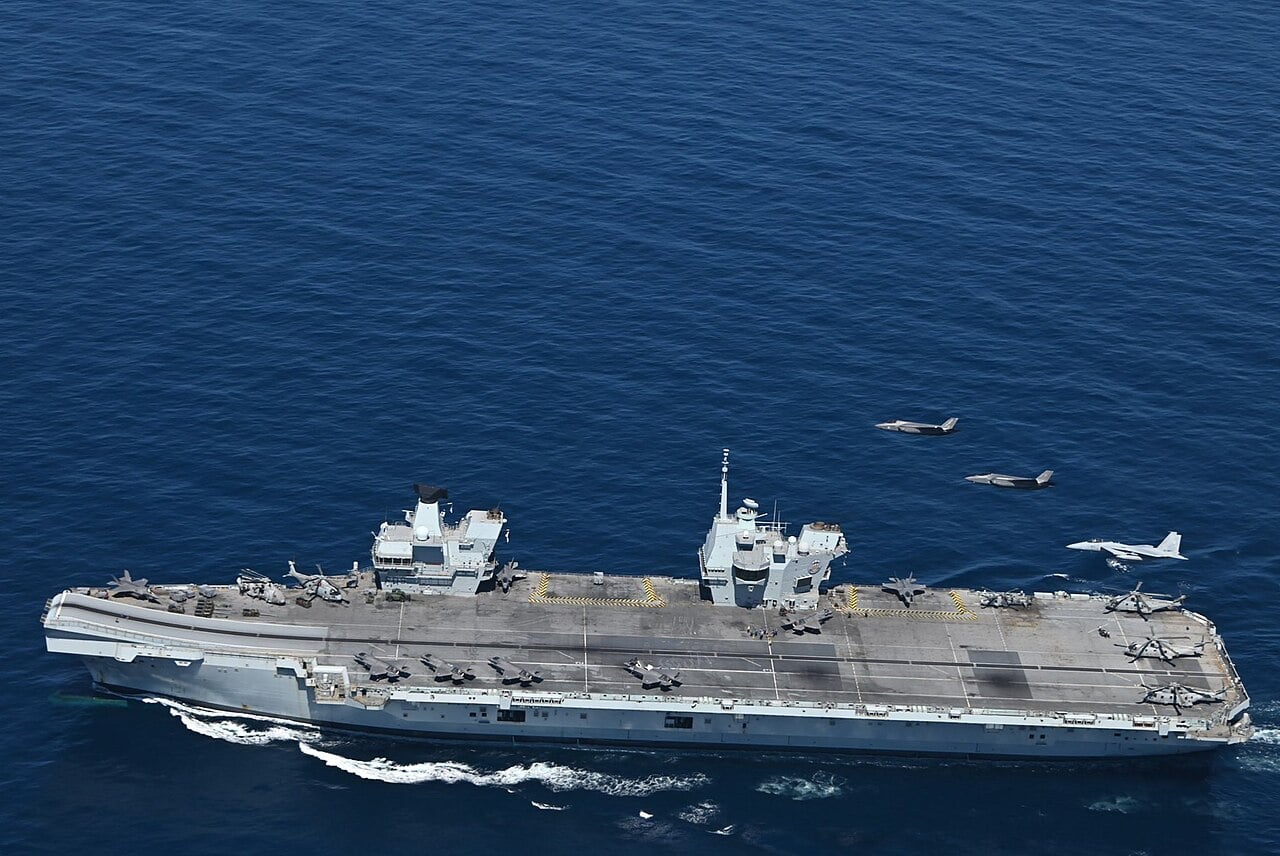
Families lined the Round Tower in Old Portsmouth on Sunday afternoon, 18 October 2026, as HMS Prince of Wales slipped out of harbour. The 65,000-tonne carrier, Britain's biggest warship, was due to leave at 17:00, weather permitting, and the Portsmouth News confirmed she set sail that afternoon.
Her destination is cold, grey and strategically loaded: the Arctic and the North Atlantic. This is the second phase of Operation Firecrest, the Royal Navy's 2026 mission on NATO's northern flank, and she carries F-35B stealth fighters back into the High North under NATO command.
Alongside her sails the Type 45 destroyer HMS Dauntless, and more than 1,200 British personnel make up the Carrier Strike Group. Over the coming weeks they will work with Norway, Denmark and Germany and feed into NATO's Neptune Strike series of exercises.
Quick Facts
- Ship: HMS Prince of Wales (R09), UK Carrier Strike Group flagship
- Sailed: Portsmouth, Sunday 18 October 2026 (planned 17:00, weather permitting)
- Mission: Operation Firecrest, phase two, under NATO command
- Air group: F-35 jets, Merlin Mk4 and Mk2, Wildcat helicopters, Malloy drones
- Escort: Type 45 destroyer HMS Dauntless
- People: More than 1,200 British personnel
- Allies named: Norway, Denmark, Germany
- Commander: Commodore Richard Hewitt, UK Carrier Strike Group
What Sails With Her
The Royal Navy describes the air group as fifth-generation F-35 jets, Merlin Mk4 Commando helicopters for moving troops and cargo, Merlin Mk2 anti-submarine helicopters, Wildcat helicopters and Malloy drones. The Malloys are heavy-lift uncrewed quadcopters that shuttle stores between ships without tying up a crewed helicopter.
What the Navy has not said is how many jets are aboard, or which squadron flies them. Britain's F-35Bs are operated by a joint Fleet Air Arm and Royal Air Force force based at RAF Marham in Norfolk. Until the Navy publishes the figure, any number is a guess, and Afterburner does not guess.
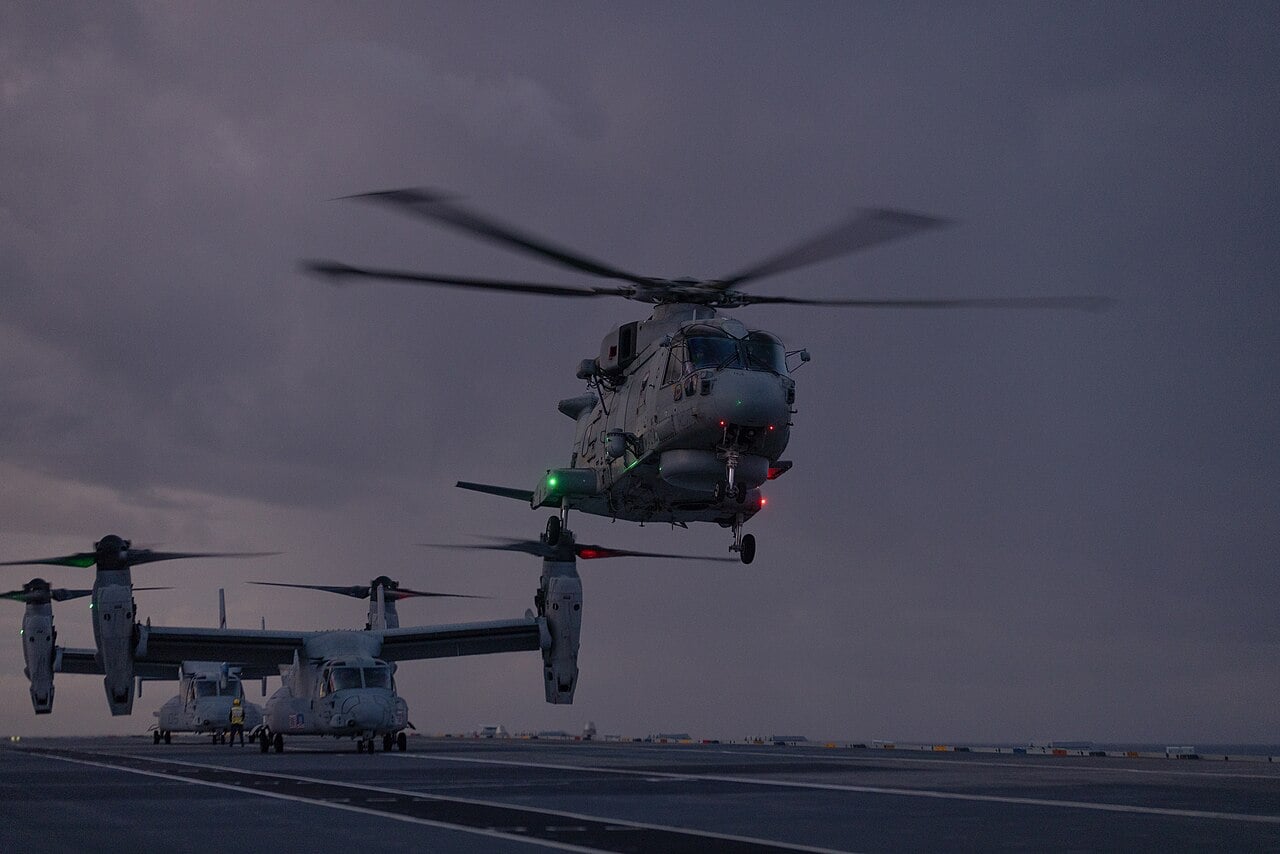
The Merlin Mk2 matters more up north than almost anywhere else. Russia's Northern Fleet, based on the Kola Peninsula, keeps its most capable submarines there, and every one of them has to pass through the Norwegian Sea to reach the Atlantic.
HMS Dauntless provides the air-defence umbrella. Naval News reported that photos dated 10 October showed two unexplained launcher boxes fitted beside her main mast, and suggested they could hold interceptor drones. The Aviationist ran a similar report on 15 October. The Royal Navy told Naval News it would not discuss the equipment fit, citing operational sensitivities.
Why the High North
The far north is where Russia's submarine force meets the undersea cables, energy links and shipping lanes that Europe depends on. The Royal Navy says the carrier's presence alongside allies is "a powerful shield for the nation", protecting the energy, trade and communication links in the region.
London has been moving in that direction all week. UK Defence Journal reports that the government's new Arctic Policy Framework commits Britain to doubling the troops it deploys to Norway to 2,000 over three years, and to a role in NATO air policing from Iceland.
Flying a stealth jet from a ship in those waters is a different job from the warm-water Indo-Pacific deployment of 2025. Deck icing, freezing spray, low cloud, short days and a heaving sea all work against an aircraft that lands vertically on a moving deck, and against the maintainers working in the open beside it.
While deployed, the carrier will also host the Atlantic Future Forum and the International Sea Power Conference alongside in Oslo. For a few days the flight deck becomes a venue for diplomacy as well as war-fighting.
Phase One: Bears, Sonobuoys and Air Policing
This is not the ship's first trip north this year. The Royal Navy says phase one began in April and ended in late July. HMS Prince of Wales sailed with the destroyer HMS Duncan and the tanker RFA Tidespring and worked with 19 allies from NATO and the Joint Expeditionary Force.
According to the Navy, 809 Naval Air Squadron F-35Bs flew long-range strikes as far as Poland during Exercise Neptune Strike. They also flew NATO air policing over Iceland and the Arctic, the first time such missions had been flown from a European carrier deck. Russia paid attention: in early July a Russian Tu-142 maritime patrol aircraft flew close to the group in the Norwegian Sea and dropped sonobuoys, Navy Lookout and the Wall Street Journal reported.
The Wall Street Journal went aboard HMS Prince of Wales during phase one in July 2026, as the carrier hunted Russian submarines in Arctic waters.
That first phase was not trouble-free. Navy Lookout reported in late May that the carrier was alongside in Stavanger for repairs, and a planned visit to Copenhagen was expected to be cancelled. Still, the Navy called the Neptune Strike finale a success.
Phase two picks up where she left off, and Neptune Strike again sits at the centre of the plan. The Royal Navy describes the series as a test of allied land, sea and air forces across Europe and the North Atlantic.
The Questions Left on the Dockside
The critics have not gone away. Former First Sea Lord Lord West told the Press Association earlier this year that the Navy was in a more "parlous state" than at any stage in his 60 years on the active list, and only one escort accompanies the carrier this time.
Commodore Richard Hewitt, who commands the strike group staff, framed the deployment as a continuation rather than a one-off. He said he was delighted to return to the Arctic and North Atlantic and to build on the successes of the first phase of Firecrest.
How many F-35Bs, how long she stays and whether those boxes on Dauntless hold drone killers are all still open questions. The direction of travel is not. For the second time in six months, Britain's biggest warship is heading north to show that its air wing can work where the weather is as hostile as any adversary.
Sources: Royal Navy, UK Defence Journal, Portsmouth News, Navy Lookout, Naval News, The Aviationist, Hits Radio/Press Association, The Wall Street Journal, Wikipedia (HMS Prince of Wales (R09))


0 Comments