
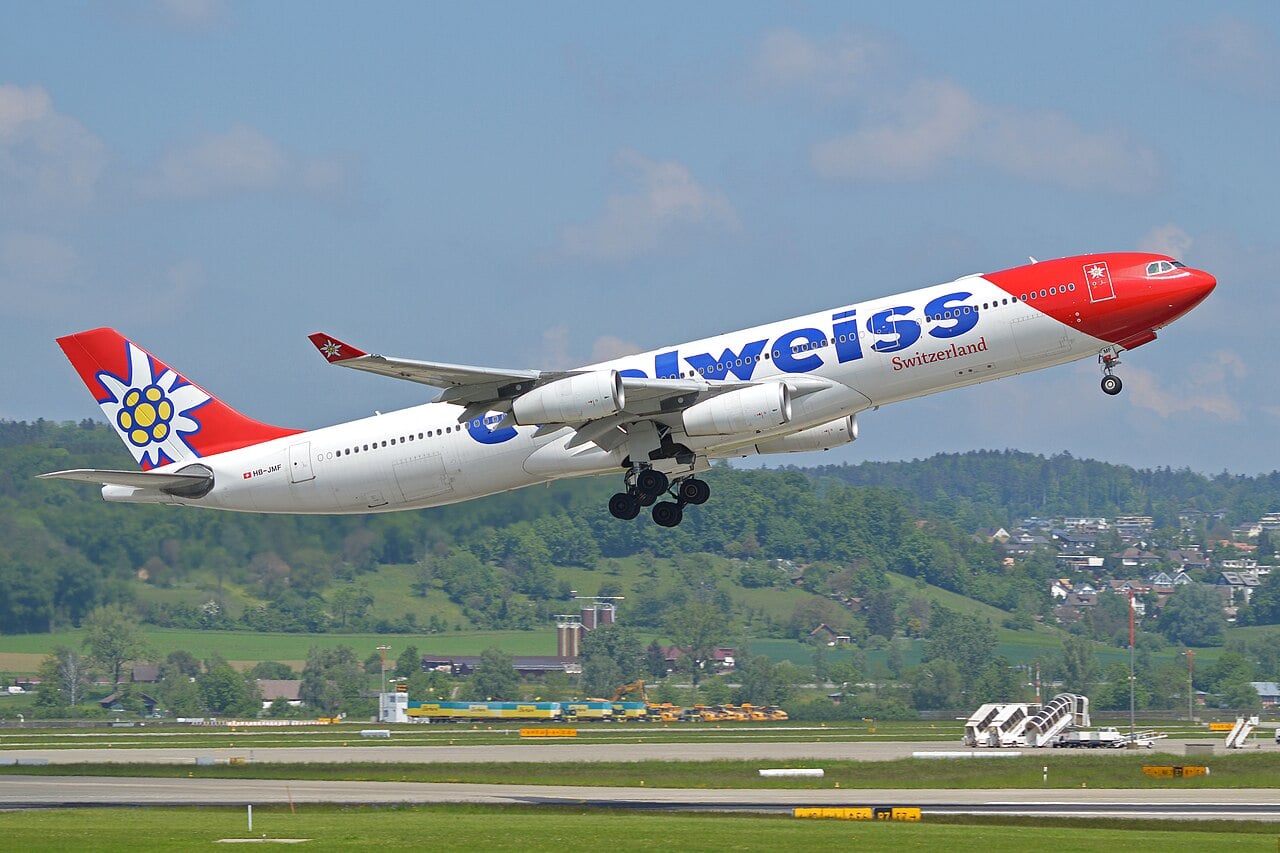
Positive rate of climb. Gear up. The pilot moves the lever, the hydraulics whine, and a few seconds later the wheels should be tucked away behind closed doors. Then a warning appears instead, or a gear leg simply stays where it is, hanging in the slipstream.
That is what happened on Saturday, 17 October 2026, to Edelweiss flight WK34, an Airbus A340-300 bound from Zurich to Punta Cana. Instead of crossing the Atlantic, the jet spent the early afternoon over the Swiss Alps getting light enough to land, then returned to Zurich. A separate Afterburner news report covers the flight itself.
When the landing gear won't retract, the crew's response follows a logic that is almost entirely about physics: speed limits, drag, fuel and weight. Here is how that decision tree works.
Quick Facts
- VLO: Maximum speed for extending or retracting the gear (14 CFR 25.1515)
- VLE: Maximum speed for flying with the gear locked down
- Main problem: Gear-down drag raises fuel burn and makes FMS fuel predictions unreliable
- A340-313 weights: Max takeoff 276.5 t, max landing 192 t (EASA type certificate)
- Options before landing: Hold to burn fuel, jettison fuel, or land overweight
- Dump altitude: 5,000 to 6,000 ft above ground is sufficient in most conditions, per SKYbrary
- Cautionary case: Hapag-Lloyd 3378, an A310 that ran out of fuel with its gear down in 2000
Two Speed Limits Written in the Rulebook
Landing gear was never designed to sit in a fast airstream. US certification rules for airliners, 14 CFR 25.1515, define two separate speed limits. VLO, the landing gear operating speed, is the fastest the gear may be extended or retracted. If the two differ, they become VLO(EXT) and VLO(RET). VLE, the landing gear extended speed, is the fastest the aircraft may fly with the gear secured in the fully extended position.
The exact numbers are type-specific and live in each aircraft's flight manual, but the principle is universal. With a gear leg stuck down, the crew is capped at VLE for the rest of the flight, well below normal cruise speed. The doors and struts were built for a short trip through the airflow during takeoff and landing, not for hours of cruise.
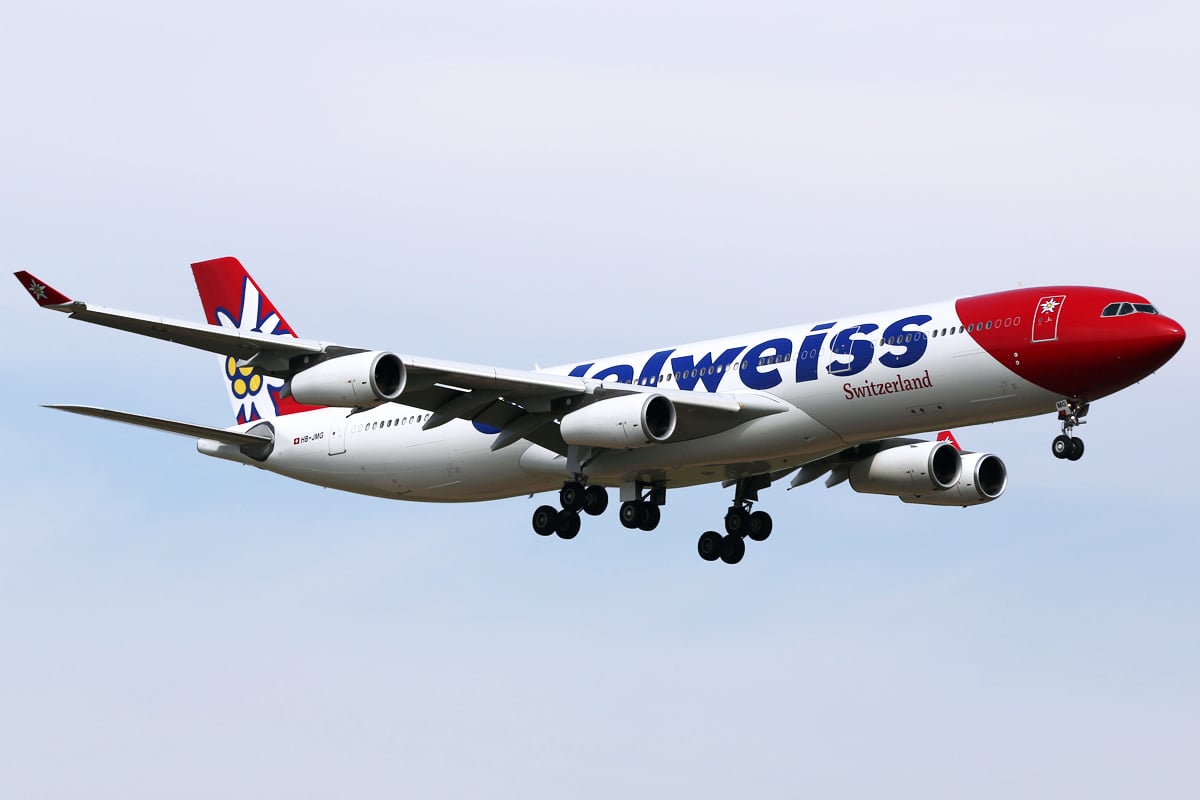
The next problem is drag. SKYbrary notes that fuel consumption with flaps, slats and landing gear deployed, fully or partially, is significantly higher than in the clean configuration. Worse, the flight management system has no idea. Its fuel predictions assume the gear is up after takeoff, so with a leg hanging out the computer keeps showing optimistic numbers.
Why Crews Almost Always Turn Back
In theory, an airliner can fly a long way with its gear down. Gear-down ferry flights are a recognised procedure, and SKYbrary says crews must use the flight manual's fuel penalties and limitations for them, load extra fuel before departure, ignore the FMS predictions and calculate range from actual fuel flow. That is fine when it is planned. It is no basis for an Atlantic crossing on fuel loaded for a clean aircraft.
The textbook case is Hapag-Lloyd Flight 3378. On 12 July 2000, an Airbus A310 left Chania on Crete for Hannover with 143 passengers and eight crew. After four attempts, the gear would not retract, so the crew left it down and continued north, reasoning that fuel would have to be burned off before landing anyway. Using the FMS, they planned to stop at Munich instead.
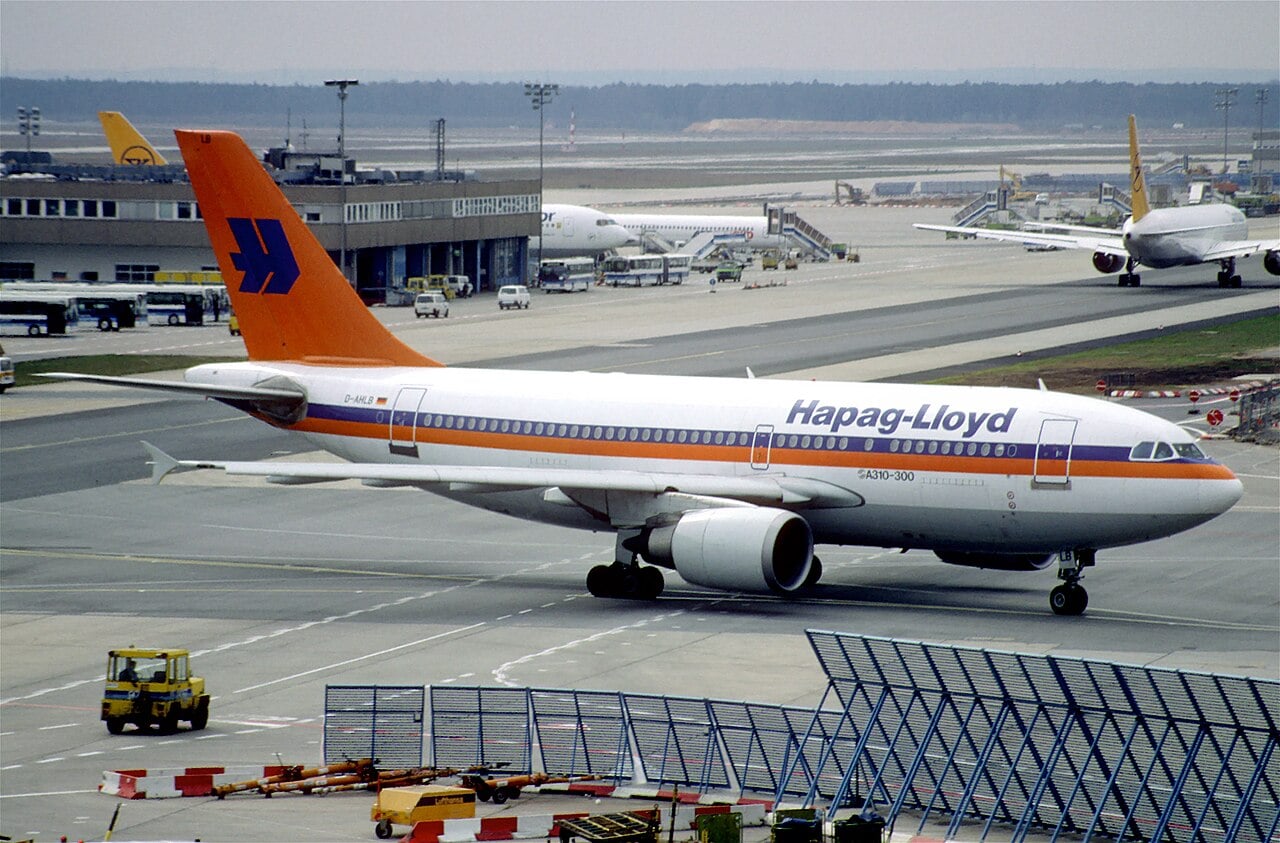
Munich was never within reach. The fuel fell far faster than the computer predicted, the crew diverted to Vienna, and both engines flamed out about 12 nautical miles (22 km) from the runway. The A310 touched down on the grass about 660 metres short of runway 34. Everyone survived, about 26 passengers suffered minor injuries using the slides, and the aircraft was written off. SKYbrary still uses the case to teach why gear-down fuel numbers cannot be trusted.
Green Dot Aviation reconstructs Hapag-Lloyd Flight 3378 and how a gear-down A310 ran out of fuel before Vienna.
Too Heavy to Land: Burn, Dump or Land Overweight
Turning back solves the range problem and creates a weight problem. A long-haul jet takes off close to its maximum weight, much of it fuel, and the maximum landing weight is far lower. For the A340-313, EASA's type certificate data sheet lists a maximum takeoff mass of 276.5 tonnes and a maximum landing mass of 192 tonnes, with the exact figures depending on the weight variant. Minutes after takeoff, a fully fuelled jet can be tens of tonnes too heavy to land within limits.
SKYbrary sets out three ways forward. Crews can hold and burn fuel, which is close to normal flying but keeps the aircraft airborne longer. They can jettison fuel, which is quick but has to be coordinated so it does not affect other aircraft or people on the ground. Or they can land overweight, which is shortest but reduces performance margins and generally requires a special inspection afterwards.
Not every airliner can dump fuel. Under 14 CFR 25.1001, a jettison system is only mandatory if the aircraft cannot meet its climb requirements at maximum takeoff weight minus the fuel for a 15-minute circuit. Most twin-engine narrowbodies, including every Boeing 737 and the A320 family, therefore have no dump system and must burn fuel or land heavy. Larger long-haul types are different: the Boeing 777 and 787 always have one, according to Wikipedia's overview, and most three- and four-engine jets such as the 747, A340 and A380 do too.
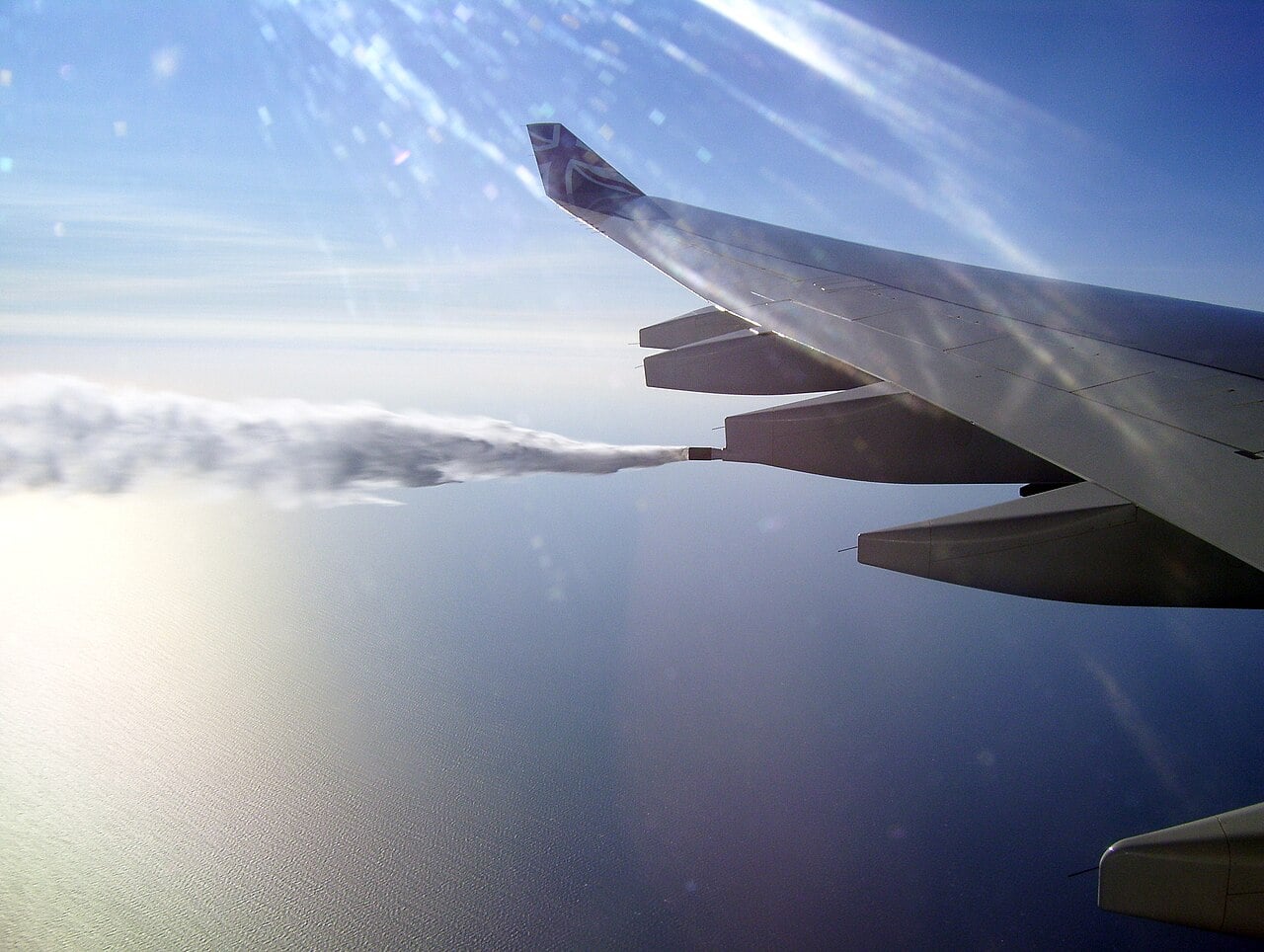
When fuel is dumped, altitude matters. SKYbrary advises jettisoning high enough for the fuel to evaporate before it reaches the ground, saying 5,000 to 6,000 feet above ground level is sufficient in most conditions. Crews coordinate with air traffic control, which usually assigns a dedicated area.
Captain Joe explains why airliners dump fuel before an unplanned landing and how the system works.
What Happens on the Flight Deck
The first move is the checklist. A gear disagreement or an unsafe-door warning brings up an abnormal procedure on the ECAM or EICAS display, or in the QRH, and the crew works through it at a safe altitude below the gear speed limits. On WK34, AirLive reported that the crew levelled at about 8,000 feet for some 20 minutes, then climbed to 22,000 feet to complete the non-normal checklists.
Air traffic control plays its part. SKYbrary's guidance for controllers tells them to expect holding requests, the need for time, possibly low passes so engineers on the ground can inspect the gear visually, and rescue services on standby. They also ask for fuel endurance in minutes and keep updating it, because a gear-down aircraft burns fuel faster than anyone expects.
For WK34, Edelweiss spokesperson Andreas Marti told 20 Minuten that the centre gear, the additional landing gear under the middle of the fuselage, could not be retracted. aeroTELEGRAPH described the jet turning south, climbing and flying two loops over the Alps before returning. Tages-Anzeiger put the fuel jettisoned at about 45 tonnes, and a 20 Minuten reader filmed it streaming from the dump nozzle.
Why Gear Gets Stuck in the First Place
Often, nothing is broken in the gear itself. A large aircraft's retraction system is almost always hydraulic, says the FAA's Aviation Maintenance Technician Handbook, with actuating cylinders, selector and sequence valves, uplocks, downlocks and door mechanisms all interconnected so the gear and doors move in the right order. A fault in any link, from a valve to a door actuator, can stop the sequence.
Then there are the sensors. A squat switch on the main gear strut tells the aircraft whether it is on the ground and blocks retraction until the strut extends at takeoff. Many modern aircraft use proximity sensors instead, which detect a metal target without physical contact. The handbook notes that technicians must set those targets at the correct distance from the sensor, often with go/no-go gauges. A target slightly out of place can make the computer believe a gear or door is somewhere it is not.
Edelweiss said the faulty part on HB-JMC was replaced, though it did not say which part. WK34 took off again for Punta Cana at 17:10, 3 hours and 40 minutes late. The 23-year-old jet has only a few months of service left: aeroTELEGRAPH reports that its last Edelweiss flight is planned for 17 January 2027.
VASAviation's ATC audio of a UPS Airbus A300 that could not retract its landing gear and returned to Louisville.
Boring Is the Goal
For passengers, a gear problem looks dramatic: the turn back, the circles over the mountains, perhaps a white mist streaming from the wing. For the crew it is a well-rehearsed sequence of limits and trade-offs. Stay below VLE, distrust the fuel computer, get the weight down and land.
Hapag-Lloyd 3378 is the reason that sequence is drilled so hard. A stuck gear leg is rarely dangerous on its own. The danger begins when anyone forgets how much fuel it costs.
Sources: 20 Minuten, aeroTELEGRAPH, AirLive, Tages-Anzeiger, EASA (TCDS A.015 Airbus A340), 14 CFR 25.1515 and 25.1001, SKYbrary, FAA Aviation Maintenance Technician Handbook (Airframe Vol. 2), Wikipedia (Hapag-Lloyd Flight 3378; Fuel dumping)

0 Comments