

In August 1929, most people had never been in an aeroplane, and nobody had flown around the world in anything as comfortable as a hotel. Then a silver airship 236 metres long drifted over Tokyo, then over the Pacific, then over Los Angeles, with a dining room, sleeping cabins and a press corps aboard. LZ 127 Graf Zeppelin went around the world in 21 days, and the world watched it happen.
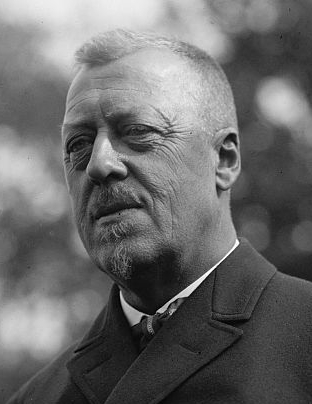
The voyage was the brainchild of Dr. Hugo Eckener, head of the Zeppelin company and the airship's commander, and it was paid for in large part by the most famous newspaper owner in America. It produced the first nonstop crossing of the Pacific by any aircraft and turned a German airship into a global celebrity.
Quick Facts
- Aircraft: LZ 127 Graf Zeppelin, rigid airship, 236.6 m long, five Maybach V-12 engines
- Commander: Dr. Hugo Eckener
- Official circuit: Lakehurst, Friedrichshafen, Tokyo, Los Angeles, Lakehurst
- Dates: Night of 7-8 August to 29 August 1929
- Elapsed time: 21 days, 5 hours, 31 minutes (about 12 and a half days in the air)
- Distance: About 33,234 km (20,651 miles), the most cited figure
- Sponsor: William Randolph Hearst's organisation, about half the cost
- Career: 590 flights, about 1.7 million km, scrapped 1940
Hearst's airship
Round-the-world flights were expensive, and Eckener needed a backer. He found one in William Randolph Hearst, whose organisation paid roughly half the cost, including $100,000 for exclusive English-language press rights. Hearst had one condition: the official circuit had to start and finish in the United States. So the Graf Zeppelin first crossed the Atlantic to Naval Air Station Lakehurst, New Jersey, and the clock started there on the night of 7 to 8 August 1929.
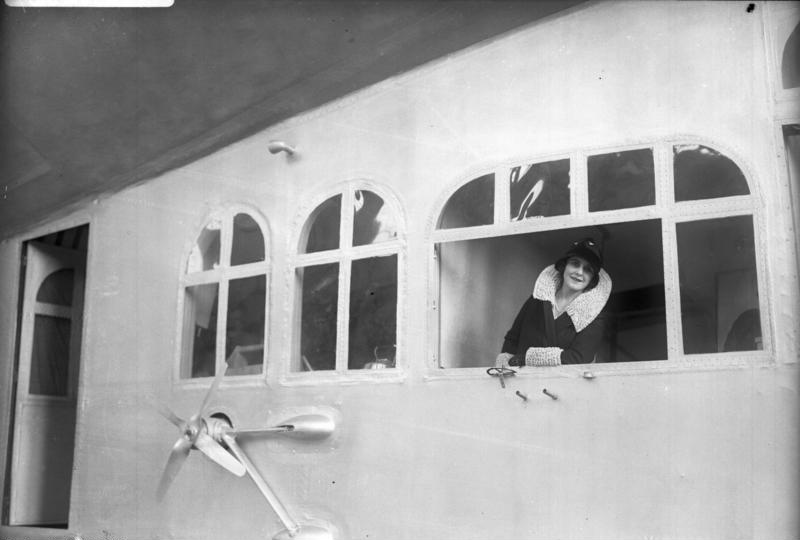
Aboard were about 40 crew and some 20 passengers, many of them guests rather than paying customers. Hearst placed his own correspondents on the ship, among them Karl von Wiegand, the Australian polar explorer Sir Hubert Wilkins and Lady Grace Drummond-Hay, the only woman aboard, who became the first woman to travel around the world by air. A US Navy observer, Lt. Cdr. Charles Rosendahl, and a Japanese naval representative also made the trip.

Across Siberia and the Pacific
After a stop in Germany, the ship left Friedrichshafen on 15 August and flew nonstop across the Soviet Union and Siberia to Tokyo, in 101 hours and 49 minutes according to Airships.net. It was the longest nonstop airship flight to that time. Eckener was not impressed by the scenery.
Tokyo gave the airship a hero's welcome at Kasumigaura naval air station on 19 August. Four days later the Graf Zeppelin set off across the Pacific and, after roughly 79 hours, arrived over Los Angeles: the first nonstop crossing of the Pacific by any aircraft. Earlier aeroplane crossings, including Charles Kingsford Smith's Southern Cross in 1928, had needed intermediate stops.
Los Angeles almost ended the voyage. In the warm air the hydrogen lost lift and the ship became heavy; crew offloaded ballast and fuel and some crew members, and according to local newspapers of the time the tail cleared power lines by only a few feet on take-off. They credited Eckener's skill. Two days later, on 29 August, the Graf Zeppelin was back at Lakehurst, 21 days, 5 hours and 31 minutes after it had left.

Archive film of the Graf Zeppelin's 1929 flight around the world (Academy of Motion Picture Arts and Sciences).
After the world flight
The Graf Zeppelin went on to do what aeroplanes of the day could not: run a regular intercontinental passenger and mail service, between Germany and Brazil, with 64 round trips to South America. In all it made 590 flights and covered about 1.7 million kilometres. It was withdrawn after the Hindenburg disaster of May 1937, and in 1940 it was scrapped on Hermann Göring's orders.

British Pathé: with the Graf Zeppelin to America, 1929.
Period film of the 1929 round-the-world flight sponsored by William Randolph Hearst (PeriscopeFilm).
Sources: Airships.net, This Day in Aviation, WorldHistory.org (citing Rick Archbold), FAI, Smithsonian National Air and Space Museum, The American Presidency Project, Homestead Museum, Wikipedia


0 Comments