
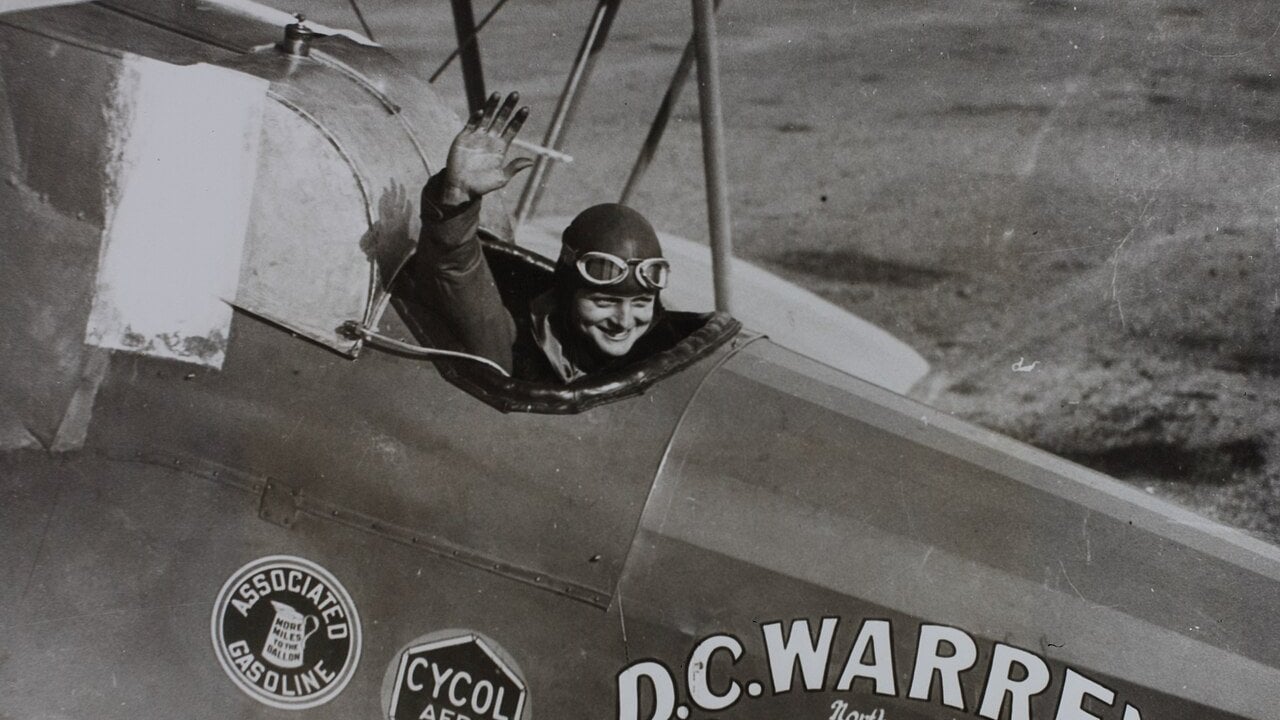
The men running across the grass at Mines Field, Los Angeles, were shouting something the two women in the blue biplane could not quite believe. After nearly 15 hours in the air from New York, Louise Thaden and Blanche Noyes were sure they had broken a rule and were about to be told off.
They had not broken anything. They had won the 1936 Bendix Trophy, the most famous long-distance air race in America, beating built-for-speed racers flown by the best men in the country. They did it in a stock Beechcraft Staggerwing, with the engine throttled back to 65 per cent the whole way.
It was the high point of a career that began with a coal company sales job in Arkansas and ran through the first Women's Air Derby, a fistful of records and the founding of the Ninety-Nines.
Quick Facts
- Pilot: Louise Thaden (1905-1979), born Bentonville, Arkansas
- Co-pilot: Blanche Noyes
- Race: 1936 Bendix Trophy, New York to Los Angeles
- Date: 4 September 1936
- Aircraft: Beechcraft C17R Staggerwing, NC15835
- Time: 14 hours, 55 minutes, 1 second
- Runner-up: Laura Ingalls, Lockheed Orion, 45 minutes behind
- Earlier win: 1929 Women's Air Derby, Santa Monica to Cleveland
- Honours: Harmon Trophy; National Aviation Hall of Fame (1999)
A Coal Saleswoman From Arkansas
Iris Louise McPhetridge was born on 12 November 1905 in Bentonville, Arkansas, and studied at the University of Arkansas in Fayetteville, trying journalism, physical education and pre-medicine along the way. None of it stuck. What stuck was a customer she met while working for the J.H.J. Turner Coal Company: the Travel Air Corporation of Wichita, Kansas, run by a man named Walter Beech.
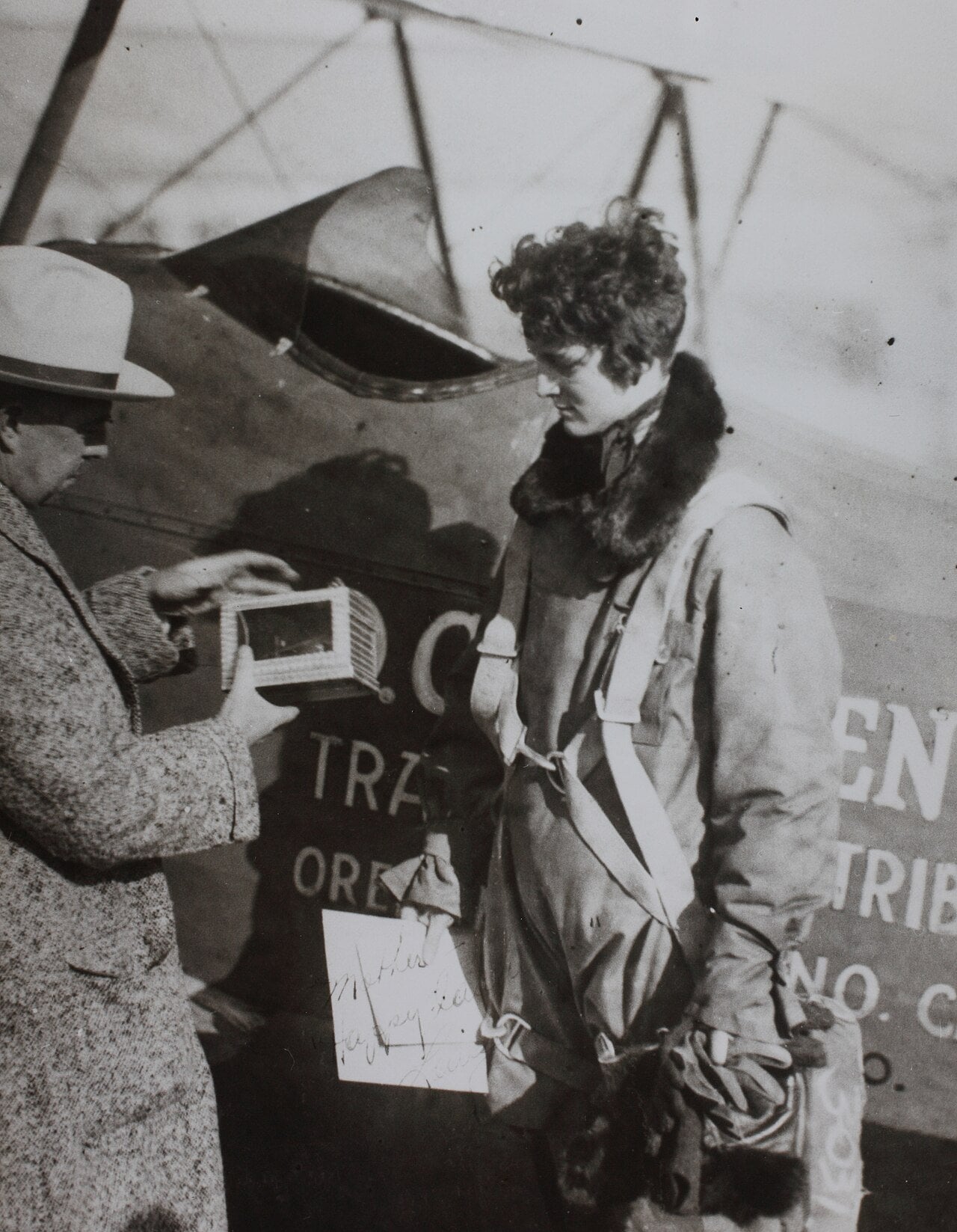
Beech liked her, and he offered her a job selling Travel Air aeroplanes on the West Coast. The pay came with flying lessons. Her pilot's licence, issued by the National Aeronautic Association on 16 May 1928, carried the signature of Orville Wright, according to This Day in Aviation. That same year she married Herbert von Thaden, a former Army pilot and engineer who was building all-metal aircraft of his own.
She did not ease into the sport. In December 1928 she climbed a Travel Air to more than 20,000 feet over Oakland, California, a women's altitude record. In March 1929 she stayed aloft for 22 hours and 3 minutes, a women's endurance record. Before 1929 was out she held the women's altitude, endurance and speed records for light planes at the same time, the first pilot to do so, and she had become only the fourth woman to hold a transport pilot rating.
The Derby Everyone Called Powder Puff
In August 1929, twenty women lined up at Santa Monica for the first Women's Air Derby, a cross-country race to Cleveland, Ohio, where the National Air Races were being held. The newspapers called it the Powder Puff Derby. The field was a who's who of the era: Amelia Earhart, Pancho Barnes, Blanche Noyes, Opal Kunz and Louise Thaden among them.
It was a brutal week. Marvel Crosson was killed. Earhart damaged her aircraft at Yuma. Barnes got lost, strayed into Mexico and wrecked her machine trying to get back on course, and Noyes fought an in-flight fire over Texas. Thaden, flying a Travel Air, came through all of it and won.
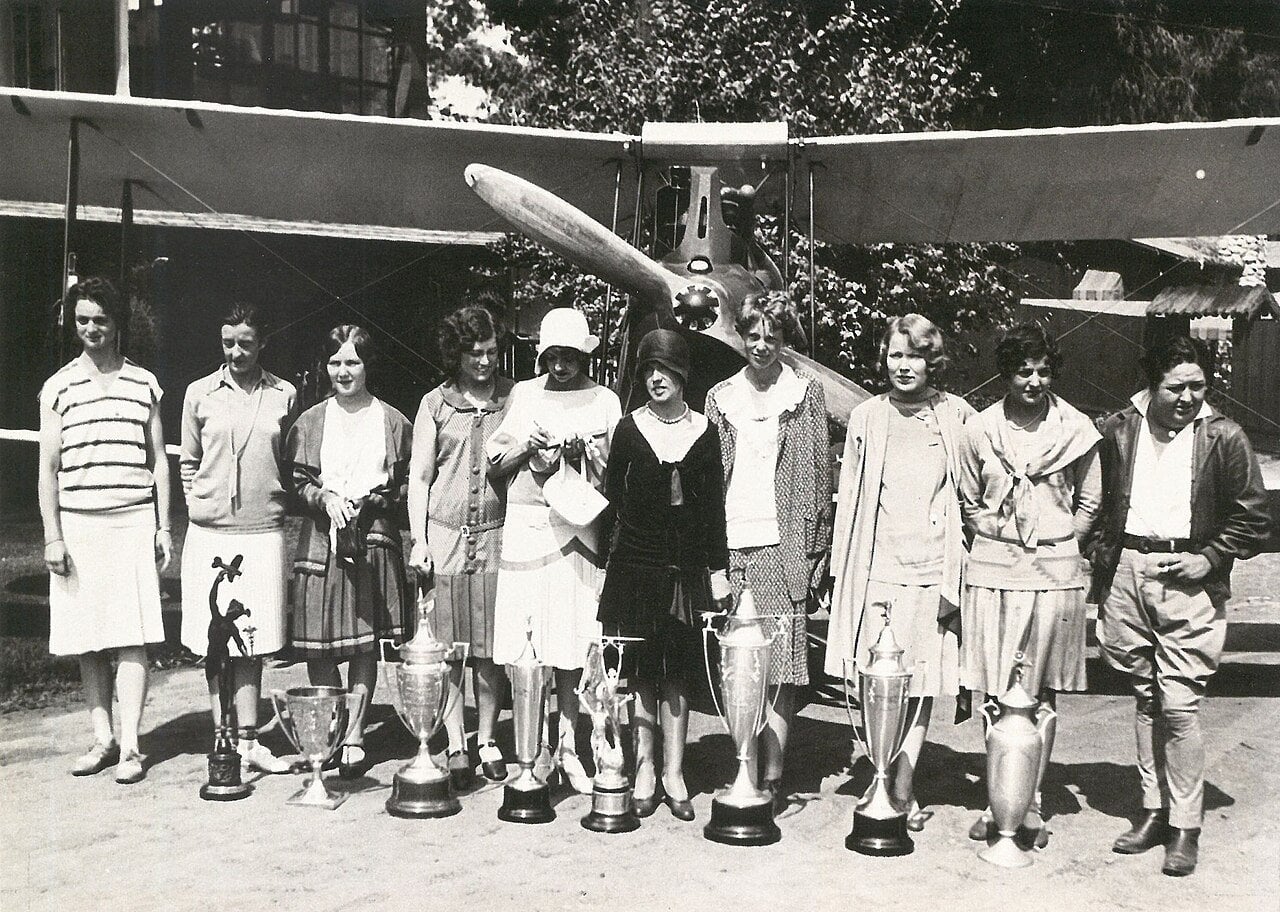
Winning brought fame, but not acceptance. Thaden worked in public relations for Pittsburgh Aviation Industries, ran the women's division of the Penn School of Aeronautics and, with Earhart and others, helped found the Ninety-Nines, the international organisation of women pilots that still exists today. She turned down its presidency and served as treasurer and vice-president instead.
In 1932 she and Frances Marsalis kept a Curtiss Thrush circling over Long Island for 196 hours, refuelling from another aircraft 78 times and taking food and water down a rope. Then, after Florence Klingensmith was killed at the 1933 International Air Races, women were shut out of the national air racing competition altogether in 1934.
Archive newsreel of the finish of the 1929 Women's Air Derby at the National Air Races in Cleveland.
A Stock Beechcraft Against Built Racers
The Bendix Trophy was the great coast-to-coast speed dash of American aviation, first flown in 1931 and won that year by Jimmy Doolittle. Women had entered before: Earhart and Ruth Nichols finished fifth and sixth in 1933. But none had won, and for 1936 Vincent Bendix added a $2,500 prize for the fastest woman to reach Los Angeles.
By then Walter Beech was building his own aeroplanes, and he wanted that money. According to King Air magazine's history of the race, it was his wife and business partner, Olive Ann Beech, who argued that the company's entry should be flown by a woman, and she pushed for Thaden. With only two weeks to go, Thaden and her friend Blanche Noyes, both then working as air-marking pilots for the Bureau of Air Commerce, agreed to fly a Beechcraft C17R Staggerwing, registered NC15835, from New York to California.
It was a stock cabin biplane. The only real changes were a 56-gallon auxiliary fuel tank where the rear seat had been and an extra oil tank in the baggage bay. The aircraft had already been sold to the government of Honduras; Beech let the two women race it before it was delivered. When Wichita reporters asked about the women's prize, Thaden would not have it.
Fourteen Hours, Fifty-Five Minutes
They took off from Floyd Bennett Field in Brooklyn in the dark early hours of 4 September 1936. Fog hid the ground and static drowned out the radio, so Noyes worked out their position by estimate until an air marker over Ohio, exactly the kind of navigation sign the two women were promoting for the government, told them they were only about 10 miles off course.
Despite the bold talk, Thaden had set the Wright Whirlwind radial at 65 per cent power. At the single fuel stop in Wichita, Beech asked her what setting she was using, and in King Air magazine's account he exploded: "What the hell do you think you're in, a potato race?" Thaden said "Yes, sir!" and, by that account, kept flying at 65 per cent anyway.
Out west, headwinds of around 60 mph cut their groundspeed to about 150 mph, and the two women resigned themselves to finishing far down the field. What they could not see was the race falling apart behind them. Benny Howard's purpose-built racer Mister Mulligan shed a propeller blade over New Mexico and crashed, badly injuring Howard and his wife. Joe Jacobson bailed out of his Northrop Gamma over Kansas. Earhart and Helen Richey lost time in their twin-engined Lockheed Electra when a hatch would not stay shut.
Thaden and Noyes landed at Mines Field, Los Angeles, after 14 hours, 55 minutes and 1 second, an average of about 165 mph. Men ran alongside the taxiing biplane shouting that they had won. The two pilots, exhausted, assumed they had broken a rule. Laura Ingalls arrived in her Lockheed Orion 45 minutes later to take second place. Earhart and Richey came fifth.
Beating the Men, Then Walking Away
Thaden collected $4,500 for first place and the $2,500 women's prize, according to This Day in Aviation, and she was awarded the Harmon Trophy as America's outstanding woman pilot. Time magazine noted that the money mattered far less to the two pilots than the pleasure of beating the men. Olive Ann Beech met them with tears in her eyes and, in King Air magazine's account, one line that summed up the decade: "So a woman could not win, eh?"
Thaden became national secretary of the National Aeronautic Association in 1937 and went back to Beech as a factory representative and demonstration pilot. She retired from competition in 1938, the year Jacqueline Cochran won the Bendix, and wrote her memoir, High, Wide and Frightened. She argued, without apology, that women were innately better pilots than men.
Film of the 1937 Harmon Trophy ceremony honouring Louise Thaden, shared by the Bentonville school named after her.
She died of a heart attack in High Point, North Carolina, on 9 November 1979. Bentonville had already renamed its airport Louise Thaden Field in 1951, and in 1999 she entered the National Aviation Hall of Fame. In 1991, astronaut Linda Godwin carried her flying helmet into space aboard the Space Shuttle.
The Bendix had been built for monoplanes with huge engines and pilots willing to wring every last horsepower out of them. It was won by two women in a cabin biplane, flying at 65 per cent power, who thought they had come last.
Sources: Wikipedia (Louise Thaden, Bendix Trophy, Blanche Noyes), This Day in Aviation, King Air magazine (Edward H. Phillips), Time magazine (1936, via Wikipedia), San Diego Air and Space Museum Archives, PeriscopeFilm, Thaden School
0 Comments