
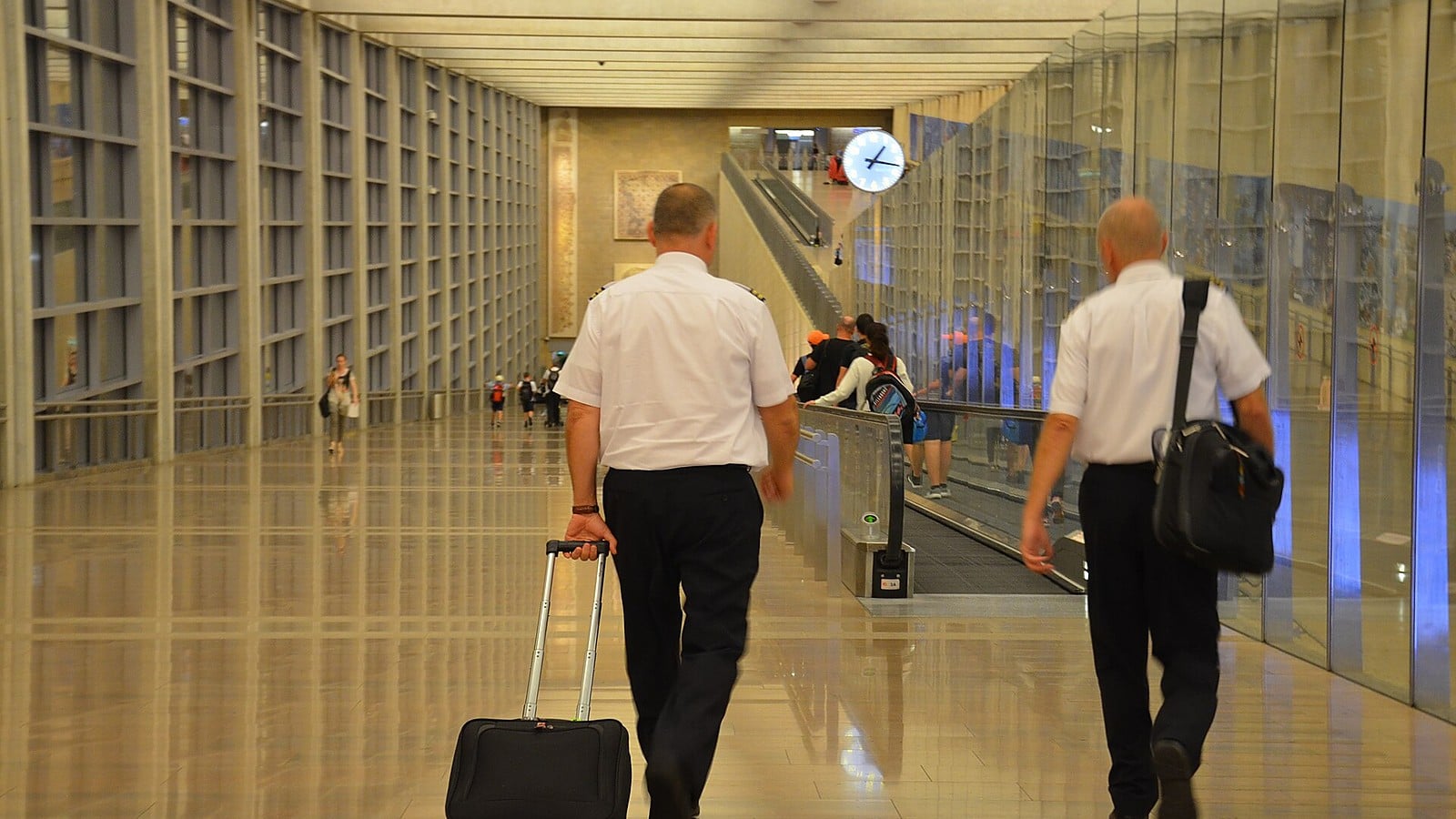
Somewhere tonight a flight attendant is asleep with a phone face-up on the bedside table, volume at maximum. Her reserve availability period began at midnight. Under the contract her airline signed in 2024, if crew scheduling calls, she has two hours from that moment to be at the airport, in uniform, with a packed bag, ready to operate a trip she has not seen yet to a city she has not been told about.
She may never be called. She may be called at 03:50. Either way she cannot leave town, cannot drink, and cannot plan anything. That is the job, and at a US major it can now be the job for two solid years before seniority lets her off it.
Reserve is the least glamorous and least understood part of airline flying, and it exists for a precise, calculable reason. To see why, you have to start a month earlier, with a piece of mathematics.
Quick Facts
- US rule for pilots: 14 CFR Part 117 (Part 121 passenger operations)
- US rule for flight attendants: 14 CFR 121.467 — a different, less generous regime
- European rule: Regulation 965/2012, Annex III, Subpart FTL, with the numbers for standby in CS FTL.1
- US short-call reserve availability period: 14 hours maximum
- US cap on availability period plus duty: the lesser of Table B plus 4 hours, or 16 hours
- European home standby: 16 hours maximum, of which 25 per cent counts as duty
- Typical American Airlines cabin-crew callout: report within two hours of the phone ringing
- Cost rank of crew: an airline’s second-largest operating expense, after fuel
How a month of flying is actually built
An airline does not hand out flights. It builds a schedule, then solves two enormous optimisation problems in sequence, and the output of the second one is somebody’s life for the next four weeks.
The canonical description comes from Cynthia Barnhart and five colleagues in the Handbook of Transportation Science: the crew scheduling problem splits into the crew pairing problem, which selects a set of pairings covering every flight exactly once, and then the crew assignment problem, in which those pairings are combined with rest, vacation and training into individual schedules spanning about a month.
A pairing — also called a trip, a sequence or a rotation, depending on who you ask and which side of the Atlantic they are on — is a multi-day package of flying that starts and ends at a crew base. Crews typically spend one to five days away from home on one. A duty period is a single working day inside it. A deadhead is a crew member flown as a passenger to be somewhere useful.
That first problem is harder than it sounds. Each flight leg is a constraint and each legal pairing is a variable, and as Barnhart and her co-authors put it, “for most real instances, explicit enumeration of the constraint matrix is not possible.” How many variables? “It is not uncommon for a problem containing 300 flights to have billions of pairings.” Nobody writes that matrix down. The industry solves it by column generation, growing the problem one promising pairing at a time.
It is worth the effort because crew is an airline’s second-largest operating expense after fuel.
Block hours, credit hours, and the thing the optimiser is really minimising
Crew are not paid for the hours they are present. They are paid on a construction with two different clocks.
Block time is the honest one: the period from the moment the aircraft first moves off the blocks at the gate to the moment it comes to a stop at the gate at the other end. Chocks off to chocks on. Credited hours are what actually count toward pay and toward the monthly maximum, and the list is much longer — deadheads, training, vacation, sick leave, minimum duty credit, and several guarantees with names like duty rig and trip rig.
The rigs are the interesting part, because they put a floor under a badly built day. In the American Airlines flight attendant contract, the duty rig guarantees one hour of pay and credit for every two hours actually on duty; the trip rig guarantees one hour for every three and a half hours of the whole trip. A day with two short flights and a seven-hour sit in between pays far more than the flying in it.
Now put the two halves together, because this is the sentence that explains the entire industry. The academic cost function for a duty period is the maximum of the flying time, a fixed fraction of the elapsed time, and a minimum guarantee — and that fraction is the duty rig. The optimiser’s stated objective is to minimise “pay-and-credit”: the payments made above and beyond the cost of the actual flying time.
In other words, the software is explicitly trying to squeeze credit hours down toward block hours. Every idle hour in a crew member’s day is, to the optimiser, a defect to be designed out. On paper it gets within about one per cent of the flying-time floor for large fleets. Then the schedule meets a real Tuesday, and that gap widens to roughly four per cent.
That gap is where reserve lives.
Bidlines, PBS and the European way
Once the pairings exist, somebody has to get them. Two traditions grew up for doing this, and they are converging.
The American approach was the bidline: build a set of anonymous monthly schedules first, each covering a share of the pairings, then auction those lines to crew members who bid on the ones they want, awarded strictly by seniority. The European approach was rostering: build each named individual’s month directly, taking account of their requests, their training, their time zones, and in some airlines their seniority too.
The hybrid that has largely eaten the American bidline is the preferential bidding system. Crew submit ranked preferences — days off, report times, what a commuter needs — and the optimiser builds each person a personal line honouring as many preferences as it can, working down the seniority list. The American Airlines flight attendant contract now runs bidding through PBS for both regular and reserve lines.
European rostering tends to add something the US system has no word for: fair-share. Instead of letting seniority concentrate all the unpopular flying at the bottom, the optimiser is asked to spread the night duties and the awkward turnarounds reasonably evenly. The two philosophies produce visibly different Decembers.

Reserve and standby are not the same thing
The vocabulary gets used loosely in conversation and precisely in law, and the precise version is what gets people paid or grounded.
In the United States, 14 CFR 117.3 defines a reserve flightcrew member as one the airline requires to be available to receive an assignment. Below that sit three flavours. Airport or standby reserve means sitting at the airport waiting. Short-call reserve means being inside a defined reserve availability period, phone on. Long-call reserve is everything else, and it is the default: unless the airline specifically designates reserve as airport or short-call, Part 117 says it is long-call.
Europe cuts it differently, and the hinge is notice. ORO.FTL.105 defines standby as a pre-notified period during which a crew member must be available to receive an assignment with no intervening rest period, splitting it into airport standby and — the regulation’s own charming term for home standby — other standby. Reserve, by contrast, means availability for a duty “notified at least 10 hours in advance.” Ten hours is the line between the two words.
And one thing both regimes agree on, which almost nobody outside the industry realises: being on call is itself a duty period. Part 117.25 requires the ten hours of rest before “any reserve or flight duty period”. Airport standby counts as flight duty period in the US from the moment it starts, and counts in full as duty in Europe. Waiting is work.
The numbers that actually bite
Three figures do most of the work in the American system, and they are worth knowing in order.
First, a reserve availability period may not exceed 14 hours. Second — and this is the one that surprises people — for an unaugmented operation the total of the flight duty period and the availability period may not exceed the lesser of the Table B maximum plus four hours, or 16 hours, measured from the start of the availability period. Third, if the airline calls a long-call reserve for a duty that will run into the window of circadian low, defined as the period of maximum sleepiness between 02:00 and 05:59 during a physiological night, it owes 12 hours’ notice of the report time.
Work the second one through. A short-call pilot’s availability period starts at 04:00. At 07:00 the phone rings for a two-segment day. Table B allows a 14-hour flight duty period for a 07:00 start. But the clock that matters started at 04:00, and 16 hours from 04:00 is 20:00. The pilot is out of legal time nearly three hours before the duty table says so. It is the waiting, not the flying, that runs the day out.
Europe prices the waiting differently, and in one respect more honestly. Home standby is capped at 16 hours, but only 25 per cent of it counts as duty against the cumulative limits — sixteen hours by the phone costs you four hours of your 190-hour month. Better still, the certification specifications say that if standby starts in the night, the hours between 23:00 and 07:00 do not erode your maximum duty period until the operator actually contacts you. The rule is explicitly written on the assumption that you were asleep, and stops counting until you are not.
Two honest caveats about that comparison. The European standby numbers live in Certification Specifications issued by EASA, not in the Regulation itself, so they carry different legal weight and an operator may propose an alternative means of compliance. And the cumulative limits are not like for like: the American 190 counts flight duty period hours, while the European 190 counts all duty — including training, positioning and that quarter of your home standby. The same number means more in Europe.
Roberts’s concern was specific: a standby converted into a late duty pushes a pilot toward the 18-hours-awake ceiling. His union asked the UK regulator whether that ceiling was a soft target. It was told, firmly, that it was not.
A working walk-through of flight time, flight duty period, rest and the fatigue rules — the tables behind every sentence in this section.
Two years at the bottom
How long does a new hire sit on reserve? At American Airlines, the answer is in the contract, and it recently got worse.
Flight attendants hired before the 2024 agreement were ratified did twelve months of straight reserve after initial training, then alternated a month on, a month off. Those hired afterwards do two years of straight reserve before that rotation begins. The contract also provides that if extra flight attendants are needed on reserve duty in a given month, they are selected in reverse order of seniority — the bottom of the list, upward.
Below reserve there is one more layer, and crews have a blunt name for it: junior manning. When the reserves run out, scheduling takes the most junior available crew member and orders them in on a day off. At one regional carrier’s agreement the practice is bounded at 36 hours, and an extension at the end of a trip is limited to a single out-and-back, paid at 150 per cent, with the crew member home no later than 18 hours after the original scheduled arrival. The union’s own summary of the situation is bleak and accurate: no contractual provision controls staffing levels at all.
Those bounds exist because junior manning is what happens when the reserve pool has been sized too thin. Which raises the obvious question.
Why reserve exists at all
Because the plan is a lie, and everyone involved knows it is a lie.
The optimiser builds a month in which every flight is covered exactly once by a crew with legal rest. Then somebody calls in sick, a jet goes technical in Palma, a thunderstorm shuts a hub for ninety minutes and forty duty periods run out of hours simultaneously. The paper cost of a crew schedule sits within about one per cent of the pure flying-time floor; the real cost comes in around four. On a large airline that difference is tens of millions of dollars a year, and it has to be absorbed by people who were at home when the plan broke.
There is also a neat, under-appreciated finding about how much reserve an airline needs, and it depends on the bidding system it chose. Researchers at Georgia Tech found that airlines using a bidline system require additional reserves to cover scheduling conflicts, because trips drop out of optimised bidlines; and when reserves are not available to cover those trips, the airline pays a premium to cover them with line pilots instead. The choice made in the crew-assignment stage determines how many people have to sit by a phone.
How many is that? Honestly, nobody publishes an industry figure, and anyone who quotes one should be asked where it came from. The best public data point is a modelling study built on a real medium-sized Dutch international airline, whose instances put roughly 17 to 19 per cent of the available crew on a reserve shift. That is one carrier’s data in one study, not an industry average — but it gives a sense of the order of magnitude. Roughly one crew member in five, doing nothing, so that the other four can be relied upon.
A week of short-call reserve, filmed by a line pilot. The waiting is the content, which is rather the point.
The tether
Reserve has one physical constraint that shapes everything about a crew member’s life: you have to be able to reach the airport inside the response time.
At American, a reserve flight attendant must report within two hours of being notified; co-terminal reserves get three. Across the US pilot contracts, short-call response times cluster around two to three hours. Two hours defines a commuting radius, and a commuting radius defines where you live — or, for the large population of crew who keep a home somewhere else entirely, where you keep a second bed. The crash pad is not a lifestyle choice. It is a regulatory artefact.
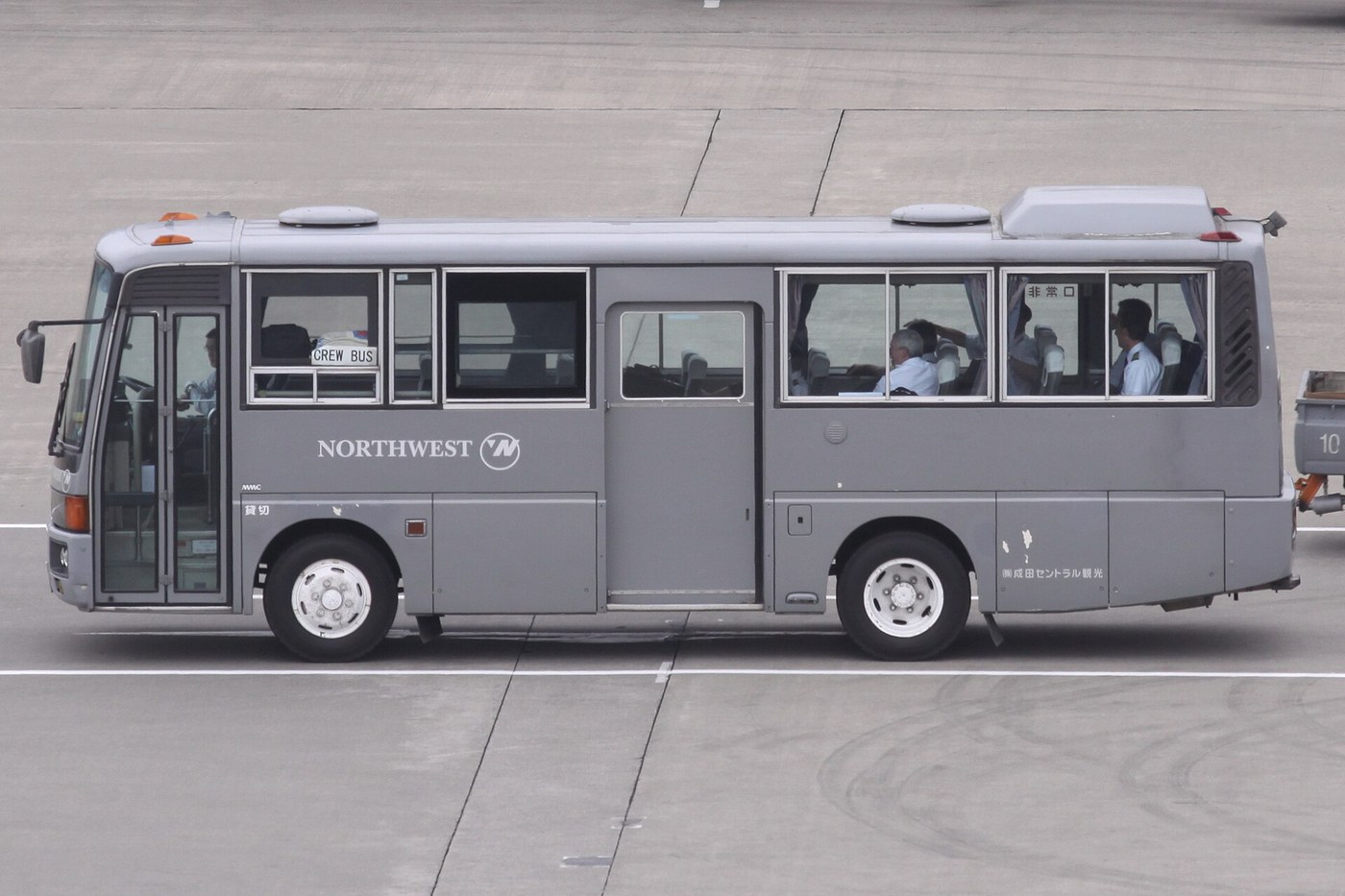
The rules reinforce the asymmetry. In Europe the operator must provide accommodation to a crew member on airport standby, and has no equivalent obligation for home standby — the certification specifications simply require that the response time let the crew member get from their place of rest to the reporting point in a reasonable time. Part 117 imposes no duty to accommodate short-call reserve at all; it only requires that the ten-hour rest before the period offers eight uninterrupted hours of sleep opportunity.
Which brings us back to the phone on the bedside table. Everything above — the billions of pairings, the column generation, the rigs, the bidding systems, the two tables of maximum duty, the 25 per cent rule, the 23:00 clause — exists to decide one question: who is flying tomorrow, and who is merely available. Reserve is the industry’s shock absorber, and it is made of people.
What living in base actually looks like, from a pilot who does it.
Sources: 14 CFR Part 117 and 14 CFR 121.467 (eCFR); Commission Regulation (EU) No 965/2012, Annex III Subpart FTL, as inserted by Regulation (EU) No 83/2014; EASA Certification Specifications CS FTL.1; Barnhart, Cohn, Johnson, Klabjan, Nemhauser and Vance, “Airline Crew Scheduling”, Handbook of Transportation Science; Sohoni, Johnson and Bailey, Journal of Scheduling (2006); Schrotenboer, Wenneker, Ursavas and Zhu, arXiv:2209.05108; APFA–American Airlines collective bargaining agreement 2024, Sections 2 and 12; Allied Pilots Association; ALPA; BALPA; AFA.



0 Comments