
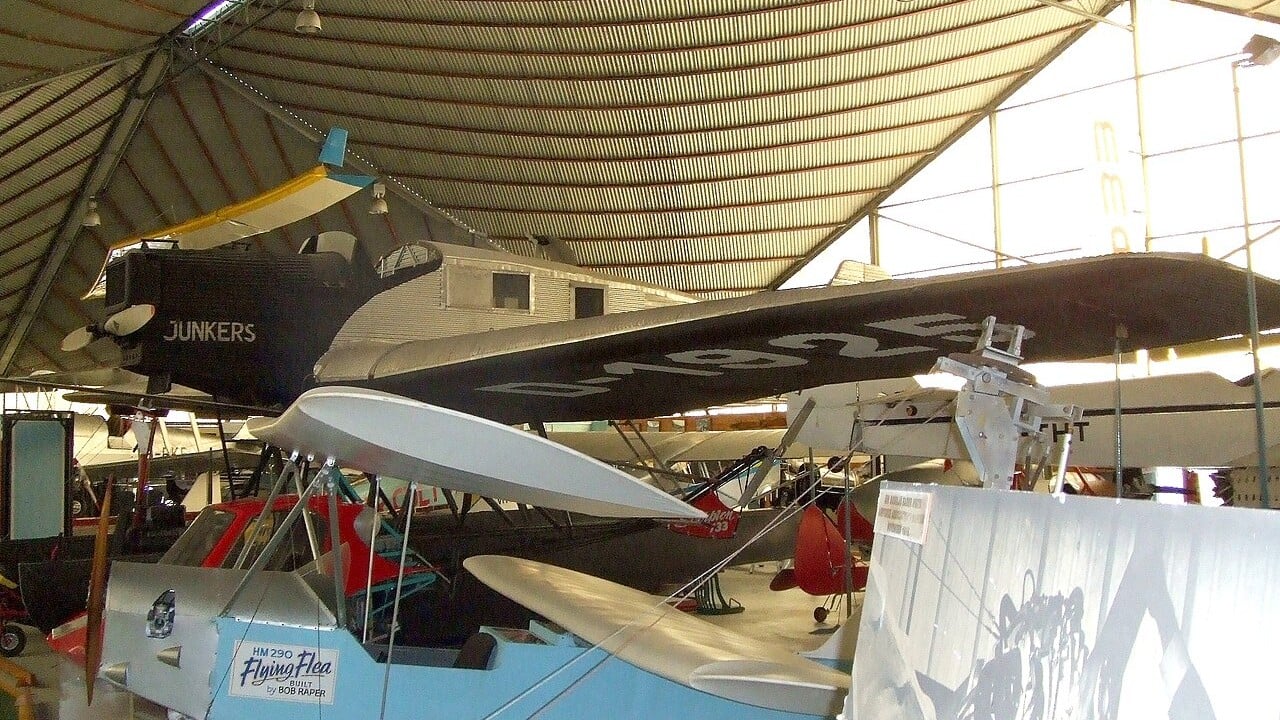
At midnight on 14 May 1932, a silver Junkers floatplane lifted off the water near Koepang in Dutch Timor and turned south-east for Darwin. The crossing was about 830 kilometres, five or six hours’ flying. Its pilot, 26-year-old Hans Bertram, expected to see the Australian coast at dawn.
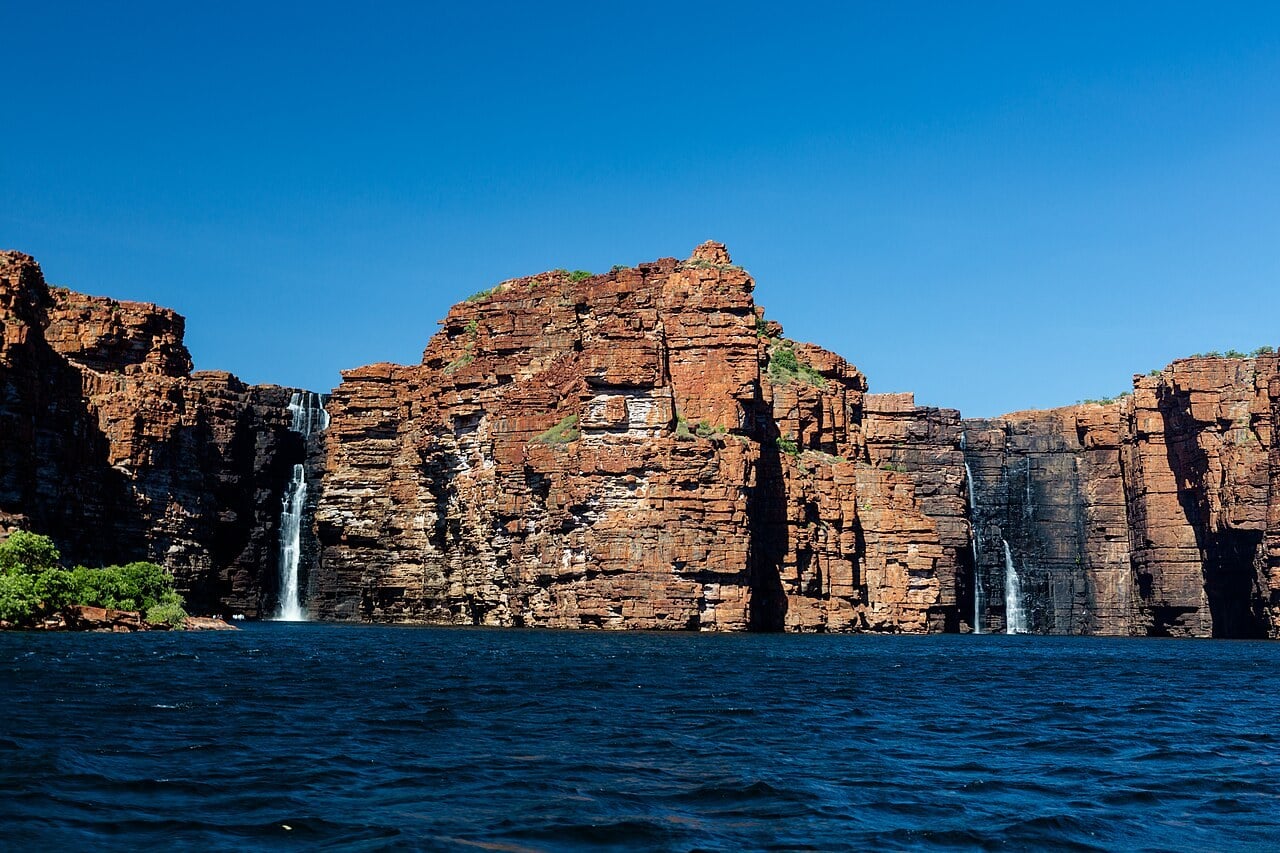
He did see a coast at dawn. It was the wrong one. A storm over the Timor Sea had pushed the Atlantis far to the west, and with the fuel nearly gone Bertram put her down in the first sheltered bay he could find. He and his mechanic, Adolf Klausmann, believed they were on Melville Island, just north of Darwin. They were actually on the wild northern coast of the Kimberley in Western Australia, hundreds of kilometres from where they thought.
It would be almost six weeks before anyone found them alive.
Quick Facts
- Aircraft: Junkers W 33 floatplane D-1925 Atlantis
- Crew: Pilot Hans Bertram and mechanic Adolf Klausmann
- Flight: Round-the-world attempt from Cologne, begun 29 February 1932
- Forced landing: 15 May 1932, Kimberley coast, after a storm on the Koepang-Darwin leg
- Aircraft found: 15 June 1932, empty, about 160 km from Wyndham
- Men found: 22 June 1932 near Cape Bernier by Aboriginal people, after 39 days
- Hospital: Wyndham, 6 July 1932
- Relic: Float canoe recovered by the Western Australian Museum in 1975
A goodwill flight in a Junkers W 33
The flight had begun at Cologne on 29 February 1932 as a round-the-world attempt. According to accounts of the expedition, the original crew of four, Bertram, co-pilot Thom, Klausmann and cameraman Alexander von Lagorio, set out to look for markets for German aviation and to visit German communities along the way. Bertram was no novice: he had been working as an adviser to China’s naval aviation.
Their aircraft was a Junkers W 33, the rugged single-engine, all-metal transport from the family of the Junkers F 13. This one, registered D-1925 and named Atlantis, had flown night mail for the Swedish airline AB Aerotransport and Lufthansa before being refurbished and sold to Bertram. On floats, it could land wherever there was sheltered water.
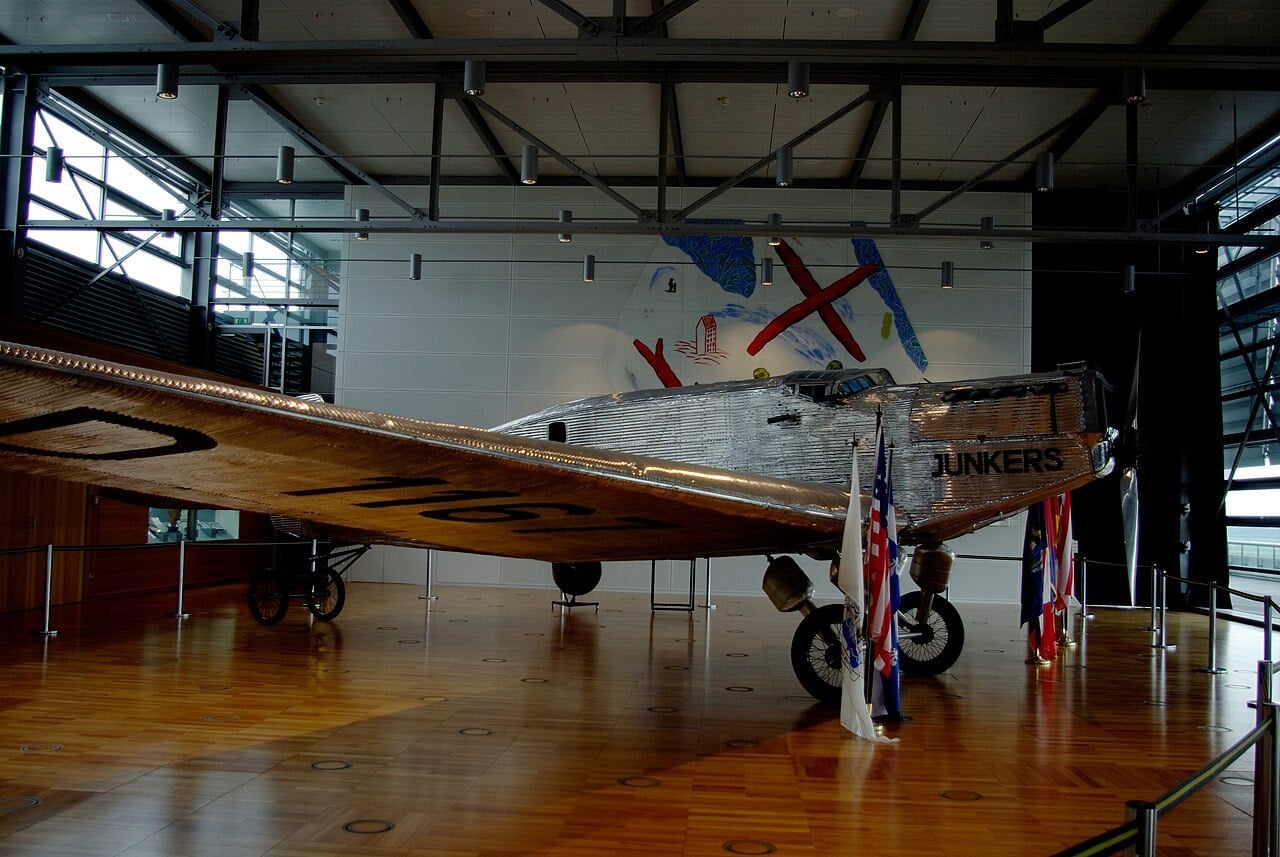
After ten weeks the team had flown through Italy, Greece, Turkey, Iraq, India, Ceylon, Burma, Siam, Malaya and the Dutch East Indies. In Java the group split: Bertram and Klausmann would fly on to Australia alone, and the four would meet again in Shanghai. The engine was overhauled at the Dutch naval air station at Surabaya, and on 13 May the pair set off down the island chain.
Down on the wrong coast
On the first night, an Aboriginal man came to look at the strangers, but they could not make themselves understood and he left. With only about 15 litres of fuel remaining, the airmen decided to try for Darwin anyway. They got airborne, flew roughly 35 kilometres west, and came down again when the engine ran dry, the floatplane rolling up onto a small beach.
There was no fresh water. Hoping to find the man they had met, they set off on foot back to the first bay. Heat, thirst and flies wore them down; swimming an inlet, they were chased by a crocodile and lost their clothes. After seven days, naked and barefoot, they staggered back to the aircraft.
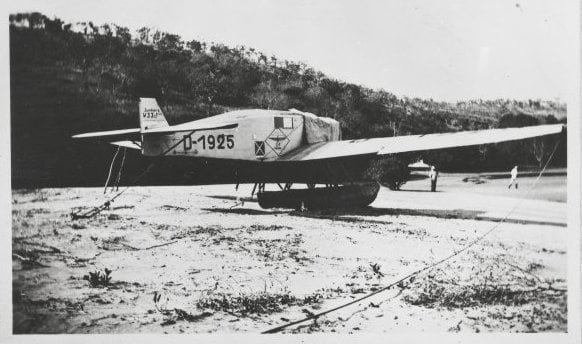
Thirteen days in, they drained the last water out of the engine radiator, took one of the floats off the Atlantis and turned it into a makeshift canoe. They paddled west for four days and nights. At one point the coastal ship Koolinda passed about 500 metres away without seeing them. They finally came ashore near Cape Bernier and took shelter under a rock ledge, where, as the Western Australian Museum puts it, they had all but given up and prepared to die.
Opening and closing titles of Flug in die Hölle (Flight into Hell), the German-Australian miniseries based on Bertram’s account.
The search, and its shadow
The Dutch sent the gunboat Flores to search the Timor Sea route. At the German consul-general’s request, the Western Australian government launched a land, sea and air search, chartering a West Australian Airways de Havilland DH.50 mail plane. On 15 June a search aircraft spotted the Atlantis on a beach about 160 kilometres from Wyndham. It was empty.
The breakthrough came from the ground. A cigarette case bearing Bertram’s initials was found by an Aboriginal tracker. There is a darker side to that search, too. The Western Australian Museum records that, amid rumours the airmen had been killed, police took a number of Aboriginal men prisoner and kept them chained with the search party, despite conflicting stories and no evidence of a body. They were released only after the Germans were found alive.
On 22 June 1932 a group of Aboriginal people found Bertram and Klausmann in their cave near Cape Bernier. The museum believes the tracker who found them was Minnijinnimurrie from the Drysdale Mission. The men had been lost for 39 days and were close to death.
Two runners and a straitjacket
A police party under Constable Marshall arrived about a week later. Klausmann’s mind had given way under the strain, and runners were sent to Forrest Mission to arrange a boat and, as his condition worsened, a straitjacket. The second pair of runners, Andumeri and Jalnga, turned the errand into an epic.
The airmen reached hospital in Wyndham by boat on 6 July. Bertram was well enough by 13 July to fly south in a West Australian Airways mail plane and was greeted by a crowd of 6,000 at Maylands Aerodrome in Perth. Klausmann, still too unwell to fly, followed by ship and never fully recovered.
Bertram was not finished with the Atlantis. In September he went back north with a West Australian Airways mechanic, fuel and a replacement float, recovered the Junkers and spent months touring Australia, including a crash on landing at Kalgoorlie that badly damaged the aircraft. He was back in Berlin in mid-April 1933 to a hero’s welcome.
Archive newsreel of the Junkers W 33 Bremen and the first east-to-west Atlantic crossing in April 1928, the same aircraft type as the Atlantis.
Bestseller, propaganda and a float in a museum
His book Flug in die Hölle (“Flight into Hell”) became a bestseller in Germany in 1933. The rest of Bertram’s career is less comfortable reading. He joined the SA in 1934 and, as a director, made aviation films for the Nazi regime, including Feuertaufe about the Luftwaffe’s attack on Poland. After the war he founded a regional airline and an aerial photography business in Bavaria, and died in Munich in 1993.
In the mid-1980s the story became a German-Australian television miniseries, Flight into Hell, for which a replica Atlantis was built. The real thing survives only in part: the cut-down float that served as the airmen’s canoe was recovered from the Kimberley coast by the Western Australian Museum in 1975.
It is often told as a story of two Germans who beat the outback. It is really a story of two men the outback beat, kept alive by people who knew the country, ran for help across it, and, in some cases, were chained up on suspicion of having killed them.
Sources: Western Australian Museum (Strangers on the Shore: Atlantis Seaplane Float), State Library of Western Australia, Aviation Heritage WA (D-1925 history, David Eyre), National Library of Australia, Wikipedia (1932 Kimberley rescue; Hans Bertram), German Wikipedia (Hans Bertram)
Header photo: Hugh Llewelyn / Wikimedia Commons, CC BY-SA 2.0

0 Comments