
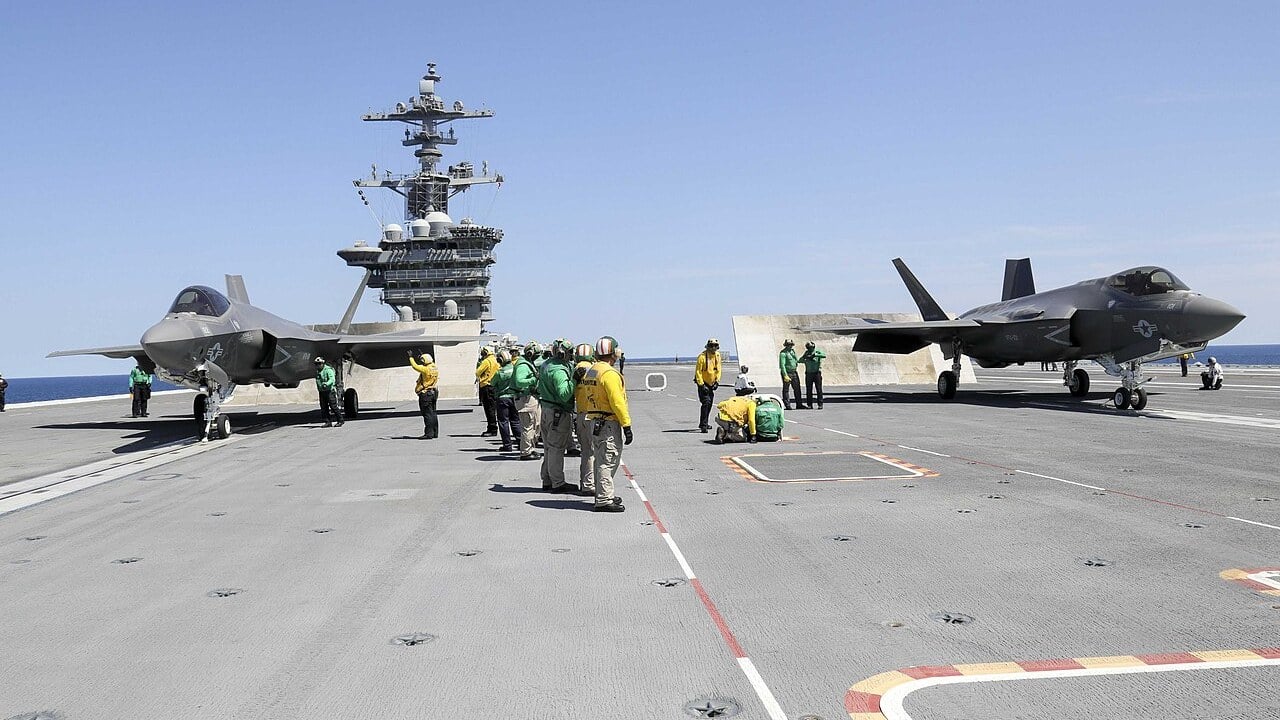
The US Navy’s next carrier fighter is still years from a flight deck. Its drone wingmen may not have to wait for it. That was the message from William Toti, the official performing the duties of Under Secretary of the Navy, when senators asked him on Thursday 19 November 2026 whether Navy CCA drones, the Collaborative Combat Aircraft meant to fly beside carrier fighters, must be tied to the future F/A-XX.
His answer, given at his own confirmation hearing before the Senate Armed Services Committee, was a clear no. The two efforts are independent, he said, and carrier-based CCAs could start working with today’s jets, the F-35C in particular, before F/A-XX arrives.
Quick Facts
- Who: William Toti, performing the duties of Under Secretary of the Navy and nominee for the post
- When: Thursday 19 November 2026, Senate Armed Services Committee confirmation hearing
- Key claim: Carrier CCA drones and F/A-XX are independent; integration could probably start before F/A-XX delivers
- First partner: The F-35C, according to Toti
- F/A-XX: Boeing selected in September 2026; the Navy hopes to see it flying for carriers in the early 2030s
- CCA status: Navy programmes still “nascent”; no service entry date announced
The question from Senator Budd
Toti, a retired Navy captain, was nominated to hold the Under Secretary job formally and has been performing its duties since May. At Thursday’s hearing, which also covered Richard Breckenridge, the nominee for Navy acquisition chief, Senator Ted Budd of North Carolina asked him about the service’s drone plans, according to an account of the exchange published by TWZ.
Toti called CCAs an element of the future combat capability of the carriers and admitted that the US Air Force has been leading on the issue, with the Navy “following closely behind.” The carrier air wing, he said, needs low-cost, attritable assets, and the Navy’s CCA programmes are still “nascent.” Budd then asked the follow-up that mattered: does CCA have to wait for F/A-XX, or can it fly with current aircraft?
That is a notable statement from the second-ranking civilian in the Department of the Navy. For years the sixth-generation F/A-XX has been pitched partly as the airborne “quarterback” that would direct uncrewed wingmen. Toti’s view is that the drones do not need to sit on the shelf until that quarterback shows up.
F/A-XX still matters
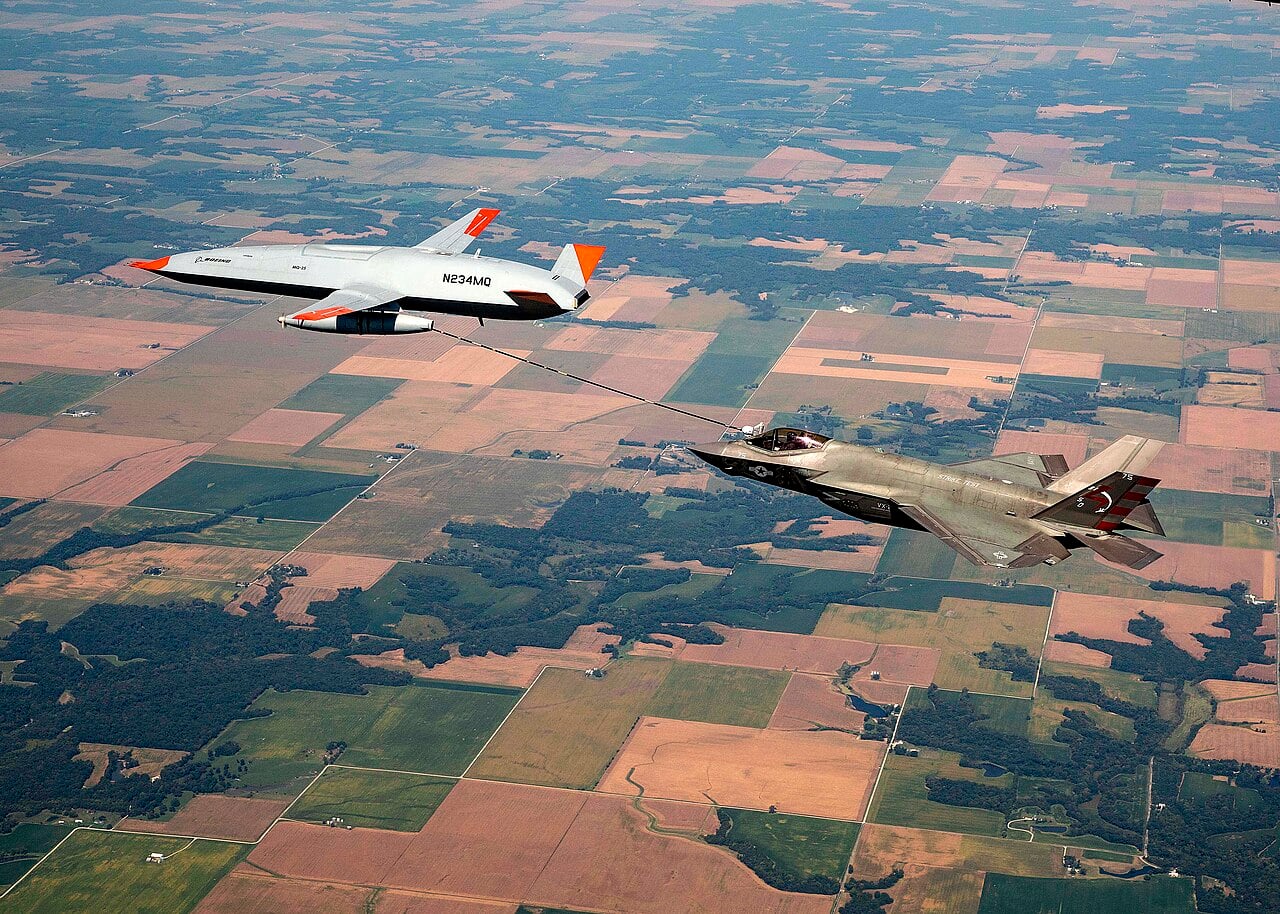
Toti was careful not to make it sound like the drones could replace the new fighter. He told the committee that F/A-XX is a critical capability, and that CCA will probably be built into it from the ground up. But he added that the drones are a capability the Navy should also be able to use with the F-35 specifically.
Boeing beat Northrop Grumman to win the F/A-XX competition in September 2026, after a long period in which the Pentagon had tried to put the programme on hold and Congress pushed back. The Navy hopes to see the new fighter flying for carrier decks in the early 2030s, according to TWZ. Its eventual targets for replacement are the F/A-18E/F Super Hornet and the EA-18G Growler, which TWZ notes could also be paired with drones in the meantime.
Forbes Breaking News video of the Senate Armed Services Committee hearing on 19 November 2026 on the nominations of William Toti, Richard Breckenridge and two other defence nominees.
The hearing came two days after Acting Navy Secretary Hung Cao faced the same committee at his own confirmation hearing on Tuesday 17 November. Cao argued that Boeing’s work on the Air Force’s F-47 would help the Navy accelerate F/A-XX, since the same company now builds both.
Where the Navy CCA effort stands
The Navy is openly behind the Air Force and the Marine Corps on drone wingmen. In September 2025 it hired Anduril, Boeing, General Atomics and Northrop Grumman to produce conceptual designs for carrier-based CCAs. In August 2026, Naval Air Systems Command set out new requirements that look more like a true uncrewed combat air vehicle, a story Afterburner covered in Navy CCA RFI: The Service Wants Its X-47B Combat Drone Back.
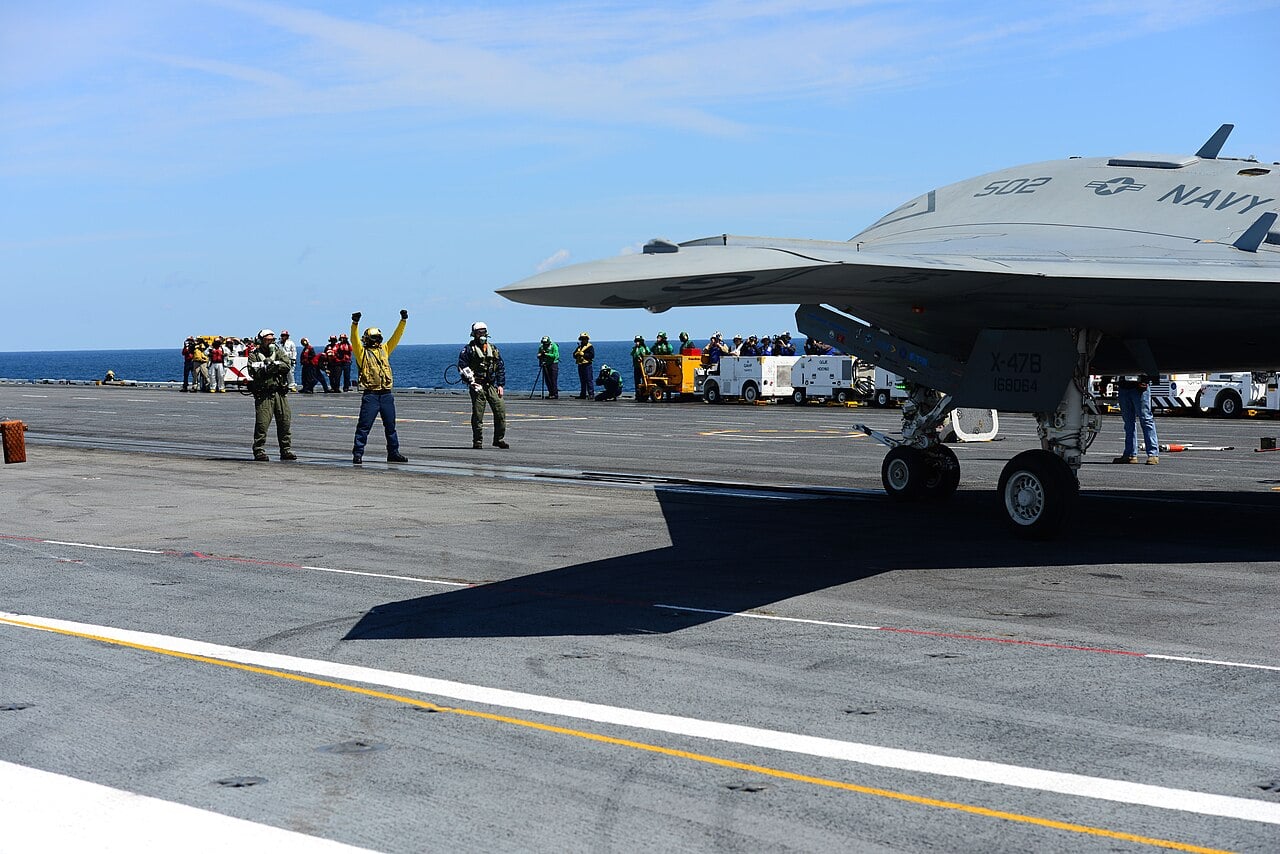
That X-47B reference stings. The Navy flew two of the demonstrators from carriers in the 2010s, including the first catapult launch of an uncrewed jet from a carrier deck in May 2013, then switched to an uncrewed tanker. That tanker, the MQ-25 Stingray, is still set to be the first fixed-wing drone in the carrier air wing.
Separately, the Navy is putting money into Shield AI’s X-BAT, a tail-sitting jet drone that takes off and lands vertically, through a programme outside its CCA effort. The services have also agreed to use common or compatible control architectures so that crewed jets from one branch can direct another branch’s drones.
No date has been set for the first Navy CCAs to enter service. But on 19 November the man who oversees the Navy’s unmanned portfolio told the Senate the drones can start with the fighters the fleet already has. For a carrier force that will sail for another 50 years, that is the difference between waiting for the future and starting it.
Sources: TWZ, USNI News, Forbes Breaking News (hearing video), Philadelphia Inquirer / Associated Press, US Navy
Header photo: MC1 Josue Escobosa / US Navy, public domain


0 Comments