
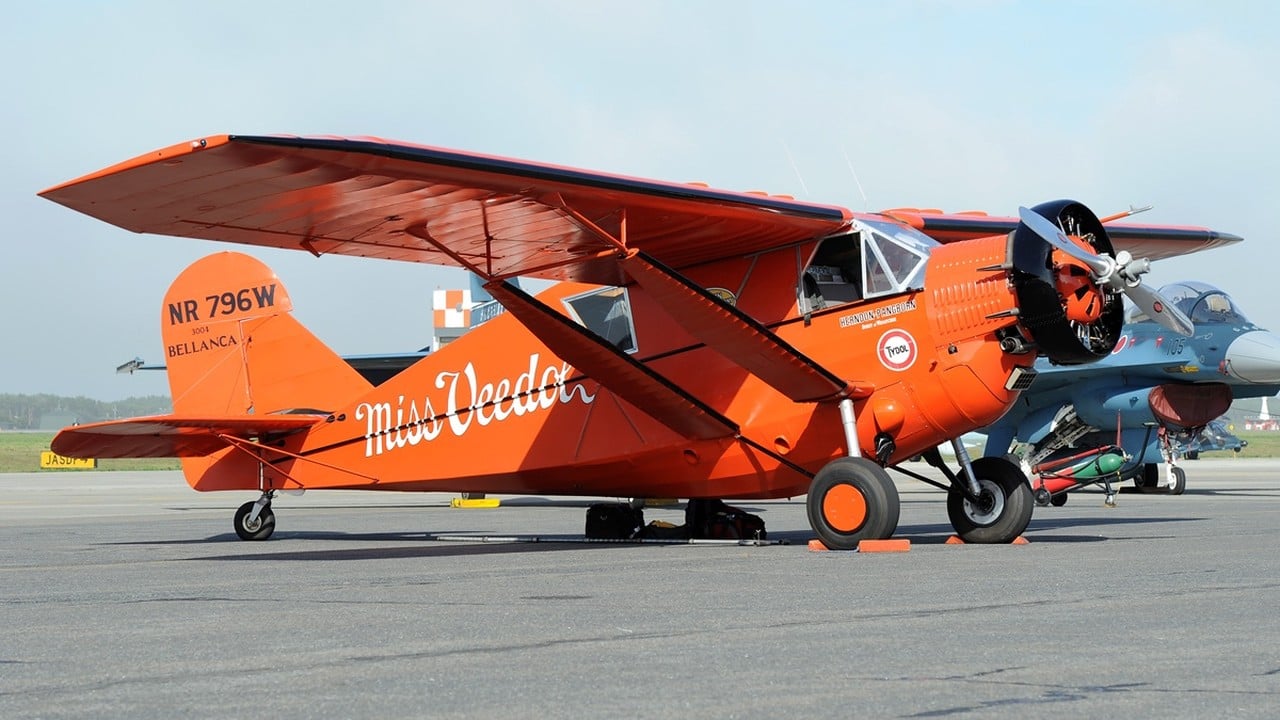
Somewhere over the North Pacific, at about 14,000 feet, on 4 October 1931, a man climbed out of a perfectly good aeroplane. Clyde Pangborn, a former barnstormer nicknamed “Upside-Down Pangborn,” inched along the bracing of a heavily overloaded orange Bellanca in freezing air, hours from any land, to knock away two pieces of metal that should already have been at the bottom of the ocean.
The aeroplane was Miss Veedol. The pieces of metal were the last struts of her landing gear, which Pangborn had deliberately dropped into the sea to save weight and drag. If the struts stayed on, the belly landing he planned at the far end would become a somersault. They came off. About 41 hours after leaving a beach in northern Japan, Miss Veedol slid to a stop on her belly at Fancher Field near Wenatchee, Washington. It was the first nonstop aeroplane flight across the Pacific Ocean.
Quick Facts
- Aircraft: Miss Veedol, Bellanca CH-400 Skyrocket, NR796W, Pratt & Whitney Wasp radial
- Crew: Clyde Pangborn (pilot) and Hugh Herndon Jr. (co-pilot)
- Take-off: 4 October 1931 (Japanese time), Sabishiro Beach, Misawa, Japan
- Landing: 5 October 1931, belly landing at Fancher Field near Wenatchee, Washington
- Duration: About 41 hours (41 h 13 min or 41 h 34 min, depending on the source)
- Distance: Roughly 4,500 miles (NPS: 4,558 miles)
- Record: First nonstop aeroplane flight across the Pacific Ocean
- Prizes: $25,000 Asahi Shimbun prize; 1931 Harmon Trophy
A round-the-world attempt goes wrong
The Pacific was never the plan. Pangborn and his co-pilot, Hugh Herndon Jr., set out from Roosevelt Field, New York, on 28 July 1931 to beat the round-the-world record. Herndon was the wealthy partner: his mother, Alice Carter Herndon, was an heiress of the Tide Water Oil Company, maker of Veedol motor oil, and the family financed the flight. Hence the name on the aeroplane.
The record they were chasing had just been smashed. In June 1931 Wiley Post and Harold Gatty had flown around the world in 8 days, 15 hours and 21 minutes in the Lockheed Vega Winnie Mae. Pangborn and Herndon went anyway, and lost time in the Soviet Union, including a rain-soaked field in Siberia that turned to mud. Well behind schedule, they gave up on the round-the-world record and flew on to Japan.
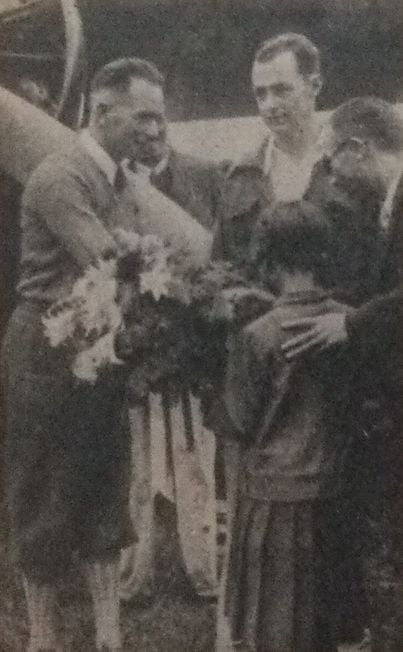
There they found a new target. The Japanese newspaper Asahi Shimbun was offering $25,000 for the first nonstop flight across the Pacific between Japan and the United States. Charles Kingsford Smith had flown the Pacific from America to Australia in 1928, but in stages. The airship Graf Zeppelin had crossed from Japan to the US in 1929. No aeroplane had done it in one hop.
Arrested in Japan
First they had to get out of jail. Herndon had filmed and photographed the country on the way in, including what turned out to be military installations, and the pair had arrived without the right paperwork. Japanese authorities suspected them of spying. They were detained for weeks while the US Embassy negotiated, then fined and told they could leave, but not come back.
Letters now held by Washington State University show how delicate it was. Pangborn’s mother wrote to Idaho’s Senator William Borah begging him to help “the boys.” His reply was a masterpiece of calm.
The US Embassy in Tokyo marks the anniversary of the Miss Veedol flight and the friendship it built between Misawa and Wenatchee (Japanese narration).
Too heavy to fly, so the wheels had to go
Miss Veedol was a Bellanca Skyrocket single-engine monoplane, a CH-400 according to her registration, powered by a Pratt & Whitney Wasp radial. A production Skyrocket was a five-passenger cabin aeroplane. Pangborn turned this one into a flying fuel tank. On take-off she carried a reported 915 US gallons of gasoline, far beyond the manufacturer’s recommended weight.
Pangborn’s answer to the weight problem was radical. He rigged a mechanism to jettison the fixed landing gear after take-off, trading wheels for less weight and drag. The price was a belly landing in America. They had one chance: if they returned to Japan, the aeroplane would be confiscated.
On the morning of 4 October 1931, Japanese time, the overloaded Bellanca lumbered along a specially prepared stretch of Sabishiro Beach near Misawa and only just got airborne. Three hours later Pangborn released the gear. The wheels fell away, but two struts stayed attached, and Pangborn went out onto the wing bracing at about 14,000 feet to free them by hand.
Fog, a silent engine and a belly landing
The drama was not over. According to accounts of the flight, the engine was starved of fuel when the transfer from the fuselage tanks to the wing tanks was missed, and it stopped. With no starter to restart it, Pangborn put the Bellanca into a dive and got the engine running again, pulling out at about 1,400 feet. They followed a great circle course, and their first landfall was the Aleutian Islands.
The Pacific Northwest was buried in rain and fog. Seattle was out. They tried for Boise, Idaho, which would also have earned a distance record, then Spokane, then Pasco. None was possible. So Pangborn turned for Wenatchee, not far from Bridgeport, where he was born, and put Miss Veedol down on her belly on 5 October 1931.
Wenatchee Valley Museum & Cultural Center’s Curator’s Corner looks at objects from the 1931 flight in the museum’s collection.
The landing was so gentle that the main damage was a bent propeller, which survives today at the Wenatchee Valley Museum & Cultural Center. Accounts of the flight time vary slightly: HistoryLink and This Day in Aviation give 41 hours 13 minutes for roughly 4,500 miles, while the National Park Service quotes 4,558 miles in 41 hours 34 minutes. Either way, it was a longer nonstop flight than Charles Lindbergh’s crossing of the Atlantic.
What happened next
The pair collected the Asahi Shimbun prize and the 1931 Harmon Trophy. Miss Veedol herself was sold, renamed The American Nurse, and disappeared over the Atlantic in September 1932 on an attempted New York to Rome flight.
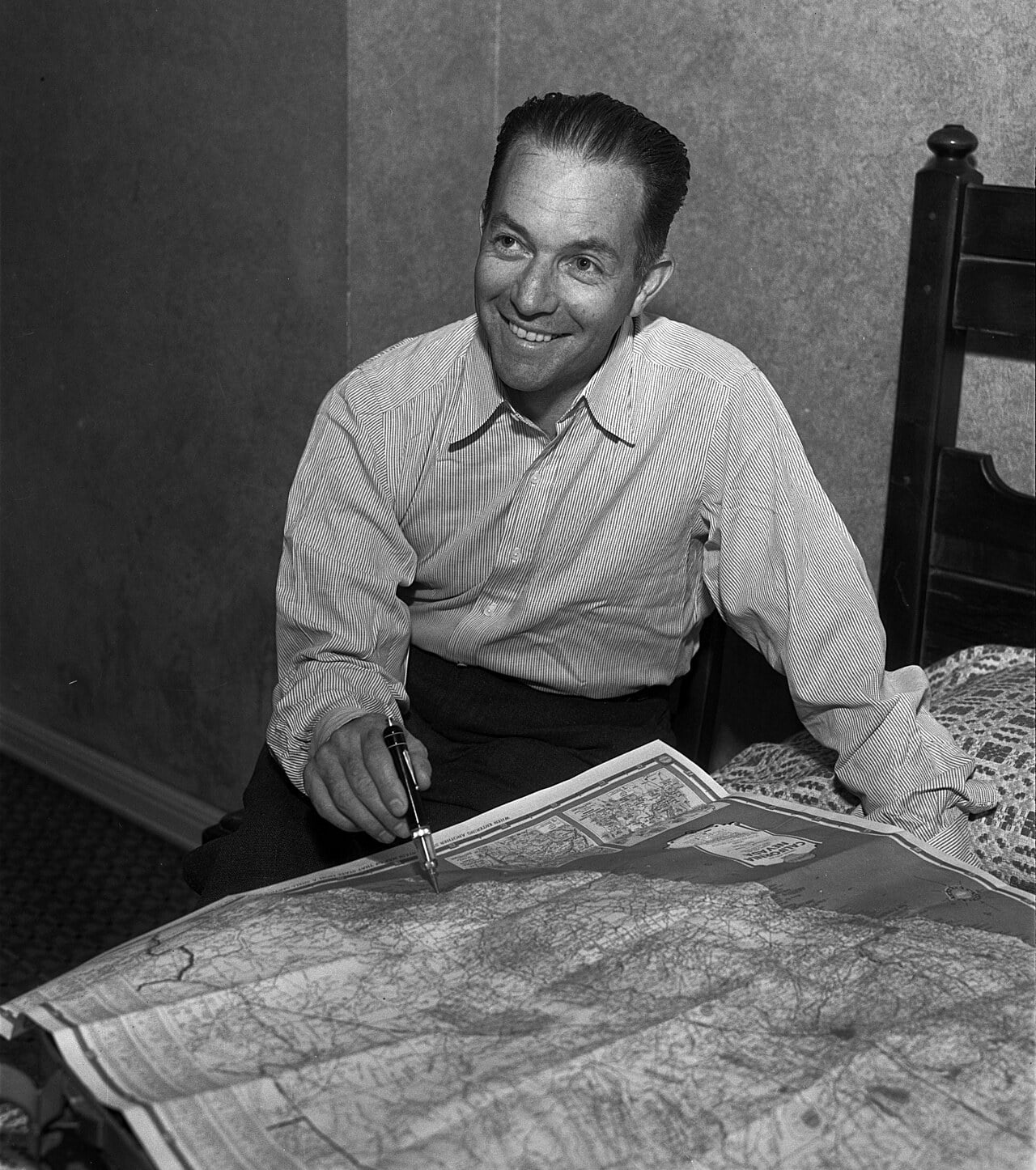
Pangborn kept flying. He became a test and demonstration pilot, and in the Second World War he made more than 170 delivery flights for the Royal Air Force Ferry Command, bringing North American-built aircraft across the Atlantic. In August 1942, according to This Day in Aviation, he flew an Avro Lancaster from Britain to Canada as a pattern aircraft for Canadian production. He died in 1958 and is buried at Arlington National Cemetery. Wenatchee’s regional airport, Pangborn Memorial Airport, carries his name.
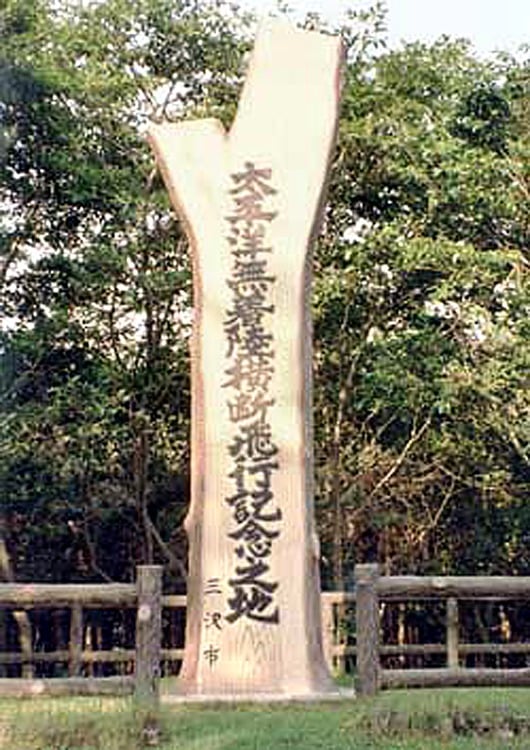
The flight also left a rare bond between two towns. Japan erected a monument at Sabishiro Beach, and a Japanese delegation led by Aomori Governor Shunkichi Takeuchi, who had covered the flight as a reporter in 1931, travelled to East Wenatchee in May 1969 to dedicate the Pangborn-Herndon Memorial, a 14-ton basalt column standing within about 50 feet of the spot where the orange Bellanca slid to a halt.
Washington State University archivist Mary Avery introduces the Pangborn Papers held by WSU Libraries.
Kingsford Smith, Post and Lindbergh are household names. Pangborn and Herndon mostly are not. Yet in 1931 two men, one aeroplane and no landing gear did something nobody had done: they flew from Asia to America without stopping. All it took was a beach, a sea of fuel and a pilot willing to go for a walk at 14,000 feet.
Sources: HistoryLink.org (essay 5400), US National Park Service (Pangborn-Herndon Memorial Site), WSU Magazine and WSU Libraries Pangborn Papers, This Day in Aviation, Wenatchee Valley Museum & Cultural Center
Header photo: Toshi Aoki - JP Spotters / Wikimedia Commons, CC BY-SA 3.0
0 Comments