
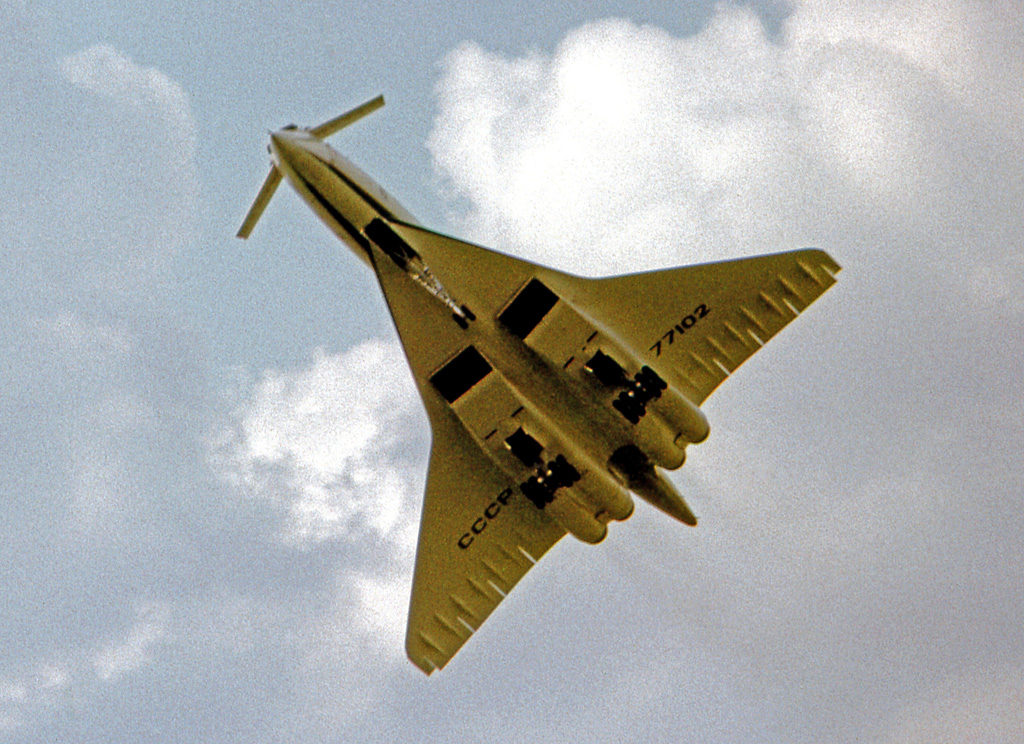
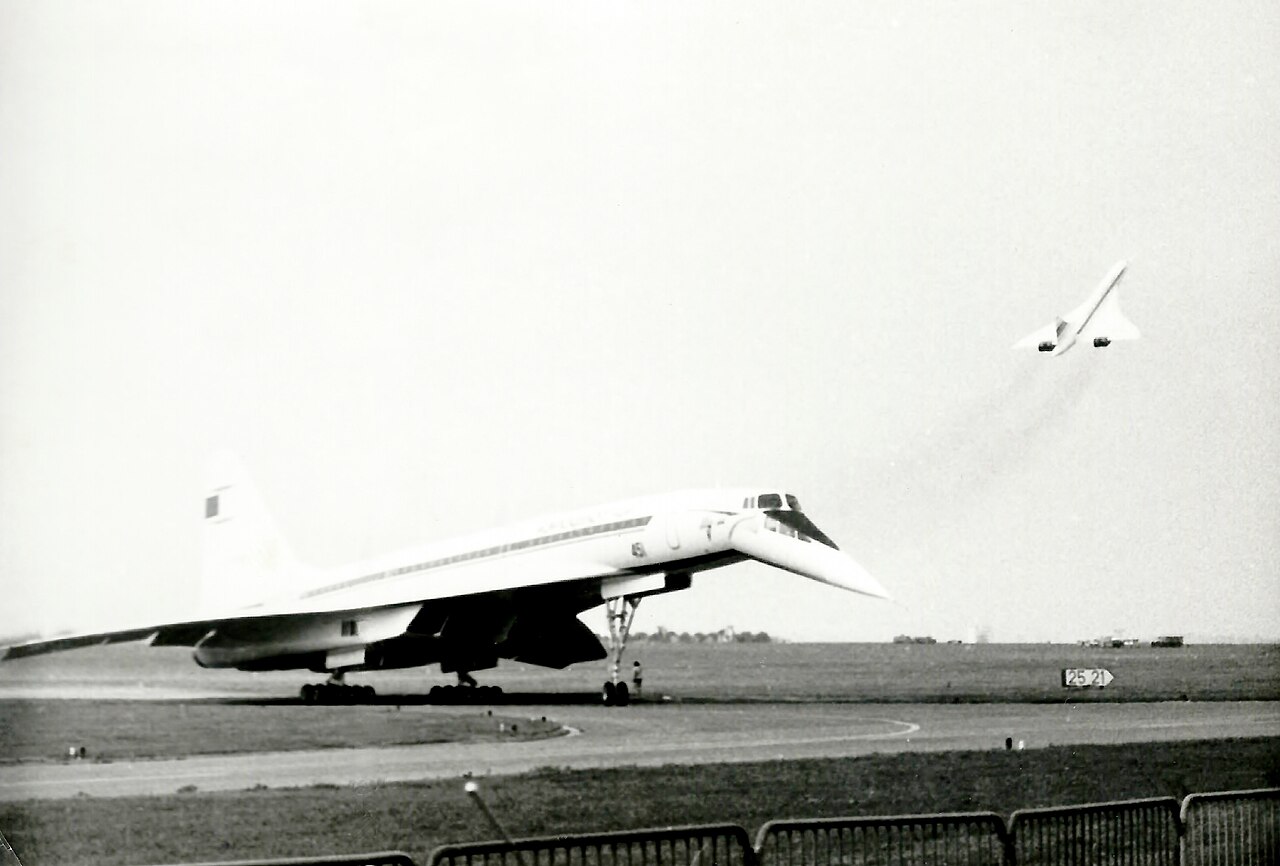
It is Sunday the third of June, 1973, the last day of the Paris Air Show, and a quarter of a million people are looking up at the sky over Le Bourget. They have come to see two aircraft above all others. Concorde goes first: a high-speed pass, then a steep climb to roughly 10,000 feet before it levels off. Then the Soviet answer, Tupolev Tu-144 CCCP-77102, flown by test pilot Mikhail Kozlov, tries to match it.
Kozlov had promised the press a show. The Tu-144 makes a low pass, pulls up hard, then suddenly pitches nose-down into a dive. As the crew tries to pull out, the airframe is overstressed. A canard tears away, the left wing is punctured, and the airliner breaks up in flames over the village of Goussainville. All six men on board are killed, and eight people die on the ground. The American display pilot Bob Hoover, watching from the field, later wrote that “when the pilot stalled, the nose of the plane pitched over violently into a steep dive.”
It was the moment the Western public met the aircraft its newspapers called “Concordski”, and it shaped the Tu-144’s reputation ever since. Yet the Soviet airliner had flown before Concorde, gone supersonic before Concorde and reached Mach 2 before Concorde. This is the story of the only two supersonic airliners ever to enter service, and of why one became a legend while the other became a footnote.
Quick Facts
- Concorde first flight: 2 March 1969, Toulouse (André Turcat)
- Tu-144 first flight: 31 December 1968, Zhukovsky (Eduard Elyan)
- First past Mach 1: Tu-144, 5 June 1969; Concorde, 1 October 1969
- First to Mach 2: Tu-144, 26 May 1970; Concorde, 4 November 1970
- Engines: Concorde: Olympus 593 turbojets. Tu-144: NK-144 turbofans, then RD-36-51A turbojets (Tu-144D)
- Wing: Concorde: ogival (ogee) delta. Tu-144: double delta with retractable canards
- Passenger service: Concorde: 21 January 1976 to 24 October 2003. Tu-144: 1 November 1977 to May 1978
- Airframes built: Concorde: 20 (14 in airline service). Tu-144: 16 or 17, depending on the source
- Range: Concorde: roughly 6,700 to 7,200 km. Tu-144D: about 4,000 to 5,300 km, sources differ
- Fatal accidents: Concorde: 1 (2000). Tu-144: 2 (1973, 1978)
Two programmes born of one idea
On 29 November 1962, Britain and France signed an agreement in London to design and build a supersonic airliner together. Neither country could afford it alone, and both feared that the Americans would get there first. The partnership paired the British Aircraft Corporation and Bristol Siddeley with France’s Sud Aviation and SNECMA. Even the name, Concorde, was a statement of intent.
In Moscow, the announcement landed as a political challenge. On 16 July 1963 the USSR Council of Ministers issued a decree ordering the Tupolev bureau to develop a supersonic transport with four jet engines and to build a batch of them. The veteran designer Andrey Tupolev oversaw the programme, but the chief designer of the aircraft was his son, Aleksei Tupolev. The Kremlin wanted the first one in the air by 1968.
The task was enormous. A Mach 2 airliner has to survive skin temperatures that would weaken ordinary aluminium alloys, fly efficiently at both 250 and 2,100 kilometres per hour, and land at a speed passengers will tolerate. The Soviet bureau even built a scaled testbed, the A-144 analogue, by fitting a MiG-21 with a miniature version of the Tu-144’s tailless wing.
The race to the sky: 1968 to 1970
The Soviet team won the first lap. Bad weather had delayed the flight for days, but on 31 December 1968 prototype 68001 lifted off from Zhukovsky near Moscow with test pilot Eduard Elyan and three other crew aboard. The flight lasted 38 minutes. Concorde was still on the ground in Toulouse, and Moscow had its New Year’s propaganda victory.
Concorde 001 followed on 2 March 1969. André Turcat flew it for 29 minutes and never exceeded 480 kilometres per hour; he later described the maiden flight as “a trip around the runway”. On 9 April the British-assembled prototype 002 flew from Filton, near Bristol, with Brian Trubshaw at the controls, and landed at Fairford despite two failed radio altimeters.
Newsreel of Concorde 001’s first flight from Toulouse on 2 March 1969. Video: British Pathé.
The Soviets also won the next two laps. According to the Tupolev bureau, the Tu-144 first went supersonic on 5 June 1969; Concorde 001 did the same on 1 October 1969. The Tu-144 passed Mach 2 on 26 May 1970, the first airliner to do so. Concorde 001 reached Mach 2 on 4 November 1970, on its 102nd test flight. On the scoreboard of firsts, Moscow led on every count.
Concordski: spies, sketches and suspicion
The two aircraft looked so alike that Western commentators assumed the Soviets had simply copied Concorde. Some espionage was real. In 1965 France expelled Sergei Pavlov, who ran Aeroflot’s Paris office, after counter-intelligence officers found Concorde documents on him. The historian Christopher Klein, writing for History.com, describes a wider Soviet network recruiting informants close to the Concorde programme for years afterwards.
Whether stolen papers shaped the Tu-144 is far less clear. Engineers on both sides have pointed out that the physics of Mach 2 tends to push designers towards similar answers: a slender fuselage, a thin delta wing, a drooping nose so the pilots can see the runway. Sir James Hamilton, a senior figure in the British Concorde programme, told NOVA that “one has to be careful about the word ‘copy’”, while accepting that the Soviets took advantage of Western preliminary work.
Ilya Grinberg of Buffalo State University, speaking to CNN, put it more precisely: the design “was not a result of espionage”, though familiarity with Concorde’s outline may have influenced some conceptual choices. The fairest verdict is that intelligence may have saved Soviet engineers time on specific systems, but the Tu-144 was not a carbon copy. Underneath the similar silhouette sat very different engineering.
Same silhouette, different machines
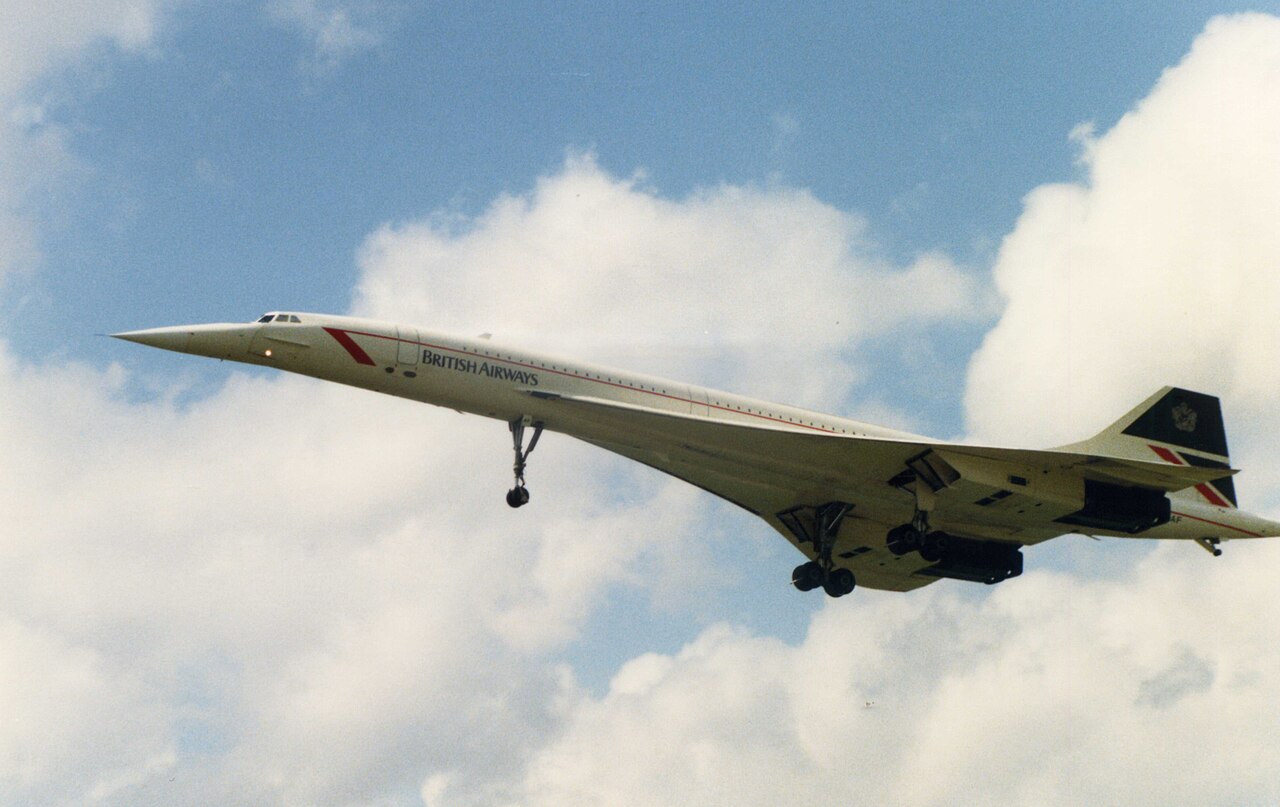
The biggest difference was in the engines. Concorde used four Rolls-Royce/SNECMA Olympus 593 turbojets, each rated at 38,000 pounds of thrust with reheat. Reheat was needed only for take-off and to push through the transonic region; once at Mach 2 Concorde cruised on dry thrust. That ability, now called supercruise, was the key to its range.
The early Tu-144 flew on Kuznetsov NK-144 afterburning turbofans, and they needed afterburner to sustain supersonic cruise. That burned fuel at a ferocious rate, and Flight International noted that the engines could not deliver the range the aircraft needed. The improved Tu-144D, first flown on 30 November 1974, switched to Kolesov RD-36-51A turbojets. Whether these let the Tu-144D supercruise is less certain than often claimed: NASA’s later evaluation report says only that it “appeared, but was not confirmed” that the RD-36-51A engines did not need afterburner in supersonic cruise.

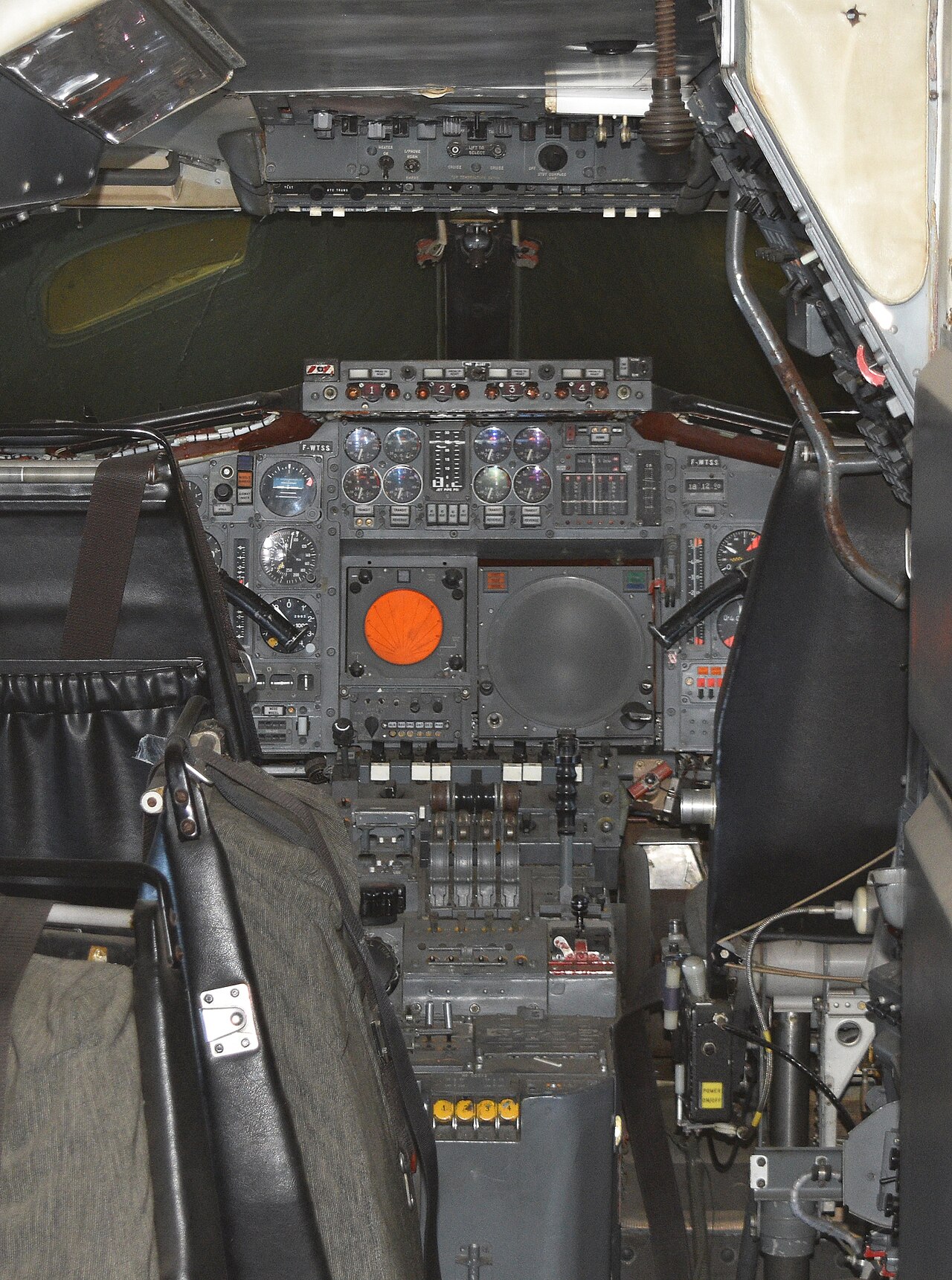
The wings differed too. Concorde used a carefully curved ogival, or ogee, delta, whose leading edge sweeps in a continuous S-shaped curve. The production Tu-144 used a double delta, with a sharper inner sweep and a shallower outer one. And the production Tu-144 carried something Concorde never had: a pair of retractable canard foreplanes, nicknamed the “moustache”, which folded out behind the cockpit to add lift and improve control at low speed.
The engine layout set the two apart in the cabin as well. The Tu-144 grouped its four engines in one large block under the centre of the wing, and passengers and journalists described a deafening roar inside. In the words of Jonathan Glancey, author of a history of Concorde, a flight on the Tu-144 “was not for those with sensitive hearing”. Concorde’s cabin was narrow, but conversation was normal.
Paris, 1973: the crash nobody fully explained
By the time the two airliners met at Le Bourget in June 1973, Concorde was already being demonstrated to airlines and the Tu-144 was in series production. CCCP-77102 was a production Tu-144S, and on 2 June it flew a display that went off as planned. Twenty-four hours later it was wreckage in the streets of Goussainville.
The cause has never been settled. One theory holds that a French Mirage, sent up to photograph the Tu-144, flew close enough to force a sudden evasive manoeuvre. Another blames a crew member’s camera falling into the controls, and a third points to a display that pushed the aircraft beyond its limits in an attempt to outdo Concorde. A joint French and Soviet investigation never produced a definitive cause, which allowed every version to live on.
Contemporary news footage from Le Bourget on 3 June 1973. Video: AP Archive.
Into service: seven months against 27 years
The Tu-144 entered Aeroflot service on 26 December 1975, but only for mail and cargo, between Moscow and Alma-Ata (today Almaty) in Kazakhstan. The route was chosen partly because it crossed sparsely populated country, where sonic booms would disturb few people. Concorde beat it to fare-paying passengers: on 21 January 1976, Air France flew to Rio de Janeiro via Dakar and British Airways to Bahrain, simultaneously.
Passengers finally boarded a Tu-144 on 1 November 1977, again on the Moscow to Alma-Ata route, cutting the journey to about two hours. It was a showcase, not a business. Aeroflot flew the service roughly once a week, and in total it made 55 passenger flights carrying 3,284 passengers, according to Kazan National Research Technical University, which preserves a Tu-144. NASA’s fact sheet gives a higher figure of 102 passenger flights, probably counting differently, so the exact total depends on the source.
Then, on 23 May 1978, a Tu-144D on a test flight suffered a fuel line rupture. Fuel leaked into the wing, fire broke out and the crew made an emergency landing near Yegoryevsk, south-east of Moscow. Two flight engineers were killed. Aeroflot suspended regular passenger flights that month, and on 1 June 1978 it decided to end them for good. The Tu-144 had carried passengers for barely seven months.
Concorde, by contrast, settled into a long career. Only 20 were built, including prototypes and pre-production aircraft, and just 14 entered airline service, seven each with Air France and British Airways. Its 100 seats were never going to make it a mass-market airliner, but on the North Atlantic, where it crossed in about half the time of a conventional jet, it found a loyal clientele for almost three decades.
An unlikely encore: NASA and the Tu-144LL
The Tu-144 programme was cancelled in 1983, and most of the fleet was scrapped or parked. But one aircraft had a second life. Tail number 77114 was a Tu-144D, the last one built, completed in 1981. It had flown only about 83 hours as a research aircraft and never carried a paying passenger.
In the mid-1990s NASA was studying a second-generation supersonic airliner for its High-Speed Research programme, and it needed a real supersonic transport to fly experiments on. Concorde was busy carrying passengers. So the Americans turned to Russia. Tupolev re-engined 77114 with Kuznetsov NK-321 turbofans, the same engine family as the Tu-160 bomber, each rated at more than 55,000 pounds of thrust in full afterburner, and filled it with instruments.
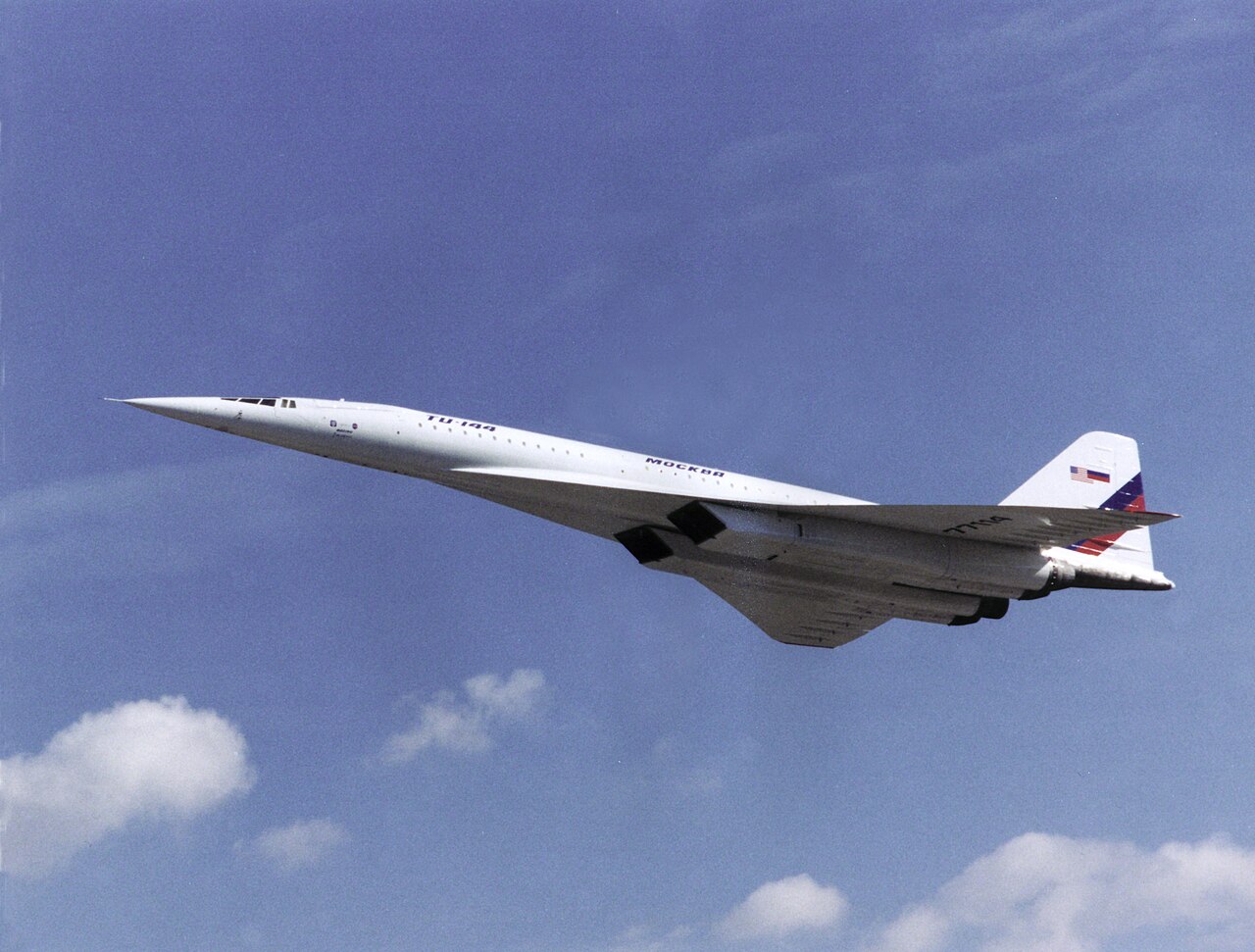
The Tu-144LL, for Letayushchaya Laboratoriya or flying laboratory, made 19 research flights from Zhukovsky between June 1996 and February 1998, followed by about seven more between September 1998 and April 1999. In September 1998 two NASA research pilots, Robert Rivers of Langley and C. Gordon Fullerton of Dryden, flew the aircraft themselves on three evaluation flights, one subsonic and two supersonic. Their report was candid.
The pilots also praised the aircraft’s crosswind landing behaviour and noted that it handled moderately aggressive lateral manoeuvring nicely. Their report recorded something else: in its NK-321 configuration, the Tu-144LL needed afterburner to hold Mach 2 at cruise altitude. Its last flight in 1999 was the final flight of any Tu-144.
The end of Concorde, and what came after
Concorde’s long run ended in tragedy, too. On 25 July 2000, Air France Flight 4590 ran over a strip of metal on the runway at Paris Charles de Gaulle during take-off. A burst tyre threw debris into a fuel tank, starting a fire. The aircraft crashed into a hotel at Gonesse, a few kilometres from where the Tu-144 had come down in 1973. All 109 people on board and four on the ground were killed.
Concorde was grounded, modified with reinforced fuel tanks and returned to service in November 2001, but the world had changed. Air travel slumped after the attacks of 11 September 2001, and maintenance support was becoming harder to justify. Air France flew its last commercial service on 31 May 2003, British Airways on 24 October 2003. On 26 November 2003, G-BOAF flew to Filton, and the age of supersonic passenger travel was over.
The dream has not died. Boom Supersonic’s XB-1 demonstrator went supersonic in January 2025, and NASA’s X-59 flew for the first time in October 2025, designed to turn the sonic boom into a soft thump that could one day make supersonic flight over land acceptable. Both programmes are trying to solve the problem that confined Concorde to oceans and the Tu-144 to the empty steppe.
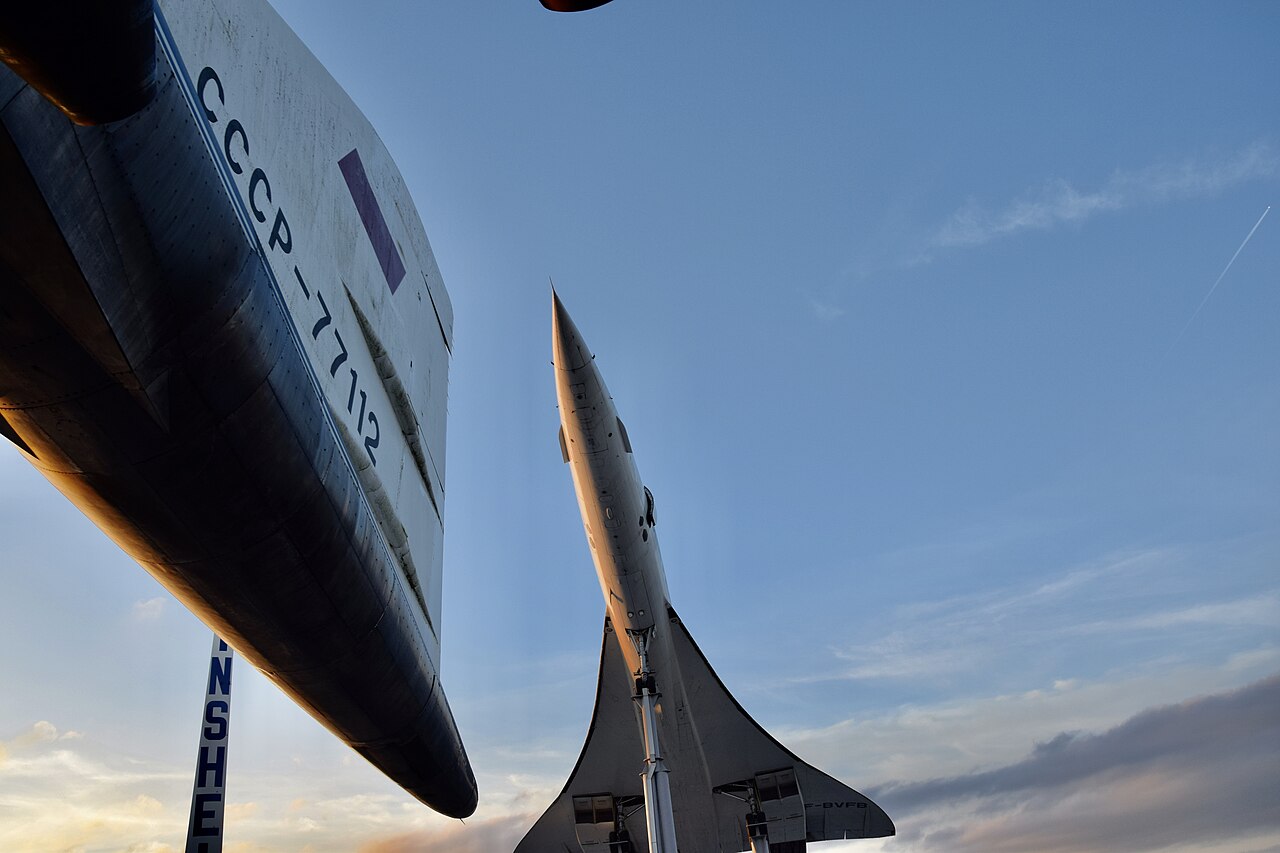
In the race of firsts, the Tu-144 won every lap: first flight, first through the sound barrier, first to Mach 2. In the race that mattered, carrying passengers safely, reliably and for years, Concorde won outright. Today the two rivals stand side by side on the roof of the Auto & Technik Museum in Sinsheim, Germany, noses drooped and frozen in a take-off they will never complete.
Sources: FlightGlobal, Concorde Special: Concorde Timeline (2003); FlightGlobal, Retrospective: Tu-144 Beats Concorde to First Flight; The National Archives (UK), Concorde’s First British Test Flight, 50 Years On (9 April 2019); Airbus, The Day Concorde Flew Into the History Books (March 2019); Musée de l’Air et de l’Espace, BAC/Sud Aviation Concorde Prototype 001 F-WTSS; British Airways, Celebrating Concorde; Kazan National Research Technical University (KAI), Tu-144: History of a Legend; NASA Dryden Flight Research Center, Tu-144LL SST Flying Laboratory, Fact Sheet FS-062-DFRC; Robert A. Rivers, E. Bruce Jackson, C. Gordon Fullerton, Timothy H. Cox and Norman H. Princen, A Qualitative Piloted Evaluation of the Tupolev Tu-144 Supersonic Transport, NASA/TM-2000-209850 (February 2000); NOVA, Supersonic Spies, PBS transcript (27 January 1998); Christopher Klein, The Cold War Race to Build the Concorde, History.com; CNN Travel, Tupolev Tu-144: the “Concordski”; Time, The Concordski (7 August 2000); Radio Free Europe/Radio Liberty, Soviet Icarus: The Supersonic Airliner Crash That Shook the World; Douglas G. Adler, Tu-144: The Soviet Supersonic Transport, HistoryNet; Encyclopædia Britannica, Tupolev Tu-144; NASA, NASA’s X-59 Completes First Flight (October 2025).
0 Comments