
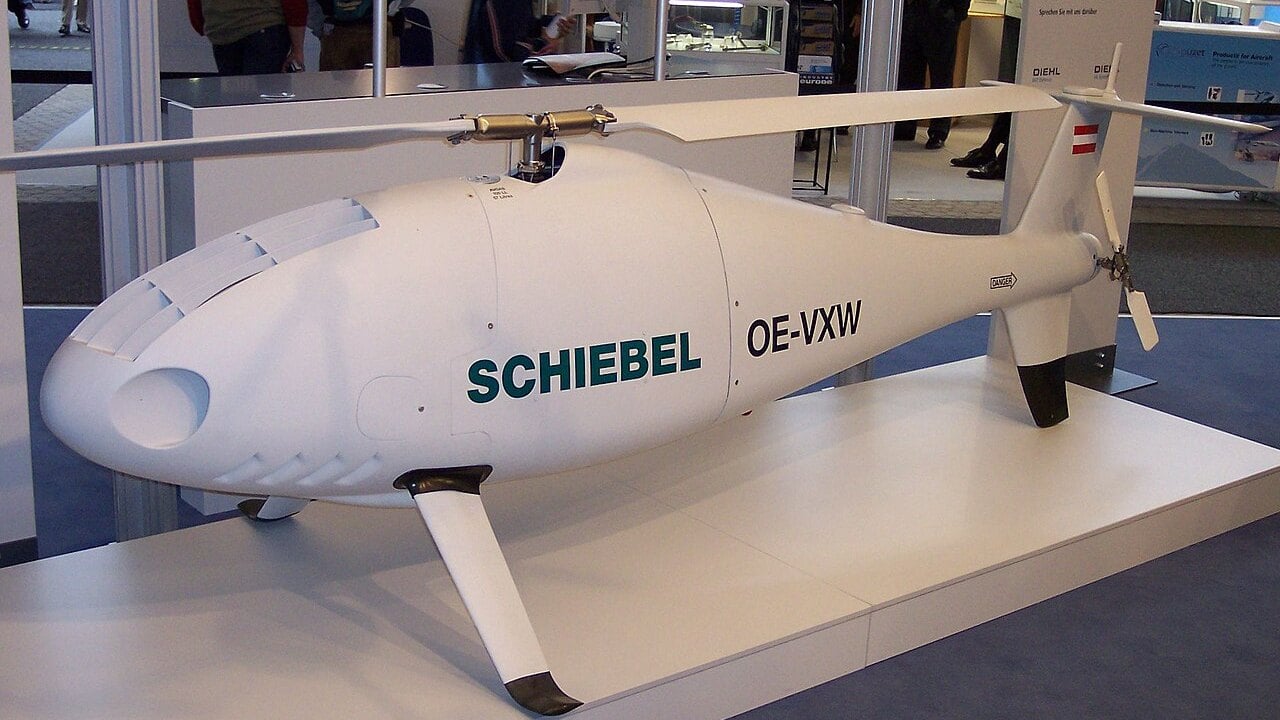
Most military test programmes try to stay out of sight. On Thursday 26 November and Friday 27 November 2026, the Royal Canadian Navy’s newest aircraft did the opposite: it flew loops over the Strait of Georgia off Nanaimo, British Columbia, broadcasting its position to anyone with a flight-tracking app.
The aircraft was the CU179 Peregrine, the navy’s first uncrewed helicopter. Vancouver tech journalist Peter Vogel spotted it on ADS-B trackers under the callsign NOMAD01 and registration 179001, first on Thursday morning over the Salish Sea north of Nanaimo at 200 feet and 7 knots, then again on Friday off Nanoose Bay.
Quick Facts
- Aircraft: CU179 Peregrine, the Royal Canadian Navy version of the Schiebel Camcopter S-100 uncrewed helicopter
- Latest flights: Thursday 26 and Friday 27 November 2026, off Nanaimo and Nanoose Bay, B.C.
- Seen on: Public ADS-B trackers, callsign NOMAD01, registration 179001
- Contractor: MDA Space (prime), Schiebel (aircraft)
- Contracts: About C$39 million for two systems, plan for up to six; about C$27 million for five years of support
- Planned ships: Halifax-class frigates; first frigate launch planned for 2027
- Capability: Initial operational capability planned for Q1 2028, full capability set for 2032
Defence Blog and DroneXL picked up his posts on Saturday 28 November. Nothing went wrong and nothing secret was revealed. But it was a rare public glimpse of a programme that has so far lived mostly in procurement releases.
An Austrian drone in Canadian colours
The Peregrine is the Royal Canadian Navy’s version of the Schiebel Camcopter S-100, a small Austrian-built uncrewed helicopter. On 5 August 2025, National Defence announced two contracts with MDA Space under its Intelligence, Surveillance, Target Acquisition and Reconnaissance Uncrewed Aircraft Systems project, known as RCN-ISTAR UAS.
The first contract, worth about C$39 million including taxes, buys two systems, with a plan for up to six. The second, about C$27 million, covers five years of in-service support and can be extended to 20 years. Schiebel supplies the aircraft through MDA. National Defence says the drones will improve the navy’s ability to carry out long-range surveillance and targeting from its Halifax-class frigates.
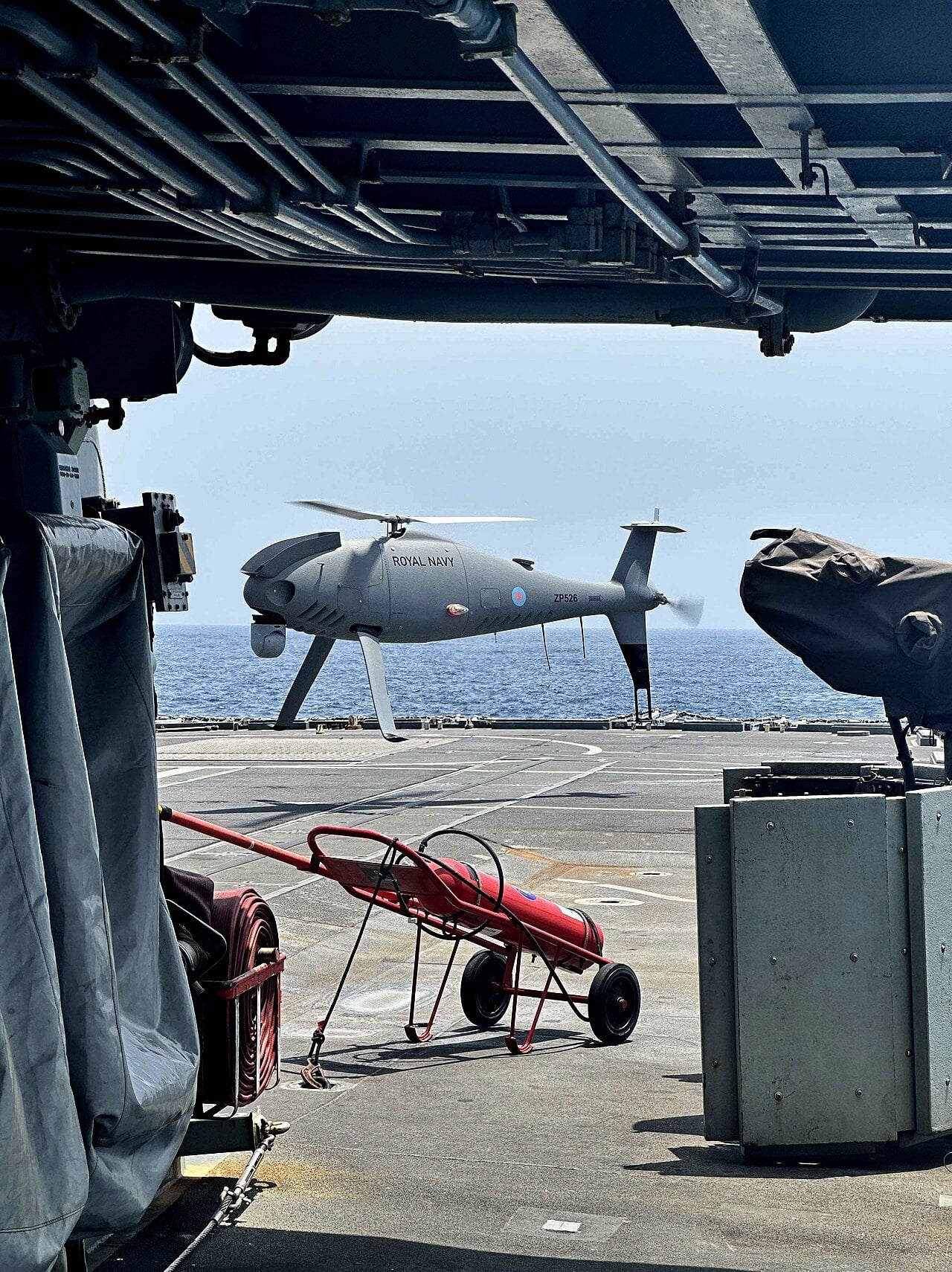
Canada accepted its first S-100 after factory acceptance testing in July 2026, FlightGlobal reported at the time. The type is no stranger to navies. Britain’s Fleet Air Arm already flies the S-100, and it uses the same name, Peregrine.
Flying from a range built for torpedoes
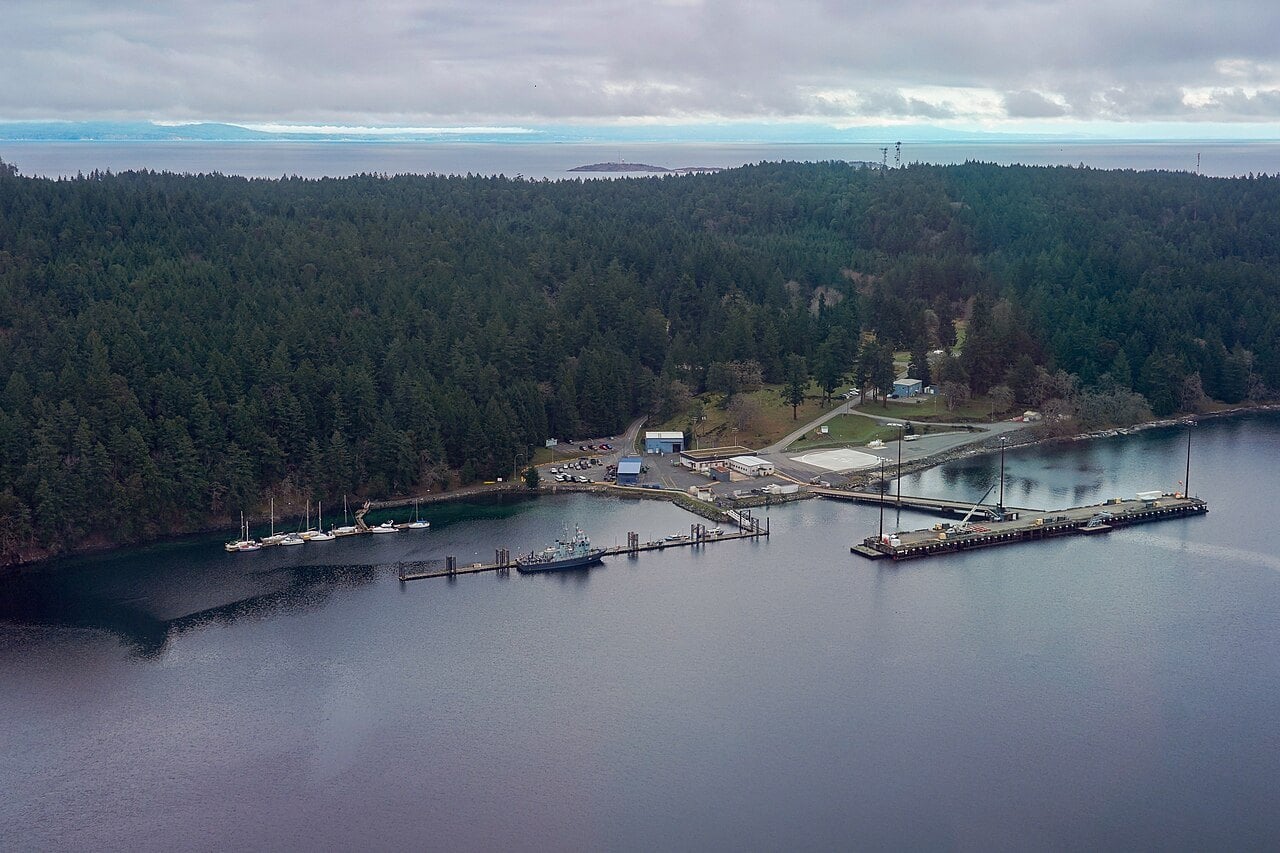
Nanoose Bay is not a random patch of sea. It is home to the Canadian Forces Maritime Experimental and Test Ranges, a joint Canadian-US facility on the east coast of Vancouver Island that normally tests sonobuoys, sonar and other underwater equipment.
The Peregrine’s first flight campaign ran there from 24 August to 4 September 2026, and included flights beyond visual line of sight with a ground-based radar watching the airspace, according to Canadian UAVs, which supplied the detect-and-avoid system. National Defence announced the navy’s first uncrewed helicopter flight at the end of September.
The late-November sorties look like more of the same steady test work. Vogel’s Friday screenshot, as described by DroneXL, showed the drone flying a tangle of loops between Nanoose Bay and Lasqueti Island at about 11 knots. In his Friday post, Vogel described the Peregrine’s job as over-the-horizon intelligence gathering.
From the test range to a frigate deck
The ship comes later. Lt Cdr Michaël X Déry, the navy’s deputy director of public affairs, told Shephard in October that before frigate trials the system will first be launched and recovered from other maritime platforms, to support testing, training and the writing of shipboard procedures.
The first launch and recovery from a Halifax-class frigate is planned for 2027, with initial operational capability in the first quarter of 2028. Full operational capability was set for 2032 when the contracts were signed.
Until then, the CU179 will keep flying slow, low circles over Nanoose Bay. For once, plane spotters on the other side of a phone screen can follow along.
Sources: National Defence (Canada), Peter Vogel on X, DroneXL, Defence Blog, Shephard, FlightGlobal, Canadian UAVs via Unmanned Airspace

0 Comments