
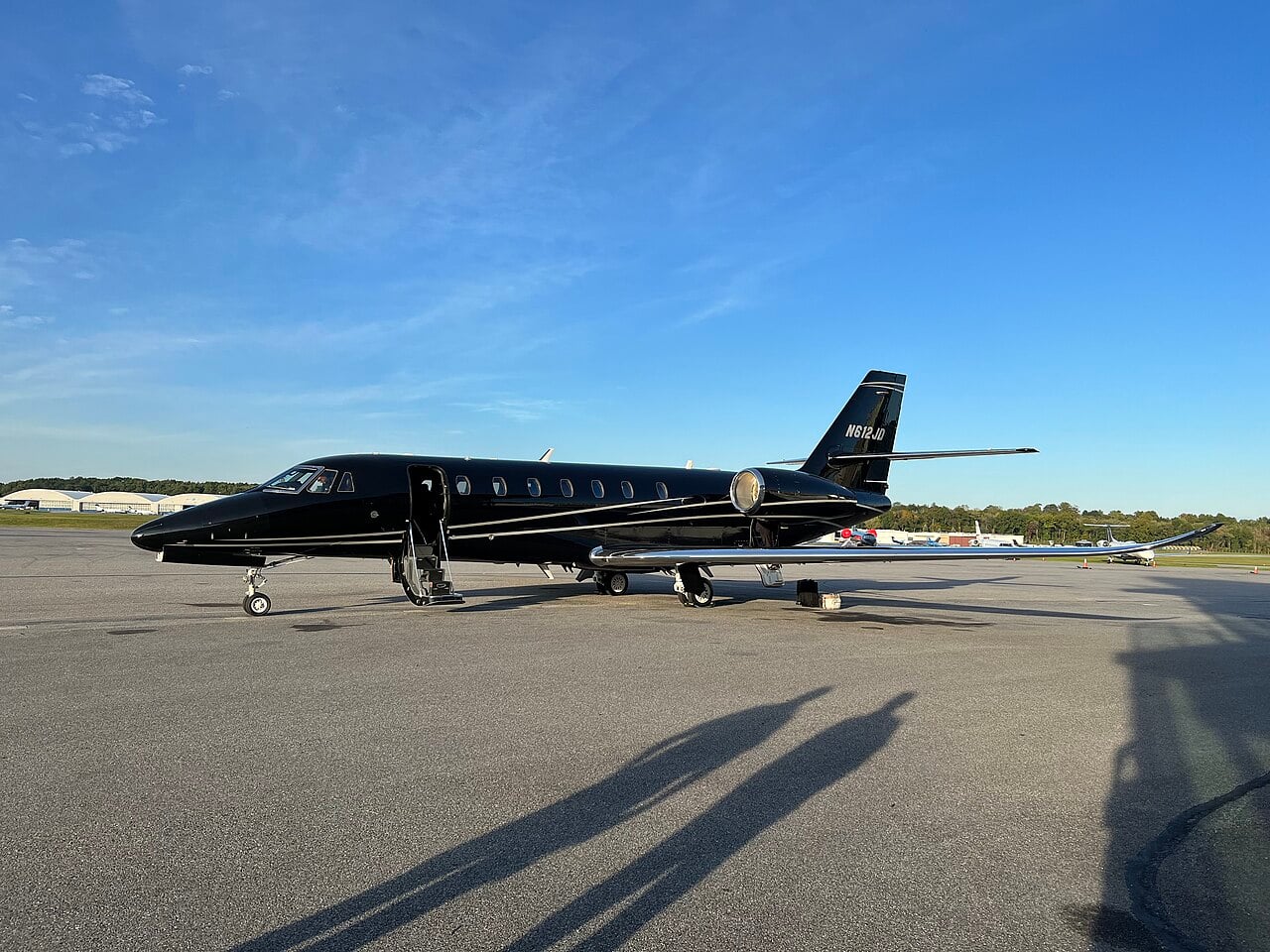
Two identical Cessna Citations sit on the same ramp at Westchester County Airport. Same type, same age, same paint shop, same pair of pilots available to fly either one. One of them can legally sell you a seat this afternoon. The other cannot, and if it tries, the FAA can propose a six-figure civil penalty against the people who arranged it.
Nothing about the aeroplanes explains the difference. The difference is a rulebook. American civil aviation runs on three of them, and which one applies to a given flight decides how experienced the pilot in the left seat must be, how the aircraft is maintained, whether anyone is required to be in the cabin, which airports the flight may use in bad weather, and who is allowed to be charged for the trip.
The middle rulebook is 14 CFR Part 135, and it is the least understood document in civil aviation.
Quick Facts: the three rulebooks
Part 91: general operating rules. Applies to everyone. No operating certificate
Part 135: commuter and on-demand operations. Charter, air taxi, most air ambulance
Part 121: domestic, flag and supplemental. The scheduled airlines
The certificate gate: 14 CFR 119.1
Part 135 cabin crew threshold: more than 19 passenger seats (135.107)
Part 135 maintenance threshold: 10 seats or more triggers a full maintenance programme (135.411)
US Part 135 operators: about 1,850 certificate holders flying about 11,760 aircraft (NTSB, citing FAA data, 2024)
Single-pilot operators: about 550, roughly 30 per cent of all Part 135 certificates
Three Rulebooks, One Sky
Part 91 is the floor. It contains the rules that apply to every civil aircraft in American airspace: right of way, altimeter settings, instrument procedures, minimum safe altitudes. A private owner flying a Cirrus to a holiday house operates under Part 91 and nothing else. So, more surprisingly, does a corporate flight department moving its own executives in a Gulfstream.
Part 121 is the ceiling. It governs domestic, flag and supplemental operations — in plain terms, the scheduled airlines and the large charter carriers that fly airliner-sized equipment.
Part 135 occupies the gap, and covers what the regulations call commuter and on-demand operations. In the real world that means charter, air taxi, most helicopter air ambulance work, small scheduled services into communities too thin for an airline, and a great deal of cargo.
The gate between them is 14 CFR 119.1, which says the certification requirements apply to each person operating civil aircraft “as an air carrier or commercial operator, or both, in air commerce.” Carrying people or property for compensation or hire, and holding yourself out to the public as willing to do so, is what pulls an operation out of Part 91 and into the certificated world.
Aviation International News on the practical difference between chartering under Part 91 and Part 135.
The Boundary Is Drawn in Seats and Pounds
Part 110 holds the definitions, and they are brutally specific. An on-demand operation includes common carriage flights, including turbojets, with a passenger-seat configuration of 30 seats or fewer excluding crew seats and a payload capacity of 7,500 pounds or less, where the departure time, departure location and arrival location are specifically negotiated with the customer. For noncommon or private carriage the limits tighten to fewer than 20 seats and a payload capacity of less than 6,000 pounds.
A commuter operation is a different animal: a scheduled service with at least five round trips a week on at least one route, flown by rotorcraft or by aircraft that are not turbojet-powered, carrying nine passengers or fewer with a payload of 7,500 pounds or less.
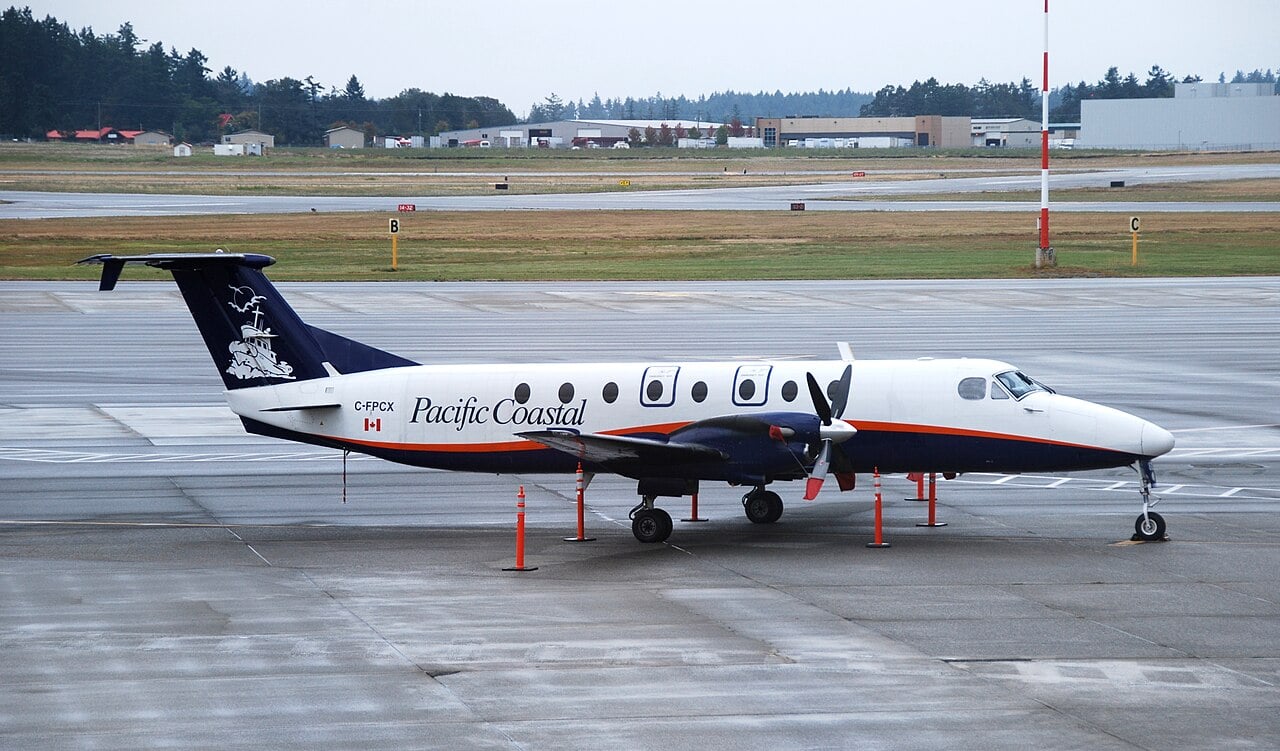
Those numbers are why American regional aviation looks the way it does. The nine-seat ceiling for scheduled commuter work and the 19-seat ceiling before a cabin crew member becomes mandatory are not arbitrary — they are the shapes the regulations cut, and manufacturers built aircraft to fit them. The Cessna Caravan at nine passengers and the Beechcraft 1900D at 19 are regulatory artefacts as much as engineering ones.
What Actually Changes: the Pilot
This is the difference passengers would care most about if they knew it existed.
Under Part 121, both pilots must hold an Airline Transport Pilot certificate. Section 121.436 requires the pilot in command to hold an ATP not subject to the restricted-privileges limitations, an appropriate type rating, and 1,000 hours in airline-type operations. The second in command must also hold an ATP and a type rating.
Under Part 135 the requirement depends on the aircraft. Section 135.243 demands an ATP for a turbojet, for any aircraft with 10 seats or more, and for a multi-engine aircraft in a commuter operation. Below that threshold, a pilot in command flying IFR needs a commercial pilot certificate, an instrument rating and 1,200 hours total time with 500 hours cross-country, 100 hours at night and 75 hours of instrument time. For VFR-only work the figure drops to 500 hours.
So the pilot flying nine fare-paying passengers in a single-engine turboprop through weather can legally be a 1,200-hour commercial pilot, while the first officer of a regional jet carrying 70 people must hold an ATP. Both are operating entirely lawfully.
What Actually Changes: the Cabin
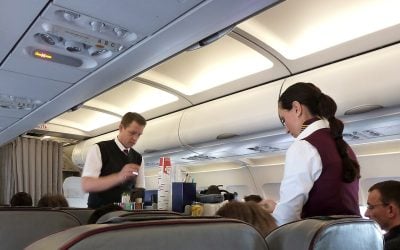
Section 135.107 is one sentence long: no certificate holder may operate an aircraft with a passenger seating configuration, excluding any pilot seat, of more than 19 unless a flight attendant is on board.
Part 121 draws the line in a completely different place. Section 121.391 requires one flight attendant for aeroplanes with a payload capacity above 7,500 pounds carrying more than nine but fewer than 51 passengers, two for more than 50, and an additional one for every unit or part unit of 50 seats above 100.
The practical result is a gap of ten seats. A 19-seat Part 135 commuter aircraft needs nobody in the cabin. A comparable aircraft operated under Part 121 would need a flight attendant from the tenth seat.
What Actually Changes: Maintenance and Weather
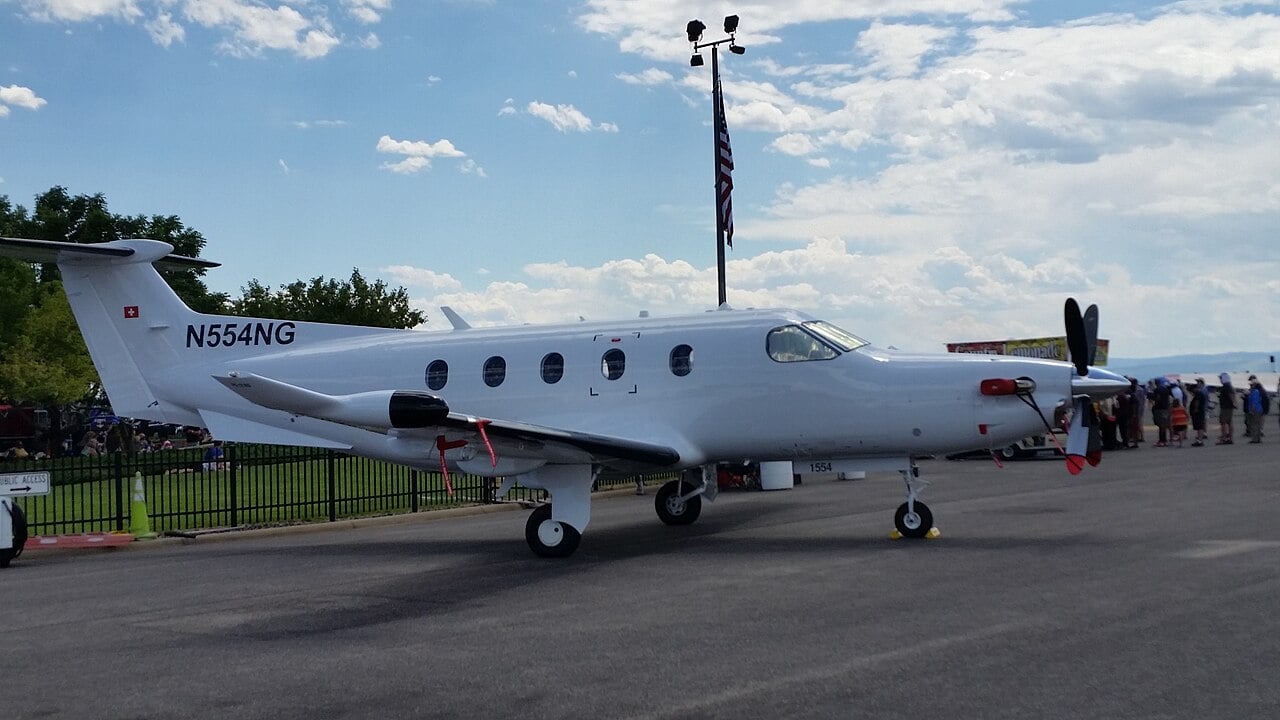
Maintenance splits at ten seats, not nineteen. Section 135.411 provides that aircraft type certificated for nine passenger seats or fewer are maintained under Parts 91 and 43 with a handful of additional Part 135 sections, while aircraft certificated for ten seats or more must be maintained under a full programme running from 135.415 to 135.443 — a continuous airworthiness maintenance programme with reliability reporting, mechanical interruption summaries and approved inspection intervals.
One seat either side of that line changes the entire maintenance philosophy of the aircraft.
Weather access differs too. Section 135.225 normally forbids beginning an instrument approach unless the destination has an approved weather reporting facility and the latest report shows conditions at or above minimums. An operator holding “eligible on-demand” authorisation — which requires higher crew experience and more demanding checking — may begin an approach at an airport with no weather reporting at all, provided the alternate has it and a current altimeter setting is available. The reward for exceeding the standard is access to airports the standard operator must overfly.
The Numbers Behind the Rulebooks
The NTSB publishes accident rates by operation type, using flight-hour estimates compiled by the FAA. The 2024 figures, per 100,000 flight hours, set out the ladder with uncomfortable clarity.
Scheduled Part 121 operations recorded 30 accidents in 19.1 million flight hours, an all-accident rate of 0.157, with no fatal accidents at all. Part 135 on-demand recorded 36 accidents, six of them fatal, in 4.19 million hours — an all-accident rate of 0.859 and a fatal rate of 0.143. Part 135 commuter operations came in at 1.061, with no fatal accidents. General aviation, operating under Part 91, recorded 4.526.
Read across that row and Part 135 on-demand sits roughly five and a half times above the scheduled airlines on all accidents, and roughly a fifth of the way down to general aviation. It is, numerically as well as legally, the middle rulebook.
The NTSB put it in its own words in special investigation report AIR-24-03, adopted in July 2024: “Historically, accident rates for Part 135 operations have fluctuated from year to year but have remained higher than the accident rates for Part 121 commercial airline operations, which are subject to the Federal Aviation Administration’s highest level of regulation and oversight.”
The same report supplies the scale of the industry. Citing FAA data from April 2024, it records that about 1,850 Part 135 certificate holders operated about 11,760 aircraft, and that about 550 of those certificate holders — roughly 30 per cent — are single-pilot or single-PIC operators, which it describes as “subject to the lowest levels of regulatory requirements and oversight compared to other Part 135 operations.”
The Board is careful not to treat the gap as simple negligence. It also wrote that while it believes the public deserves one level of safety across commercial aviation, “we also recognize that the diverse mission demands of some segments of the Part 135 industry may inherently involve unique risks that typically do not exist for Part 121 operations.” Flying an air ambulance to an unlit hospital pad at three in the morning is not the same job as flying a 737 between two international airports.
The career view of the same boundary, from a pilot who has flown both sides of it.
The Grey Zone, and What the FAA Does About It
Because the line between Part 91 and Part 135 is invisible from the ramp, it is routinely crossed — sometimes by people who do not know it exists, sometimes by people who know exactly what they are doing. The FAA runs two dedicated units against it, the Special Emphasis Investigations Team and the Safe Air Charter Team.
The enforcement record shows what the criminal end looks like. In May 2026 the FAA proposed a 336,000 dollar civil penalty against Planet Nine Private Air of Van Nuys, California, alleging the company intentionally submitted 21 inaccurate flight plans that described passenger flights as general aviation rather than commercial charter operations. The alleged violation is, in its purest form, mislabelling a Part 135 flight as Part 91.
In January 2023 the agency proposed a penalty of 1,037,478 dollars against Aircraft Resource Management of Kansas for allegedly conducting 78 charter flights without the required certification or qualified pilots. Larger figures sit further back in the list, including a proposed 5.89 million dollars against Humes McCoy Aviation in 2020. All of these are proposed penalties; operators have 30 days to respond, and the published figure is not necessarily the amount finally collected.
For a passenger the verification is simpler than the regulation.
The commercial pressure is real on the legitimate side too. Jenny Ann Urban, vice president of regulatory affairs at the National Air Transportation Association, told the FAA’s own publication in January 2026 that being undercut by illegal operators is her members’ number one complaint. An operator who skips the certificate skips the inspector oversight, the maintenance programme, the crew training and checking, the duty and rest limits, the drug and alcohol testing, the insurance requirements and the 7.5 per cent federal excise tax. It is a cheaper flight because it is a different flight.
JSX, and the Scheduled Airline That Legally Is Not One
The most interesting thing about Part 135 is what fits inside it that does not look like charter at all.
The Part 110 definition of an on-demand operation includes, in its first line, “passenger-carrying operations conducted as a public charter under part 380 of this chapter.” Part 380 is an economic regulation administered by the Department of Transportation, and it allows a charter operator to sell individual seats through a public charter operator rather than chartering the whole aircraft to one customer.
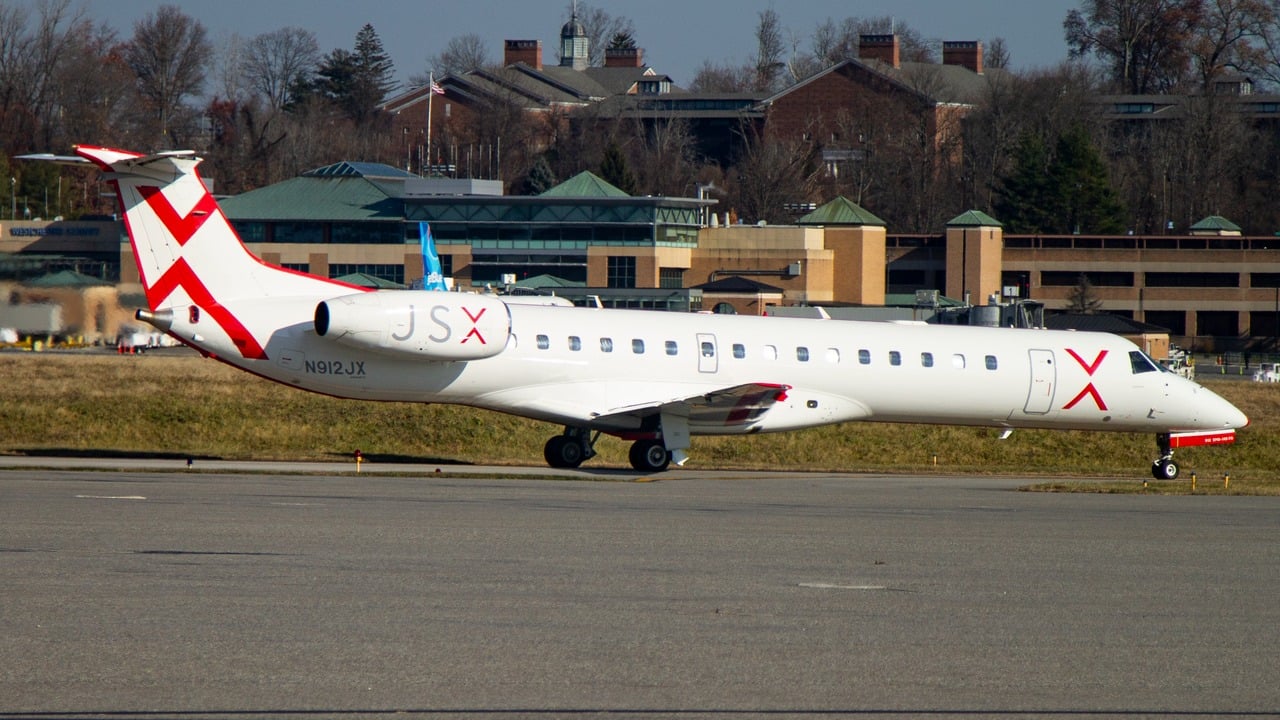
JSX uses exactly this structure. It flies Embraer ERJ-135 and ERJ-145 regional jets on published routes with published times, sells seats one at a time on a website, and operates them under Part 135 as public charters, from private terminals, with the aircraft configured to 30 seats. To a passenger it is indistinguishable from a small airline. To the regulations it is on-demand charter.
That structure has been argued over formally since 29 August 2023, when the FAA proposed a rule titled “Revisions to the Regulatory Definitions of On-Demand Operation, Supplemental Operation and Scheduled Operation” — an attempt to redraw the very Part 110 boundaries described above, after complaints from airlines and unions that the model lets a scheduled-looking service operate to a lower standard. The counter-argument is that the operator meets every Part 135 requirement that applies to it, and that the rules themselves define what it is doing as on-demand.
Why an operation that behaves like an airline is legally a charter, and what rides on the distinction.
Part 91 Is Not Automatically the Worse Option
It would be neat to conclude that more regulation means more safety and leave it there. The people who work inside the system do not say that.
A well-run corporate flight department operating under Part 91 may fly two-pilot crews with type ratings, run a voluntary safety management system, use flight data monitoring and maintain to manufacturer schedules that exceed anything Part 135 requires of a nine-seat operator. The regulation is a floor, not a ranking.
Part 91 also contains carve-outs that surprise people. Subpart F, beginning at 91.501, governs large and turbojet multi-engine aeroplanes in operations not involving common carriage, and lists what may be flown without a Part 135 certificate: ferry and training flights, aerial survey and pipeline patrol, demonstration flights to prospective customers, the owner’s personal transportation, carriage of company officials and guests incidental to the company’s business with no charge beyond the cost of owning and operating the aeroplane, time-sharing and interchange agreements, and the carriage of an athletic team or similar group where nobody is charged.
Subpart K, from 91.1001, handles fractional ownership — the NetJets model. A fractional programme requires a single programme manager, two or more airworthy aircraft, at least one aircraft with more than one owner, a minimum ownership interest for each owner, a dry-lease aircraft exchange and multi-year agreements. Part 119 expressly does not govern Subpart K operations when common carriage is not involved. Buying a share in an aeroplane is not the same as buying a seat on one, and the regulations treat it accordingly.
The Line You Cannot See
The useful way to think about Part 135 is not as a weaker version of being an airline. It is the rulebook that exists because the alternative — one standard for a 19-seat turboprop serving a village in Alaska and a widebody crossing the Atlantic — would either ground the first or hollow out the second.
What follows from that is a system full of thresholds: nine seats, ten seats, nineteen seats, twenty seats, 6,000 pounds, 7,500 pounds, five round trips a week. Each one is a place where the cost and the obligations step up, and each one is invisible from the terminal window.
Which is why the only question worth asking before buying a seat on a small aircraft is the one the FAA itself recommends: whose certificate is this flight operating on, and can you show it to me?
Sources: 14 CFR 110.2, 119.1, 121.391, 121.436, 135.1, 135.3, 135.107, 135.225, 135.243, 135.265, 135.267, 135.411, 91.501 and 91.1001 (Electronic Code of Federal Regulations, current to 25 November 2026); NTSB Special Investigation Report AIR-24-03, Safety Issues Related to Part 135 Operations, adopted 24 July 2024; NTSB Aviation Accident Statistics workbook 2005-2024, published 12 January 2026; NTSB press release, 22 May 2019; FAA, Cleared for Takeoff blog, Safe Air Charter, 21 January 2026; FAA Safe Air Charter rogue operator enforcement actions, updated 15 July 2026; FAA press releases on Planet Nine Private Air (28 May 2026) and Aircraft Resource Management (18 January 2023); National Business Aviation Association, The Risks of Flying with Illegal Charter Operators, 8 February 2019; FAA, Revisions to the Regulatory Definitions of On-Demand Operation, Supplemental Operation and Scheduled Operation, proposed rule, 29 August 2023.


0 Comments