

Pardo's Push - an incredible story of flying skills and bravery
In the realm of aviation, stories of heroism and bravery often take center stage, capturing the essence of the human spirit. Among these extraordinary tales is the remarkable account known as "Pardo's Push," an incident that unfolded in the skies during the Vietnam War. This true story showcases the unwavering dedication and selflessness of an F-4 Phantom II pilot who went above and beyond the call of duty to save the life of a fellow aviator. The date was 10 March 1967 - Pardo's thirty-third birthday - and the Vietnam War was in full swing. Four F-4C Phantoms of the 433rd Tactical Fighter Squadron, 8th Tactical Fighter Wing, had flown out of Ubon in Thailand to escort a strike on the Thai Nguyen steel mill, North Vietnam's only steel plant, some thirty miles north of Hanoi. On a fateful day, a group of F-4 Phantom II fighter jets, flying a dangerous mission deep into enemy territory, faced a life-threatening situation. At the center of this story is Captain Bob Pardo, an experienced F-4 pilot renowned for his flying skills and bravery. Pardo had been assigned to fly as the lead aircraft in a flight of Phantoms.The Incident and the Heroic Act
As the mission progressed, disaster struck. Anti-aircraft fire punched into the F-4C flown by Captain Earl Aman, with 1st Lt Robert Houghton in his back seat, and holed the fuel system. The engines were undamaged and the aircraft still handled normally. It simply could not hold fuel. Aman was trailing it across North Vietnam with no chance of reaching the tanker over Laos, let alone the runway at Ubon. Pardo's own Phantom had taken a hit as well, and was leaking too. He was flying with 1st Lt Steve Wayne in his own back seat. Aware of the dire situation, Captain Pardo made a decision that would defy the odds. He first told Aman to jettison his drag chute, then tried to plant the nose of his own Phantom into the empty chute compartment. The jet wash threw him off before he could get within ten feet of it. He tried again from underneath, attempting to carry the crippled aircraft on the spine of his own fuselage, and backed away when his nose started pitching up toward both canopies. Smashing them would have taken ejection off the table for everybody. Then he tried the thing nobody had tried. "Aman, drop your tailhook." The Phantom's heavy, carrier-type arresting hook swung down and locked, and Pardo edged forward until the steel tip of it came to rest against his own windscreen, roughly an inch of glass between the hook and his face. Aman shut his engines down to kill the jet wash. It held. Because the hook is built to swivel, it worked loose every fifteen to thirty seconds and Pardo had to back off and re-establish contact each time; when the glass began to craze, he moved the contact point down onto the metal frame at the base of the windscreen and kept pushing. It worked. Aman's rate of descent halved, from around 3,000 feet per minute to roughly 1,500. The two aircraft proceeded on a slow and treacherous journey toward friendly territory, Pardo pushing for some 88 miles by his own account, until they crossed into Laos at about 6,000 feet. Pardo's left engine caught fire on the way and he finished the push on one. All four men ejected over Laos. Aman and Houghton went first, then Wayne, then Pardo, who glided on a little further hoping to reach a friendly strip. Aman and Houghton suffered compression fractures of the spine, Pardo broke two vertebrae in his neck, and Wayne walked away essentially unhurt. Rescue helicopters picked all four of them out of hostile country, Pardo last.Punishment, Recognition and Remembrance
The act of heroism displayed by Captain Bob Pardo in "Pardo's Push" embodied the spirit of brotherhood and sacrifice among aviators in the Vietnam War. His unwavering determination and selflessness in the face of danger showcased the indomitable courage that became emblematic of those who served during the conflict. After the "Pardo's Push" incident, Pardo was very nearly court-martialled. Senior officers took the view that he had thrown away a serviceable aircraft, and at first did not believe he had been hit himself. By his own account it came to "seven days of ass-chewings" rather than paperwork, and the threatened charges were dropped once his wing commander, Colonel Robin Olds, became involved. No formal written reprimand has ever surfaced, though several accounts describe one. What is certain is that the Air Force sent a briefing team round the F-4 bases in Southeast Asia to make sure nobody tried it again. Despite the disciplinary action, it's worth noting that Pardo's actions in the "Pardo's Push" incident were widely recognized for their bravery and selflessness. The incident continues to be remembered as a remarkable act of heroism during the Vietnam War. In 1989, twenty-two years after the event, Pardo and Wayne were each awarded the Silver Star. A senator had pushed for the Air Force Cross; the Air Force downgraded it two weeks later. The story of "Pardo's Push" serves as a testament to the courage and camaraderie shared by those who served in the Vietnam War and continues to inspire future generations of aviators. "Pardo's Push" stands as a testament to the extraordinary acts of heroism and self-sacrifice that can emerge in the crucible of war. Captain Bob Pardo's courageous decision to push Captain Earl Aman's crippled F-4 Phantom II demonstrated the unyielding bond among those who fly in defense of their nation.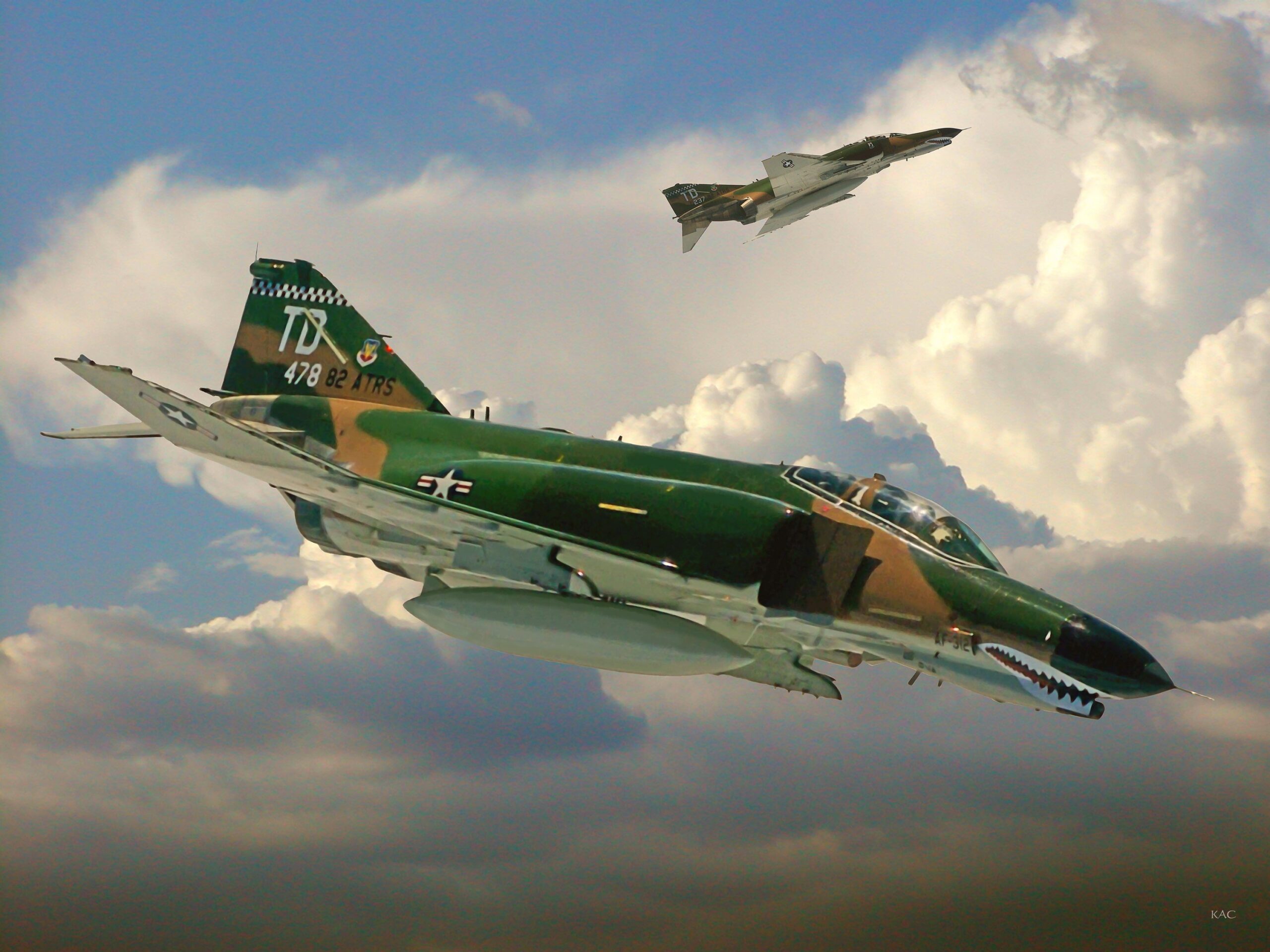

Related Questions
What was Pardo's Push?
Pardo's Push was a daring 1967 feat in the Vietnam War in which US Air Force pilot Captain Bob Pardo used his own F-4 Phantom to physically push a crippled, fuel-starved F-4 through the air, extending its flight far enough for both crews to escape enemy territory before ejecting.
Who was Bob Pardo?
Captain Bob Pardo was a US Air Force F-4 Phantom pilot with the 8th Tactical Fighter Wing during the Vietnam War. He is remembered for the selfless airmanship of "Pardo's Push," risking his own aircraft and crew to save a fellow pilot whose jet was too damaged to make it home.
How did Pardo push another jet in mid-air?
Pardo positioned his Phantom behind and below the stricken aircraft and rested its windscreen against the other jet's lowered tailhook. By gently throttling forward he slowed the damaged jet's descent — a feat of precision flying as delicate as aerial refuelling.
What is the F-4 Phantom II?
The McDonnell Douglas F-4 Phantom II was a twin-engine American fighter-bomber widely used in the Vietnam War and beyond. Big, fast and versatile, it served as an interceptor, strike aircraft and reconnaissance platform, becoming one of the most important Cold War combat jets.
Did both crews survive Pardo's Push?
Yes. Thanks to Pardo's manoeuvre, the damaged aircraft stayed airborne long enough to cross into safer territory, where the airmen ejected and were recovered. Pardo's own jet ran out of fuel as well, forcing his crew to eject too — but everyone survived.
Why is Pardo's Push famous?
It is celebrated as one of the greatest displays of airmanship and selflessness in combat aviation. Pushing one jet with another is almost unthinkable, and Pardo's calm improvisation under fire turned a hopeless situation into a successful rescue, earning lasting admiration.


0 Comments