
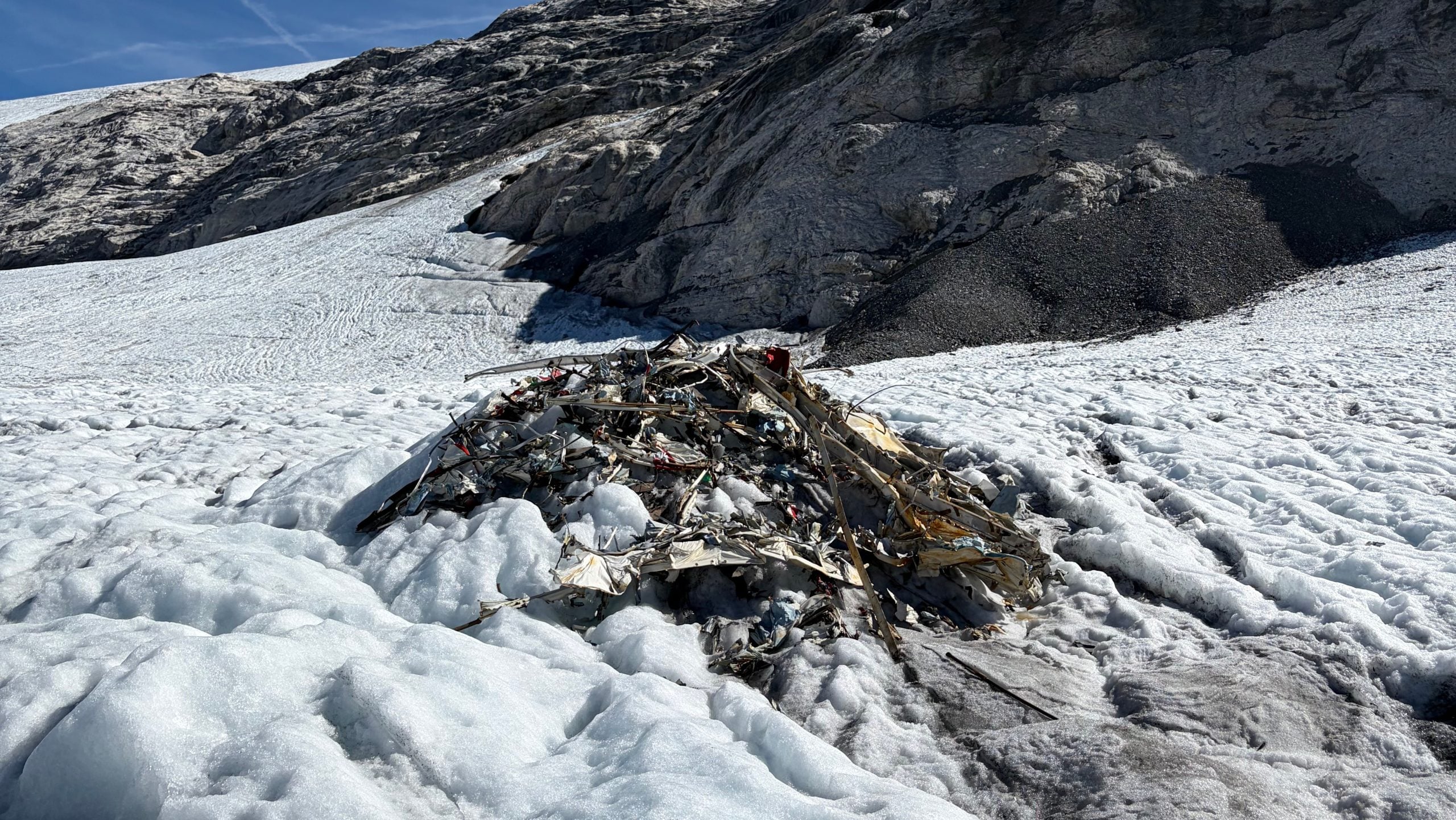
A walker in the Swiss canton of Uri came across something metallic lying on the ice near the Hüfifirn glacier and called the police. The police called the accident investigators. The investigators confirmed it was light alloy from an aircraft.
Then came the part that makes this more than a curiosity. Nobody had lost an aircraft there recently. The last one went in more than sixty years ago.
The glacier has simply melted far enough to give it back.
Informations clés
Où: the Hüfifirn glacier, near the Clariden pass between the Swiss cantons of Uri and Glarus
Found by: a hiker, who alerted the Uri cantonal police
Confirmed by: the Swiss Transportation Safety Investigation Board (SUST), which identified the material as aircraft light alloy
Police statement: issued 9 September 2026
Recovered: 3 September 2026 — roughly 250 kilogrammes of material
Probable origin: an aircraft that crashed there in 1963. A definitive identification was not initially possible
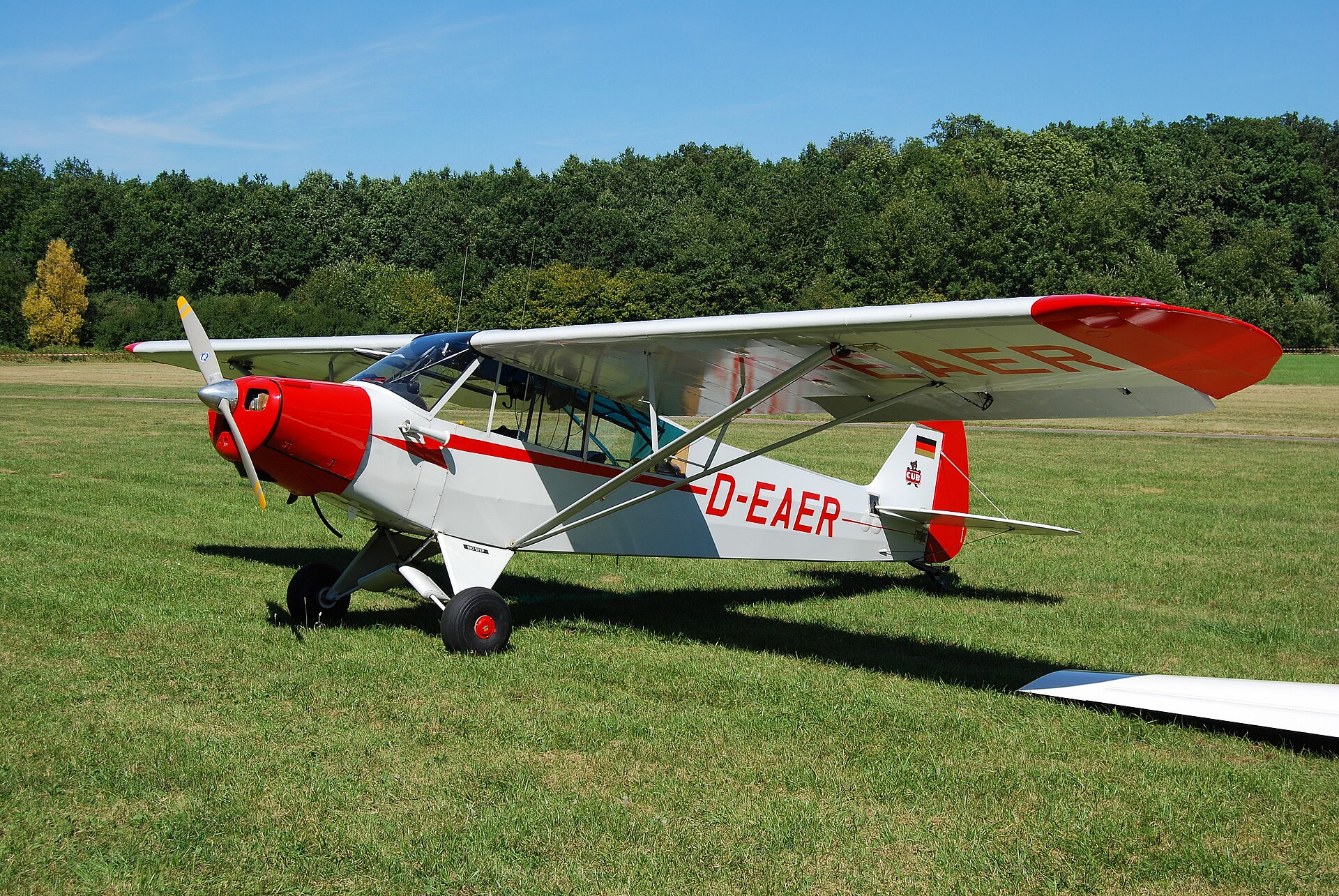
The likely aircraft: according to SRF, citing SUST records, a Piper PA-18 Super Cub that crashed while attempting to recover another aircraft. Nobody was hurt in either accident
What happens to it: the parts are being disposed of by a recycling firm, not preserved
Two crashes, one day apart
The sequence reported by SRF, drawing on SUST records, is almost farcical and entirely believable to anyone who has flown in mountains.
First a light aircraft built by Champion came down on the Hüfifirn. The following day an aircraft sent to help recover it crashed too. That second aircraft was a Piper Super Cub. Neither accident injured anyone.
The first aeroplane was eventually recovered. The Super Cub was not, and it is the Super Cub that the ice has now surrendered.
The police were matter-of-fact about why the wreck was left there in the first place.
In 1963 there was no heavy-lift helicopter standing by to sling a broken aeroplane off a high Alpine glacier. If nobody was hurt and the aircraft was written off, it stayed where it was and the snow covered it. Within a season it was gone.
Why a Super Cub was up there at all
A modern reader might wonder what a small fabric-covered taildragger was doing on a glacier. The answer is that in Switzerland in 1963, that was the aircraft for the job.
Hermann Geiger, the Valais pilot universally known as the glacier pilot, had spent the 1950s proving that a Piper PA-18 fitted with skis could land on and take off from Alpine glaciers. He flew more than six hundred rescue missions doing it, and he made mountain aviation in Switzerland a practical discipline rather than a stunt.
Geiger died in 1966. By then a generation of Swiss pilots had followed him onto the ice, and recovering a downed aircraft from a glacier with a Super Cub was an entirely ordinary thing to attempt. Sometimes, as the Hüfifirn shows, it did not work.
Hermann Geiger landing on Alpine glaciers, filmed in 1958. In French.
The glacier is the real story
Wreckage emerging from Swiss ice is no longer a freak event. As Alpine glaciers retreat they are steadily handing back what they swallowed: aircraft, climbing equipment, and in several well-documented cases the bodies of people who disappeared decades ago.
Each find is a small, precise measurement. This one says that the ice at the point where an aeroplane came to rest in 1963 has now thinned enough for the wreck to sit on the surface, sixty-three years later.
There will be no museum piece. The roughly 250 kilogrammes of aluminium recovered on 3 September is going to a recycling firm, which is a slightly melancholy end for an aircraft that spent six decades in a glacier. It is also, in fairness, exactly what you would do with sixty-year-old crumpled airframe metal.
The mountain kept it a long time. Then it changed its mind.
A short documentary on Hermann Geiger and the origins of Alpine glacier flying. In German.
Sources: Kantonspolizei Uri statement of 9 September 2026, Swiss Transportation Safety Investigation Board (SUST), SRF, aeroTELEGRAPH.

0 Comments