
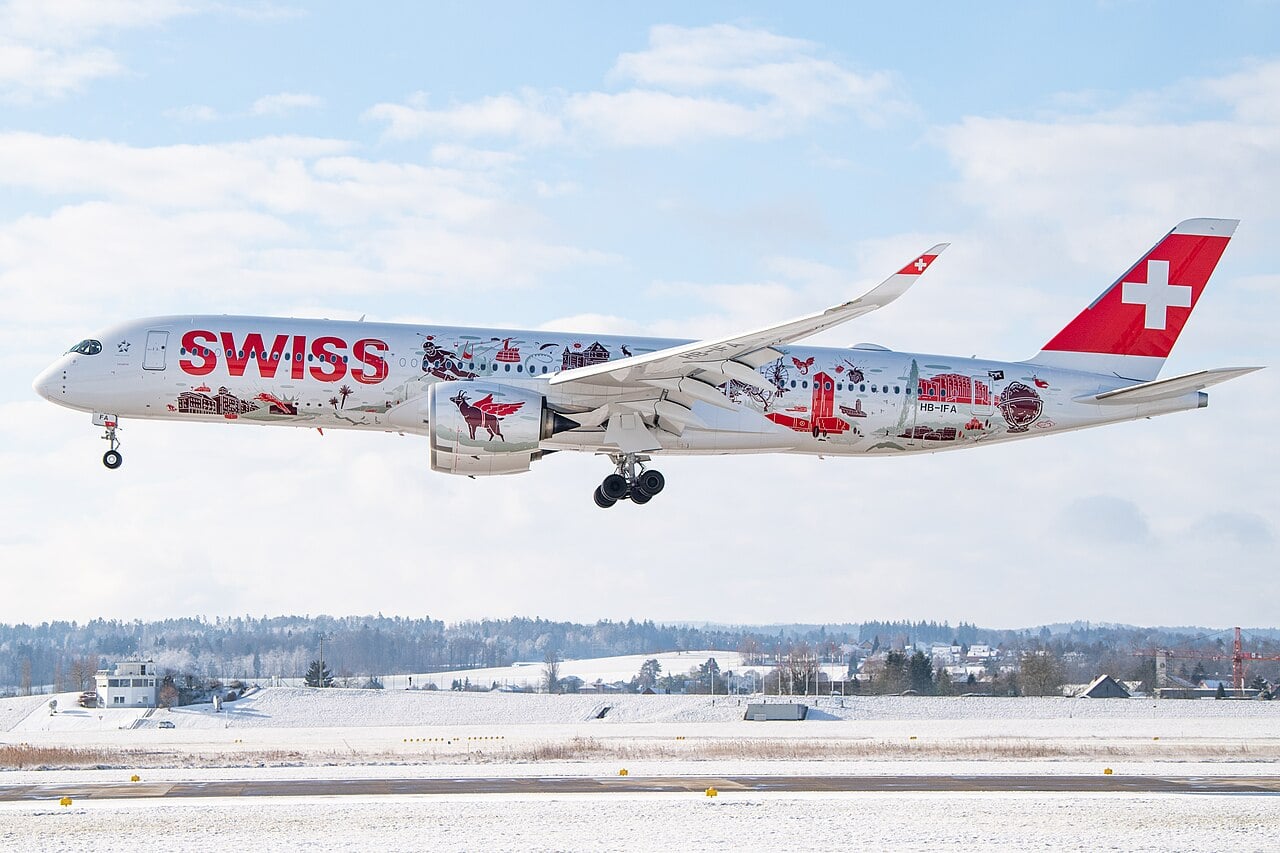
Swiss has a third Airbus A350. According to aeroTELEGRAPH, HB-IFC arrived in Zurich on 12 September, joining the two A350-900s already in the fleet and continuing the slowest, most consequential fleet change the airline has made in twenty years.
Three aircraft out of ten does not sound like much. But each one that lands at Zurich retires a piece of an aeroplane that has defined Swiss long-haul flying since the airline was founded out of the wreckage of Swissair.
Informations clés
L'avion : Airbus A350-900, registration HB-IFC, reported by aeroTELEGRAPH as arriving in Zurich on 12 September 2026
First of the type: HB-IFA, named Lausanne, delivered October 2025
Second: HB-IFB, named Delémont, delivered February 2026
Total on order: Ten A350-900s
Rôle: Long-haul fleet renewal, replacing the Airbus A340-300
Naming convention: Swiss names its aircraft after Swiss places
Note: The arrival of HB-IFC is reported by a single outlet at the time of writing
Why Replacing the A340 Matters
The A340-300 is a four-engined long-haul aircraft from a period when twin-engine jets were not yet trusted to cross oceans on their own. It is a good aeroplane and a thirsty one. Four engines means four times the maintenance, four times the parts inventory, and fuel burn that made sense in 1993 and stopped making sense somewhere around the time oil prices decoupled from optimism.
The A350-900 replaces it with two engines, composite structure and substantially lower fuel consumption per seat. For an airline whose home market is small, expensive and premium-heavy, the economics of the long-haul fleet are close to the whole business model.
One Aircraft at a Time
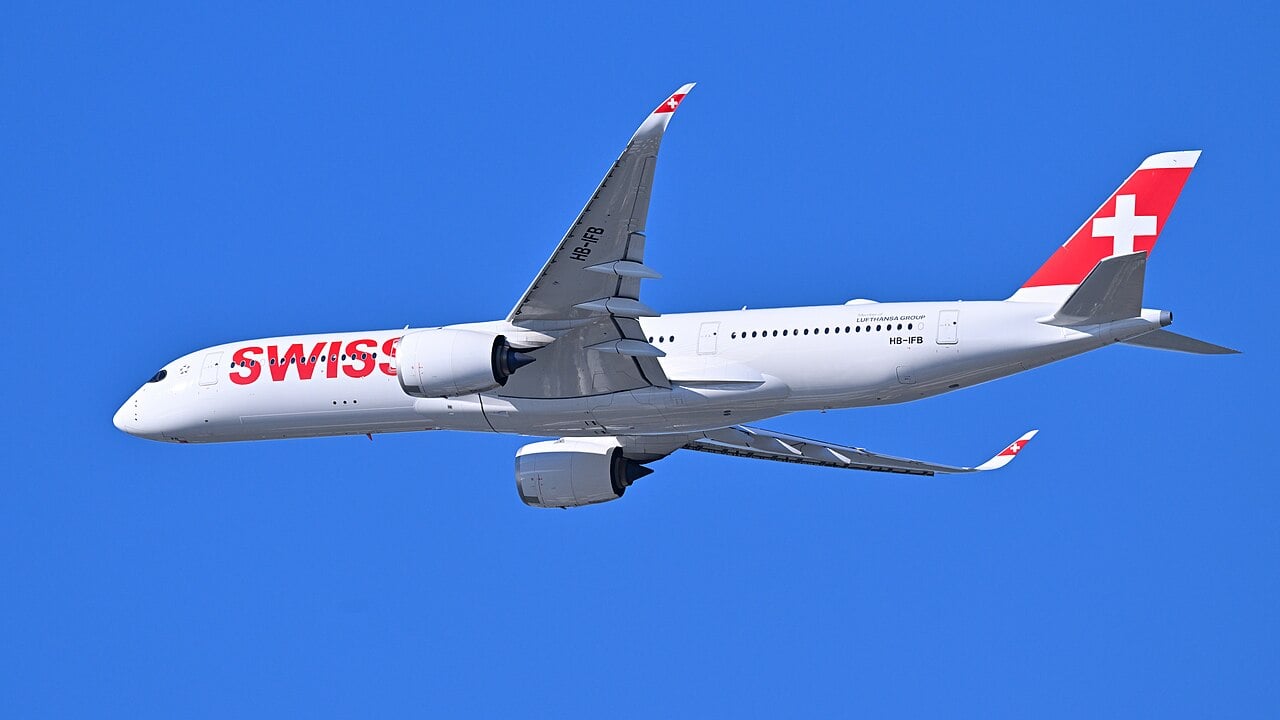
Swiss took its first A350, HB-IFA, in October 2025, and named it Lausanne. The second, HB-IFB Delémont, followed in February 2026. That is a deliberately unhurried tempo, and it reflects how airlines actually absorb a new type: crews to be trained, engineers to be certified, spares to be positioned, procedures to be rewritten.
The naming is not incidental either. Swiss names its aircraft after Swiss places, which turns a fleet list into a slow tour of the country and gives a national carrier the thing national carriers trade on.
What has not been reported at the time of writing is what HB-IFC is called. Nor has the airline’s own newsroom confirmed the arrival independently, which is worth flagging: the 12 September delivery rests on a single outlet’s reporting for now.
The Long Tail of Swissair
There is a longer story sitting behind the fleet plan. Swiss exists because Swissair collapsed in 2001, and the airline that emerged was smaller, more cautious and eventually absorbed into the Lufthansa Group. Fleet renewal at that scale — ten widebodies, delivered across years — is the kind of capital commitment the post-2001 airline could not have contemplated on its own.
So a third A350 landing at Zurich is a small item in an aviation news feed and a reasonably large statement about the health of a flag carrier that very nearly did not survive its own founding decade.
Swiss’s own film of the first A350 arriving at Zurich, complete with water salute:
Foire aux questions
How many Airbus A350s does SWISS have?
What is the SWISS A350 replacing?
Why does SWISS name its aircraft after Swiss places?
Why is the A350 more efficient than the A340 it replaces?
Is the arrival of HB-IFC confirmed by SWISS?
How is SWISS connected to Swissair?
Sources: aeroTELEGRAPH, SWISS newsroom, AviTrader, Airways Magazine, World Airline News.
Articles similaires
0 Comments