
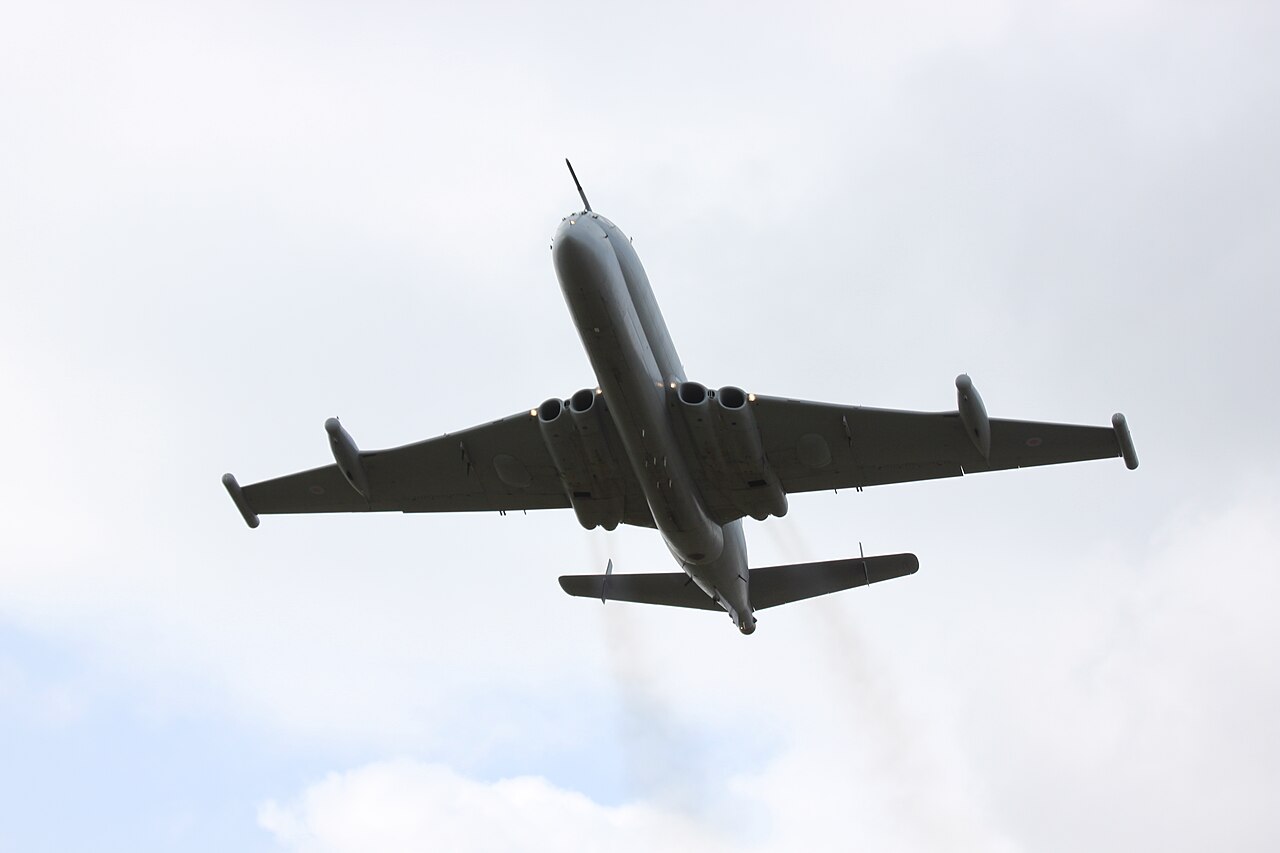
The de Havilland Comet was the world’s first jet airliner and, after three of them came apart in the air, the most notorious. Its reputation never recovered. But the last two unfinished Comet 4C fuselages on the Hawker Siddeley line did not go to scrap. They became the prototypes for an aircraft that hunted Soviet submarines in the North Atlantic for forty-two years.
The Nimrod was the world’s first jet-powered maritime patrol aircraft, and for most of its life it was very good at a job almost nobody could see it doing. It ended badly, twice: once in a fireball over Afghanistan, and once in a scrapyard at Woodford with five brand-new aircraft being cut up behind screens.
Informations clés
Origine: Built on the de Havilland Comet 4C airframe. The two prototypes, XV148 and XV147, used the last two unfinished Comet fuselages
Premier vol : 23 May 1967
Into RAF service: 2 October 1969, first aircraft XV230
Construit: 49 production aircraft plus 2 prototypes
Moteurs : Four Rolls-Royce Spey, 12,160 lbf each, replacing the Comet’s Avons
Équipage: 13
Endurance: About 10 hours, extended by shutting down up to two engines on patrol
Armes : 20,000 lb internal bay, up to 150 sonobuoys, torpedoes, depth charges, Harpoon
MR2 withdrawn: 31 March 2010. The R1 flew last on 28 June 2011
A jet that could loiter
The requirement went out in June 1964 to replace the piston-engined Avro Shackleton, and the choice of a jet airframe was not obvious. Maritime patrol is mostly loitering, and jets are not good at loitering. The Nimrod’s answer was brute capacity: the unpressurised pannier grafted under the Comet fuselage held the sensors and the weapons bay, and on station the crew simply shut down one or two of the four Speys and cruised on the rest, restarting them with crossfed compressor air when something happened.
That gave roughly ten hours on task, a 44,000 ft ceiling when it needed to get somewhere quickly, and 500 knots when it needed to get there very quickly. A Shackleton could not do any of that. The crew of thirteen included two pilots, a flight engineer, two navigators, an air electronics officer and a back end of acoustic and electronic warfare operators.
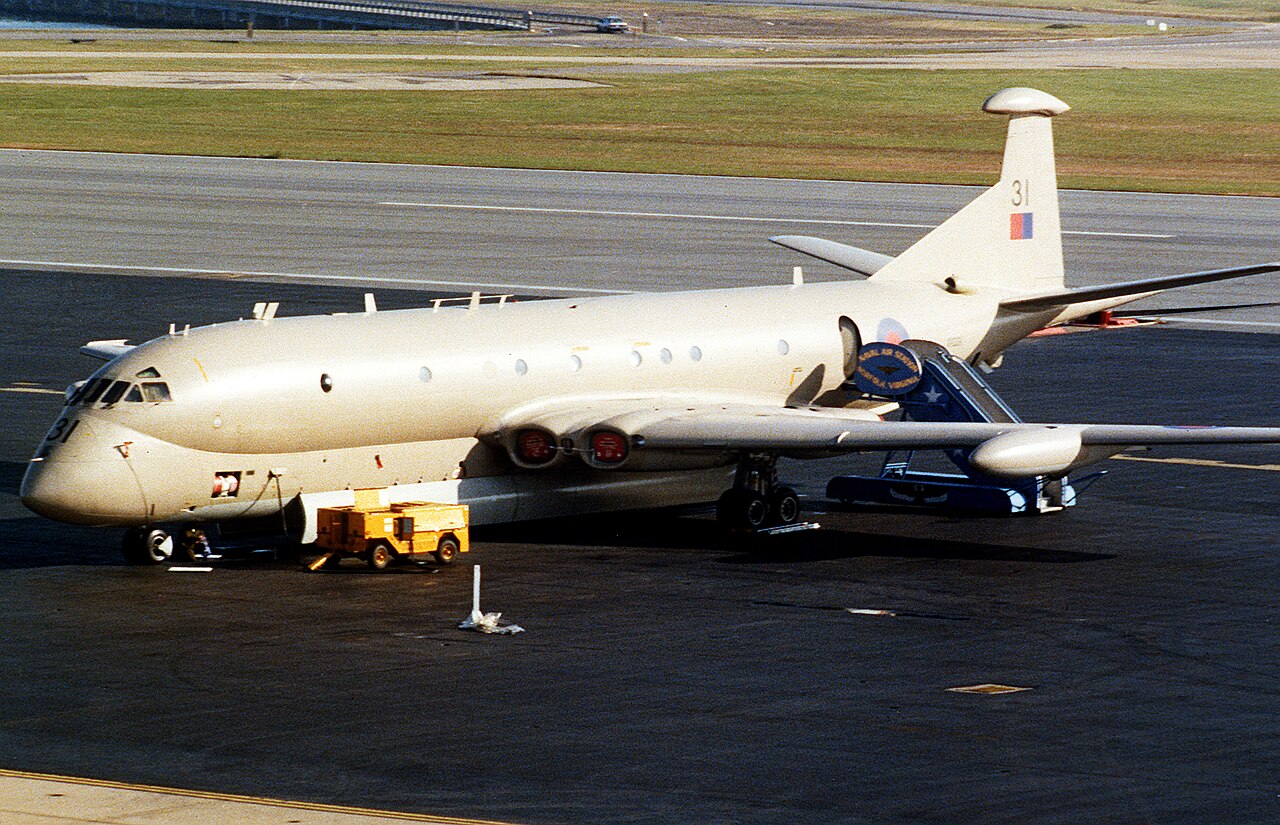
The primary job during the Cold War was finding Soviet submarines in the North Atlantic and, above all, making sure nobody else was finding Britain’s own Resolution-class ballistic missile boats. From 1977 the fleet also patrolled the new 200-nautical-mile exclusive economic zone, roughly 270,000 square miles of water.
It could carry nuclear depth bombs, which is the part most people have forgotten: two American-owned B57s until 1992, and two British WE.177A weapons of about ten kilotons. A converted airliner with a nuclear weapon in the bomb bay, orbiting over the Atlantic, is a fair summary of what the Cold War actually looked like.
A documentary on the Nimrod in RAF service, covering the maritime patrol role it was built for.
The Falklands and the Gulf
The Falklands stretched it further than anyone intended. Nimrods deployed to Ascension Island on 5 April 1982 and flew 111 missions from there. On 15 May XV232 flew a patrol lasting 19 hours and 5 minutes. Five days later another aircraft covered 8,453 miles in a single sortie, the longest flight of the war. Sidewinders were bolted on for self-defence, which was never a standard fit and tells you something about how exposed those sorties were.
In the 1991 Gulf War five MR2s operated from Seeb in Oman, using a towed radar decoy operationally for the first time, and were credited with helping sink or damage sixteen Iraqi vessels. Later the aircraft spent years doing something it was never designed for at all: long overland intelligence sorties above Afghanistan and Iraq, using maritime sensors to watch a land war.
XV230
On 2 September 2006, XV230 — the very first Nimrod delivered to the RAF, thirty-seven years earlier — was flying over Helmand province when a fire warning sounded at 11:11. Six minutes later the aircraft exploded near Kandahar. All fourteen people aboard were killed: twelve RAF, one Royal Marine, one soldier. It remains the largest single loss of British service personnel since the Falklands.
The Board of Inquiry found that fuel had escaped during air-to-air refuelling and pooled in a dry bay, where it met a duct running at around 400°C. That duct was part of the same crossfeed system that let the crew restart shut-down engines. The design elements that combined to destroy the aircraft had been added across three separate decades: the crossfeed duct around 1969, a supplementary cooling pack around 1979, the permanent refuelling modification around 1989. None of them was dangerous alone.
Charles Haddon-Cave QC was asked to review it. His report, published on 28 October 2009 and subtitled A Failure of Leadership, Culture and Priorities, concluded that the Nimrod Safety Case produced between 2001 and 2005 had missed the very hazards that killed the aircraft, and that had it been done properly the loss would have been avoided. Forty per cent of hazards had been left open, thirty per cent unclassified, including the catastrophic fire hazard.
He traced the failure to a dilution of the airworthiness regime under financial pressure after the 1998 Strategic Defence Review, and called it a systemic breach of the Military Covenant. The Defence Secretary accepted it in the Commons the same day.
BAE Systems issued a statement the following day accepting full responsibility for the failings and apologising unreservedly. An independent Military Aviation Authority was established in April 2010, which is the most durable thing to come out of the whole affair.
The replacement that was cut up
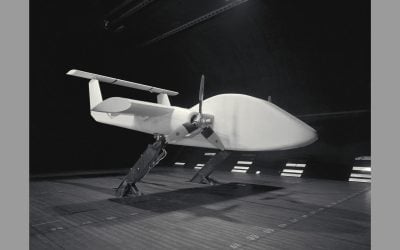
The MRA4 was supposed to be the answer. BAe was selected in July 1996 on a fixed-price contract for 21 aircraft at £2,813 million, in service by April 2003. The plan was to reuse the existing fuselages with new wings, new engines and new systems.
The problem was that the Comet fuselages had been hand-built in the 1950s and, as BAE’s own design director later put it, had not been built to a common standard. Reusing them turned out to mean measuring and accommodating each one individually. The new wing then had to be redesigned, halting the programme. By the end only about ten per cent of a finished MRA4 was actually old airframe, which rather defeated the point.
Numbers fell from 21 to 18 to 12 to 9. The National Audit Office recorded an overrun of £789 million, a delay of 114 months, £3.4 billion spent and a unit cost increase of 199 per cent. The Public Accounts Committee called it £3.6 billion wasted. On 19 October 2010 the Strategic Defence and Security Review cancelled it outright, and from 26 January 2011 the completed aircraft were broken up at Woodford behind screens while the BBC filmed from a helicopter.
The counter-argument deserves an airing, because the scrapping is usually reported as vandalism. The aircraft were grounded at the point of cancellation and the Financial Times reported several hundred outstanding design non-compliances. These were not finished aeroplanes being destroyed out of spite. They were unfinished aeroplanes that had already consumed more than three billion pounds with no credible date for entering service.
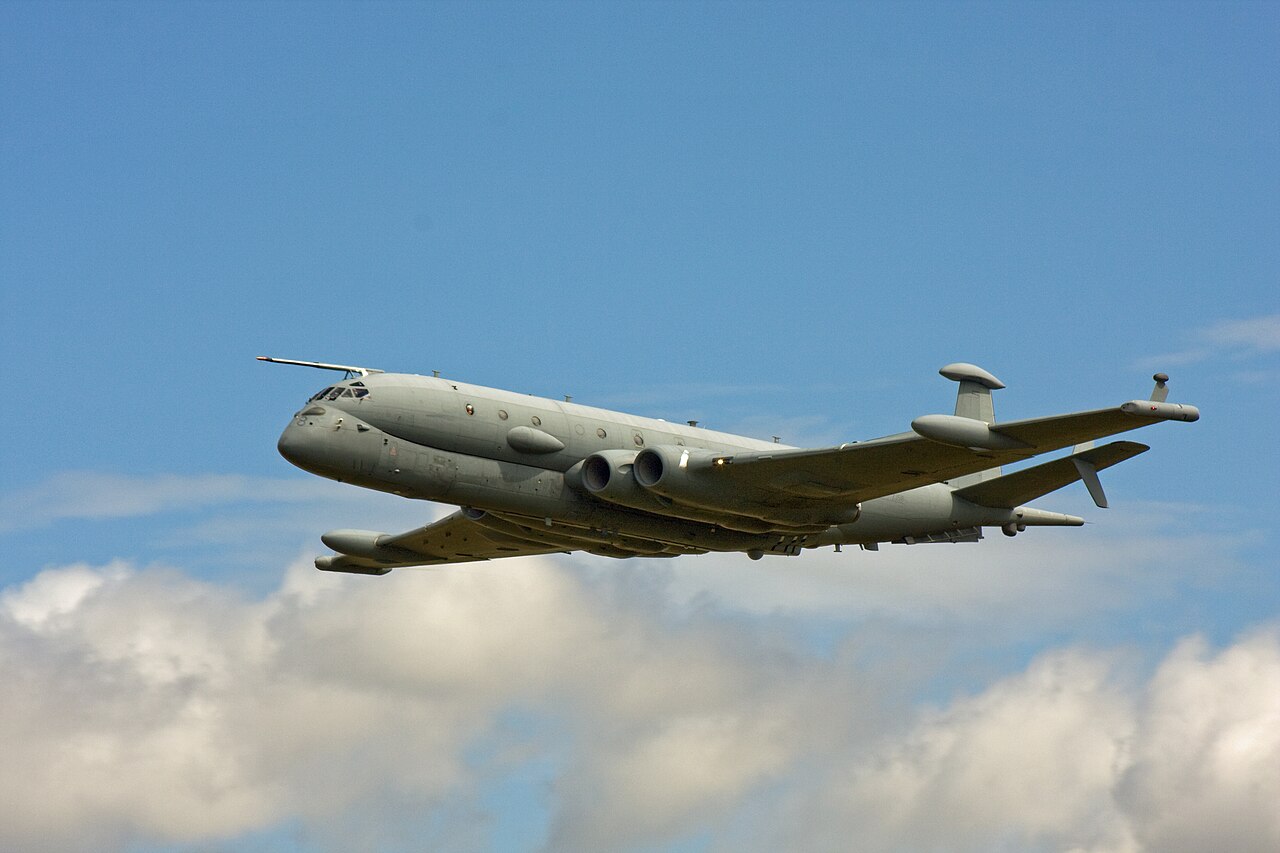
The MRA4 in the air at Fairford in 2007, four years before the survivors were cut up.
Britain then had no maritime patrol aircraft at all until the first Boeing P-8A Poseidon arrived, a gap of several years in which allied aircraft covered the northern approaches. The Nimrod’s last flight of any kind was an R1 signals intelligence aircraft on 28 June 2011.
Archive footage of the Nimrod in its element.
Forty-two years is a long run for an airframe that began as a cancelled airliner with a reputation for breaking up. The aeroplane was not the problem. What surrounded it, at the end, was.
Sources: The Nimrod Review (HC 1025), Charles Haddon-Cave QC, 28 October 2009; National Audit Office Major Projects Reports 2010 and 2011; House of Commons Public Accounts Committee HC 687; Hansard; The Engineer; Financial Times.
0 Comments