
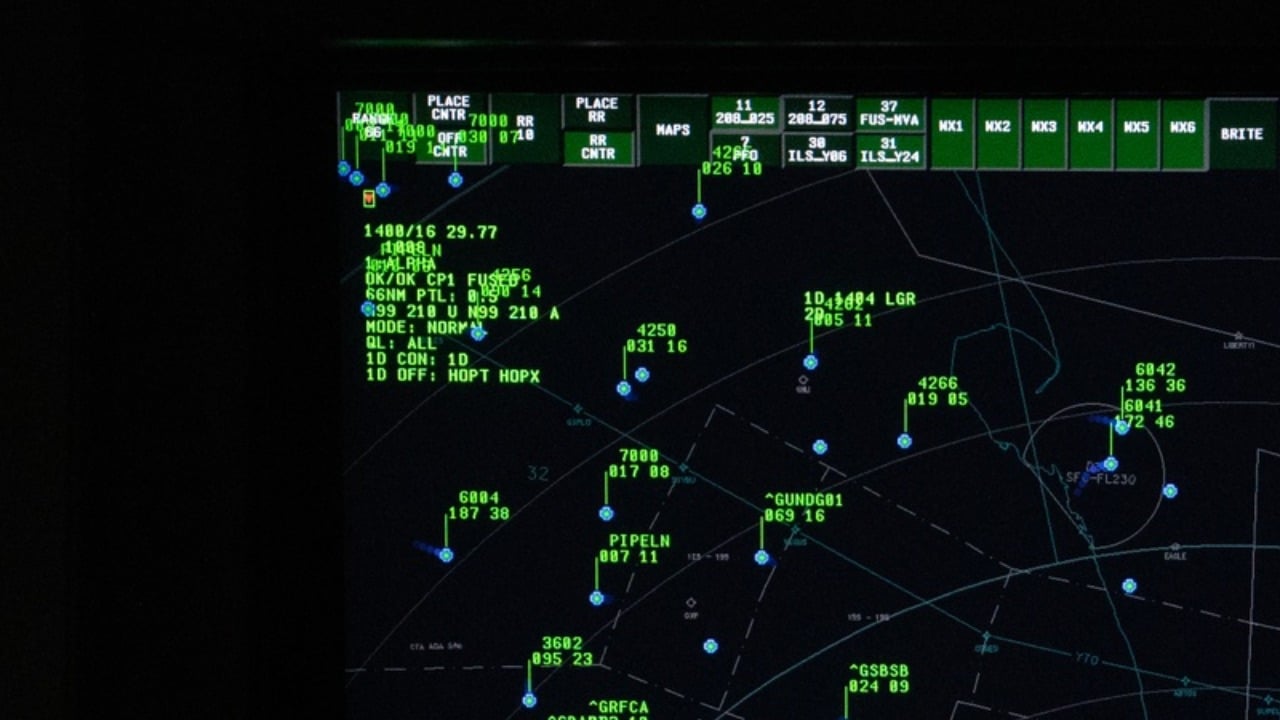
Type “what does squawk 7700 mean” into a search box and you get a correct answer in five seconds. Type “what does squawk 2303 mean” and you get a page of confident nonsense.
That asymmetry is the most interesting thing about transponder codes. A handful of them are fixed by international agreement and mean the same thing in every country on earth. The overwhelming majority mean nothing at all on their own: they are inventory numbers, handed out by a computer, recycled the moment the flight lands. And a small, strange minority are reserved by the FAA for purposes the FAA declines to print.
Here is how the four-digit code space is actually carved up, taken from the documents that carve it: FAA Order JO 7110.66H, the National Beacon Code Allocation Plan, and the European rules that do the same job completely differently.
Informations clés
- Code space: four octal digits, 0000 to 7777. The digits 8 and 9 are never used, giving 4,096 possible codes
- Structure: 64 code blocks, 64 non-discrete codes (those ending in 00), and 4,032 discrete codes, 63 in every block
- US VFR conspicuity: 1200
- European conspicuity: 7000 for VFR, 2000 for IFR
- 2000 in the US: oceanic airspace, unless ATC assigns another code
- Reserved internationally: 7500 unlawful interference, 7600 communication failure, 7700 emergency
- 7400: reserved for an unmanned aircraft experiencing a lost link
- 7777: reserved and allocated. The FAA order prints an email address instead of a purpose
- 0000: must never be assigned by ATC
- Governing documents: FAA Order JO 7110.66H (NBCAP), SERA.13005, UK AIP ENR 1.6
Four digits, base eight, 4,096 of them
Every transponder code is four digits and every digit runs from 0 to 7. There is no squawk 8000 and there never has been, because the code is octal: each of the four digits carries three bits, and eight to the fourth power is 4,096.
The NBCAP divides that space with a vocabulary worth learning, because it explains almost everything else. A code block is defined by the first two digits, so there are 64 of them. A non-discrete code is one ending in 00, and there are 64 of those, one per block; the order says they are “not normally used.” Everything else is a discrete code: 4,032 of them, 63 in every block.
Four thousand and thirty-two sounds like plenty. It is not, and the shortage is the reason two continents now manage the same 4,096 numbers in almost opposite ways.
Captain Joe’s walk through the three emergency codes is the most-watched explainer on the subject, with well over a million views. It covers the part everybody already half-knows; the rest of this article is the part nobody does.
What does squawk 2303 mean? Nothing
This is the single largest category of search traffic on the subject and the answer is genuinely, structurally boring: a discrete code is an index into one air traffic control computer’s flight-plan database, and it means whatever that computer decided it meant ten minutes ago.
Take 2303. Appendix B of the NBCAP shows the 2300 block adapted by Fort Worth Center as an external primary block, by New York Center and Miami Center and Cleveland Center as an external secondary, by Anchorage Center for internal flights, and by Salt Lake City Center as the subset 2301 to 2332 for external tertiary use. Six centres, one block. If you see 2303 on a receiver, the honest reading is that an aeroplane somewhere in American airspace has a flight plan and a radar identity. That is the whole of it.
The same applies to 4071, 3327, 6675 and every other four-digit combination that is not on the reserved list. Pages that tell you otherwise are inventing meaning where the source documents allocate none.
The FAA is refreshingly candid about the consequence of running a 4,032-code inventory across twenty-odd centres and tens of thousands of daily flights.
The conspicuity codes: 1200 in America, 7000 in Europe
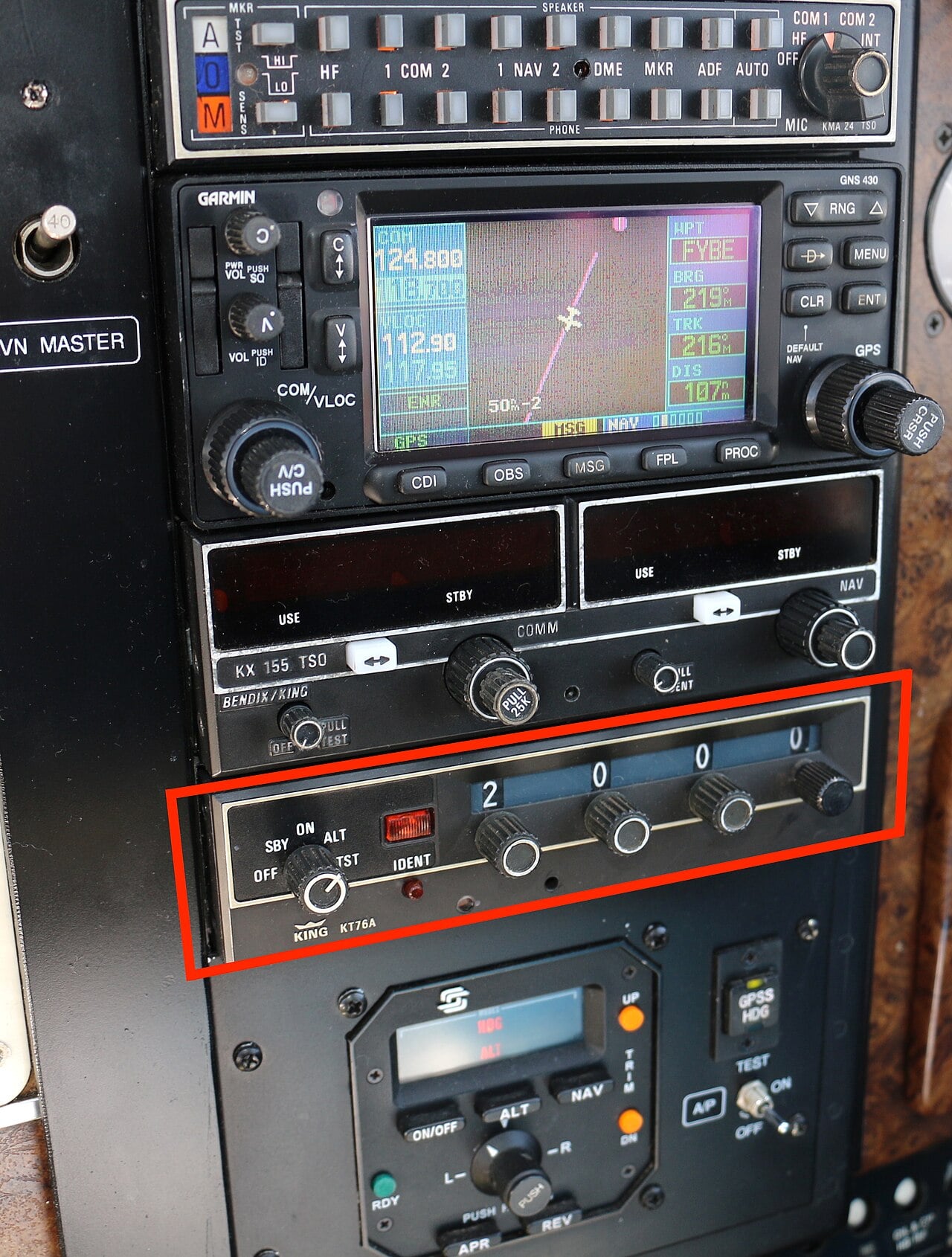
If nobody has given you a code, you still need to appear on a radar screen as something other than a mystery. That is what a conspicuity code is for, and the two sides of the Atlantic chose different numbers.
In the United States, Appendix A of the NBCAP allocates 1200 to “Visual Flight Rules (VFR) aircraft that may or may not be in contact with ATC.” One code, one meaning, in use since long before most pilots flying today were born.
Europe runs it out of law rather than an order. SERA.13005, the Standardised European Rules of the Air provision on Mode A code setting, tells the pilot that in the absence of ATS instructions they shall “select code 2000 or another code as prescribed by the competent authority” or, “when not receiving air traffic services, select code 7000 in order to improve the detection of suitably equipped aircraft unless otherwise prescribed by the competent authority.”
The United Kingdom sharpened that into two codes on 27 February 2020. AIC Y 128/2019 introduced separate conspicuity codes in all airspace classifications: 7000 when operating VFR without a specific transponder instruction, 2000 when operating IFR without one. The circular also added the phraseology, which is why a British controller can say “squawk conspicuity” and expect the right thing to happen.
One line in that circular is worth memorising, because it is the mistake pilots actually make: “The choice of whether to select VFR conspicuity or IFR conspicuity is based on the flight rules being followed by the pilot not the meteorological conditions encountered.” A beautiful day does not make you VFR. Your flight rules do.
And note what 2000 is doing in the two systems. In Europe it announces an IFR flight nobody has coded yet. In the United States the NBCAP hands 2000 to Boston, Los Angeles and Atlanta Centers as a code block, with a footnote reserving it “for use in oceanic airspace, unless another code is assigned by ATC.” Same four digits, entirely different job.
The reserved codes, and the one the FAA will not explain
Three codes are fenced off worldwide, and the NBCAP labels each of them the same way: “reserved internationally.” 7500 for hijack or unlawful interference. 7600 for communication failure. 7700 for emergency.
SERA.13005 tells the pilot what to do with them, and the verb in the hijack paragraph is the detail everyone misses. For an emergency the pilot “shall select Code 7700”; for a radio failure, “select Code 7600”; but for unlawful interference the rule says attempt to select 7500, and adds that “if circumstances so warrant, Code 7700 should be used instead.” The regulation is written by people who understood that a pilot dialling 7500 may be doing it with somebody watching.
A fourth reservation is newer and belongs to the drones. The NBCAP allocates 7400 to “an unmanned aircraft experiencing a lost link situation” — the uncrewed equivalent of 7600, telling controllers that the aircraft is still flying but nobody is commanding it.
Then there is 7777, which is where the published record stops. The NBCAP lists it alongside the subsets 7501 to 7577, 7601 to 7607 and 7701 to 7707, and against all of them prints a single line: “Reserved/allocated. For information on the use of these code subsets, contact” an FAA mailbox. The internet will tell you with great confidence that 7777 is for military interceptor operations. The order that actually allocates the code does not say so, and it is worth being honest about the difference between a widely repeated claim and a documented one.
What happens when the wrong four digits go in: a student pilot selects 7700 by mistake, and the system responds exactly as designed. Real controller and pilot audio, via VASAviation.
Europe ran out of codes and centralised the problem
The American answer to a finite code space is the NBCAP: allocate blocks to centres, accept that duplicates happen, watch them carefully. The European answer was to give up on static allocation altogether.
Europe’s old system, ORCAM, allotted code sets to individual States and relied on the same code meaning different things in adjacent participating areas. EUROCONTROL’s own account of why that stopped working is a tidy summary of thirty years of European history: the geopolitical map changed, new States needed codes allotted to them, neighbouring ICAO regions started using secondary radar of their own, and traffic grew. Code conflicts rose with all of it.
The replacement was approved by EUROCONTROL’s Provisional Council at its 26th session in November 2006 and is now implemented in twenty States.
A single server at EUROCONTROL now picks a code for each flight, pushes it to every unit along the route, and holds it conflict-free for the whole trajectory. ICAO Paris has recognised CCAMS as the short- to medium-term fix for code shortage. The long-term fix is to stop needing a code at all, which brings in the strangest entry on either allocation list.
Code 1000 appears in both systems and means something different in each — while pointing at the same idea. In Europe it is the Mode S conspicuity code: if a ground unit can read your downlinked aircraft identification and match it to your flight plan, a discrete Mode A code is redundant and you are given 1000 instead. In the American NBCAP, 1000 is “used exclusively by ADS-B aircraft to inhibit Mode 3A transmit.” Two continents, two mechanisms, one conclusion: the four-digit code is a 1950s identity system being quietly retired by aircraft that can simply say who they are.
Code 0000 makes the same point from the other end. The order is emphatic that “Code 0000 must never be assigned by ATC” — and then allocates it to certain Universal Access Transmitter ADS-B units to use on power-up, before the aircraft enters beacon interrogation coverage.
The Canada Aviation and Space Museum on how ADS-B works — the technology that is making the discrete four-digit code slowly unnecessary.
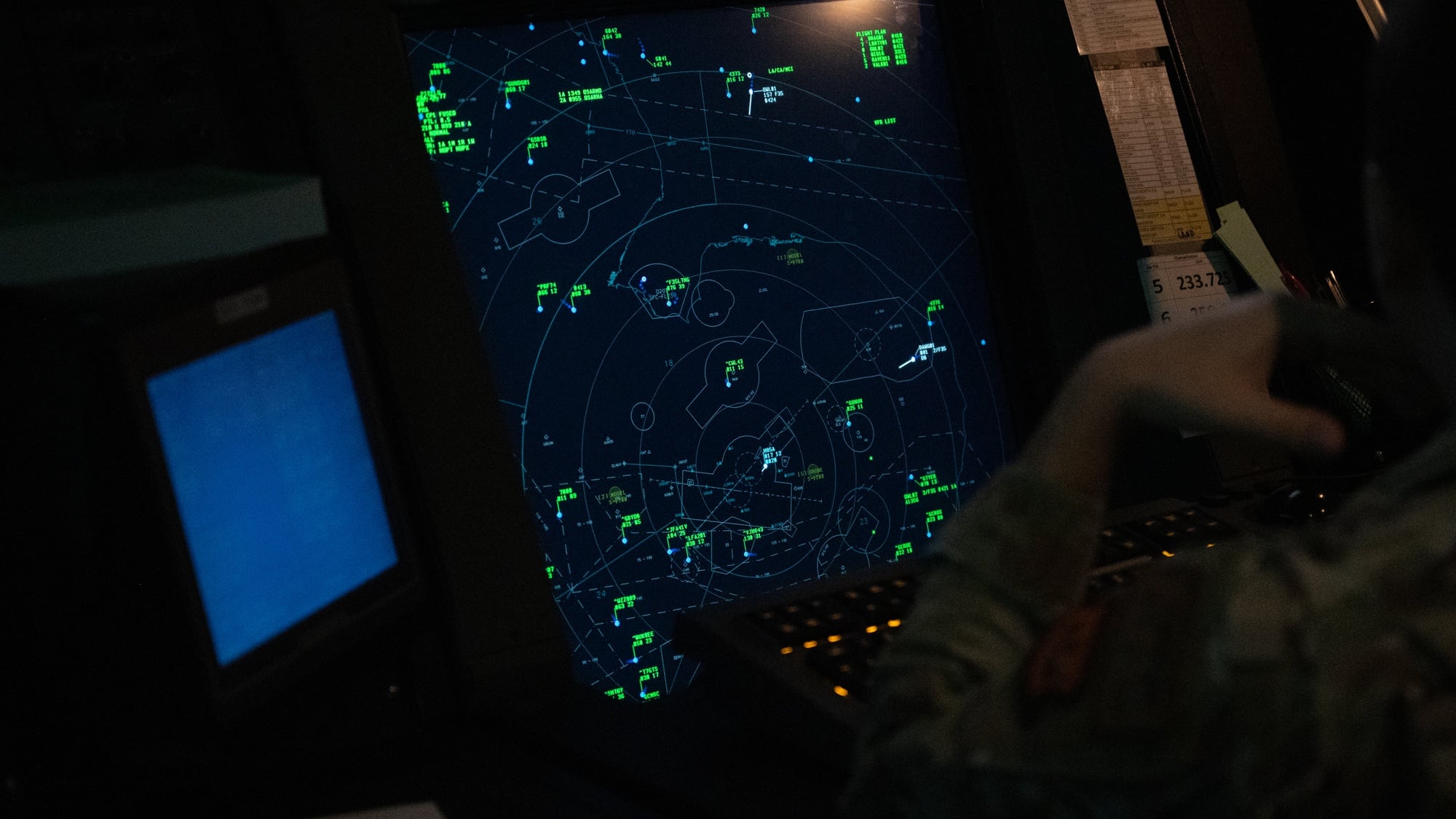
Appendix A is full of small strange doors
The reserved list is not just emergencies. Buried in the NBCAP’s allocation table is a catalogue of aviation’s odd corners, each with four digits of its own.
1202 belongs to VFR gliders. 1255 is for firefighting aircraft. 1277 is for designated search and rescue aircraft. 1276 is for an aircraft penetrating an Air Defence Identification Zone when it cannot raise anyone on the radio — a code that exists to say “I am not hiding, I simply cannot reach you.”
1203 is the newest entry, added in the May 2024 edition, and it solves a problem formation pilots know well: the lead aircraft squawks 1203 instead of 1200, and everyone else in the formation squawks standby, so four aeroplanes in close trail appear as one radar identity rather than a flickering argument.
1273 to 1275 are not aircraft at all. They belong to Calibration Performance Monitoring Equipment, remote system monitors and PARROT transponders — fixed ground boxes that answer radar interrogations from a known position so engineers can tell whether the radar is lying. 4434 to 4437 are for weather reconnaissance. And 4453 is reserved for high balloon operations, naming the National Scientific Balloon Facility at Palestine, Texas.
Washington gets its own shelf: 1234 for VFR aircraft flying circuits inside the DC Special Flight Rules Area, 1205 for departures from the SFRA fringe airports, and two code blocks handed wholesale to Potomac TRACON for the SFRA and the Flight Restricted Zone. Los Angeles has 1201 for its own Special Flight Rules Area, 1205 for helicopters, and 1206 held for public-service helicopters.
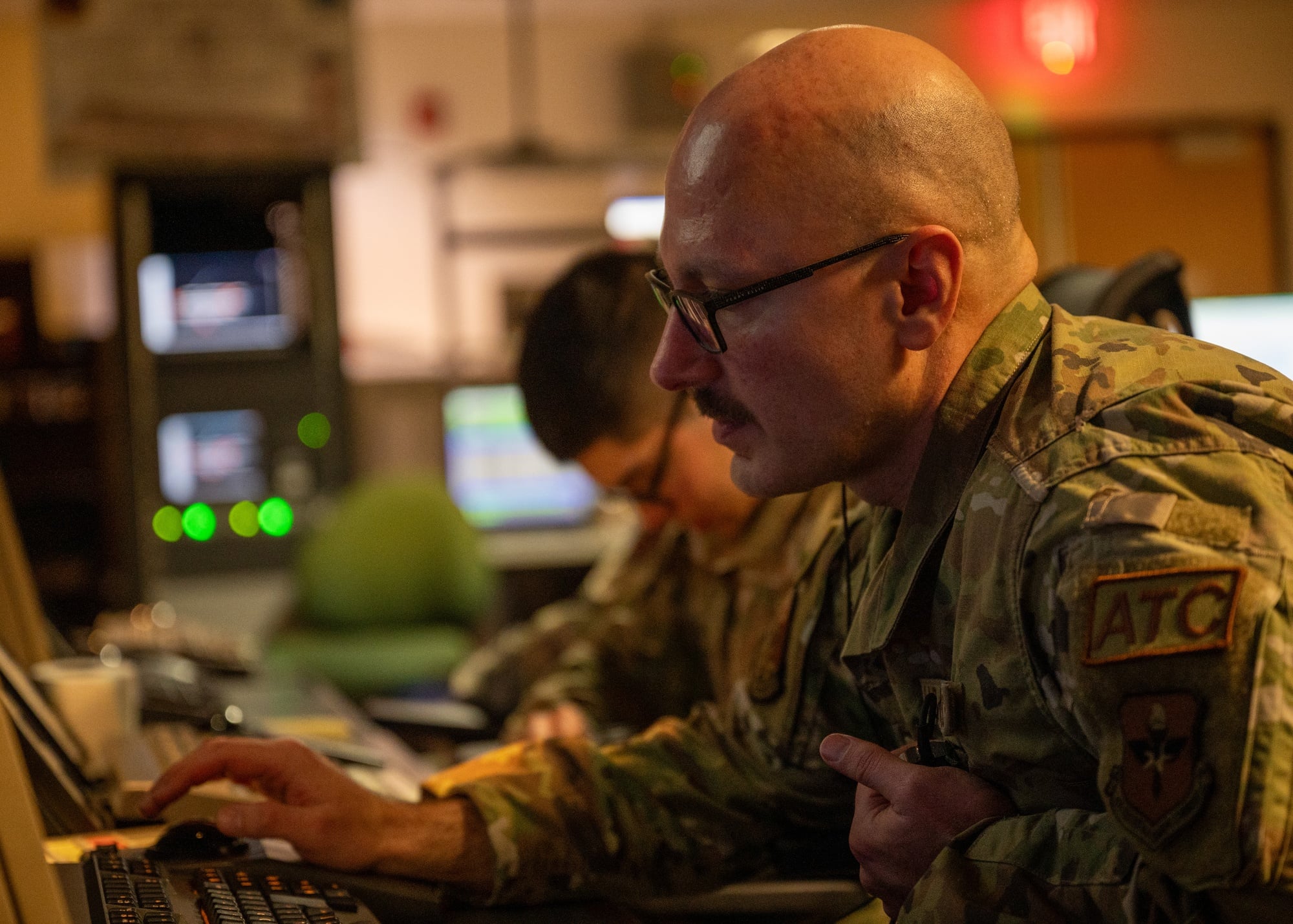
So what does 7700 on Flightradar24 tell you?
Less than people think, and exactly what it says. A flight-tracking site displays the Mode A code the aircraft is transmitting. A 7700 on the map means somebody in that cockpit turned four knobs to 7-7-0-0, which under both the FAA and European rules indicates a state of emergency.
It does not tell you what the emergency is, how serious it is, or whether it is an emergency at all rather than a thumb in the wrong place. Aircraft squawk 7700 for engine problems, for sick passengers, for a cracked windscreen, and occasionally for nothing, as the recording above demonstrates. Reading the code is easy; reading the situation is not, which is why the crew talks as well as squawks. We covered what they actually say in the phraseology piece.
The reverse case is worth noting too. A transponder that is switched off says nothing at all, which is itself a message: Polish fighters have repeatedly intercepted a Russian Il-20 flying with its transponder off over the Baltic, and when a 7500 appears where nobody expects it, as it did over Bulgaria, MiG-29 get airborne. Four digits, and a great deal riding on them.
Which is the useful way to think about the whole system. A handful of codes carry meaning by agreement. Four thousand carry no meaning whatsoever and are all the more important for it, because the moment two aircraft near each other carry the same one, the screen stops telling the truth. That is why the FAA writes orders about it and why Europe built a server.
Foire aux questions
What does squawk 1200 mean?
What does squawk 7000 mean?
What does squawk 7400 mean?
What does squawk 7777 mean?
What does squawk 2303 mean?
How many transponder codes are there?
Why are there no transponder codes with an 8 or a 9?
What does 7700 on Flightradar24 mean?
What is CCAMS and why did Europe need it?
What does squawk 1000 mean?
Sources: FAA Order JO 7110.66H, National Beacon Code Allocation Plan, effective 6 May 2024 (Appendices A, B and C); SERA.13005, SSR transponder Mode A code setting (UK CAA Regulatory Library); UK AIC Y 128/2019, Changes to SSR Transponder Code Procedures (NATS); EUROCONTROL, Centralised Code Assignment and Management System; DVIDS; Wikimedia Commons.

0 Comments