
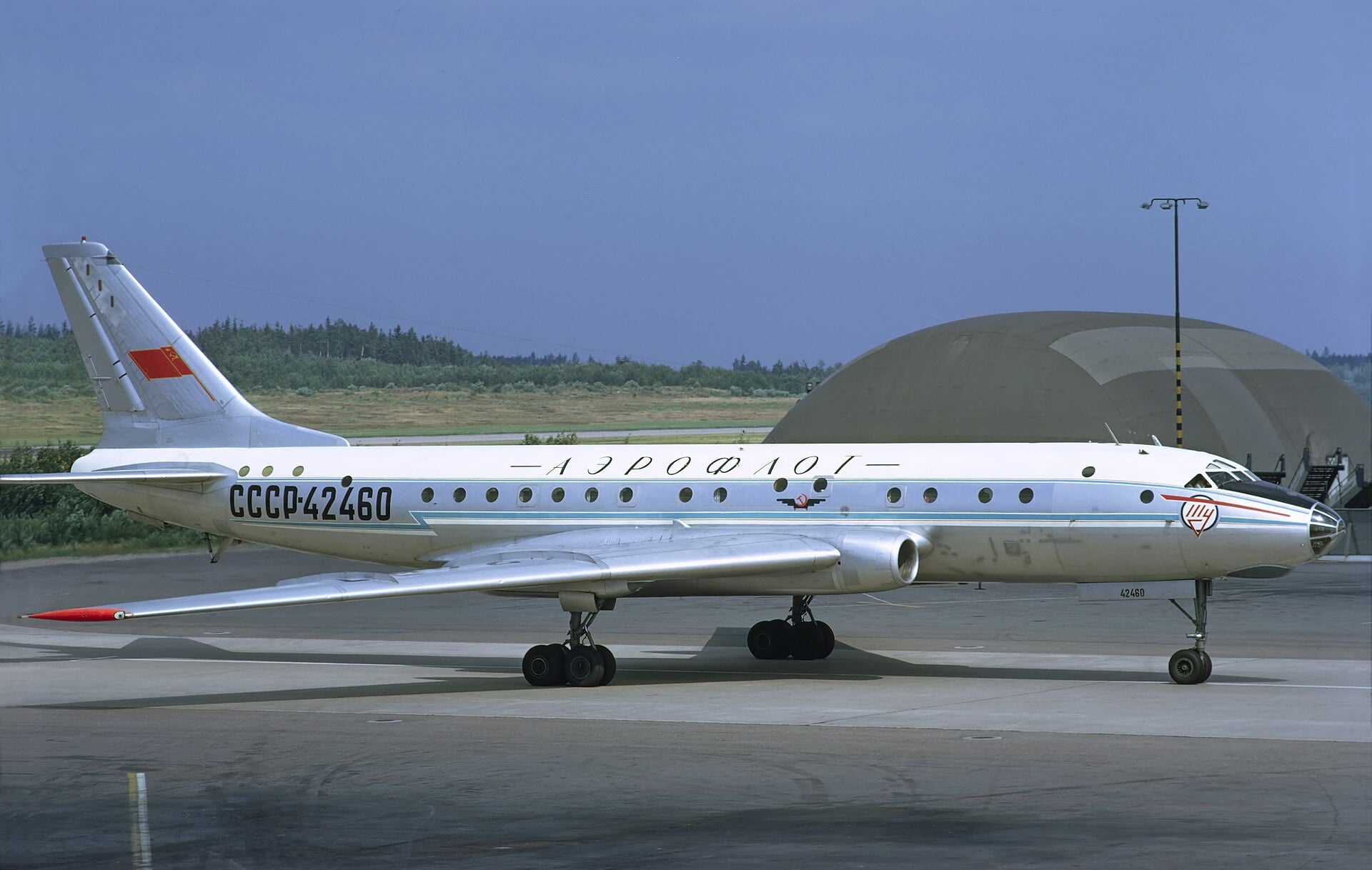
For two years, between 1956 and 1958, exactly one jet airliner was carrying fare-paying passengers anywhere in the world. The Comets were grounded. The 707 had not arrived. The Caravelle was not in service.
The aircraft holding that title was a Soviet bomber with a wider fuselage, a mahogany-and-lace interior and a wing that would try to kill you if you let the speed decay.
It carried more than 90 million passengers. It also killed 1,140 people.
Informations clés
| Aéronef | Tupolev Tu-104, NATO reporting name Camel |
| Derived from | Tupolev Tu-16 bomber: same wings, engines and tail, new pressurised fuselage |
| Premier vol | 17 June 1955, pilot Yu. L. Alasheyev |
| Entré en service | 15 September 1956, Aeroflot, Moscow to Omsk to Irkutsk |
| Time saved | That route fell from 13 hours 50 minutes to 7 hours 40 minutes |
| Moteurs | Two Mikulin AM-3 turbojets buried in the wing roots |
| Construit | 201, between 1956 and 1960 |
| Export customer | CSA Czechoslovak Airlines, six aircraft |
| Safety record | 16 lost in crashes of 37 written off; 18 percent hull-loss rate; 1,140 fatalities (Flight Safety Foundation, 1958–1981) |
| Last flight | 11 November 1986, a ferry to the Ulyanovsk museum |
A bomber with the bomb bay taken out
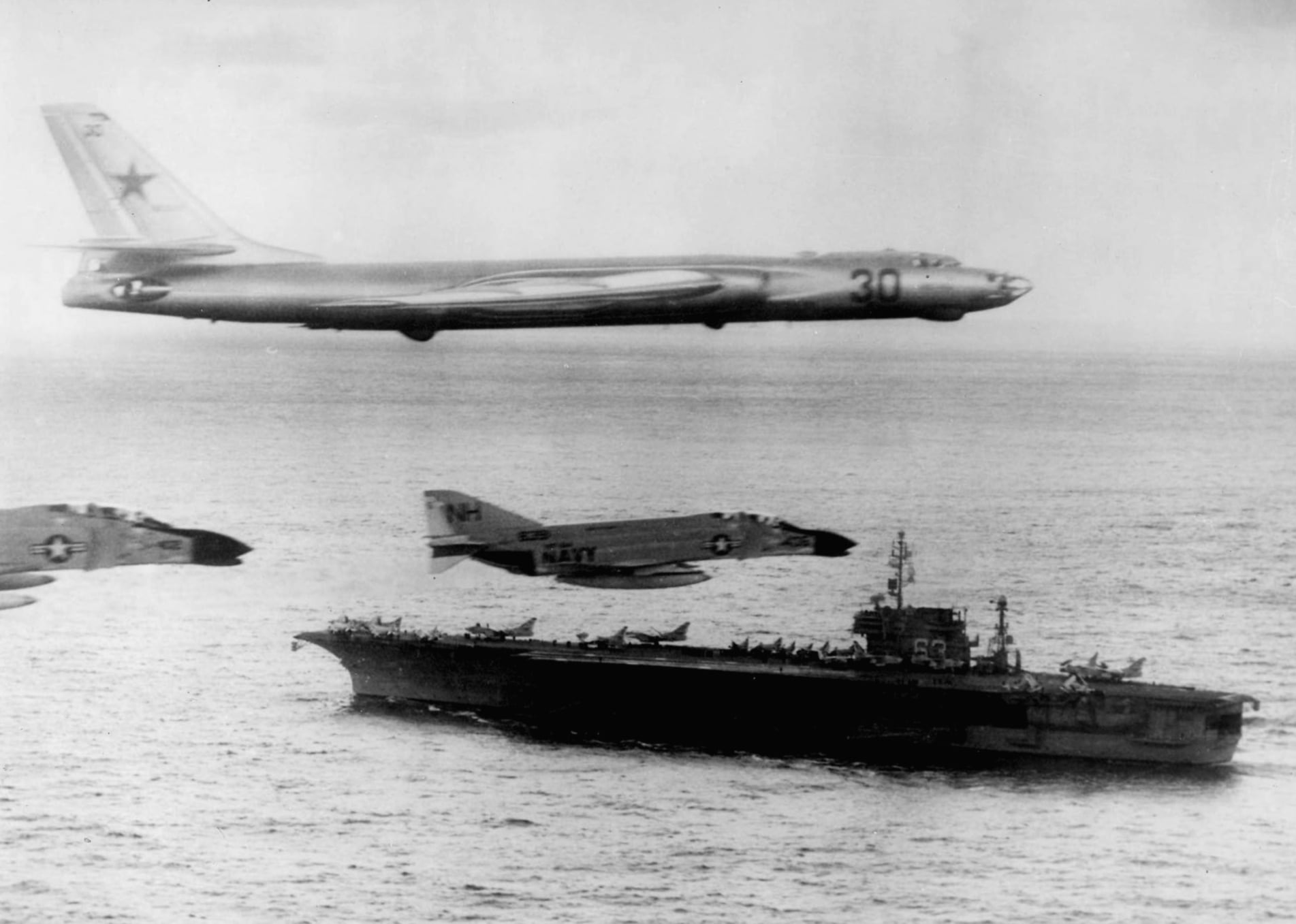
The Tu-104’s origins are not a secret and were never meant to be flattering. Aeroflot needed a modern airliner; Tupolev had the Tu-16 Badger; the fastest route to a jet airliner was to keep the bomber’s wings, engines and tail and build a new, wider pressurised fuselage on top of them.
The two Mikulin AM-3 turbojets sat buried in the wing roots, as on the bomber. The navigator sat in a glazed nose that is unmistakably a bomb-aimer’s position. The crew was seven. A drag parachute was fitted because Soviet runways were short.
The interior went the other way entirely. Western observers who saw it called it Victorian: mahogany, copper and lace, in an aircraft whose wing had been designed to carry nuclear weapons.
Crews came to it by an equally unusual route. Pilots trained on the Il-28 bomber, then flew mail runs between Moscow and Sverdlovsk in an unarmed Tu-16 painted in Aeroflot colours, before moving to the airliner itself.
The men who flew it were the elite, and they knew why
Vyacheslav Yanchenko became a Tu-104 crew commander in June 1971 and stayed on the type until Aeroflot retired it. He is a Hero of the Soviet Union, an award he received for his conduct during a 1973 hijacking. He is also refreshingly blunt about the aeroplane.
The early Tu-104 crews had a status to match. Yanchenko describes the first pilots of the Tu-104 detachment carrying hats made at a single tailor’s shop on Liteyny Prospekt in Leningrad, and a silk white scarf. By his time, he says, they were just ordinary pilots.
He is equally clear about the workload. Two years as a co-pilot were required before anyone could command the aircraft, regardless of ability, simply to learn how it moved.
The flaw, and the man who reported it all the way down
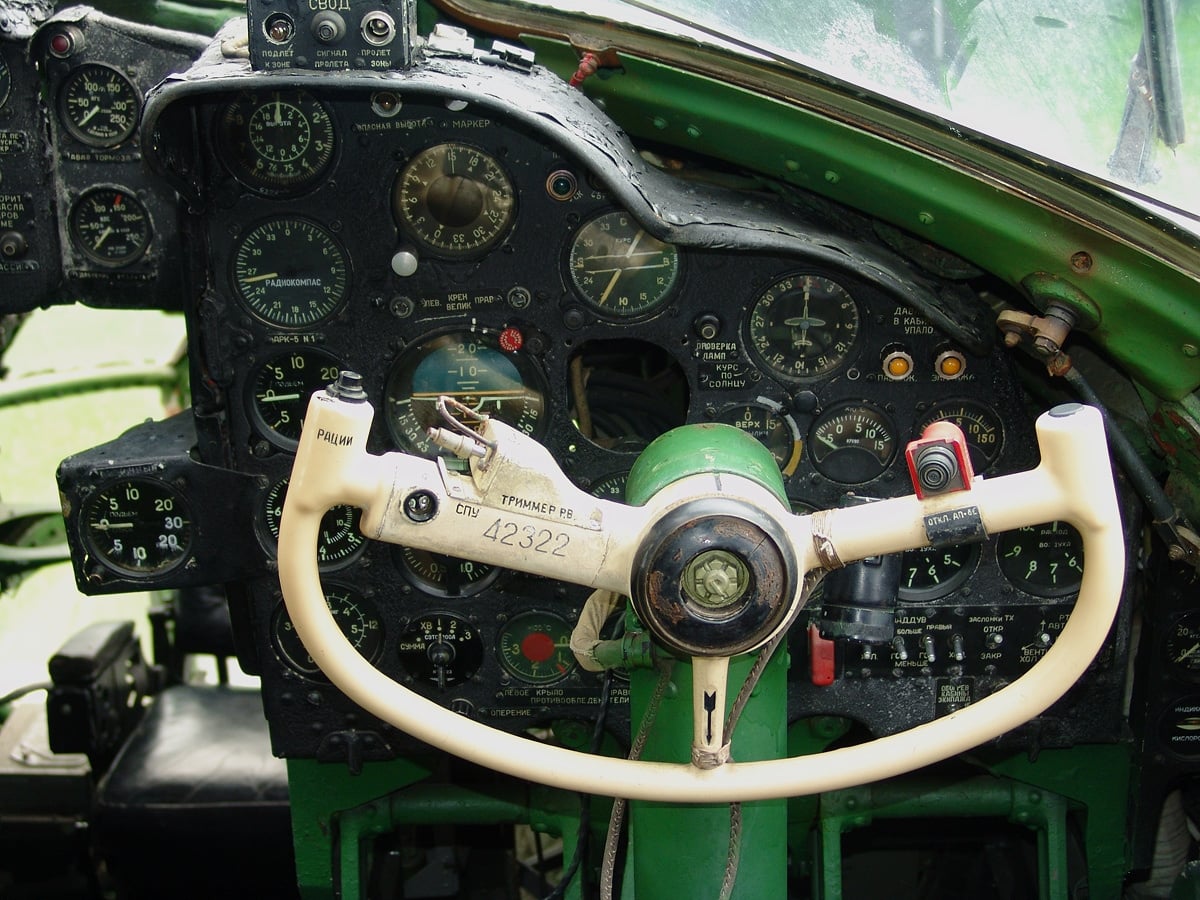
The problem was in the wing. At certain speeds and in certain air, the Tu-104 would pitch up sharply just before the stall and enter a dive from which it could not be recovered.
On 15 August 1958 Aeroflot Flight 04 hit an updraught at 12,000 metres, stalled, spun and crashed, killing all 64 aboard. Two months later, on 17 October, a Tu-104A flying senior officials to Moscow did the same thing near Kanash. All 80 on board were killed.
The captain of that second aircraft was Garold Kuznetsov, and what he did in the last minutes is the reason the aeroplane was eventually fixed.
After Kanash the aircraft was restricted to 9,000 metres and the stabilisers were redesigned. But the fear it left behind shaped how the type was flown for the rest of its life: crews carried extra speed on approach, touching down at 270 to 300 km/h, and the brakes paid for it.
The numbers, and why they are slippery
The Flight Safety Foundation figure is the one usually quoted: between 1958 and 1981, sixteen Tu-104s lost in crashes out of 37 written off, an 18 percent hull-loss rate, 1,140 people killed.
Be careful with the arithmetic, though, because the sources do not agree with themselves. A widely repeated line says “16 of 96 aircraft were lost in accidents”, which sits oddly beside 201 built and 37 written off, and nobody explains where 96 comes from. A separate tally that counts only mechanical failures and crew error, excluding the aircraft shot down by a Soviet missile in 1962 and the ones destroyed by bombs, comes to 939 deaths rather than 1,140.
What is not in dispute is the shape of the record. Accidents attributed to failed artificial horizons, to water in the static lines, to control cables connected backwards after maintenance, to a hijacker’s bomb, to a surface-to-air missile that lost its target in a storm and found an airliner instead.
The end, and what it left behind
Aeroflot gave up on the Tu-104 in March 1979, after Flight 1691 crashed trying to return to Moscow following a fire warning that turned out to be false, caused by mismatched parts in an engine. Fifty-eight of the 119 people aboard were killed.
The survivors went to the military, where they hauled staff around and trained cosmonauts in weightlessness. That ended on 7 February 1981 when a Soviet Navy Tu-104 stalled on take-off from Pushkin with improperly secured cargo, killing all 50 aboard, among them a large part of the Pacific Fleet’s senior leadership. The type was grounded permanently.
It is easy to file the Tu-104 under Soviet corner-cutting, and some of that is fair. But it is worth remembering what it actually did: it halved journey times across a country eleven time zones wide, it put the Soviet Union into the jet age two years before the Americans, and the lessons learned on it produced the Tu-124, the Tu-134 and the Tu-154.
Yanchenko has the last word on what that cost, and who paid it. Not the designers, and not the state.
Foire aux questions
What was the Tupolev Tu-104?
Was the Tu-104 really the only jetliner flying in the world?
How dangerous was the Tu-104?
What was wrong with the way it flew?
Who was Garold Kuznetsov?
Did anyone outside the Soviet Union operate the Tu-104?
When did the Tu-104 stop flying?
What did the Tu-104 lead to?
Sources: Wikipedia; Flight Safety Foundation via Aviation Safety Network; Gordon and Rigmant, Tupolev Tu-104: Aeroflot’s First Jetliner; interview with V. M. Yanchenko by Oleg Korytov, airforce.ru.
0 Comments