
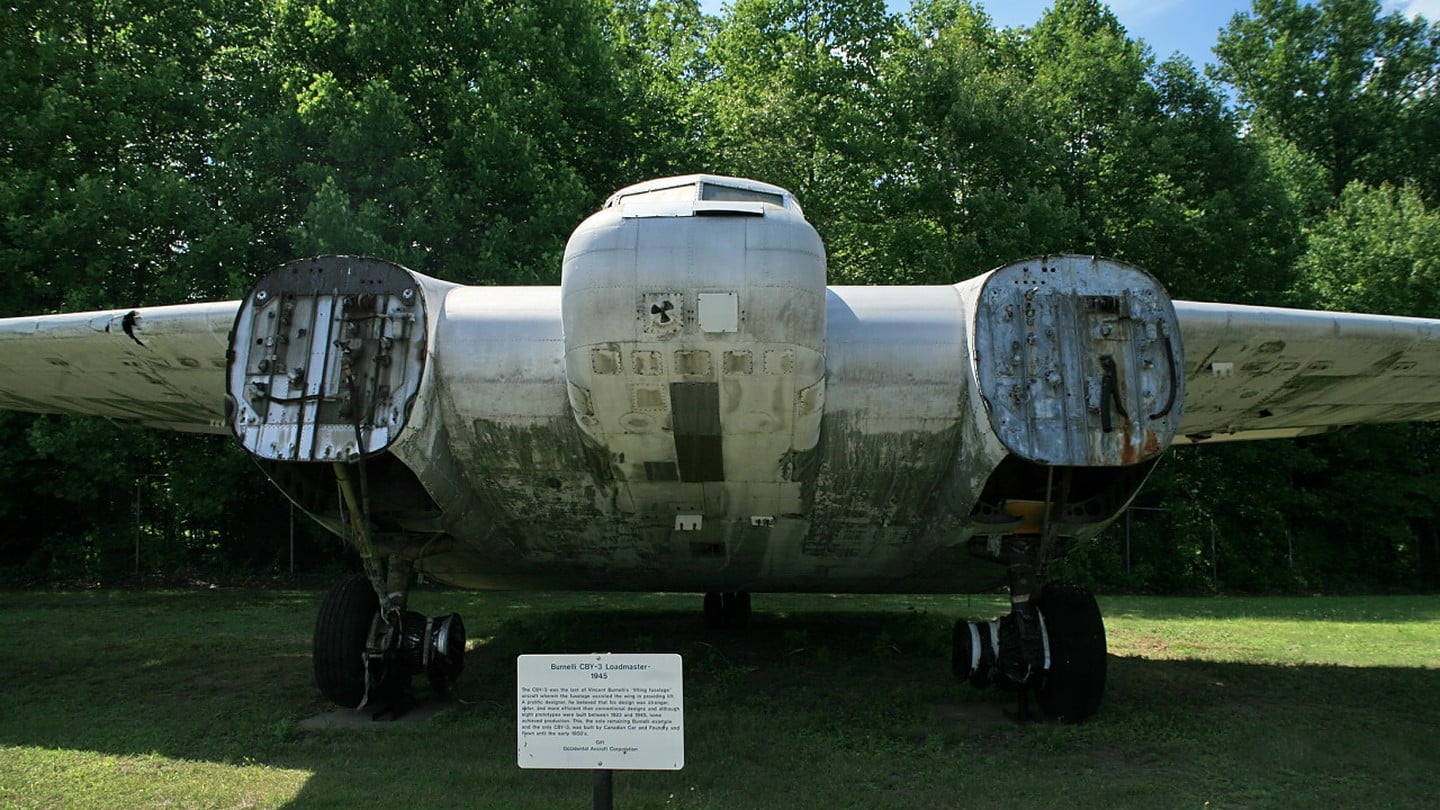
Vincent Burnelli spent nearly fifty years arguing that the fuselage of an aeroplane should not be a tube. It should be a wing.
He built aircraft that proved it worked. He never sold one in quantity. One survives, sitting outdoors in Connecticut, and it is the last physical evidence of an idea that the industry looked at, understood, and declined.
Informations clés
| Designer | Vincent Justus Burnelli (1895–1964), born Temple, Texas |
| The idea | An airfoil-shaped fuselage that generates lift instead of merely carrying payload |
| First aircraft | A biplane designed with John Carisi in 1915, later bought by the New York City Police Department |
| Key types | RB-1 (1921), RB-2 (1924), CB-16 (1928), UB-20 (1930), UB-14 (1935), CBY-3 (1944) |
| Last design | Burnelli CBY-3 Loadmaster, built by Canadian Car and Foundry |
| Survivant | One CBY-3, at the New England Air Museum, Windsor Locks, Connecticut |
| Career length | Roughly 1915 to his death in 1964 |
Street cars belong on the ground
Burnelli built his first aeroplane in 1915 in Maspeth, Queens, with his friend John Carisi, and demonstrated it at the field that later became Roosevelt Field. The government was not interested. The New York City Police Department bought it, making it the first aircraft the NYPD ever operated.
In 1919 he built the Lawson L-4 in Milwaukee, an early large commercial airliner. He hated it, and said so in a line that explains his entire career.
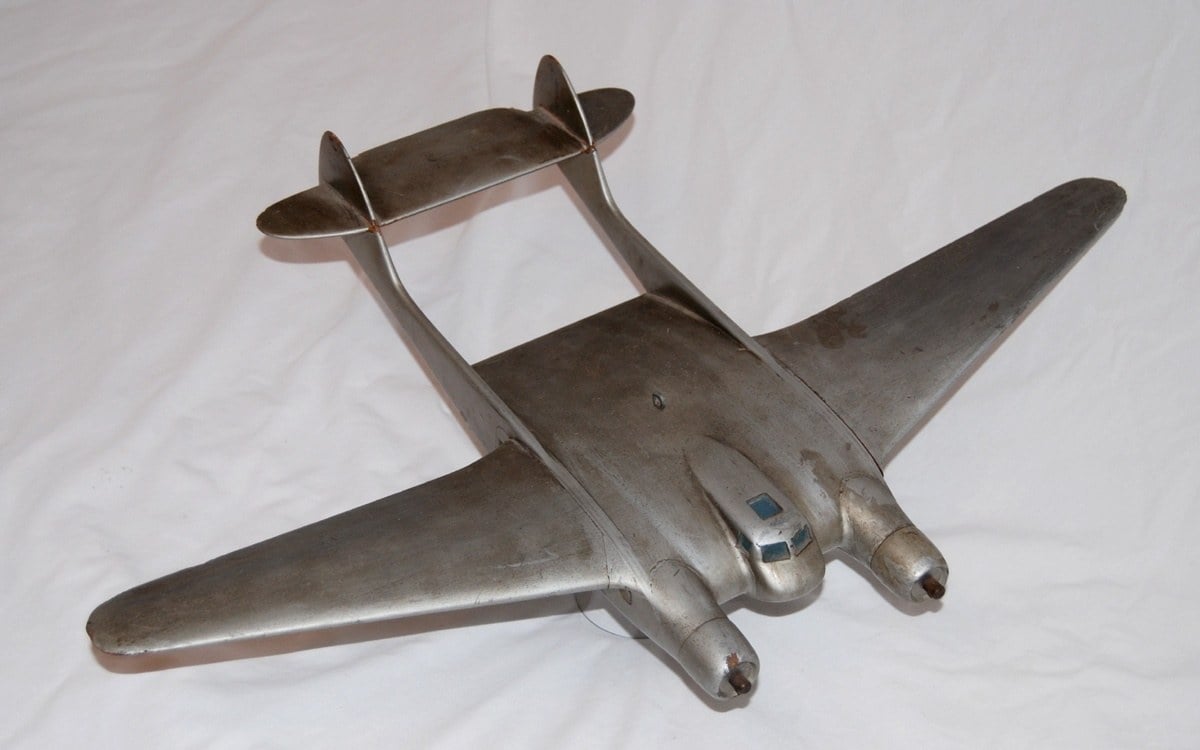
His objection was structural and aerodynamic at once. A conventional fuselage is dead weight: a tube that carries the load and contributes nothing to lift, hung beneath a wing that does all the work. Burnelli wanted the body itself shaped as an aerofoil, so that the thing carrying the payload also helped hold the aeroplane up.
Not actually a flying wing
Burnelli called his aircraft flying wings, and they were not. A true flying wing houses everything inside the wing and dispenses with the tail. His designs kept a conventional tail, usually carried on twin booms sweeping back from the wing.
The accurate term is lifting fuselage, and the distinction matters because it is the reason his idea was practical when the flying wing was not. He was not asking the industry to abandon the tail, the control system or anything else it understood. He was asking it to change the shape of one component.
Forty-five years of very nearly
The list of companies is longer than the list of aircraft. In 1920 he bought a defunct factory at Amityville with Charles Cox; in 1921 the Airliner Engineer Company was formed with backing from George C. T. Remington, and the RB-1 flew at Curtiss Field that July. The RB-2 followed in 1924, the CB-16 in 1928 with money from Paul Chapman.
Then the Uppercu-Burnelli Aircraft Corporation with Inglis Uppercu, which produced the UB-20 in 1930. A GX-3 entered the Guggenheim Safe Aircraft Competition in 1929. The Burnelli Aircraft Company produced the UB-14 in 1935. Cunliffe-Owen built a licensed British version, the OA-1 Clyde Clipper, at the end of the decade. He consulted for Higgins in New Orleans. He designed the XCG-16 cargo glider in 1943.
Every few years, a new backer, a new company name, a new aeroplane that flew and worked and went nowhere.
Rex’s Hangar on the CBY-3 Loadmaster and the lifting-fuselage idea behind it.
Twenty passengers and forty-one sled dogs
The last Burnelli was the CBY-3 Loadmaster, built in Canada by Canadian Car and Foundry in 1944. It had a long and strange working life: commercial flying in northern Canada and South America, acquisition by Airlifts Inc of Miami, a spell in Venezuela, a refit with Wright R-2600 engines.
In 1955 Burnelli adapted it to fly an expedition to the North Pole carrying twenty passengers and forty-one sled dogs with their equipment. The expedition was cancelled, which is a pity, because it would have been the single best sentence in the history of air transport.
The idea outlived the man
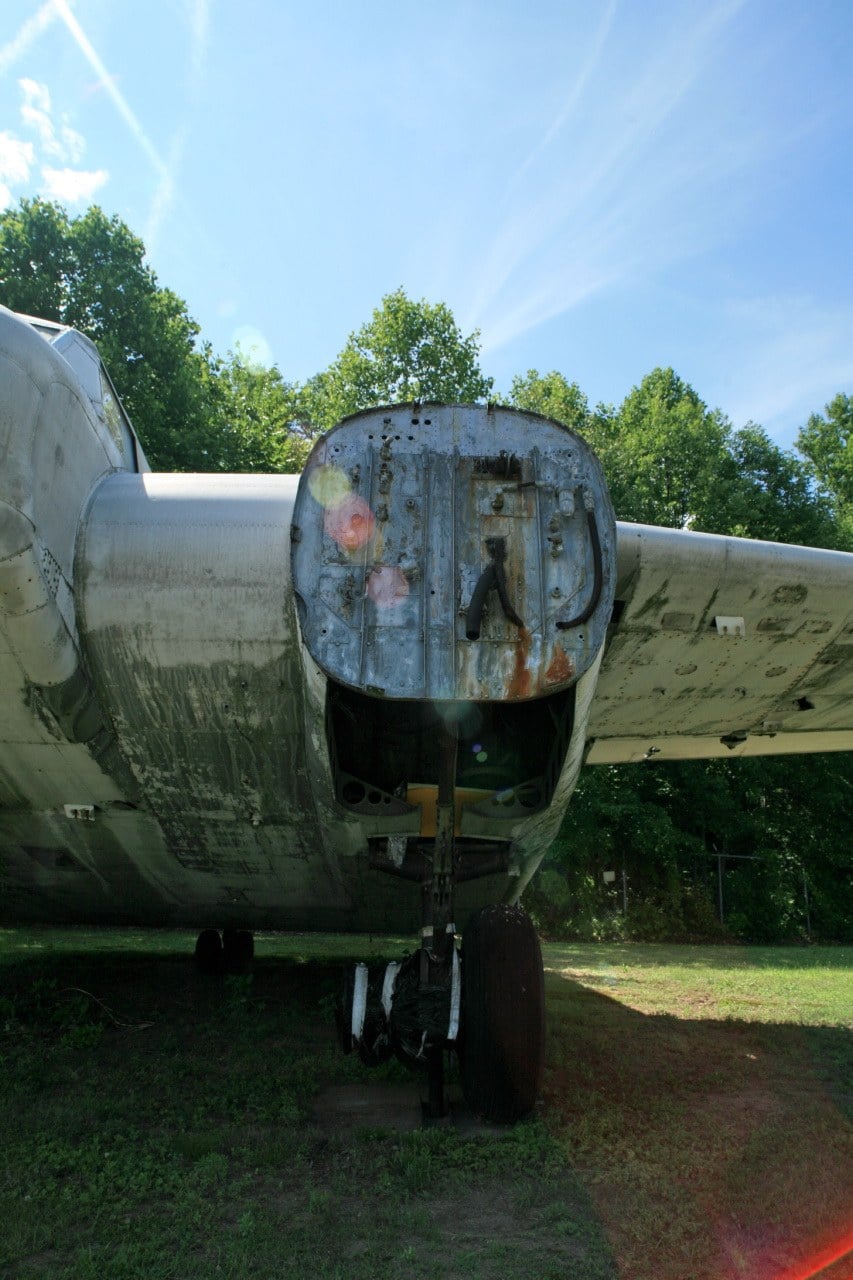
Burnelli died in 1964, the same year his last aeroplane was retired to the New England Air Museum. It is still there, the only Burnelli left anywhere.
The concept, though, keeps resurfacing. Every blended wing-body study, every lifting-body airliner concept, every hybrid wing-body freighter proposal is a restatement of the thing he spent his life on: stop treating the fuselage as cargo and start treating it as structure that flies.
Why did it never win? Not because it did not work. Tube fuselages are cheap to build, easy to pressurise, simple to stretch into longer variants, and they fit the airport infrastructure everyone already owns. Burnelli was competing against an entire industrial system, with one aeroplane at a time and a new set of investors every few years. That is not a fight one designer wins.
Sources: Richard M. Wood, The Contributions of Vincent Justus Burnelli (NASA technical report, 2003); “Burnelli and His Flying Fuselage”, Histoire de l'aviation, September 1997; New England Air Museum; Ingenium Canada.
0 Comments