

Four guidons were rolled and cased at Davis-Monthan on Friday. That is how the Air Force ends things: a flag wound around its staff, slid into a canvas sleeve, and a unit that existed on Thursday does not exist on Saturday.
The 355th Operations Group, the 357th Fighter Squadron, the 357th Fighter Generation Squadron and the 355th Training Squadron all went at once. With them went fifty years of A-10 Thunderbolt II operations at the Tucson base, which began when the type arrived in 1976.
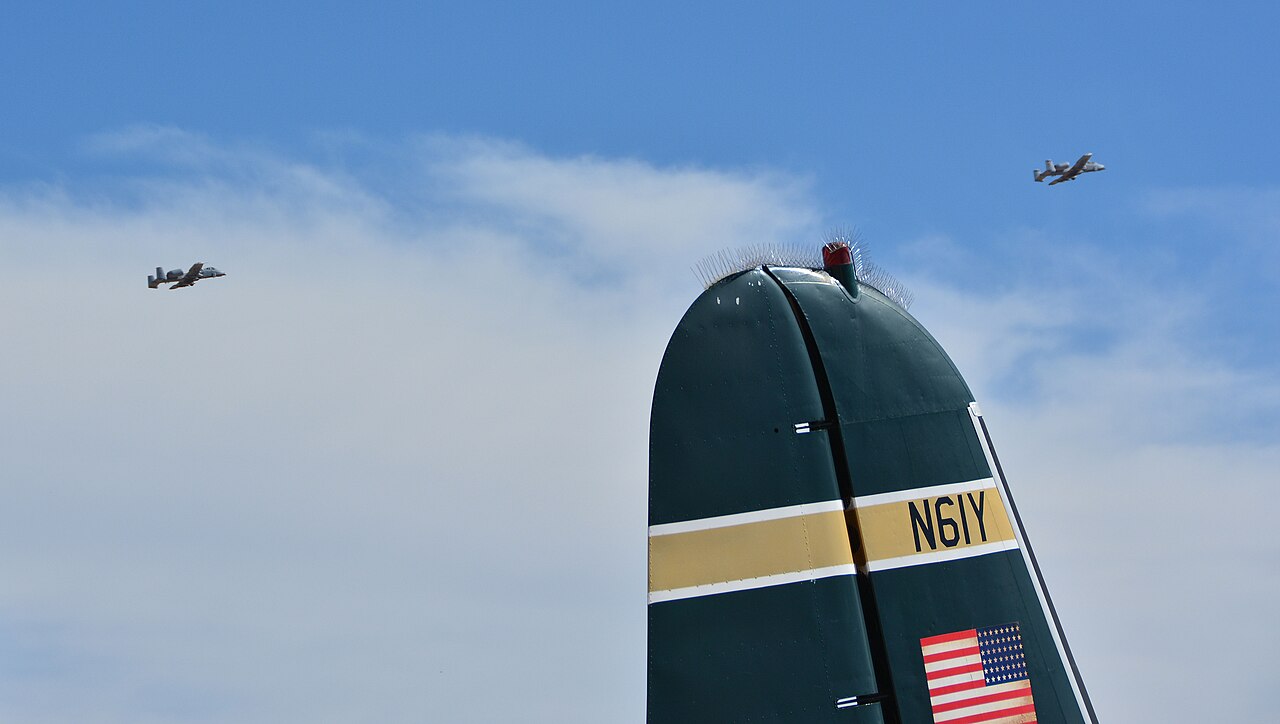
Two Warthogs flew over while it happened, borrowed from the Idaho Air National Guard and the Guard and Reserve test centre, because Davis-Monthan no longer has any of its own.
Informations clés
| Quoi | Davis-Monthan AFB inactivated its last four A-10 units |
| Units | 355th Operations Group, 357th Fighter Squadron, 357th Fighter Generation Squadron, 355th Training Squadron |
| Quand | 18 September 2026 |
| A-10 at Davis-Monthan | Arrived 1976; final 355th Wing Warthog flight in July 2026 |
| 355th Operations Group | Activated 1 May 1992; trained every active-duty A-10 pilot |
| Where the jets go | Moody AFB, Georgia, or the Boneyard at Davis-Monthan |
| Air Force plan | Divest 49 in FY27 leaving 54; none in FY28; 18 in FY29; the last 36 in FY30 |
| Congressional counter-proposal | The BRRRT Act would keep 126 aircraft through FY2033 — still a bill, not law |
The squadron that made the pilots
The 355th Operations Group was activated on 1 May 1992 and spent the next thirty-four years doing two things: providing A-10 close air support, forward air control and combat search and rescue wherever it was needed, and running every formal A-10 qualification course the Air Force had.
Col. Jose Cabrera, the 355th Wing commander, credited the group with building every single active-duty A-10 pilot who flew into harm’s way. That is not rhetorical inflation. If you flew the Warthog on active duty, you learned to do it at Davis-Monthan.
Among those present was retired Lt. Gen. Glen “Wally” Moorhead, who recalled flying the aircraft for the first time on 7 November 1975 and described himself as the last and youngest member of the A-10 test programme at Edwards, before becoming the first A-10 pilot at Davis-Monthan.
Où vont-ils ?
Moody Air Force Base in Georgia, or the Boneyard.
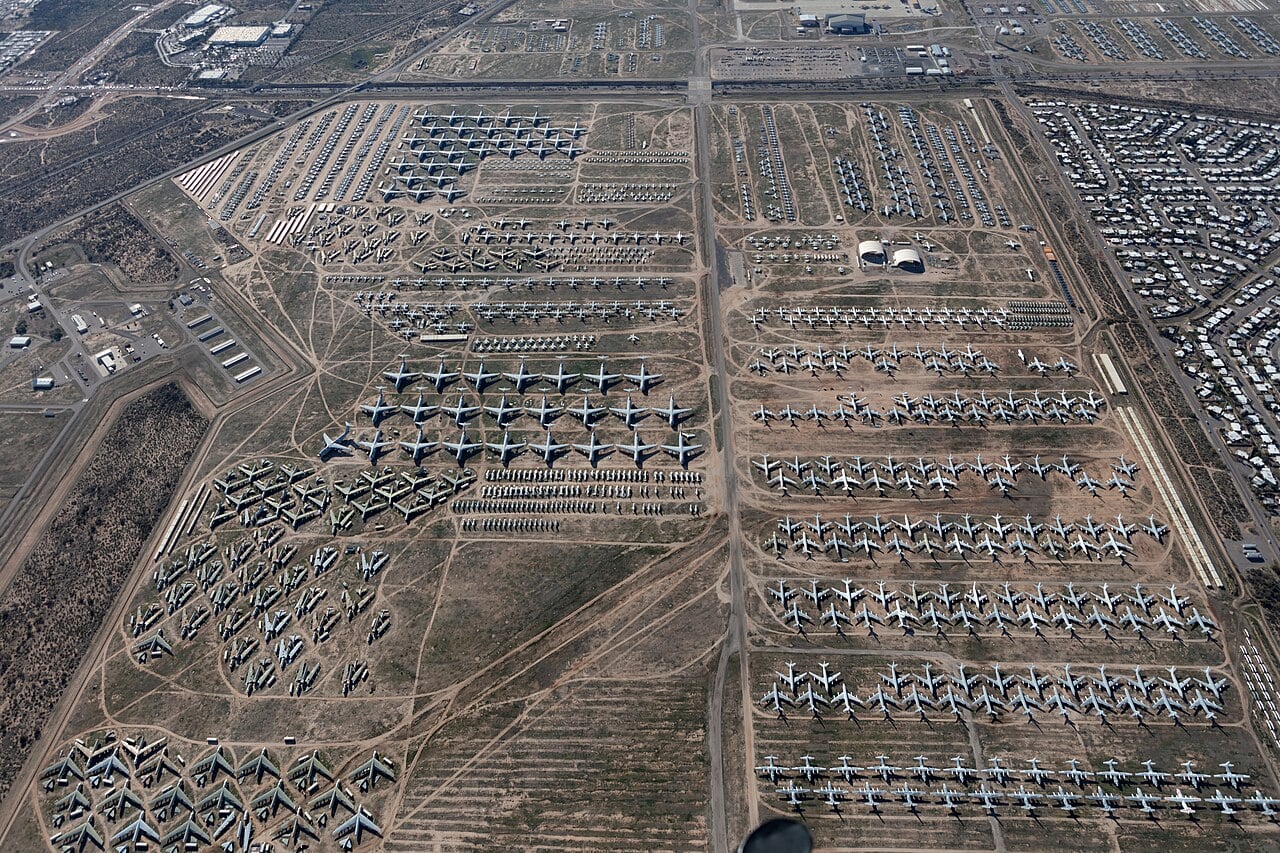
There is an unkind geographical joke in that. The Aerospace Maintenance and Regeneration Group occupies the desert immediately alongside the runway the A-10s have just stopped using. Some of these aircraft will taxi from an active ramp to long-term storage without leaving the property.
The wind-down has been running for a while. The 924th Fighter Group deactivated in September 2025. The 40th Flight Test Squadron’s Detachment 1 shut in December 2025. The final A-10 Range Day at the Barry M. Goldwater range came in June 2026, the last 355th Wing flight in July, and the type flew its final Weapons School training sortie at Nellis on 20 September — two days after this ceremony.
Still an argument
None of this is settled, which is the peculiar thing about watching it happen.
The Air Force’s force structure proposal, submitted to Congress in May, divests 49 A-10s in fiscal 2027 and leaves 54. None go in FY28. Eighteen go in FY29 and the last 36 in FY30, which puts the aircraft out of service by the end of that fiscal year. The survivors would sit with two active-duty squadrons at Moody — one of which is itself due to close in 2029 — and a Reserve squadron under the 442nd Fighter Wing at Whiteman.
Meanwhile the bipartisan BRRRT Act, still a bill rather than a law, would keep 126 Warthogs through fiscal 2033, require selected aircraft to be stored in recoverable condition, restore training and sustainment capacity, look for foreign buyers, and study autonomous versions of the mission.
The detail worth noticing
The two aircraft that flew the ceremony were carrying the new probe refuelling adapter on the nose — a fitting that lets an A-10 take fuel from probe-and-drogue tankers instead of only from booms. The Guard and Reserve test centre qualified it earlier this year and aircraft carrying it were photographed in the Middle East in May, supporting Operation Epic Fury.
Which is to say: while one part of the Air Force was casing the guidons, another part was adding a capability to the aircraft and sending it to a war. The Warthog has spent a decade being retired. It has not stopped being useful, and that, rather than sentiment, is why the argument keeps coming back.
The boxes of unit histories are going to the National Museum of the US Air Force at Wright-Patterson. The aircraft are going to Georgia, or across the fence.
Sources: 355th Wing release; DVIDS; The Aviationist; US Air Force FY2027 force structure changes exhibit; Air & Space Forces Magazine.
0 Comments