
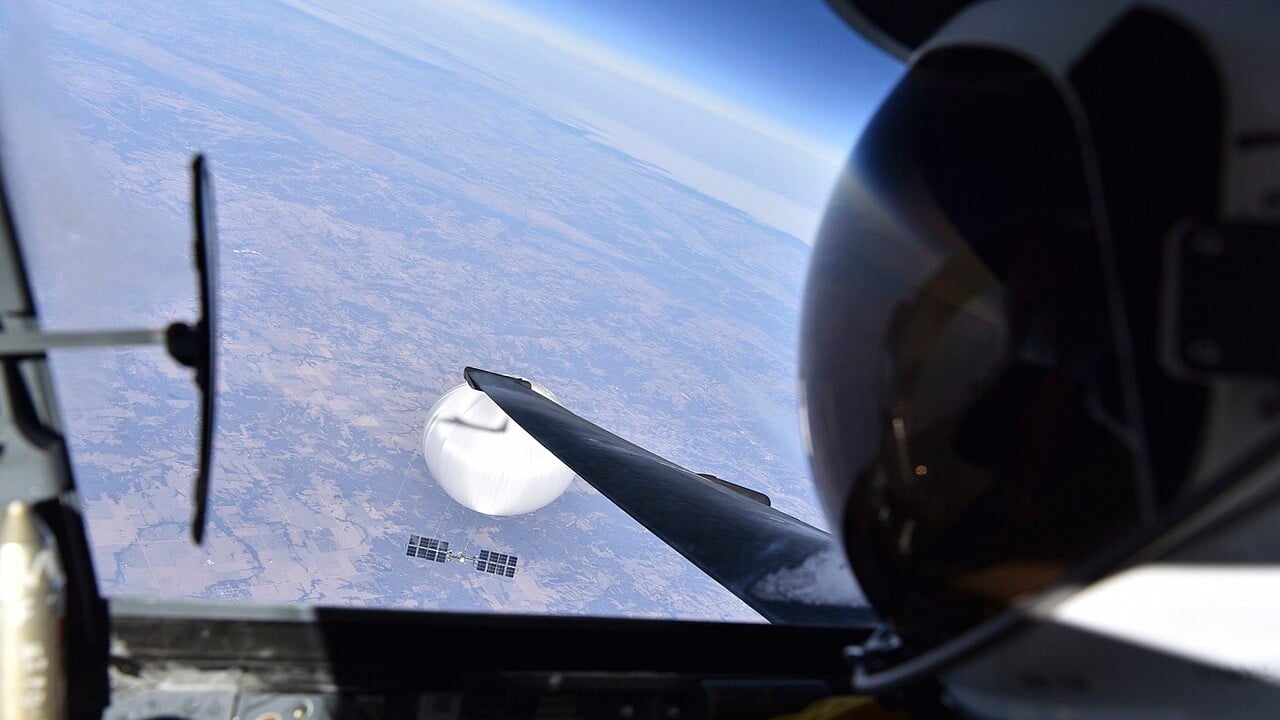
Between the top of the weather and the bottom of space lies a band of sky that almost nobody uses. The stratosphere, roughly 18 to 30 kilometres up for the purposes of this story, is too high for airliners and most fighters, far below satellites, and calm enough that a balloon or a very light aircraft can hang there for days or weeks.
Militaries have been trying to exploit it since the 1940s. This week the US Army revealed that it flew swarms of high-altitude balloons to support operations in the Middle East, and that it is now deciding whether the future belongs to balloons, solar-powered gliders or so-called pseudo-satellites. "Would it be a balloon? Would it be a solar glider? Would it be some sort of pseudo satellite?" the Army's Andrew Evans asked.
Here is how each one works, and why an old idea keeps coming back.
Quick Facts: The Stratosphere as a Sensor Layer
Typical altitude: About 18 to 30 km (60,000 to 100,000 ft)
Why there: Above weather, airliners and most air defences; below satellites
Main options: Free balloons, steerable balloons, solar-powered aircraft (HAPS)
Early example: Project Genetrix: 512 camera balloons launched in 1956
Longest Zephyr flight: 64 days aloft in 2022
Best-known incident: Chinese balloon shot down by an F-22 off South Carolina, 4 February 2023
Big advantage: Cheap, persistent coverage
Big weakness: Wind: hard to steer and hard to keep on station
Why the Stratosphere
Satellites see a lot but often only in passing: imaging satellites in low orbit circle the Earth roughly every 90 minutes and are over a given spot for a few minutes at a time. Drones and spy planes can loiter, but they need runways, crews and a lot of fuel, and they can be shot down. The stratosphere offers a middle way. Something parked at 20 kilometres can see a circle hundreds of kilometres across, stay for days, and costs a tiny fraction of a satellite.
It is also hard to hit. Stratospheric balloons are slow, cold and have almost no radar or heat signature. Many surface-to-air missiles can technically reach them, but spending an expensive missile on a cheap balloon is a poor trade.
The catch is the wind. A balloon goes where the air takes it. For most of history, that meant launching many balloons and hoping some drifted over the target.
Mogul, Genetrix and the First Balloon Spies
In 1947, Project Mogul flew long trains of balloons over New Mexico carrying microphones to listen for distant Soviet nuclear tests. One of them came down near Roswell, and the debris launched a UFO legend that has outlived the project by almost 80 years.
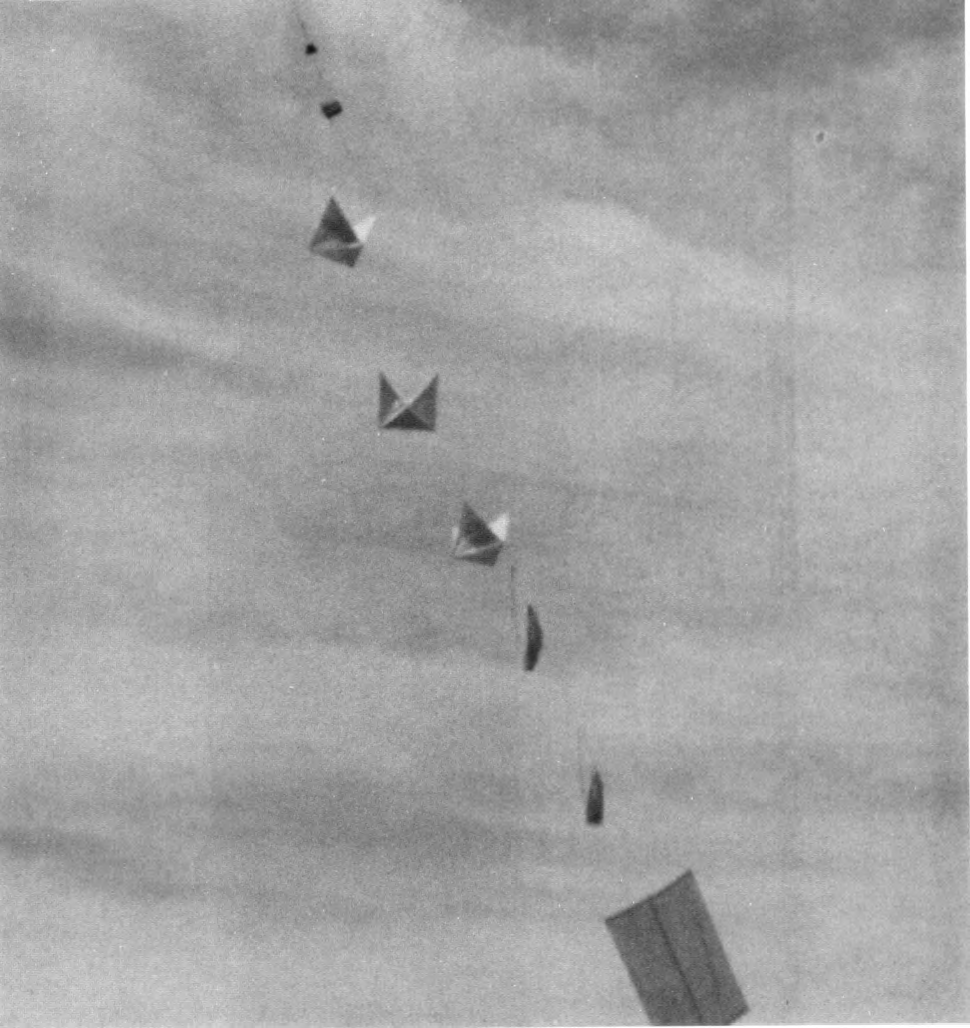
Project Genetrix was more direct. Authorised by President Eisenhower at the end of 1955, it launched 512 camera-carrying balloons from Norway, Scotland, West Germany and Turkey between 10 January and 6 February 1956, aiming them across the Soviet Union and China on the jet stream. The cover story was weather research. Only 54 were recovered and 31 produced usable photographs, but those covered more than 1.1 million square miles. Soviet MiG pilots learned to catch the balloons at dawn, when the cooling gas made them sink into range. When the Kremlin protested, Secretary of State John Foster Dulles defended the balloons in public.
Within months the U-2 took over the job, and spy satellites followed. Balloons faded from the front line of reconnaissance for more than half a century.
The Wall Street Journal on how balloons became an aerial surveillance tool, from the 1950s to today.
Steerable Balloons
What changed is steering. A modern stratospheric balloon still cannot fly against the wind, but it can change altitude, and winds at different heights blow in different directions. By pumping air in and out of a ballast chamber or venting gas, and using weather forecasts and software to choose the right layer, a balloon can loiter over a region rather than drifting away.
Google's sister company Loon used the technique to deliver mobile internet from the stratosphere before it shut down in 2021. Several American companies now sell similar balloons to the military, carrying cameras, signals receivers or radio relays. They are cheap enough to launch in dozens, which is what the US Army did over the Middle East.
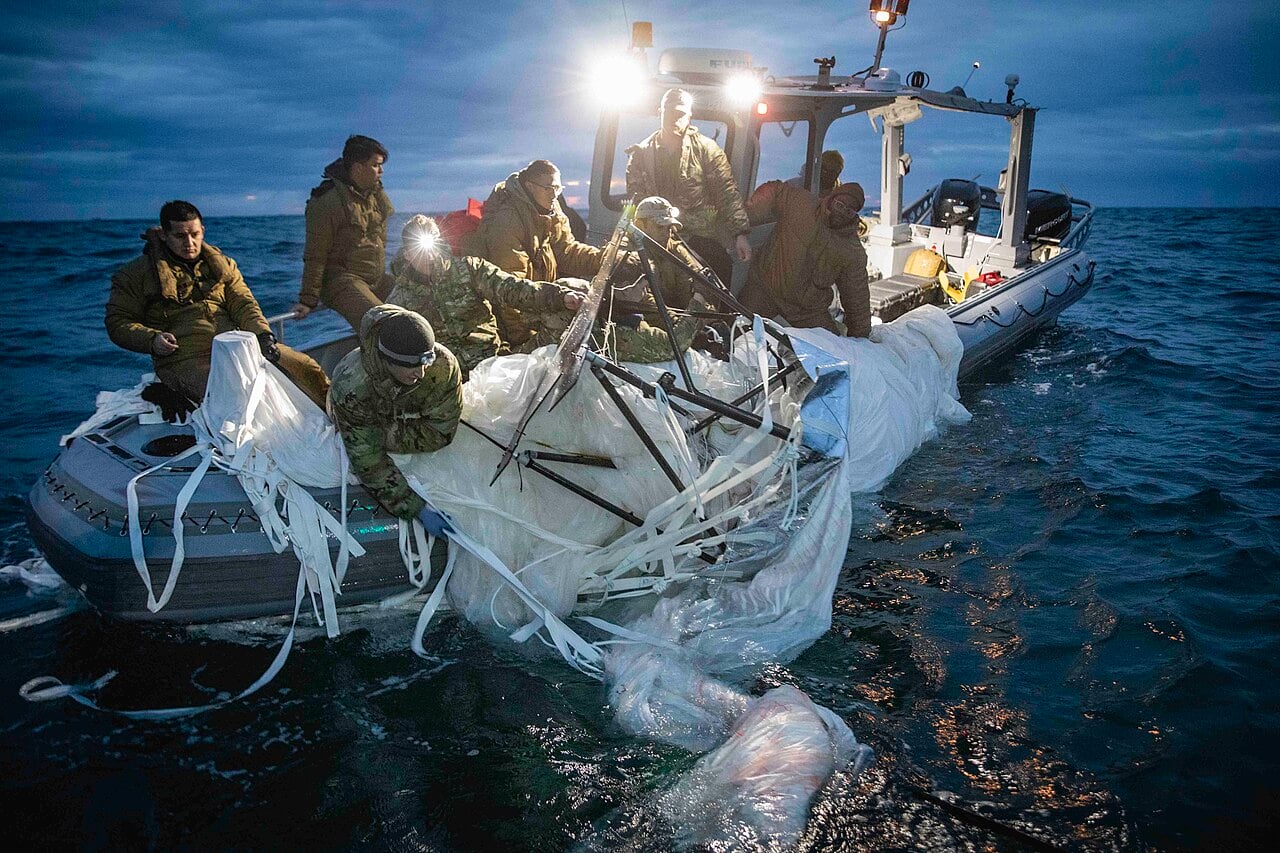
The world was reminded of the idea in early 2023, when a Chinese balloon drifted across North America. On 4 February an F-22 Raptor shot it down off South Carolina with a Sidewinder missile, and US Navy divers recovered the wreckage.
Solar Gliders and Pseudo-Satellites
The other approach is to fly. High-altitude pseudo-satellites, or HAPS, are ultra-light, solar-powered aircraft that climb into the stratosphere and stay there, charging batteries by day to keep flying through the night. The best known is the Airbus Zephyr, a 25-metre-wingspan aircraft weighing around 60 to 65 kilograms. In 2022 a Zephyr stayed aloft for 64 days, longer than any Zephyr before it, before it was lost in turbulence over Arizona.
HAPS can hold position far better than balloons, and they can be brought back down and reused. They are also fragile, expensive compared with balloons and tightly limited by weather and the seasons, because winter nights are long and the sun is low. Several have been lost in testing. Airbus has set up a spin-off company, AALTO, to sell Zephyr-based services for communications and Earth observation.
BBC News on the solar-powered Zephyr, an aircraft designed to stay in the stratosphere for weeks.
An Old Idea Whose Time Has Come Again
The case for the stratosphere is stronger now than in Eisenhower's day. Satellites have become targets, drones have proved vulnerable, and cameras and radios have shrunk enough to fit under a balloon or on a glider's wing. Above all, war has become a contest of cost: a sensor that costs less than the missile fired at it is a sensor worth having.
Balloons will not replace satellites or reconnaissance aircraft. But a layer of cheap, persistent sensors 20 kilometres up is exactly what a military wants when everything else is either too expensive, too vulnerable or too far away. Seventy years after Genetrix, the balloons are back.
Airbus Defence and Space on the Zephyr's record-breaking 2022 flight.
Sources: Wikipedia (Project Genetrix; Project Mogul; Airbus Zephyr; 2023 Chinese balloon incident); Breaking Defense; The New York Times (1956); U.S. Air Force; U.S. Navy.



0 Comments