

On Sunday night, an Austrian Airlines A320 flying from Tel Aviv to Vienna received a bomb threat, diverted to Sofia under a Bulgarian MiG-29 escort, and landed safely. Nothing was found. That is how almost all of these end. But the crew could not know that when the call came in, so they did exactly what they were trained to do.
Here is what that training looks like, from the moment a threat reaches the flight deck to the moment the last passenger walks away from the aircraft.
Informations clés
- Golden rule: Every bomb threat is treated as real until proven otherwise
- First move: Land at the nearest suitable airport
- Transponder: 7700 for an emergency; 7500 is reserved for hijacking
- In the cabin: Discreet search of toilets, galleys, stowage and jump seats
- If something is found: Do not touch it; move it only if essential, and only to the least risk bomb location
- Pressurisation: Avoid sudden pressure changes; reduce cabin differential gradually
- Par terre: Remote parking, disembarkation or evacuation, passengers moved upwind
Treat It as Real
Most bomb threats against airliners are hoaxes. Training starts from the opposite assumption. SKYbrary, the aviation safety knowledge base run by Eurocontrol, puts it plainly in its guidance for air traffic controllers.
Airlines and security services do grade threats. A vague warning with no named target, like a note found in a lavatory, is treated differently from a specific threat naming a flight that comes from a known group. But either way, the crew gets the aircraft on the ground.
On the Flight Deck
The pilots stop any climb, ask air traffic control for a lower level, and head for the nearest suitable airport. Controllers clear airspace around them, give them priority and keep them away from cities where possible. Crews often configure for landing early and fly a long, stable final rather than risk a go-around.
The transponder usually goes to 7700, the general emergency code, which is what Austrian Airlines OS82 broadcast on Sunday. Code 7500 means something different: unlawful interference, or a hijacking. Over Europe, either code can bring a quick reaction alert fighter alongside within minutes.

The Search and the Least Risk Bomb Location
In the cabin, flight attendants search quietly so as not to start a panic. If they find a suspicious item, the rule is not to touch it. Instead, the crew turns to a single spot designated on the aircraft: the least risk bomb location.
That location is chosen and documented by the manufacturer, and the US FAA covers it in its Advisory Circular 25.795-6. On many airliners it is next to a rear door, where a blast is least likely to damage flight-critical structure or systems. Crews are taught to move a device there only if it is essential, surround it with soft items such as blankets and cushions soaked in water, and never put it in an oven or trolley, where a sealed box would make the blast worse.

Why Pressure Matters
At cruise altitude, the cabin is pressurised far above the outside air. A blast that breaches the hull lets that pressure escape violently and can tear a small hole into a catastrophic one. That is why crews are told to avoid large, rapid pressure changes and, where possible, to bring the pressure difference down gradually.
Daallo Airlines Flight 159 showed how much this matters. In February 2016 a bomb hidden in a laptop exploded in an A321 about 20 minutes after take-off from Mogadishu. The flight had been delayed, so it had not yet reached cruising altitude and the cabin was not fully pressurised. The bomber was killed, but the aircraft landed safely back at Mogadishu with everyone else alive.
You'll Need This Later explains why every airliner has a designated place to put a bomb.
On the Ground
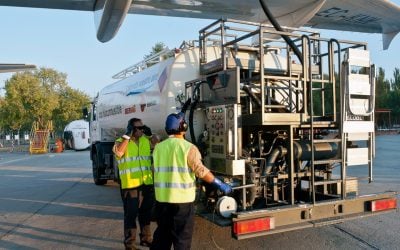
After landing, the aircraft is usually sent to a remote stand away from terminals, fuel and other aircraft. Passengers and crew leave, either by steps or, if the threat is serious, by emergency slides, and are moved well away, ideally upwind. Then the specialists go in, and the aircraft, the cabin, the hold and every bag are searched.
On Sunday in Sofia, that is exactly what happened. It took hours, fighters, a crisis team and a diverted airliner to prove that a single phone call was a lie. That is the frustrating maths of hoax threats, and also the reason the system works: it never assumes the call is a lie.
Sources: SKYbrary, OPSGROUP, FAA Advisory Circular 25.795-6, Wikipedia (Daallo Airlines Flight 159), Al Jazeera


0 Comments