
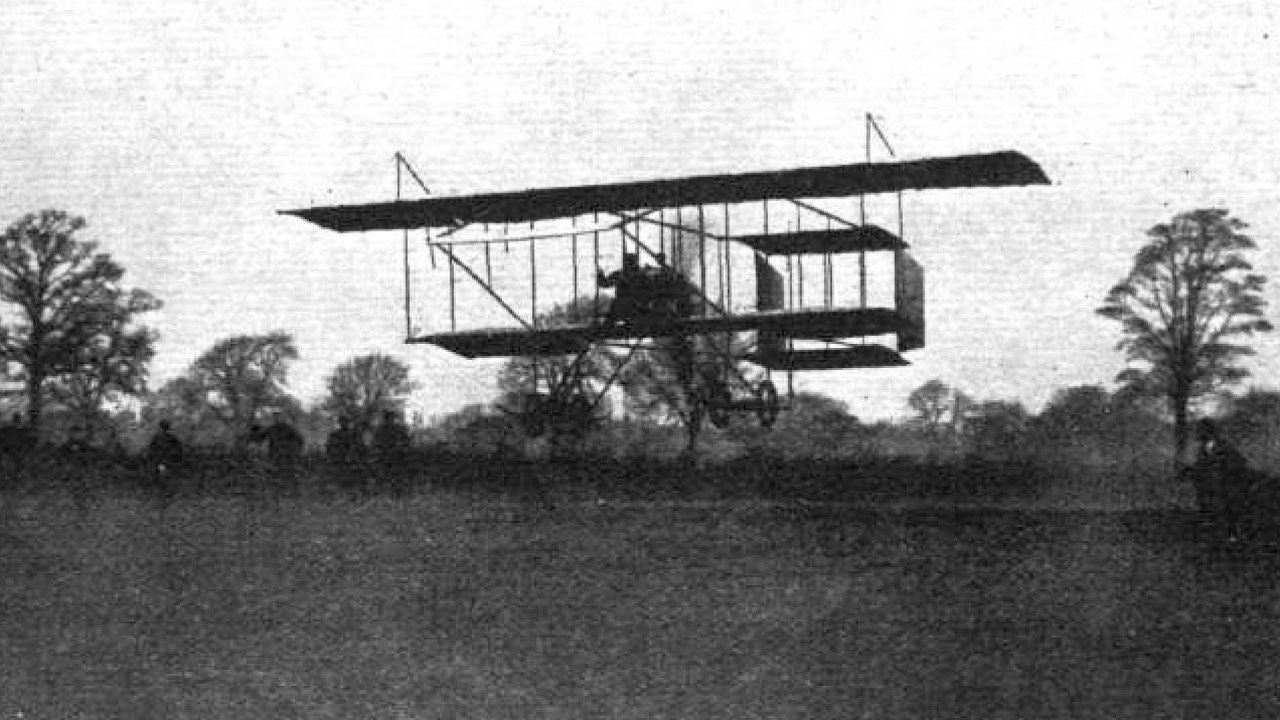
At 2:50 in the morning of 28 April 1910, in a dark field at Roade in Northamptonshire, a young Englishman climbed into an open Farman biplane while his friends aimed the headlamps of their cars across the grass. Nobody had ever taken off in a powered aeroplane at night. Claude Grahame-White was about to try, because a Frenchman was 60 miles ahead of him with £10,000 on the line.
The Frenchman was Louis Paulhan, asleep in a hotel near Lichfield. The prize was the Daily Mail’s, offered four years earlier for the first flight between London and Manchester. And the duel that unfolded in April 1910, the London to Manchester air race, became the first long-distance air race in England.
Informations clés
- Événement: Daily Mail London to Manchester prize flight, 1910
- Prix: £10,000, offered on 17 November 1906
- Rules: 185 miles (298 km) in under 24 hours, no more than two stops, start and finish within 5 miles of the Daily Mail offices
- Rivals: Louis Paulhan (France) and Claude Grahame-White (England), both in Farman biplanes
- Gagnant: Paulhan: left Hendon 5:21 p.m. on 27 April, overnight stop at Lichfield, landed at Didsbury 5:32 a.m. on 28 April 1910
- D'abord: Grahame-White’s 2:50 a.m. take-off from Roade on 28 April, the first night take-off by an aeroplane
- Encore: Paulhan flew the route again on 28 April 1950 as a passenger in a Gloster Meteor T7
A prize nobody expected to be won
On 17 November 1906, the Daily Mail offered £10,000 to the first aviator to fly the 185 miles (298 km) from London to Manchester in under 24 hours, with no more than two stops. Take-off and landing had to be within five miles of the newspaper’s offices in each city.
Powered flight was still a very new invention, and the paper wanted to spur the industry on. Its smaller prizes came first: the Mail’s £1,000 for crossing the English Channel went to Louis Blériot on 25 July 1909. London to Manchester was a different order of difficulty, in machines of wood, wire and fabric that were at the mercy of every gust.
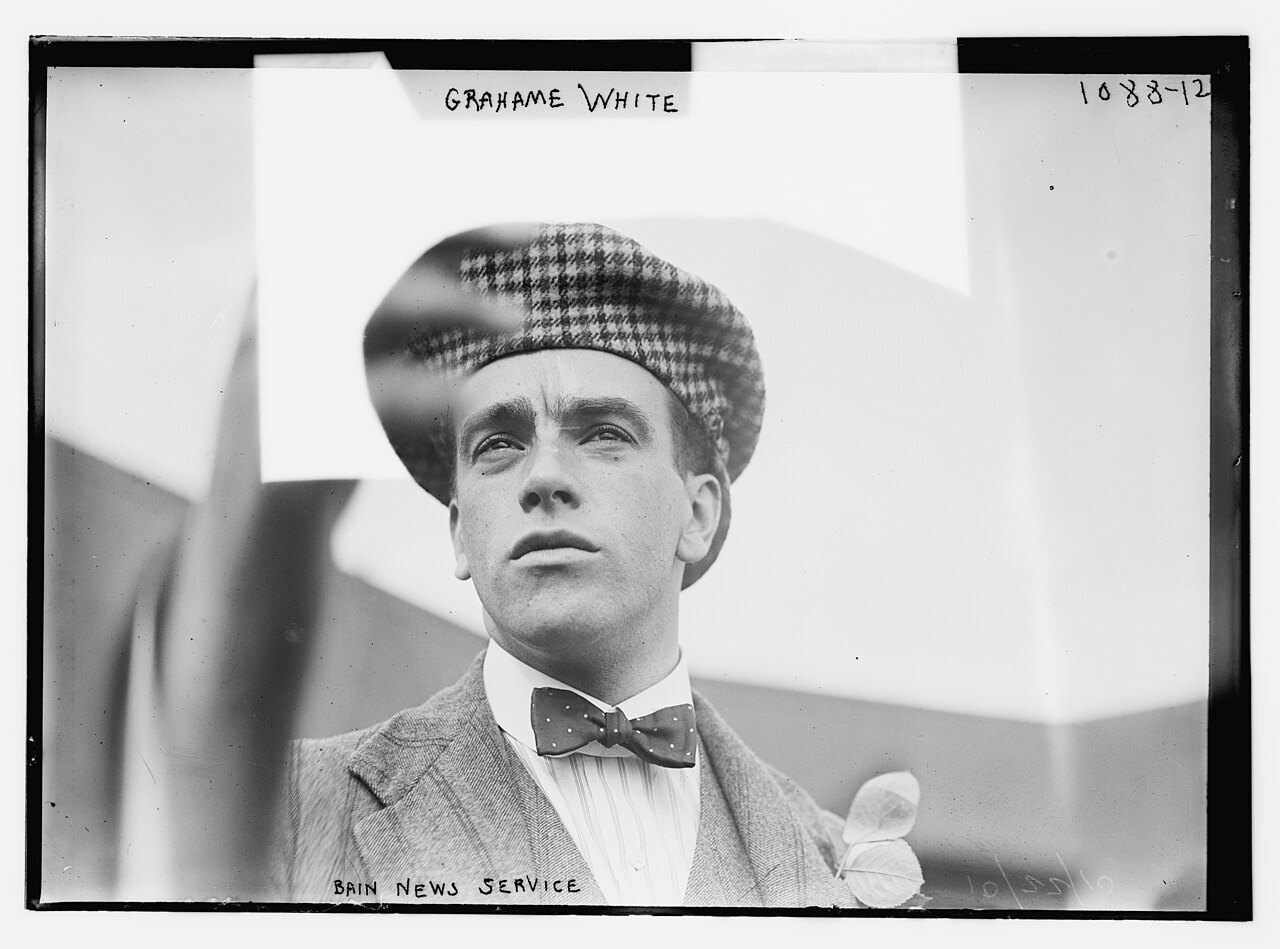
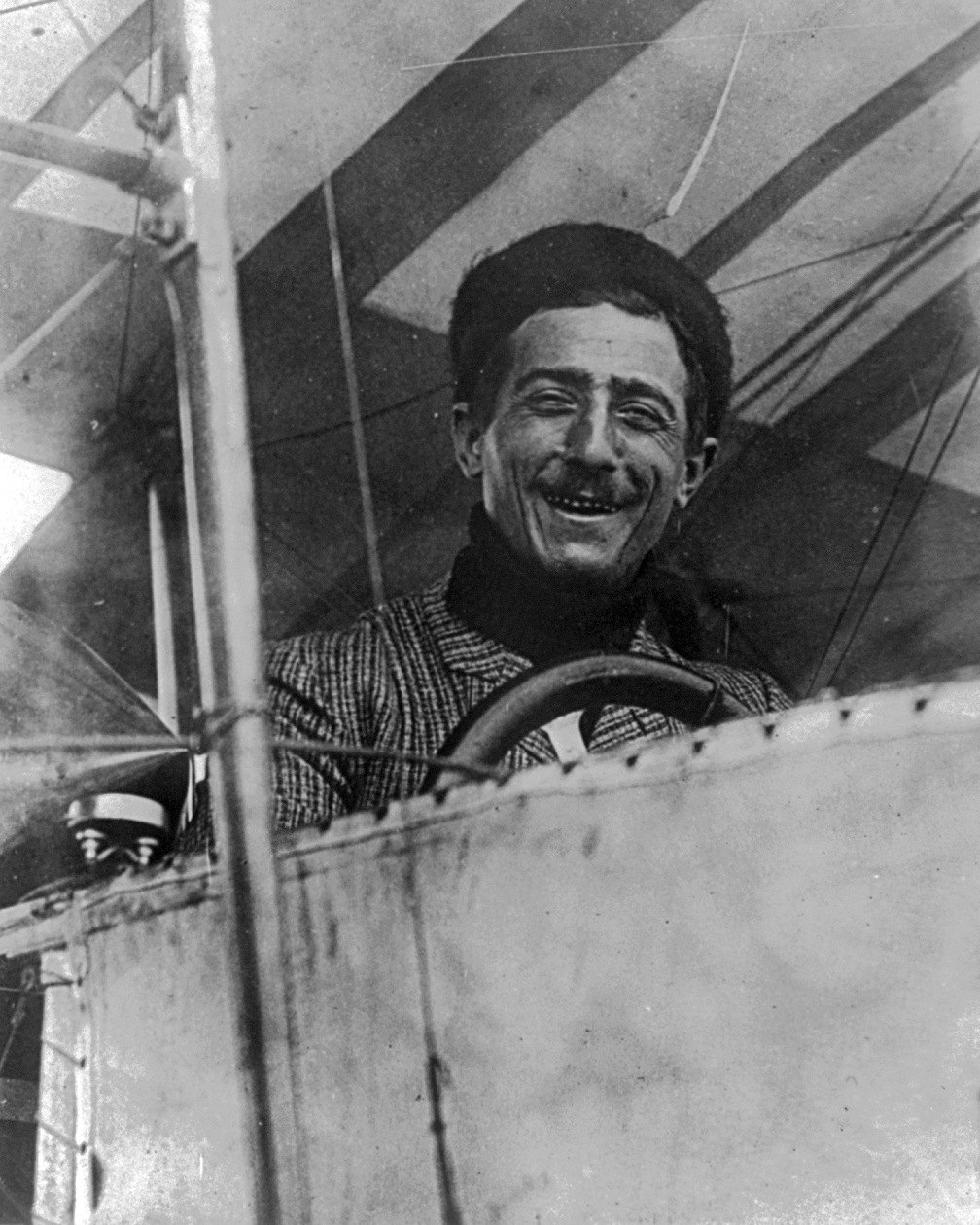
By spring 1910, two men believed they could do it. Grahame-White, born in Hampshire in 1879, had learned to fly in France after Blériot’s crossing and was one of the first Englishmen to hold an aviator’s certificate. Paulhan, born in Pézenas in 1883, held French licence number 10, had flown at Blackpool and Brooklands, and had just returned from exhibition flying in America.
Grahame-White goes first
Grahame-White struck first. Just after 5 a.m. on 23 April 1910, he lifted his Farman III off frosty grass in west London, crossed the starting line at a gasometer at Wormwood Scrubs, and followed the London and North Western Railway north. He landed at Rugby just after 7:15, frozen.
He set off again for Crewe, but about 30 miles past Rugby an engine valve problem forced him down at Hademore, near Lichfield, roughly 115 miles into the course. The wind rose through the evening and he had to give up. That night, with the aircraft not properly pegged down, a gale blew it over and badly damaged it. It went back to London for repairs.
The Manchester Evening News visits the piece of 1910 aviation history tucked away in the Manchester suburb where Paulhan landed.
Paulhan’s evening dash
Paulhan saw his chance. On 27 April, his newer Farman was assembled at Hendon in less than 11 hours, and at 5:21 p.m. he took off for his official start at Hampstead Cemetery. He followed the same railway, whose company had whitewashed the sleepers on the correct line, while his wife and Henry Farman himself rode behind him in a special train.
Grahame-White, exhausted after two days rebuilding his aircraft, was asleep in a hotel. Woken at about 6:10 p.m. with the news, he took off in pursuit and crossed the starting line at 6:29. As darkness fell he landed near the railway at Roade. Fifteen minutes later Paulhan, out of fuel about 117 miles from London, put down in a field near Lichfield’s Trent Valley station.
The first night take-off
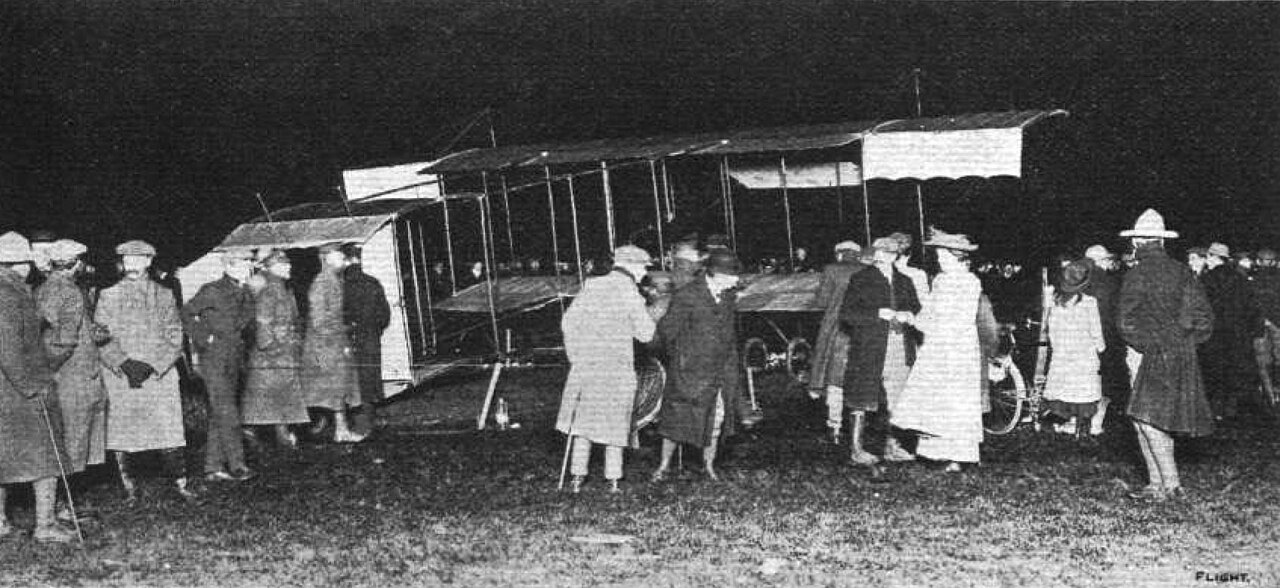
Both men planned to restart at 3 a.m. Grahame-White, about 60 miles behind, decided not to wait. He took off at 2:50 into pitch darkness, guided by car headlamps and then by the lights of railway stations. One friend reportedly lit up the wall of a pub so he could find his way.
Minutes into the flight, his jacket brushed the ignition switch and stopped the engine; he caught it in time. He passed Rugby within 40 minutes and Nuneaton at 3:50. But his Farman was heavy with fuel and oil, and the engine could not lift it over the high ground ahead. He landed at Polesworth, about 107 miles from London and only some 10 miles behind his rival.
Paulhan, unaware of how close the Englishman had come, took off a few minutes later. He passed Stafford at 4:45 and Crewe at 5:20, and at 5:32 a.m. on 28 April he landed at Barcicroft Fields near Didsbury, within five miles of the Daily Mail’s Manchester office. The prize was his.
Period film of the 1910 London to Manchester air race, digitally colourised and upscaled by the channel.
“Three cheers for Paulhan”
Grahame-White took the defeat with remarkable grace. On hearing the news, he reportedly told the crowd that the prize had been won by “the finest aviator that the world has ever seen”, called himself a novice by comparison and led three cheers for his rival. He later sent Paulhan a telegram of congratulations.
On 30 April, Paulhan received a golden casket containing a cheque for £10,000 at a luncheon at the Savoy Hotel in London. Grahame-White was given an inscribed silver bowl filled with red and white roses. Paulhan returned the compliment in his speech.
The race made aviation history twice over. It was the first long-distance aeroplane race, and Grahame-White’s gamble at Roade was the first night take-off by a heavier-than-air machine, proof that a pilot could fly in darkness if he could relate his position to the ground. Paulhan’s arrival at Didsbury was also the first powered flight into Manchester from outside the city.
Author Don Hale tells the story of the 1910 Daily Mail air race between Claude Grahame-White and Louis Paulhan.
Forty years later, in a jet
Within weeks, the Daily Mail offered another £10,000 for a 1,000-mile circuit of Britain, and later in 1910 Paulhan beat Grahame-White again for the paper’s £1,000 cross-country prize.
On 28 April 1950, exactly forty years after his landing at Didsbury, Paulhan flew from London to Manchester again, this time as a passenger in a Gloster Meteor T7, Britain’s first jet fighter in its two-seat trainer version. The 67-year-old covered the route at 400 mph, and Grahame-White joined him afterwards at the Royal Aero Club. Today a blue plaque on Paulhan Road in Didsbury marks where it all ended.
The original race took about 12 hours, with a night in a Lichfield field in between. That a Frenchman won it, a gentleman Englishman cheered him for it, and the loser invented night flying in the process is exactly why it is still remembered.
Sources: Wikipedia (1910 London to Manchester air race), Simple Flying, Manchester Evening News, Library of Congress, Flight
0 Comments