
There is a photograph doing the rounds of a grey twinjet sitting in a hangar in Brazil, wearing markings almost nobody expected to see on an Embraer product: the words UZ AIR FORCE, the registration UK 39010, and roundels in the blue, white and green of Uzbekistan.
Embraer released the images on 10 September 2026. The aircraft is the first of two C-390 Millennium tactical transports ordered by Tashkent, and it is due to be delivered before the end of the year.
A two-aircraft order is small. What it represents is not.
Informazioni rapide
Aeromobili: Embraer C-390 Millennium, the first of two for the Uzbekistan Air Force
Markings: grey scheme, “UZ AIR FORCE” titles, registration UK 39010, Uzbek flag on the fuselage and national-colour roundels on the wings
Rivelato: images released by Embraer on 10 September 2026
Delivery: to Tashkent before the end of 2026
Order history: signed in December 2024 as an undisclosed customer; Uzbekistan named at the Singapore Airshow in February 2026
Significato: the first C-390 operator in Central Asia
Stated roles: transport and humanitarian missions
L'aereo: two International Aero Engines V2500-E5 turbofans, up to 26 tonnes of payload, 470 knots, cleared for unpaved and temporary strips
Other customers: Brazil, Portugal, Hungary, South Korea, the Netherlands, Austria, the Czech Republic, Sweden, Slovakia and Lithuania, with Colombia added in August 2026
Who normally sells Uzbekistan its aeroplanes
Uzbekistan’s military air fleet was assembled in the Soviet Union. When the USSR dissolved in 1991, the aircraft on Uzbek soil simply became Uzbek, and the transport fleet has been Ilyushin and Antonov ever since.
Replacing Soviet-era transports has generally meant going back to Russia or to Ukraine. Choosing a Brazilian jet instead is a deliberate step outside that orbit, and Central Asian states have been taking more of those steps since 2022, quietly diversifying away from a supplier whose industry is consumed by its own war and constrained by sanctions.
Embraer, for its part, has been extremely willing to walk through that door.
The jet that is eating the Hercules market
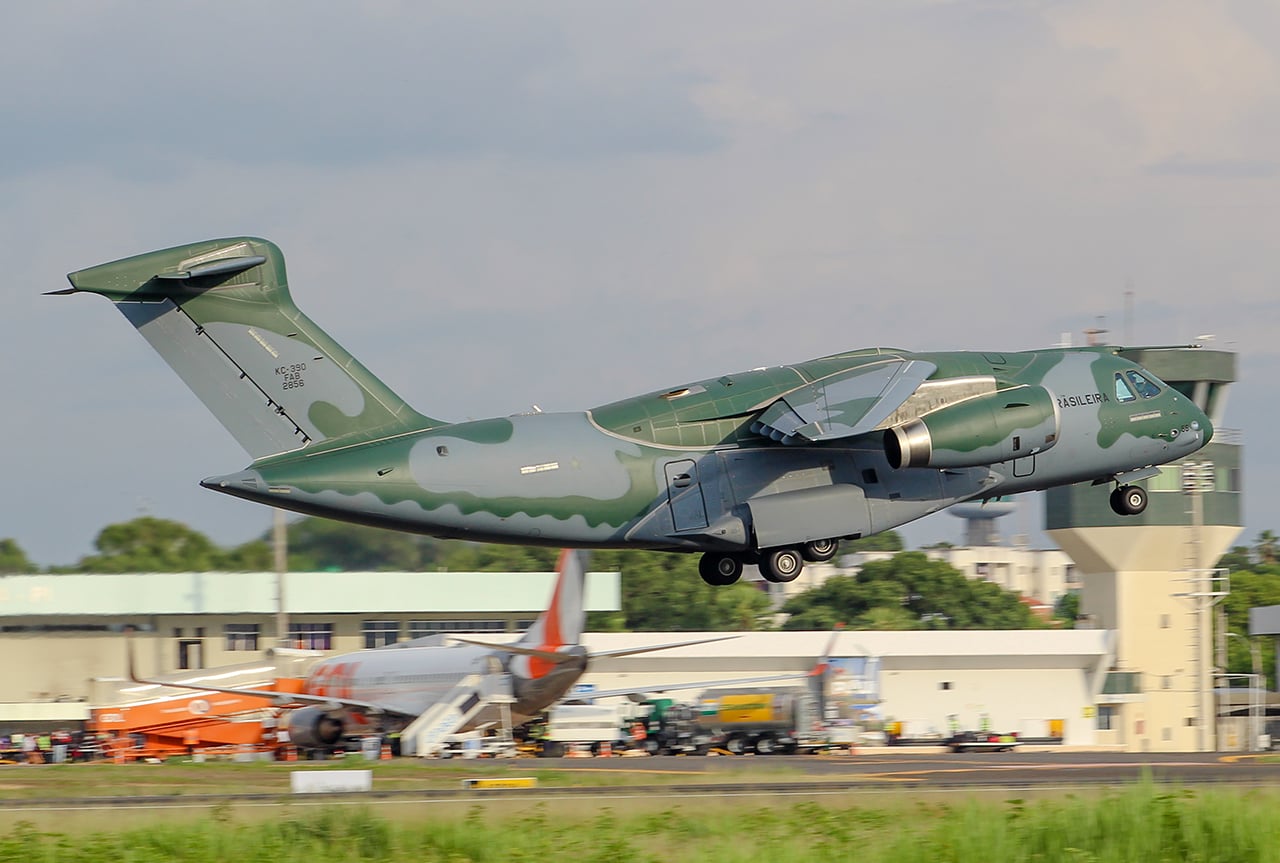
The C-390 is the most consequential thing Embraer has ever built for the defence market, and its appeal is straightforward arithmetic. It carries up to 26 tonnes, which is more than a C-130J, and it cruises at 470 knots, which is faster, because it is a jet rather than a turboprop.
Two IAE V2500-E5 turbofans do the work — the same engine family that hangs under a great many A320s, which means a deep commercial support network rather than a purely military one. It has full fly-by-wire controls, and it can still work from packed earth and gravel, which is the whole reason tactical transports exist.
Fitted with removable refuelling pods it becomes the KC-390 and can pass fuel as well as receive it.
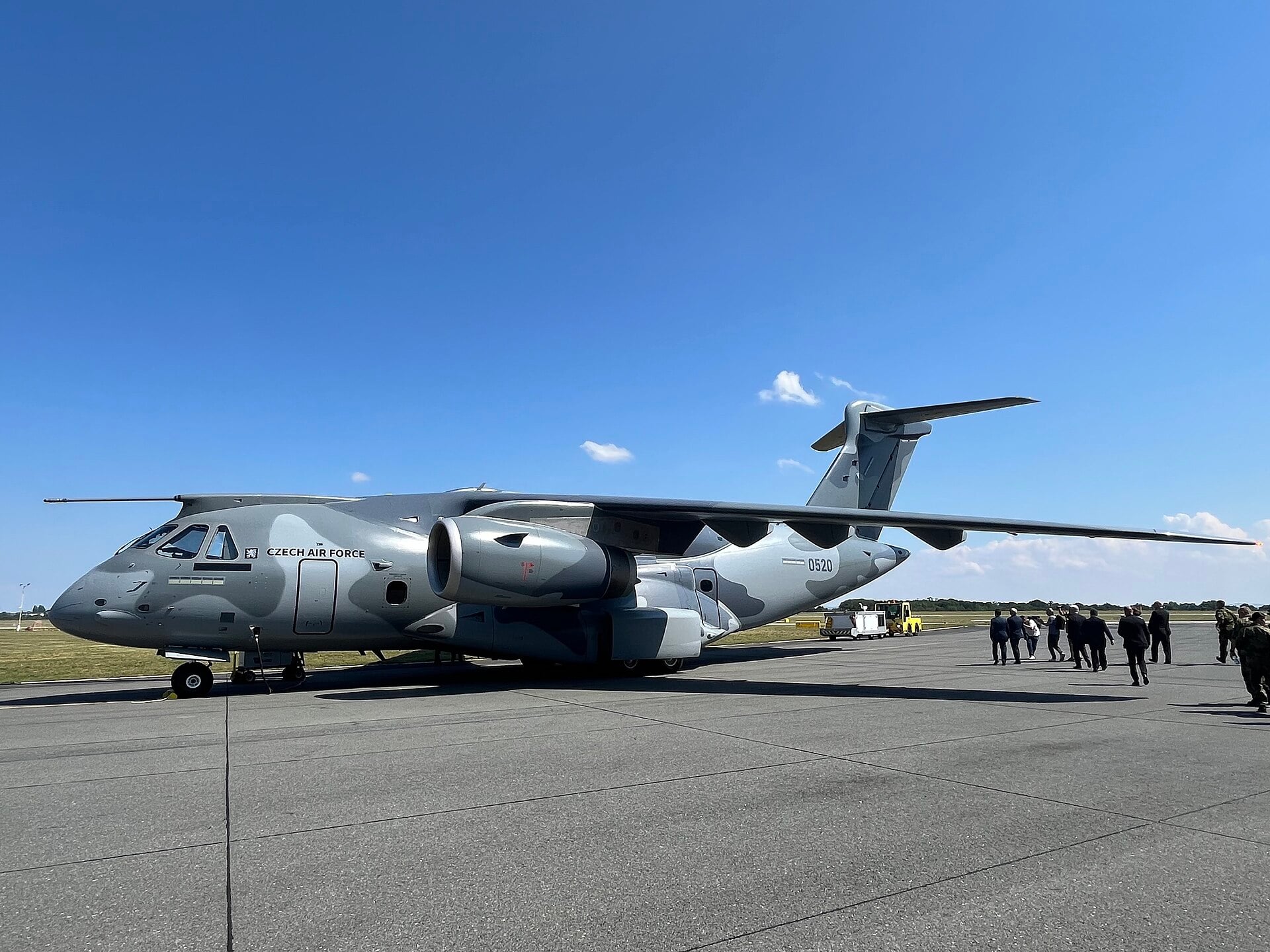
The customer list tells the story better than any brochure. Brazil first, then Portugal and Hungary, then South Korea, the Netherlands, Austria, the Czech Republic, Sweden, Slovakia and Lithuania. Colombia signed in August 2026. Several of those are NATO members replacing Hercules fleets, and Embraer has been perfectly happy to point out that the aircraft is NATO-interoperable.
Two aircraft is a foot in the door
Nobody should oversell a pair of transports. Uzbekistan is not rearming, and two airlifters will not change a regional balance.
But transport aircraft are a relationship, not a transaction. They come with training, spares, technical support and a maintenance pipeline that ties the buyer to the seller for decades. An air force that learns to operate and support one Brazilian type is markedly more likely to buy a second.
Embraer has built its defence business on exactly that pattern, and the map of C-390 operators has spread from South America into Europe, then into Asia, and now into the former Soviet space. The next photograph worth watching for is the one taken on the ramp at Tashkent.
An overview of the Embraer C-390 and KC-390 Millennium and what the type is designed to do.
Sources: Embraer press releases and media centre, FlightGlobal, Defence Blog, Air Data News, Zona Militar, Spot.uz.
0 Comments