
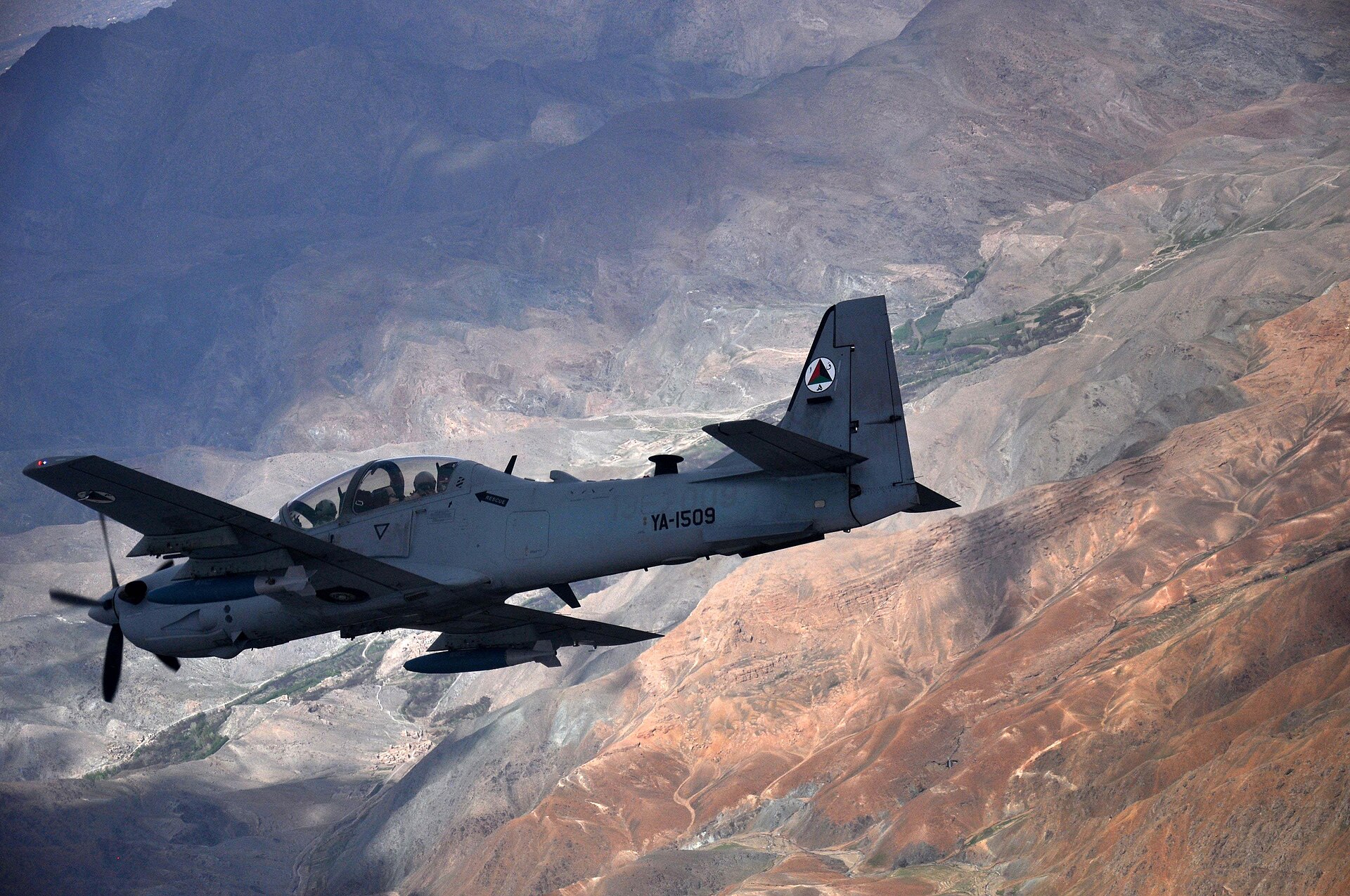
Five years after the Taliban walked into Kabul, one of the odder questions in military aviation is still unanswered: what is actually left of the air force the United States spent two decades and billions of dollars building?
The honest answer is that nobody outside Afghanistan knows precisely. What can be established is the shape of the problem, and it is a case study in why an air force is not a collection of aeroplanes.
Informazioni rapide
What collapsed: the Afghan Air Force and the Special Mission Wing, in August 2021
What America spent: roughly 8.5 billion dollars on both since 2010, according to the U.S. Special Inspector General for Afghanistan Reconstruction
Inventory at the end: SIGAR recorded 131 available, usable aircraft out of a total inventory of 162 as of 15 August 2021
What flew out: Afghan pilots flew roughly 46 aircraft to Uzbekistan and at least 17 to Tajikistan — around a quarter of the usable fleet — taking many of the best-trained crews with them
What was captured: the Taliban took more than 7 billion dollars of U.S.-supplied military equipment, including over 923 million dollars’ worth of aircraft
Types involved: A-29 Super Tucano light attack aircraft, UH-60 Black Hawk and Mi-17 helicopters, Cessna 208 Caravans, MD 530 light helicopters
Oggi: secondary trackers put the flyable Islamic Emirate fleet in the low tens of airframes. These figures are estimates and should be treated as such
Washington knew before it happened
The most striking document in this story predates the collapse. In January 2021, seven months before Kabul fell, SIGAR produced a classified report on whether the Afghan air forces could sustain themselves. The declassified version is unambiguous.
That sentence sounds like bureaucratic throat-clearing. It is in fact the entire diagnosis. The American effort had concentrated on producing pilots and maintainers, because those are the visible outputs, while the unglamorous functions that keep an air force running — supply, engineering management, finance, oversight — were persistently under-staffed.
SIGAR recorded that U.S. advisers did not believe the Afghan Air Force or Special Mission Wing had, in its words, the ability to sustain themselves without continued adviser and contractor logistic support.
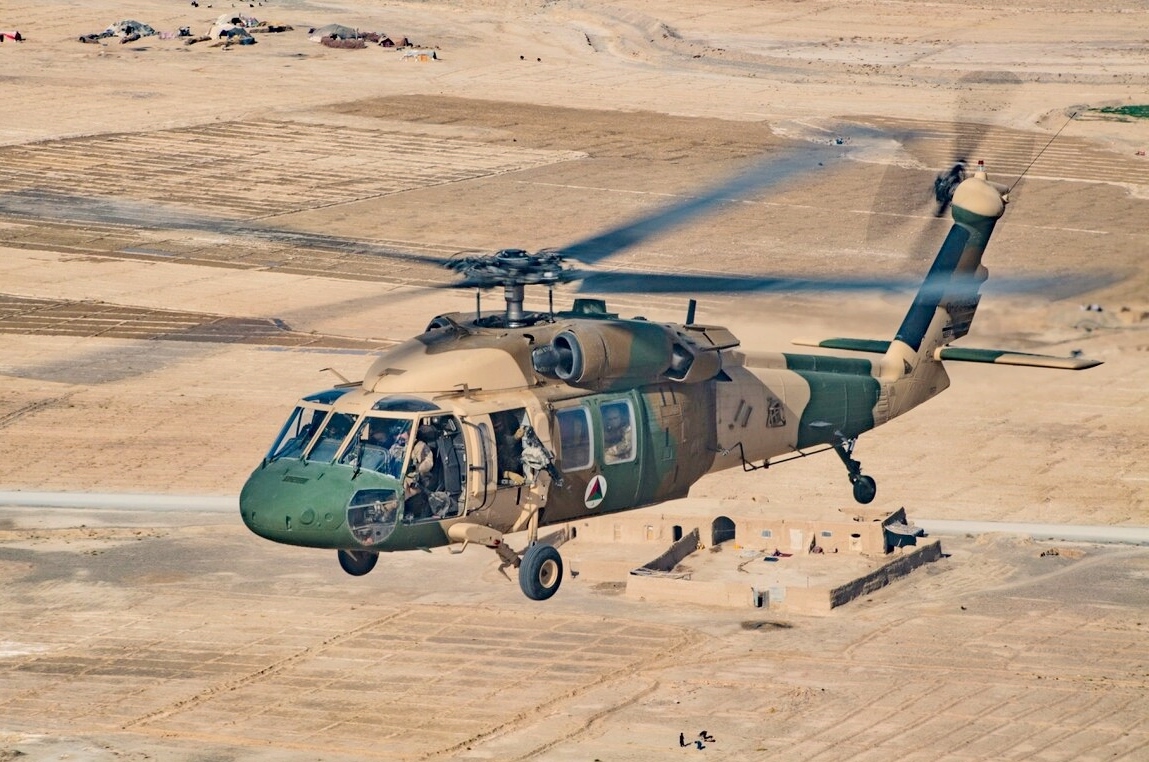
SIGAR was equally blunt about what the American mission had become in its final phase.
In other words, the effort had shifted from building an air force to administering the contracts that propped one up. When the February 2020 agreement committed the United States to withdrawing its civilian personnel, including contractors, the props went with them.
The Black Hawk problem
There is a particular irony in the fleet the Taliban inherited. For years the Afghan force had flown Mi-17s: Soviet-designed, rugged, tolerant of rough handling, and supportable through a regional parts market that has nothing to do with Washington.
The United States replaced many of them with UH-60 Black Hawks. The Black Hawk is the better helicopter by most measures. It is also a machine with proprietary components, a controlled supply chain and a maintenance culture that assumes the manufacturer is on your side.
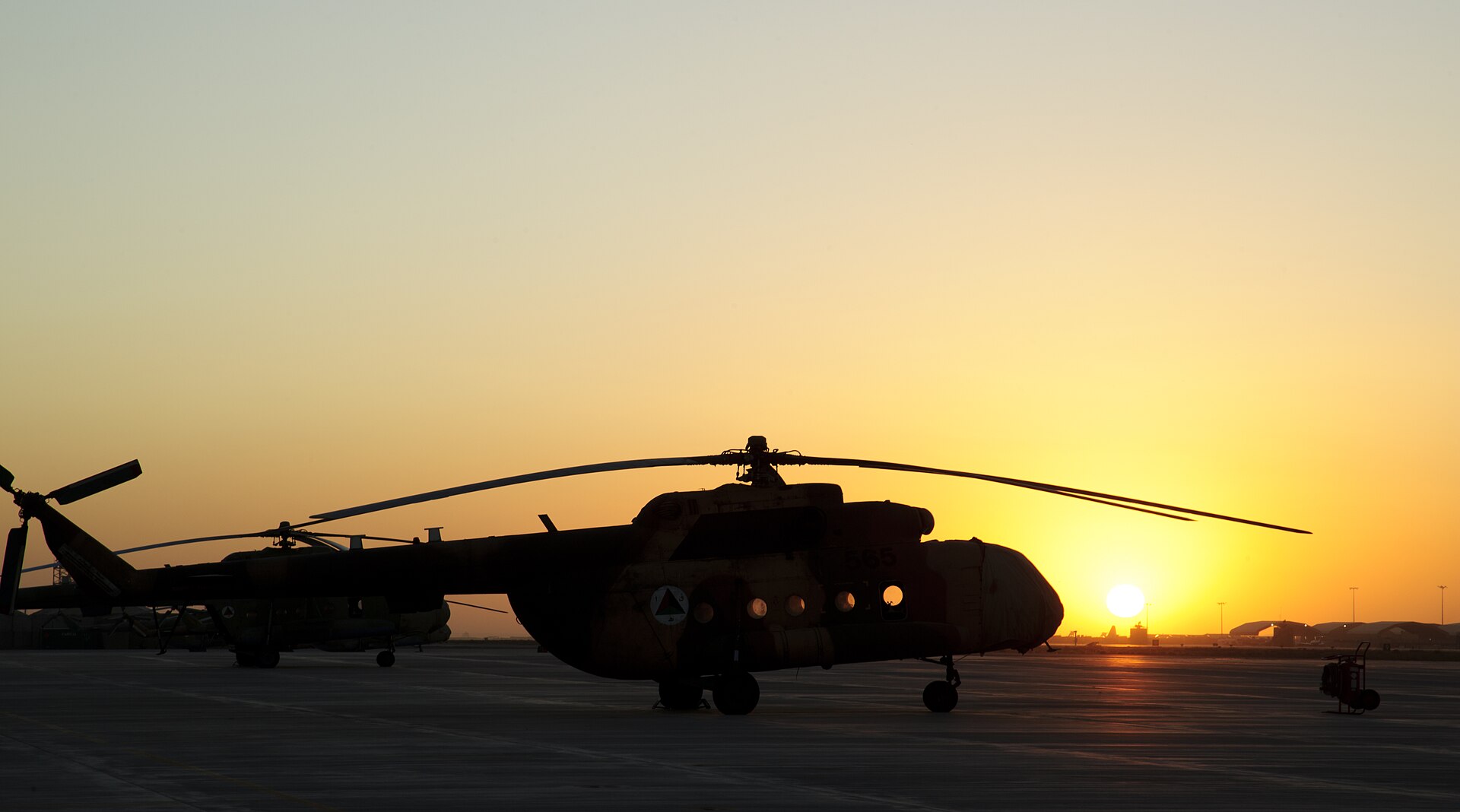
Under sanctions, that supply chain closes. Western-origin aircraft become progressively harder to keep flying as parts run out and nobody will sell more. Reporting through 2025 suggested the Taliban had nonetheless managed to return a handful of Black Hawks to flying condition, with estimates in the region of six to eight airframes — an achievement, and also a measure of how far the fleet has shrunk when a single-figure number is notable.
Afghan Air Force A-29 Super Tucano operations during the coalition period, when the force was at its most capable.
The pilots left, and that mattered more
In the days around the fall of Kabul, Afghan aircrews flew what they could across the northern border. Roughly 46 aircraft reached Uzbekistan and at least 17 reached Tajikistan. One Afghan A-29 collided in mid-air with an Uzbek MiG-29 during the influx; both pilots ejected and survived.
Those flights removed about a quarter of the usable fleet. More importantly they removed the people. A trained combat pilot represents years of investment and cannot be replaced by capturing his aeroplane.
That is the asymmetry at the centre of this story. Aircraft are visible, countable and photogenic; the Taliban posed with them at Kandahar within days. Aircrew, maintainers, supply clerks and engineering managers are none of those things, and they are what an air force actually is.
The A-29 Super Tucano in Afghan service in 2016, the aircraft at the centre of the fleet that no longer exists in that form.
What the numbers are worth
Published inventories for the Islamic Emirate’s air arm circulate freely and should be read with caution. Secondary trackers list small numbers of Mi-8/Mi-17s, UH-60s, Cessna 208s, MD 530s, Mi-24s and An-32s still notionally active, totalling a few dozen airframes.
Nobody is auditing that. There is no published flying-hour data, no independent inspection, and a strong incentive for the operator to overstate readiness and for others to understate it. Treat any specific figure as an estimate with wide error bars.
What is not in doubt is the direction. A force that in 2021 had over a hundred usable aircraft and a functioning, if fragile, training pipeline now flies a fraction of that, on captured equipment, without the manufacturer, without the contractors and without a large share of the people who used to fly it.
The aeroplanes were the cheap part. Everyone found that out at the same time.
An Afghan Air Force A-29 training sortie from the period before the collapse.
Sources: U.S. Special Inspector General for Afghanistan Reconstruction reports of January 2021 and January 2022, The Diplomat, CSIS, Reuters special report on the collapse of the Afghan Air Force, Defense News, The War Zone, aeroTELEGRAPH, and secondary fleet trackers.
0 Comments