
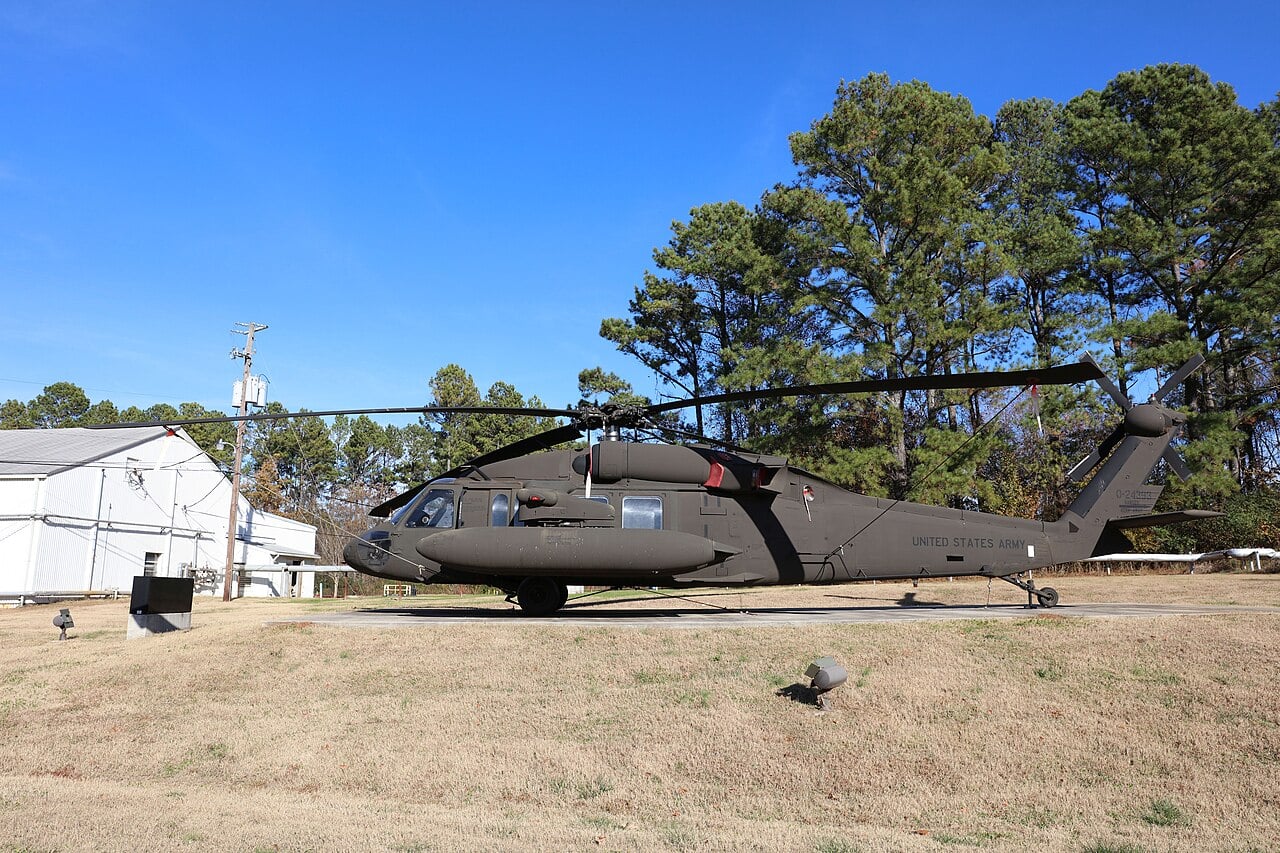
The helicopters had American flags painted on the fuel tanks, on both cabin doors, on the nose and on the belly. It was a clear spring morning in northern Iraq with good visibility. The lead F-15 pilot passed 1,000 feet to their left and 500 feet above them at 450 knots, looked down, and called out what he saw.
“Tally two Hinds.”
Two minutes later, on 14 April 1994, both F-15 had fired and twenty-six people were dead: American, British, French, Turkish and Kurdish. It remains the worst air-to-air fratricide in United States history, and it is still the case study taught in every serious course on how organisations kill their own.
Informazioni rapide
Data: 14 April 1994, around 10:30 local time
Dove: Northern Iraq, near Erbil, inside the Operation Provide Comfort no-fly zone
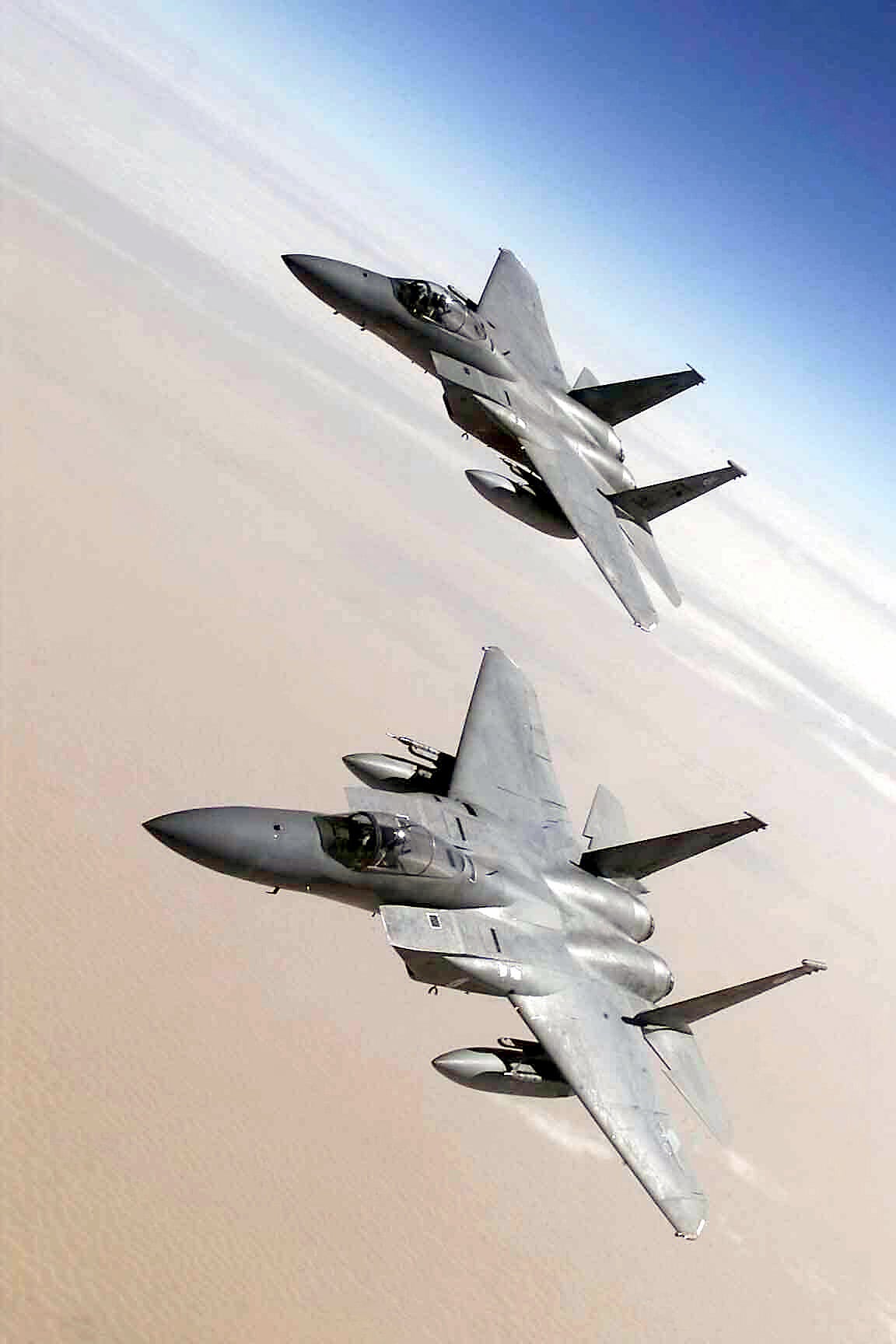
Shooters: Two USAF F-15Cs of the 53rd Fighter Squadron out of Incirlik
Victims: Two US Army UH-60 Black Hawks, “Eagle Flight”, 6th Battalion, 159th Aviation Regiment
Ucciso: 26, all aboard; no survivors
Armi: One AIM-120 AMRAAM, then one AIM-9 Sidewinder
Court-martialled: One person, an AWACS officer. Acquitted.
Two aeroplanes that could not hear each other
Operation Provide Comfort had been protecting the Kurds of northern Iraq since 1991. By April 1994 it was three years old, routine, and in that routine it had quietly grown a set of cracks that nobody had joined up.
The first was radio. The Black Hawks were talking on the en route frequency. The F-15s were on the frequency used inside the no-fly zone itself. Nobody had told the helicopters to switch, so the two formations were in the same sky on different channels, unable to hear each other even if either had thought to call.
The second was the electronic answer-back that exists precisely to stop this. When the F-15s interrogated the contacts, Mode I came back negative — because the Black Hawks were squawking the wrong code. Two different versions of the daily air tasking order were being printed, one for the Air Force units at Incirlik and one for the Army detachment, and the Army copy carried the wrong code for the no-fly zone. It had carried the wrong code for roughly two years. AWACS crews had seen it repeatedly. Nobody had ever told them.
Mode IV, the encrypted one, briefly answered correctly and then went negative. The investigation listed five possible reasons and could not settle on any of them.
The third crack was paperwork. The tasking order the F-15 pilots read that morning mentioned that Army Black Hawks operated in the zone. It gave no times, no routes, no durations. Nobody had ever built a procedure for getting helicopter mission details to the fighter units, and an Eagle Flight officer later testified that a task force staff officer had told him the Army helicopters were not considered part of the operation at all.
The identification pass
The rules said fighters should not descend below 10,000 feet above the ground. The lead pilot went down to make a visual identification, which meant breaking that rule, and made one fast pass.
What he was looking for, he had been trained to find on 35mm slides. Helicopters made up about five percent of those slides, and almost all of the pictures were taken from the ground looking up — because the Army had supplied them. He had never been shown what an Operation Provide Comfort Black Hawk looked like with its distinctive external fuel tanks fitted, and he had not been briefed that Iraqi Hinds were painted light brown and desert tan while the Black Hawks were dark green.
He called two Hinds. His wingman made a second pass, higher, and called “Tally 2” — which he later told the accident board meant only that he had seen two helicopters, not that he was confirming anything. The lead declared himself engaged. The AMRAAM went first, then the Sidewinder.
Associated Press coverage from April 1994, in the days after the shootdown.
Nineteen people were watching
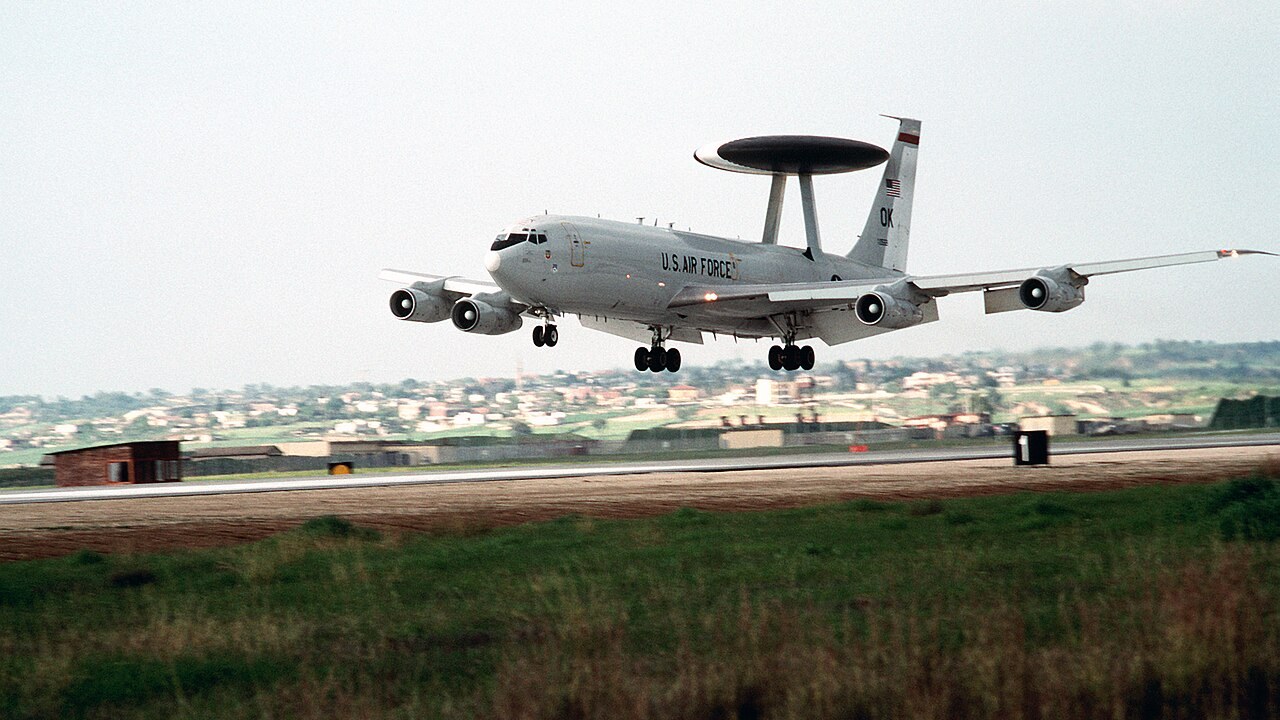
Above it all sat an E-3 Sentry with a crew of nineteen, whose entire purpose was to know where everything in that airspace was.
They had seen the Black Hawks. They had tracked them into the zone. The air surveillance officer noticed the returns vanish behind terrain and sent a blinking alert to the senior director’s scope; it cleared itself after a minute with nothing done. The controller responsible for the zone was on his first ever mission there, and the instructor sent along to supervise him had gone to the back of the aircraft for a nap. The mission crew commander was not, under his own service’s rules, currently qualified to be in that seat.
When the lead F-15 called “Tally two Hinds”, the controller repeated it and then asked his senior director: “Sir, are you listening to this?” The answer was “Affirmative.” Nothing else was said. Symbols for friendly helicopters had by then reappeared on the senior director’s screen, in the same place as the contacts the fighters were about to shoot.
The most quoted passage of the whole affair is not a radio call. It is three answers given to investigators afterwards, when they asked who had been responsible for tracking those helicopters. The mission crew commander said he honestly did not know. The senior director said no one was responsible. The airborne command element — the officer whose job was to ensure the rules of engagement were followed, and who did have the authority to stop the engagement — was asked what action he took.
Twenty-six people
The helicopters were carrying the leadership of the coalition’s civil-military effort in northern Iraq. The outgoing commander of the Military Coordination Center was flying his designated replacement out to introduce him to Kurdish leaders and UN representatives.
Aboard were four American aircrew in each aircraft, a US State Department adviser, a US Army intelligence specialist, a medic, an Air Force officer, British, French and Turkish liaison officers, and Kurdish and Assyrian representatives. Twenty-six in total. There were no survivors. Kurdish farmers who watched it happen reported it to the coordination centre some three hours later.
Nobody was convicted of anything
The accident board interviewed 137 witnesses and produced 27 volumes running to 3,630 pages. Its seventh and central finding was that the shootdown was caused by a chain of events beginning with a breakdown of clear guidance from the task force to the organisations under it.
Charges were announced against six people. The wingman was charged with 26 counts of negligent homicide; the charges were dismissed. The flight lead who made the identification and fired first was never charged at all, and was granted immunity to testify. Four AWACS officers had their charges dropped or resolved administratively.
That left one man. The AWACS senior director went to court-martial on three counts of dereliction of duty, and in June 1995 a ten-member panel returned a nullification verdict — not a finding of innocence, but a refusal to convict. He remained a captain for at least the next decade, repeatedly passed over for promotion. Afterwards, he telephoned the victims’ families and apologised.
The board president was asked about the identification pass at a congressional hearing the following August, and gave the plainest answer anybody gave about the whole thing.
What the paperwork left out
A Government Accountability Office review, published in November 1997, found the Air Force investigation had been properly convened but had left two things out.
The first was that the pilots never reported their unidentified contacts to the airborne command element, as the rules required, and that this reflected a broader lack of discipline among F-15 aircrew on the operation. The second was an intense rivalry between F-15 and F-16 pilots — F-16s having taken every air-to-air kill since the Gulf War — which senior officers told investigators may have contributed to an urgency to engage. Two F-16s were due into the zone ten to fifteen minutes behind the F-15s. Going up the chain of command would have slowed things down.
A parallel Senate investigation ended without a report. The Department of Defense declined to produce four witnesses, and then, for the first time in American history, refused to comply with a Senate subpoena. A new subcommittee chairman terminated the inquiry in January 1997.
An analysis of the incident through the lens of Scott Snook’s study Friendly Fire, still the definitive academic account of how a system full of competent people produced this outcome.
Cosa è cambiato?
Five days after the shootdown, Air Force officers on the operation started putting Black Hawk flight times into the daily tasking order and printed the correct identification code in the copy given to the Army detachment. That was the entire technical fix. It had been available for three years.
The wider response came in August 1995 from the Air Force Chief of Staff, who disqualified five of those involved from flying duties for at least three years, wrote permanent letters into seven officers’ files, rescinded a decoration, and recorded a video on standards and accountability that every Air Force officer and senior NCO was ordered to watch.
The United States also paid compensation to the families of the foreign victims, the first time it had done so after a friendly fire incident. American families were initially excluded on legal precedent; Congress corrected that in 1999.
Operation Provide Comfort ran until the end of 1996 and flew 62,000 sorties. The shootdown was its only serious accident. A monument to the twenty-six stands at Fort Rucker, Alabama, moved there when the German airfield the helicopters flew from closed.
Associated Press footage of the coalition force withdrawing from northern Iraq as Operation Provide Comfort wound up at the end of 1996.
The uncomfortable part of this story is not that somebody was careless. It is that almost everyone involved was doing a version of their job that had worked fine the day before, and the day before that, for three years. The identification training was inadequate, and had been for years. The frequencies were split, and had been for years. The code was wrong, and had been wrong for two years while everyone who could see it said nothing. On 14 April 1994 all of it lined up at once, and two helicopters covered in American flags flew into the middle of it.
Sources: USAF AFR 110-14 accident investigation board report; US General Accounting Office OSI-98-4; Scott A. Snook, Friendly Fire (Princeton University Press); Allen L. Hall, Michael, My Son; Joan L. Piper, Chain of Events; AP Archive.
0 Comments