

Michael O’Leary was asked on Wednesday whether Ryanair would add a fuel surcharge. He said no. Then he explained, without apparent embarrassment, that he would quite like jet fuel to get more expensive, because it would kill his competitors faster.
It is worth quoting the man directly, because paraphrase softens him.
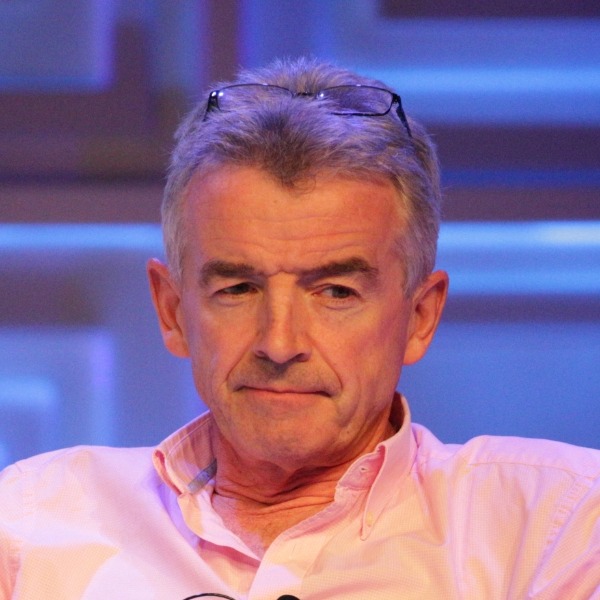
Informazioni rapide
- Chi: Michael O’Leary, Ryanair chief executive
- Quando: Wednesday 23 September 2026, speaking to reporters
- The pledge: No Ryanair fuel surcharge, whatever happens to jet fuel prices
- The prediction: Competitor fares up 10 to 20 per cent next summer
- The forecast cut: Ryanair’s fiscal 2027 passenger target trimmed from 216 million to 214 million
- Hedging: Most airlines are well hedged through summer 2026; Ryanair has only a small percentage of unhedged exposure
- The endgame he sees: Europe consolidating into four large airlines: British Airways, Lufthansa, Air France and Ryanair
Why a surcharge is a confession
A fuel surcharge looks like a pricing mechanism. In practice it is an admission that an airline did not hedge well enough and cannot absorb a shock inside its cost base. O’Leary’s formulation was characteristically unkind: Ryanair will not levy a fuel surcharge, but the legacy carriers certainly will next summer.
Behind the rhetoric sits a real structural advantage. Ryanair hedges heavily and years ahead, which converts a volatile input into a known number. It also runs one aircraft type, high utilisation and the lowest unit costs in Europe, so the same fuel price increase consumes a smaller share of its margin than it does of a network carrier’s. He acknowledged that most airlines are well hedged through summer 2026, which is the honest caveat: the pain he is describing arrives later, when existing hedges roll off at higher prices.

The four-airline Europe
The genuinely interesting claim was not about surcharges at all. Asked where this leads, O’Leary said loss-making airlines will fail and that it will accelerate the consolidation of Europe into four large airlines: British Airways, Lufthansa, Air France and Ryanair.
Read carefully, that list is three groups and one airline. BA sits inside IAG alongside Iberia, Vueling and Aer Lingus. Lufthansa Group holds Swiss, Austrian, Brussels Airlines and ITA. Air France is half of Air France-KLM. Ryanair is the only name on the list that is genuinely a single carrier, which is rather the point he is making about cost structure.
He has predicted this before and the direction has broadly gone his way. European consolidation has proceeded through failure and absorption rather than through mergers of equals, and the past two years have supplied plenty of examples of small carriers running out of road.
Whether it really ends at four is another matter. Wizz Air, easyJet, Turkish Airlines and a set of well-capitalised national carriers are not obviously about to disappear, and competition regulators have been notably unenthusiastic about letting the big groups absorb everything they would like to. The forecast is best read as a competitive position stated as a prophecy.
The immediately checkable part is the fare prediction. If rival European fares are up 10 to 20 per cent next summer and Ryanair’s are not, he was right. That one can be measured.
O’Leary making an earlier version of the same argument about oil prices and competitors. The interview is from 2019, and the position has not softened.
Sources: Reuters, via Cyprus Mail and Euronext; aeroTELEGRAPH; Hospitality Ireland.

0 Comments