
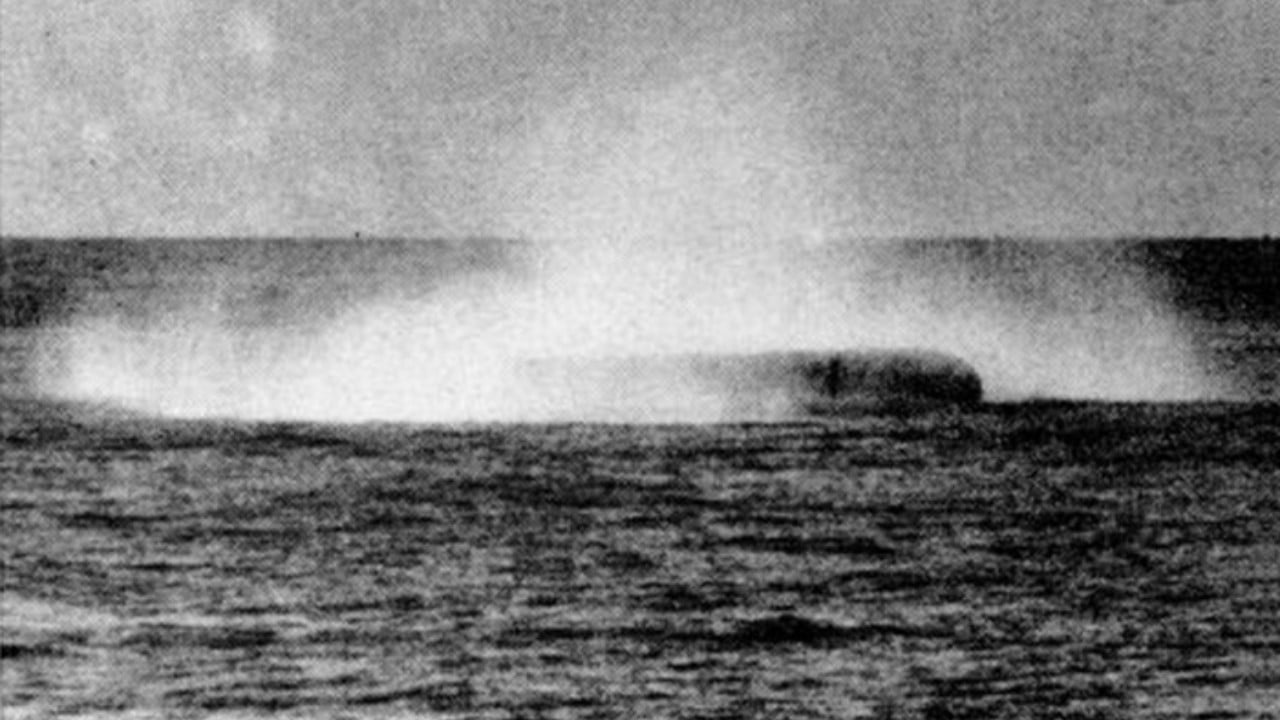
In the middle of the night, halfway between Honolulu and San Francisco, the Boeing Stratocruiser Clipper Sovereign of the Skies lost two of its four engines. It was too far from land to make it either way. So for hours, its crew flew circles in the dark above a single Coast Guard ship, waiting for the sun to come up so they could land on the Pacific Ocean.
At 6:15 a.m. on 16 October 1956, Pan Am Flight 6 touched down on the water beside the cutter Pontchartrain. Twenty minutes later the airliner was gone. Every one of the 31 people on board was alive.
Informazioni rapide
- Data: 16 October 1956, ditched at 6:15 a.m. local time
- Aeromobili: Boeing 377 Stratocruiser N90943, Clipper Sovereign of the Skies
- Itinerario: Honolulu to San Francisco, the last leg of a round-the-world service
- A bordo: 24 passengers and 7 crew
- Problema: Failures on engines No. 1 and No. 4; not enough fuel to reach land
- Rescue ship: US Coast Guard cutter Pontchartrain at Ocean Station November
- Risultato: All 31 survived; the aircraft sank about 20 minutes after touchdown
Two engines down over the Pacific
Flight 6 left Honolulu at 8:26 p.m. on 15 October, bound for San Francisco on the final leg of Pan American's round-the-world service. The aircraft was a Boeing 377 Stratocruiser, the double-deck, four-engine luxury liner of its day, commanded by 43-year-old Captain Richard N. Ogg.
At around 1:20 a.m., the No. 1 engine, the outer engine on the left wing, began to overspeed after a failure in its propeller governor. The crew could not feather the propeller, which meant they could not turn its blades edge-on to the airflow. The engine was eventually lost, but the propeller kept windmilling, acting like a huge air brake on one side of the aircraft.
At 2:45 a.m., the No. 4 engine, outermost on the right wing, began to backfire and could only produce partial power. The crew shut it down. With two engines left, a dead propeller creating enormous drag and the fuel burn climbing, the navigator worked out the bad news: they would run out of fuel roughly 250 miles short of land, whether they pressed on to California or turned back for Hawaii.
The History Guy tells the story of Pan Am Flight 6, with the US Coast Guard's footage of the ditching.
Ocean Station November
In 1956, the North Pacific was not entirely empty. The US Coast Guard kept weather ships on permanent station along the transpacific air routes, and one of them, the 255-foot cutter Pontchartrain under Commander William K. Earle, was holding Ocean Station November, roughly midway between Hawaii and California.
Ogg turned for the ship. Rather than ditch in the dark, the crew decided to circle overhead, between 2,000 and 5,000 feet, until dawn, when the crew of the cutter and the pilots could see the swell properly. The Coast Guard passed them weather information and ditching advice while the cabin crew prepared 24 passengers, including small children, for a landing on the open ocean.
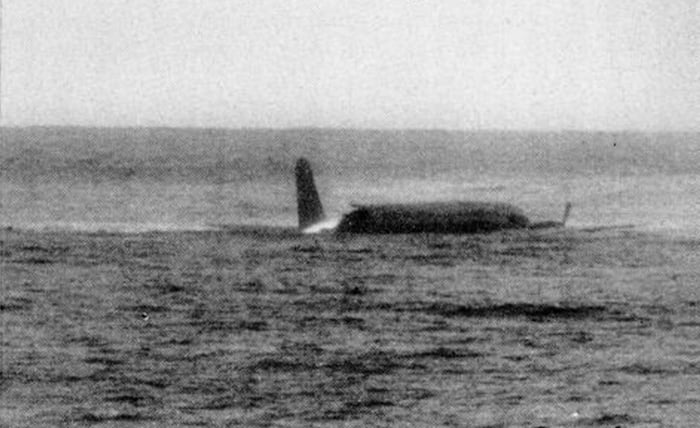
6:15 a.m.
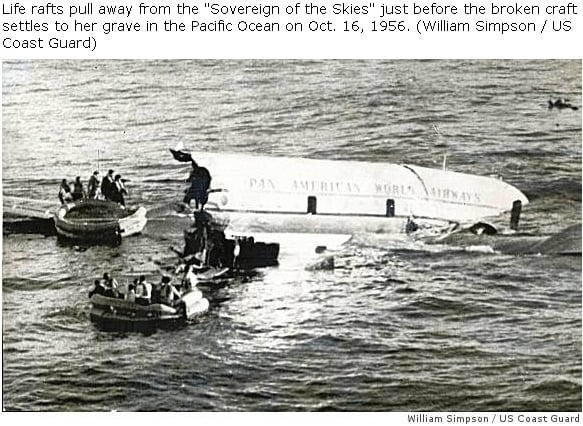
At first light, Ogg brought the Stratocruiser down alongside the cutter at about 90 knots. The touchdown was rough. The aircraft swung around, the nose was damaged and the tail broke away, but the fuselage stayed afloat long enough. Passengers and crew climbed out into life rafts, and boats from the Pontchartrain picked them up.
Coast Guard footage of the Pan Am Flight 6 rescue, posted by Ken Laesser.
At 6:35 a.m., twenty minutes after touchdown, Sovereign of the Skies sank. The injuries were minor, the worst of them to an 18-month-old girl who was knocked unconscious. All 31 people had survived a night-time double engine failure in the middle of the Pacific.
Why it is still remembered
Successful ditchings of large airliners in the open ocean are extremely rare. Pan Am Flight 6 worked because almost everything that could go right did: a rescue ship exactly where it needed to be, enough fuel to wait for daylight, a calm and methodical crew, and a cabin team who had people braced and ready. The Coast Guard filmed the whole thing, and the footage has appeared in documentaries ever since.
The parallels with US Airways Flight 1549 on the Hudson River in 2009 are obvious, and Ogg is often mentioned in the same breath as Chesley Sullenberger. The difference is that Ogg had hours to think about it, over a black ocean, with no runway anywhere in sight.
The US Coast Guard's own 1956 film of the rescue of Pan Am Flight 6, restored by Periscope Film.
Sources: Wikipedia (Pan Am Flight 6, USCGC Pontchartrain), This Day in Aviation, AvGeekery, The History Guy, US Coast Guard
0 Comments