
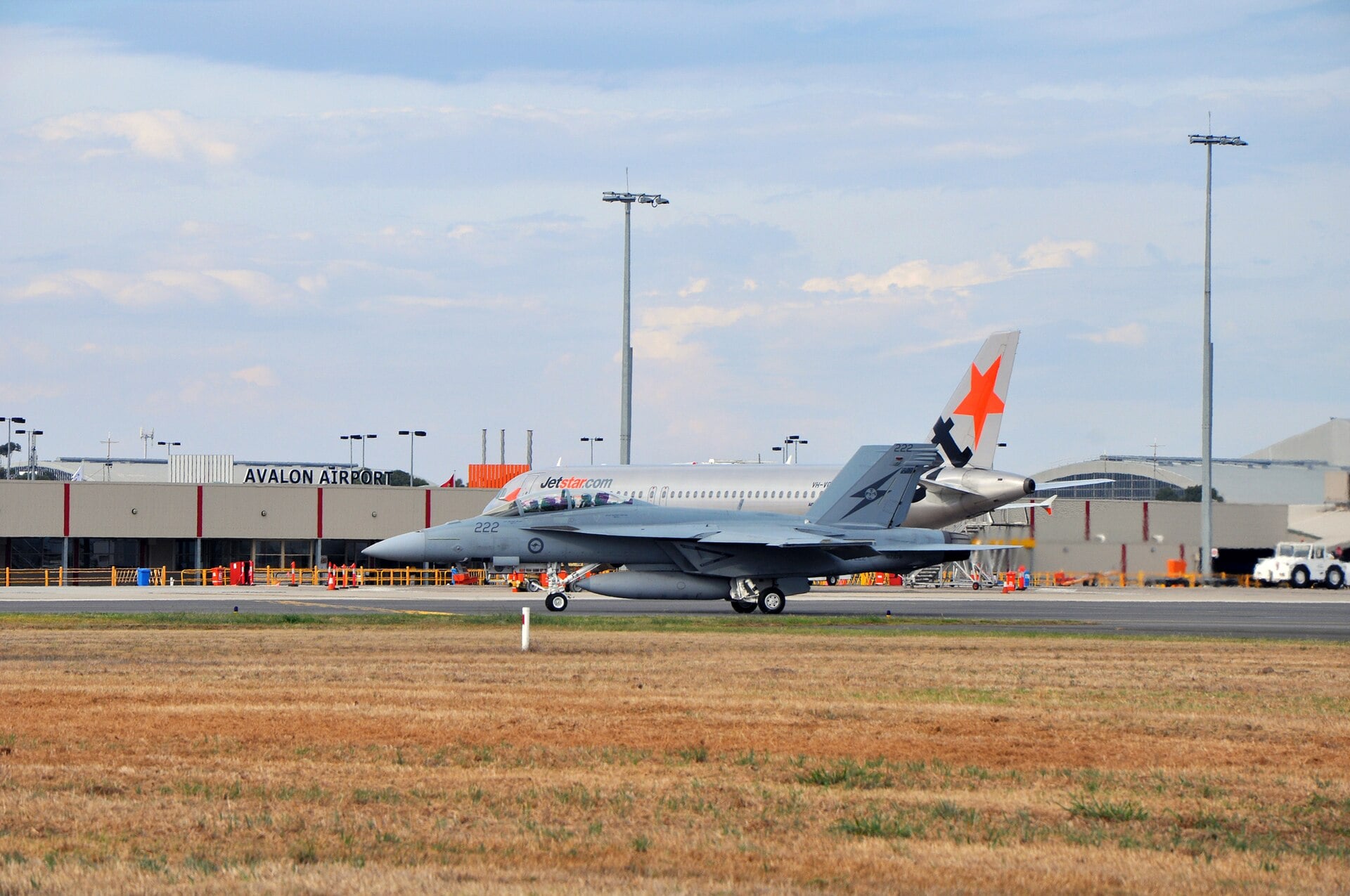
After a year of delays, America's first scramjet-powered strike weapon has finally left an aircraft. The US Air Force confirmed on 5 October 2026 that the Aeronautica militare reale australiana has released a Hypersonic Attack Cruise Missile, or HACM, flight test unit over an Australian test range.
It was the first flight test of a missile designed to cruise at more than five times the speed of sound on an air-breathing engine. The Air Force is keeping almost everything else about it under wraps.
Informazioni rapide
- Arma: Hypersonic Attack Cruise Missile (HACM), designated AHM-4A according to The War Zone
- Pietra miliare: First flight test release, announced 5 October 2026
- Partner: Royal Australian Air Force, under the SCIFiRE agreement
- Propulsione: Rocket booster, then a scramjet cruising above Mach 5
- Contractors: RTX (Raytheon) prime, Northrop Grumman scramjet engine
- Planned carrier: USAF F-15E Strike Eagle; RAAF F/A-18F Super Hornets for test launches
What the Air Force Said, and What It Did Not
The confirmation came from an Air Force spokesperson in response to questions from The War Zone and Air & Space Forces Magazine. The test was carried out with Australia as part of the Southern Cross Integrated Flight Research Experiment, known as SCIFiRE, a hypersonics partnership between the two countries.
The Air Force would not say when the release took place, which aircraft launched the missile, or whether the scramjet actually lit and powered the vehicle in flight. Air & Space Forces Magazine reported that the test took place over the Woomera range in South Australia, home to one of the largest land-based weapons test ranges in the world. Australia has previously said its F/A-18F Super Hornets would carry out HACM test launches.
How HACM Works
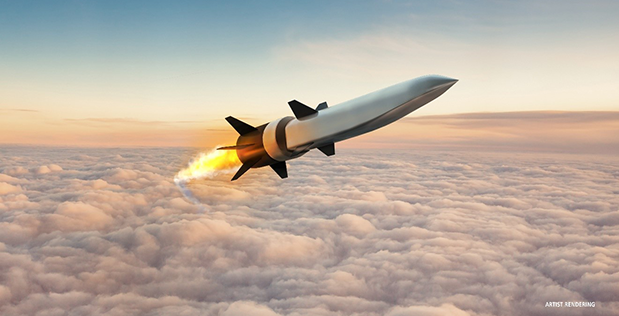
HACM is a two-stage weapon. A rocket booster accelerates the missile to the speed at which a scramjet can start working, then drops away. The scramjet, a supersonic combustion ramjet with no moving parts, then scoops in air and burns fuel in a supersonic airflow to cruise at more than Mach 5, roughly 3,300 mph or 6,100 km/h.
Unlike a hypersonic boost-glide weapon, which coasts after its rocket burns out, an air-breathing missile can keep powering itself and manoeuvre at speed. It is also small enough to be carried by fighters such as the F-15E Strike Eagle, the Air Force's planned launch platform, rather than only by bombers.
A Year Late, and Under Pressure
Raytheon, now part of RTX, won the HACM contract in 2022, with Northrop Grumman providing the scramjet. The first flight test was originally expected in 2024 and slipped first to 2025 and then to 2026. The test campaign has also been trimmed from seven flights to five, and the US Government Accountability Office has warned that a significant failure could leave the programme unable to complete all of them.
The Air Force wants to start fielding HACM in fiscal year 2027, which began on 1 October 2026. One release over Australia does not get it there, but after years of hypersonic setbacks, the first missile off the rail is a milestone the service clearly wanted to get on the record.
Sandboxx explains what was known about HACM when the design was first revealed:
Sources: The War Zone, Air & Space Forces Magazine, US Government Accountability Office, Janes

0 Comments