
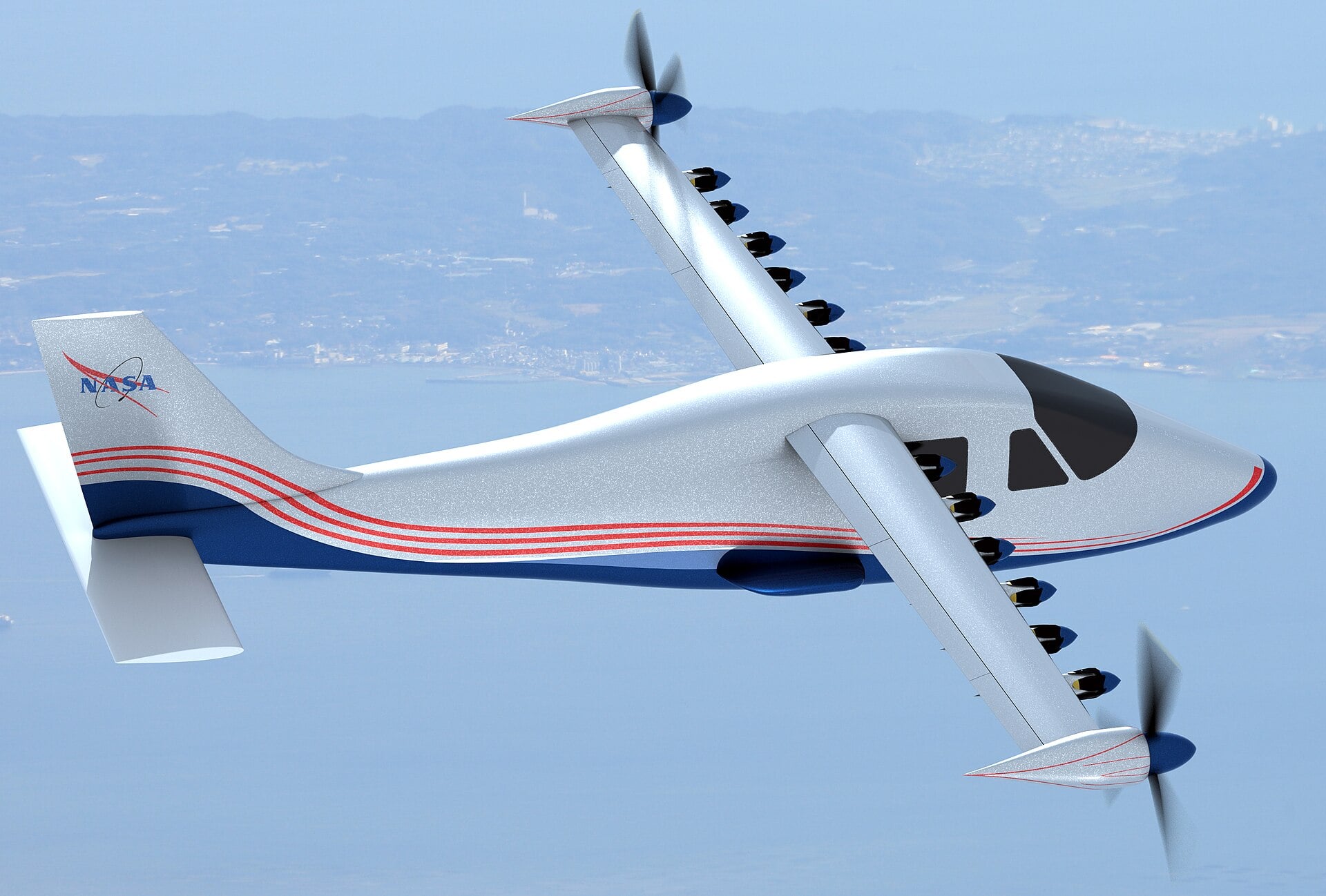
On paper, the X-57 Maxwell was one of the most exciting aircraft NASA had drawn in decades: a small, all-electric airplane with fourteen propellers strung along a skinny wing, promising to cruise five times more efficiently than the twin it was based on. NASA even gave it an X-plane number.
It never left the ground. In 2023, after nearly ten years of work, NASA wound the project down without a single flight. The story of why is one of the most useful lessons in the race to electrify aviation.
Informazioni rapide
- Aeromobili: NASA X-57 Maxwell, all-electric experimental aircraft
- Base airframe: Tecnam P2006T four-seat twin
- Final design: 14 electric motors: 12 small high-lift motors and 2 wingtip cruise motors
- Batteria: Lithium-ion, 860 lb, 69.1 kWh (47 kWh usable)
- Obiettivo: A 500 percent increase in high-speed cruise efficiency, zero in-flight emissions, less noise
- Risultato: Project ended in 2023 without flying
Fourteen Propellers and a Very Thin Wing
The X-57 started life as a Tecnam P2006T, the same Italian twin that many flight schools use for multi-engine training, and fittingly from the same manufacturer now bringing its P2008JC NG trainer to America. NASA and prime contractor Empirical Systems Aerospace planned to rebuild it in stages, known as Mods.
Mod II swapped the piston engines for two electric motors. Mod III would add a new, very slender high-aspect-ratio wing with the cruise motors moved to the wingtips. Mod IV, the final form, would add twelve small motors along the leading edge. Those would spin up for take-off and landing, blowing air over the small wing to generate extra lift at low speed, then fold their propellers away in cruise.
Why It Never Flew
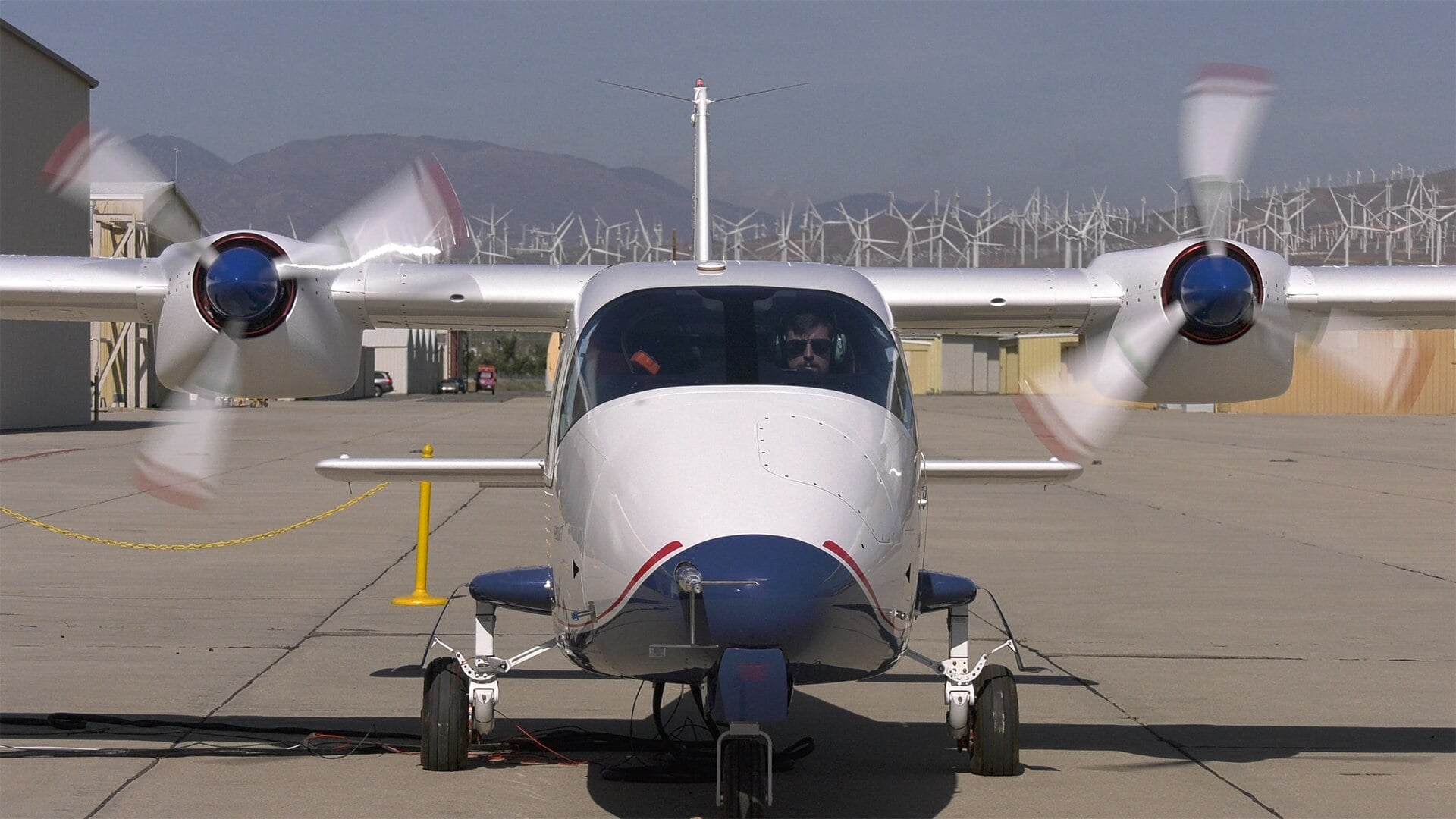
The first modified aircraft, Mod II, was delivered to NASA Armstrong Flight Research Center on 2 October 2019. Then the problems arrived. Batteries had to be redesigned to stop a single failing cell from setting off its neighbours. Motor controllers ran into trouble, and critical experimental components were hard to obtain. First flight slipped again and again.
In June 2023, NASA announced that the X-57 would not fly. The mechanical issues found late in the programme, together with the shortage of parts, meant the team could not reach safe flight conditions before the planned end of aircraft operations in September 2023. As Wikipedia’s account of the programme puts it, the project had assumed electric propulsion was mature enough for safe flight, and that turned out not to be the case.
A Failure That Paid Off
The X-57 did not fail quietly. NASA published what it learned, from the redesigned battery pack to fixes for electromagnetic interference and motor controllers built with silicon carbide transistors that reached around 98 percent efficiency. NASA says American companies working on electric aircraft are already seeing the benefits.
That is what X-planes are for. They exist to discover the problems nobody knew were there, so that the next design does not have to. Sometimes that discovery comes in flight. In the X-57’s case, it came on the ground.
NASA Armstrong’s video of the X-57 powering up:
NASA marks early milestones in the development of the X-57:
Sources: NASA, NASA Armstrong Flight Research Center, Wikipedia



0 Comments