
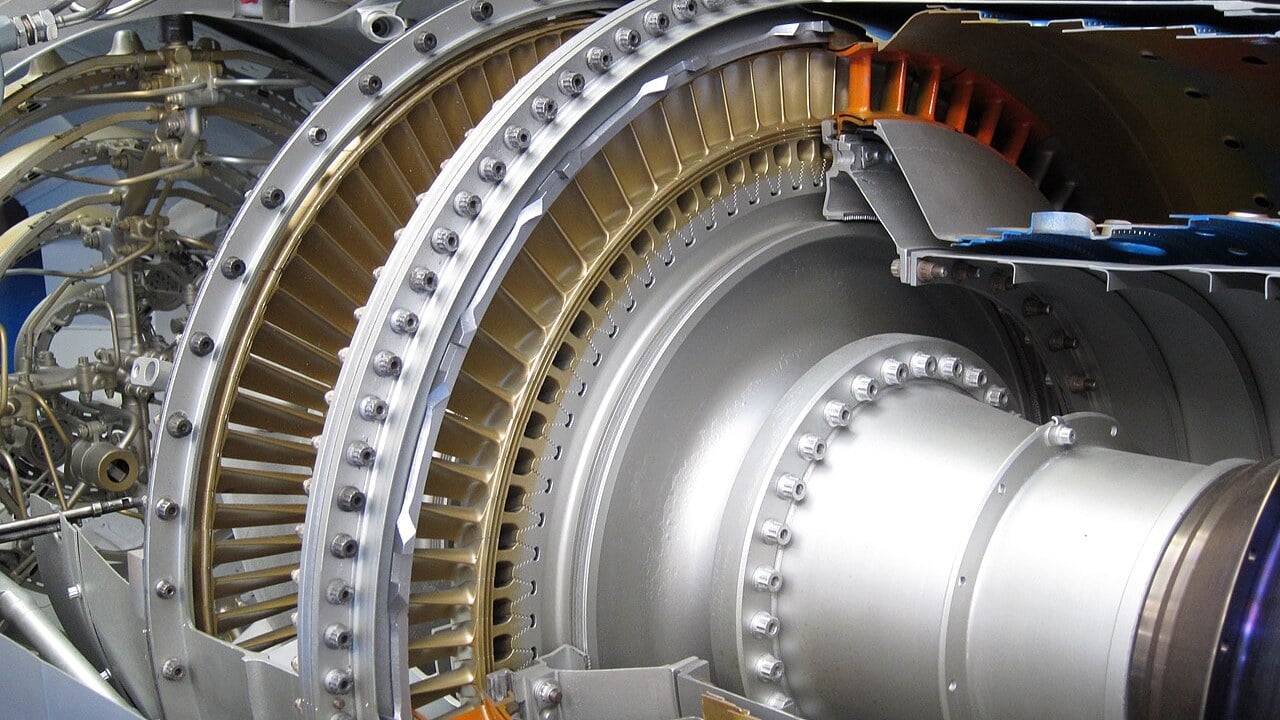
Picture a high-pressure turbine disc coming out of a CFM56 in an engine shop. It has passed every inspection it has ever had. It shows no crack, no corrosion, no damage of any kind. By every test anyone can run on it, it is a perfectly good part.
It is going to be cut in half anyway.
The disc has reached its life limit, a number of flight cycles fixed when the engine was certified. On the next cycle it would become scrap metal with a forged history, so the shop makes sure it can never be fitted again. To understand why, you have to understand how engine makers think about the parts that must never break.
Informazioni rapide
- Che cosa: Engine rotor and major static structural parts whose failure is likely to be hazardous
- Typical LLPs: Discs, spacers, hubs, shafts, high-pressure casings, non-redundant mounts
- Life measured in: Flight cycles, set at certification and published in the Airworthiness Limitations Section
- Statistical basis: 1 cracked part in 1,000 (or 1 in 740 at minus three sigma)
- Crack definition: About 0.030 by 0.015 inches (0.76 by 0.38 mm)
- Example: CFM56-7B: 18 LLPs, target lives of 20,000 to 30,000 cycles
- Key rules: 14 CFR 33.70, 43.10 and 91.417; FAA AC 33.70-1
The parts that are not allowed to fail
Most aircraft components are designed so that a failure is survivable: a second hydraulic system, a backup pump, a crack that grows slowly enough to be found at the next inspection. Engine rotors are different. A turbine disc spinning at thousands of revolutions per minute stores an enormous amount of energy, and if it breaks, its fragments can tear out through the engine: what engineers call an uncontained rotor failure.
The US rules recognise this explicitly. Section 33.70 of the FAA’s engine certification standards, Title 14 of the Code of Federal Regulations, defines the category and lists the usual suspects.
Discs, spacers, hubs, shafts, high-pressure casings and non-redundant engine mounts: these are the life-limited parts, or LLPs. For each one, the engine maker must publish an approved life in the Airworthiness Limitations Section of the engine’s Instructions for Continued Airworthiness. When a part reaches that number, it comes out. There is no on-condition option, and no individual part earns an extension for good behaviour.
Cycles, not hours
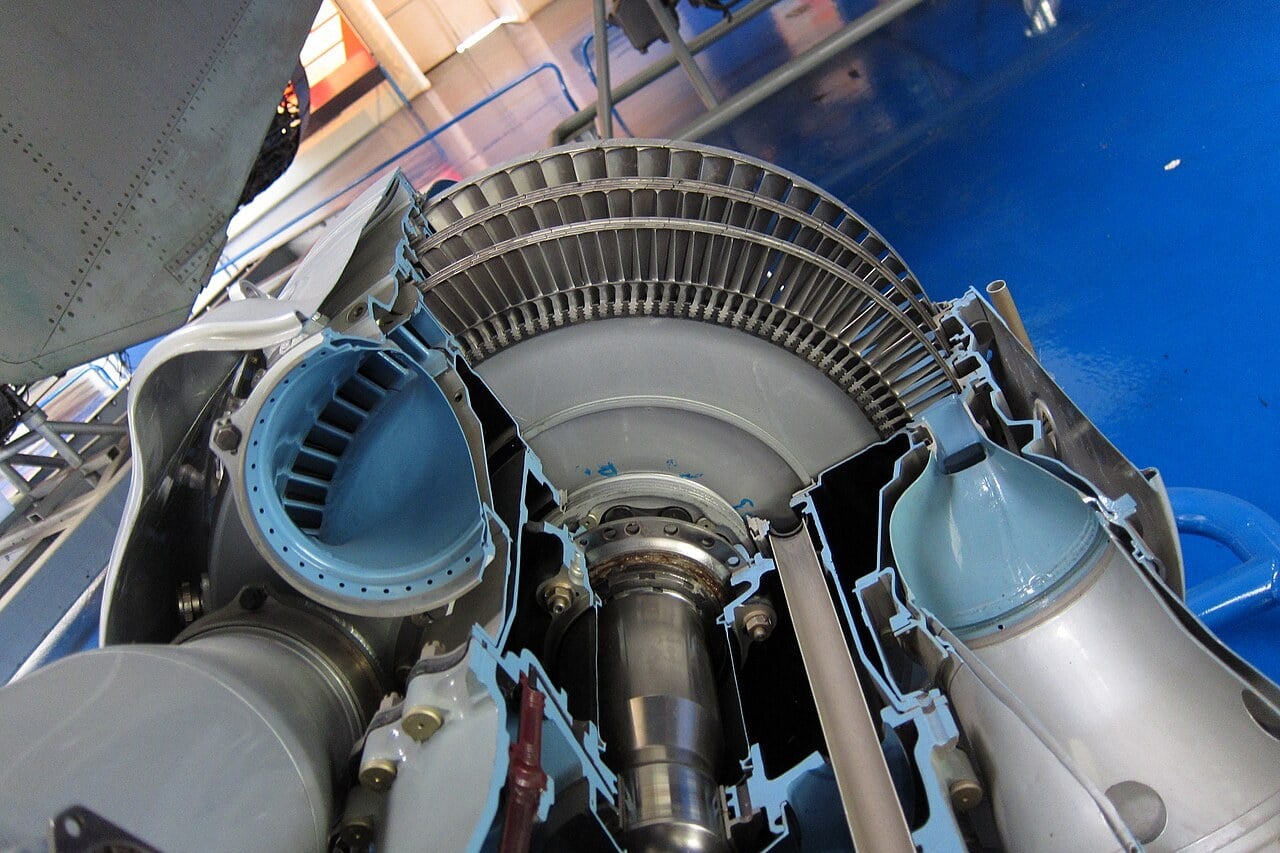
An LLP’s life is counted in flight cycles rather than flight hours, and that is the first “aha”. A disc does not wear out by spinning. It wears out by being loaded and unloaded. Every start, take-off, climb, landing and shutdown takes the disc from rest to full centrifugal and thermal stress and back again.
The FAA calls the damage this does low cycle fatigue. Its guidance, Advisory Circular 33.70-1, describes it as a progressive, permanent deterioration of the material that ends in a detectable crack, typically within 100,000 cycles. That is why a regional jet flying six short hops a day uses up its discs far faster than a long-haul twin flying one 14-hour sector, even if both log the same hours.
GE Aviation chief engineer’s office on why life-limited parts, and the parts that influence them, must be correctly configured.
Retiring 999 good discs to catch one bad one
Here is the second, less comfortable “aha”. A life limit is not the point at which a disc is expected to crack. It is a statistical floor, set well below the average.
Engine makers test many specimens and real parts to failure and plot when cracks start. Because metal varies, the results scatter widely. AC 33.70-1 tells applicants to reduce that scatter to an acceptable level of risk, and to define the crack it is talking about very precisely: about 0.030 inches long and 0.015 inches deep, roughly 0.76 by 0.38 millimetres.
So the approved life is the number of cycles at which, statistically, one disc in a thousand would have started a crack less than a millimetre long. The other 999 would have had plenty of life left. Nobody can tell which disc is the one, because the crack has not started yet, and inspection cannot find a crack that does not exist. The only safe answer is to retire all of them on the same count.
This is the safe-life philosophy, and Afterburner has looked at how it differs from fail-safe and damage-tolerant design in airframe structures. For rotating engine parts it remains the core of the rules: AC 33.70-1 says damage tolerance assessments supplement the safe life and are not intended to let parts stay in service beyond it, or to let rotating parts return to service with cracks.
What safe life cannot see
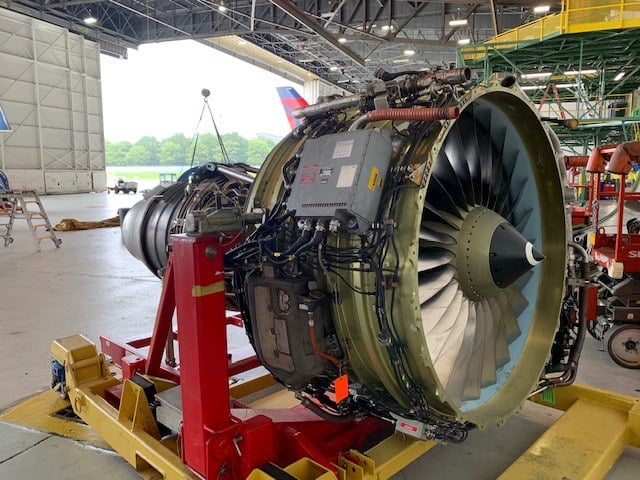
Safe life assumes the part was made correctly. The weak spot is the disc that was not: a tiny melt-related defect in titanium, called a hard-alpha inclusion, or damage from machining. After the 1989 accident at Sioux City, the FAA asked engine makers through the Aerospace Industries Association to look at whether a damage tolerance approach could reduce uncontained rotor failures, according to its Advisory Circular 33.14-1.
Today’s rule reflects that. Section 33.70 requires three plans for every LLP: an engineering plan that sets the life, including damage tolerance assessments for material, manufacturing and service-induced anomalies; a manufacturing plan that pins down exactly how the part must be made; and a service management plan that limits what repairs are allowed.
Magnetic Group time-lapse of a CFM56-3 engine repair, showing how deep into an engine technicians go during a shop visit.
A real engine, in numbers
The CFM56-7B, the engine of the Boeing 737 Next Generation, has 18 life-limited parts, according to a 2008 maintenance analysis by Aircraft Commerce. Three sit in the fan and booster, nine in the high-pressure spool and six in the low-pressure turbine. CFM’s target lives were 20,000 cycles for the high-pressure parts, 25,000 for the low-pressure turbine and 30,000 for the fan and booster.
Two details show how seriously the lives are taken. Certified lives sometimes start below the target and are extended only as service experience builds up. And the same part can have a shorter life on a higher-thrust rating, because more thrust means more stress per cycle. In 2008, a full shipset of new CFM56-7B LLPs carried a list price of $1.775 million.
Why the disc gets cut in half
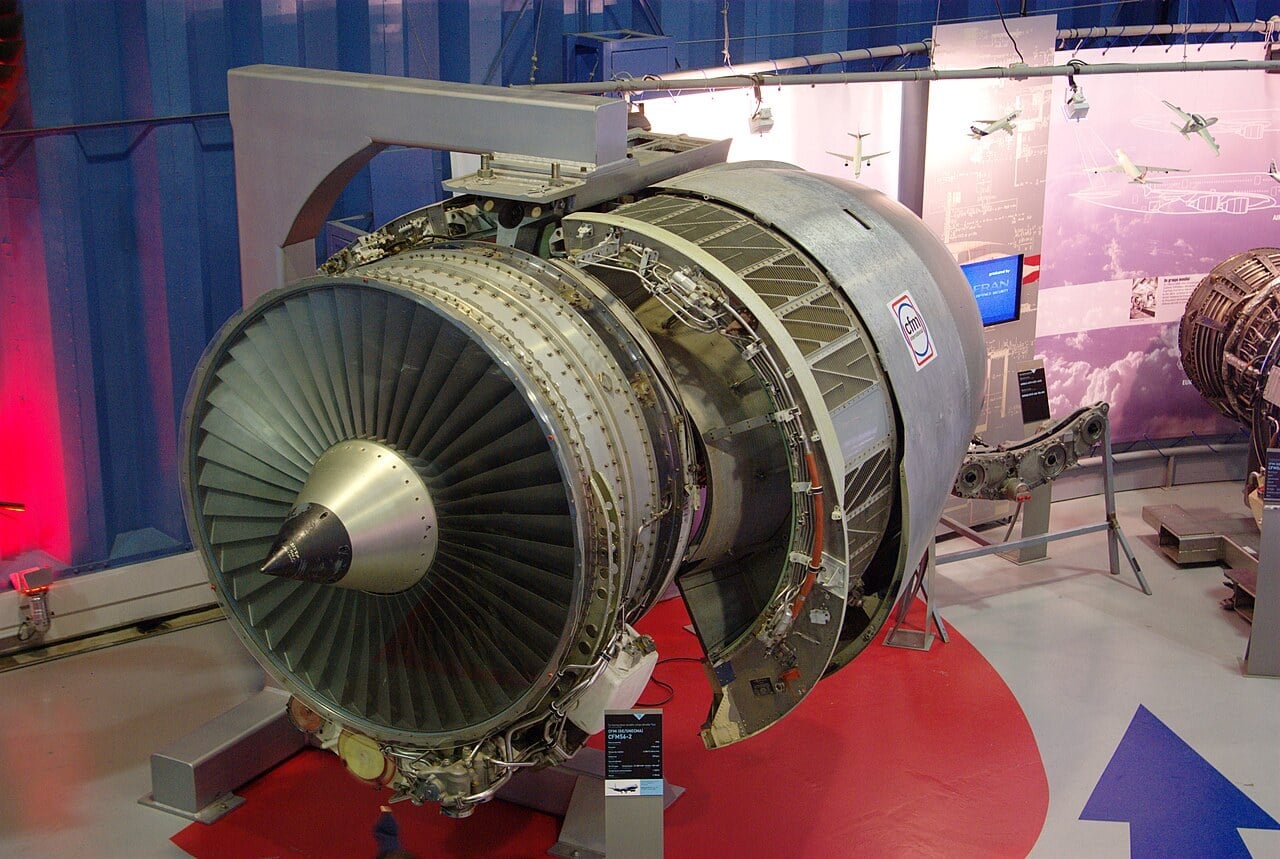
Those prices explain the ending. A life-expired disc looks identical to a serviceable one, and if its paperwork can be replaced, it is worth far more to a fraudster than to a scrapyard. So the rules make the life status follow the part. Under 14 CFR 91.417, operators must keep records of the current status of life-limited parts, and under 14 CFR 43.10 anyone who removes one must control it by records, tags, marking, segregation or mutilation.
Mutilation is the most final of those options: cutting, crushing or otherwise destroying the part so that it can never be passed off as airworthy. Even that depends on the chain of custody, as the industry learned in 2026.
In late January 2026, according to the FAA’s Special Airworthiness Information Bulletin 2026-11, a third party impersonated a contracted mutilation provider and intercepted 12 containers of engine parts on their way to be destroyed. They held 625 serialised parts, including life-limited parts, and 9,740 non-serialised items from CFM56, V2500, PW1100G and RB211 engines. Spain’s aviation safety agency detected the rerouting and reported it to EASA on 17 March 2026.
Afterburner covered what that bulletin does and does not require in its piece on SAIBs and service bulletins, and how the FAA hunts suspected unapproved parts.
AirPro News on a 2026 partnership to tear down CFM56-5B and -7B engines for used serviceable parts.
So the next time you see a photo of a turbine disc sawn neatly through the middle, do not think of it as waste. It is the last step of a system that retires 999 good parts to make sure the thousandth never flies, and then makes sure none of them ever comes back.
Sources: 14 CFR 33.70, 43.10 and 91.417 (eCFR), FAA Advisory Circulars 33.70-1 and 33.14-1, FAA SAIB 2026-11, EASA unapproved parts notification, Aircraft Commerce (CFM56-7B maintenance analysis)



0 Comments