
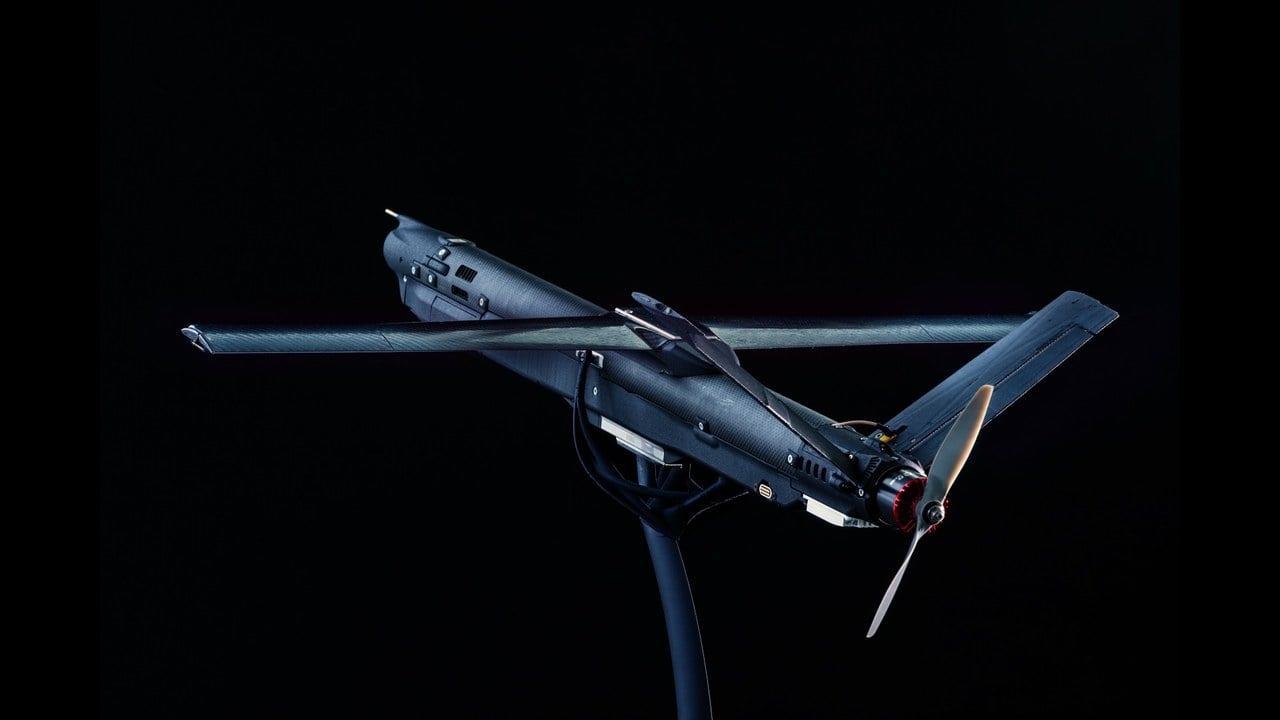
A small Swedish start-up wants to answer one of the hardest problems in Ukraine’s air war: how to stop a jet-powered attack drone without firing a missile that costs more than the target. On Friday 20 November 2026, Stockholm-based Nordic Air Defence (NAD) unveiled the K200, an autonomous drone interceptor built to chase down fast one-way attack drones such as Russia’s jet-powered Geran-3.
The company says the K200 is heading to Ukraine for testing, and that it has opened a staffed office in the country to support that work. FlightGlobal, Breaking Defense and other defence outlets reported the launch the same day, based on a company statement.
Informazioni rapide
- Sistema: K200 autonomous drone interceptor
- Produttore: Nordic Air Defence (NAD), Stockholm, Sweden
- Svelato: Friday 20 November 2026, company statement
- Predecessor: Kreuger 100XR
- Obiettivi: Jet-powered one-way attack drones such as the Russian Geran-3 (company claim)
- Testata: 500 g, per the company (earlier model: 250 g, as reported)
- Indicazioni: External radar and EO/IR cueing, onboard infrared camera for the final approach
- Next step: Testing in Ukraine; NAD has opened a staffed office there
From Kreuger 100XR to K200
The K200 is the successor to NAD’s Kreuger 100XR, a compact interceptor the company demonstrated publicly earlier in 2026. The earlier family was designed against smaller, slower drones. The new model is aimed at a nastier class of target: jet-powered strike drones that fly far faster than the piston-engined Shahed 136 and its Russian-built Geran-2 copy.
According to the company statement quoted by Breaking Defense, the K200 is faster than the 100XR and carries a heavier 500-gram warhead. Times of Defence and Euromaidan Press, citing NAD’s chief executive Karl Rosander’s comments to Tectonic Defense, report that it is roughly twice the size of the earlier model, whose warhead weighed 250 grams, and that it was developed in about 70 days.
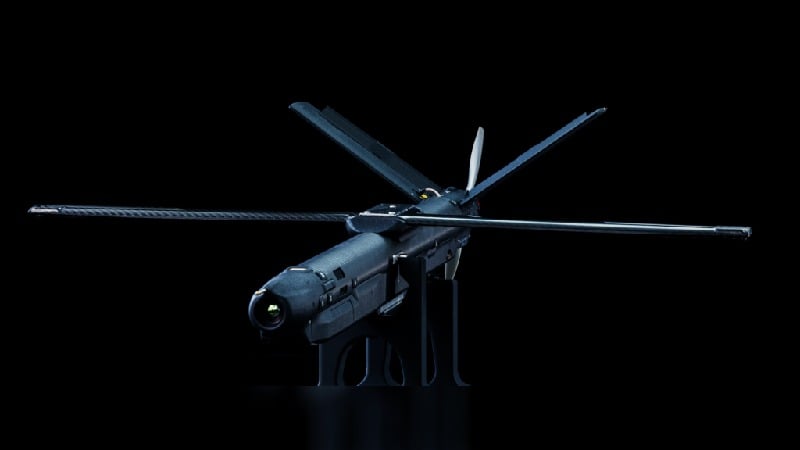
It keeps a simple layout: a fixed wing and a single propeller. NAD has not published a top speed for the new interceptor, and none of the performance claims have been independently verified in combat.
How the K200 finds its target
The interceptor does not search the sky on its own from launch. The company says external radars and electro-optical/infrared cameras steer it towards a threat, after which an onboard infrared camera takes over for terminal guidance. If the first pass misses, NAD says the K200 can turn back and re-engage.
The company says the system supports tail-chase, head-on and crossing engagements, and can plug into existing layered air defences through data links and associated radars. A family of launchers is planned so the K200 can be fired from vehicles, fixed sites and ships.
Why cheap interceptors matter
The argument behind the K200 is cost. Ukraine faces regular mass attacks by Russian one-way attack drones, and every drone brought down by a surface-to-air missile uses up an expensive round that may be needed against cruise or ballistic missiles. Breaking Defense noted that a shortage of American-made Patriot interceptors has strained Kyiv’s defences.
NAD says the K200 is built to intercept long-range attack drones at a fraction of the cost of conventional air defence missiles. The company has not disclosed a price. Euromaidan Press reports that NAD says it can build up to 1,000 interceptors a month at its own facilities, with more capacity planned through international partners; Times of Defence describes the same figure as a target for March 2027.
NAD is not alone. Ukrainian President Volodymyr Zelenskyy told the Financial Times in October that Kyiv is testing five locally produced jet-powered drone interceptors, according to Breaking Defense. Earlier in 2026 the Swedish firm also expanded into Poland through a counter-drone partnership with WB Group and Tantalit.
Daily Mail’s War On Tape visits a test of the K200’s predecessor, the Kreuger 100XR, in Sweden (September 2026).
Cosa succederà dopo?
Testing in Ukraine will shape how the K200 develops before NAD offers it more widely. The company says it is preparing to introduce the system across multiple markets. For now, the K200 is a company product launch with company performance figures. The real verdict will come from Ukrainian test ranges, and from whether a propeller-driven interceptor can reliably catch a jet.
Sources: Nordic Air Defence company statement (via Breaking Defense), Breaking Defense, FlightGlobal, Times of Defence, Euromaidan Press, Tectonic Defense
Header photo: Nordic Air Defence (company handout)



0 Comments