
Arado Ar 68
One of the reborn Luftwaffe’s first biplane fighters — a strong, sweet-handling machine rated in some respects above the Heinkel He 51, yet made obsolete almost at birth by the monoplane Messerschmitt Bf 109.
故事
The Arado Ar 68: the Luftwaffe’s biplane fighter, obsolete almost at birth
The Arado Ar 68 was one of the first fighters of the reborn German Luftwaffe — a single-seat biplane that entered service in the mid-1930s alongside the Heinkel He 51. It was a genuinely good aeroplane: strong, pleasant to fly, and in several respects rated superior to the He 51 it served beside. Yet its timing was cruel. The Ar 68 arrived just as the revolutionary monoplane Messerschmitt Bf 109 was appearing, and within a couple of years the biplane fighter was obsolete. Its front-line career was brief, and it spent most of its service life as a fighter-trainer, with a short, improvised turn as an early-war night fighter. It is a textbook example of a competent design overtaken by the pace of technology.
To understand the Ar 68 you have to understand the moment that produced it. In the early 1930s Germany was still formally bound by the Treaty of Versailles, which forbade it a military air force. The Luftwaffe was therefore built in secret, its first aircraft developed under cover of civilian or sporting guises before Germany openly repudiated the treaty and revealed its air force in 1935. The Ar 68 and the He 51 were the fighters of this covert-then-overt rearmament — the machines with which Germany re-equipped itself with a modern fighter arm, or what passed for modern in the twilight of the biplane era.
The Ar 68 was designed by Walter Rethel, Arado’s chief designer — a man whose name is worth remembering, because he would shortly move to the Bayerische Flugzeugwerke and work on the very aircraft that made his biplane obsolete: the Messerschmitt Bf 109. There is a neat, poignant symmetry in that. The engineer who gave the Luftwaffe one of its last biplane fighters went on to help create the monoplane that swept it away. The Ar 68 was thus, in a sense, the end of one line and its designer a bridge to the next.
“A better biplane than the one it served beside — and obsolete the moment the Bf 109 flew. The Ar 68 was overtaken almost as soon as it arrived.”— the Arado Ar 68’s fate, in a sentence
As a design the Ar 68 was conventional but sound: a single-bay biplane of mixed construction, with a fabric-covered fuselage of welded steel tube and wooden wings, armed with a pair of rifle-calibre machine guns. What set it apart was its handling and its performance in the climb and at altitude. Pilots found it strong, stable and agreeable, and it was widely regarded as a better fighter than the Heinkel He 51 in several important respects — particularly, with the right engine, in rate of climb and high-altitude performance.
That engine question was central to the Ar 68’s story. It was built with two different powerplants, both liquid-cooled inline V-12s. Early aircraft used the BMW VI, an older design; later and better versions used the Junkers Jumo 210, a more modern inverted-V engine. The Jumo-powered Ar 68E, in particular, was the one that showed the type at its best, with noticeably improved climb and altitude performance. The choice of a slim inline engine, rather than a radial, gave the Ar 68 a streamlined nose and clean lines typical of the German fighters of the period.
This preference for the liquid-cooled inline engine was a hallmark of German fighter design, and it linked the Ar 68 directly to what came next. The Junkers Jumo 210 that powered its best version was the same class of engine that would power the first Messerschmitt Bf 109s, and the streamlined installation the Ar 68 pioneered pointed straight at the monoplane era. In its powerplant, as in its designer, the biplane already carried the genetic material of the aircraft that would replace it — a quiet continuity beneath an apparent break.
There is a famous story attached to the Ar 68’s adoption. In a comparative demonstration, the celebrated German aviator and First World War ace Ernst Udet is said to have flown the Ar 68 against the He 51 and found the Arado the better fighter — a verdict that helped secure production orders. Like many good stories the details are told in different ways, and it is wise to hedge the specifics, but it reflects a genuine truth: the Ar 68 was well thought of, and it was ordered into service as a front-line fighter for the young Luftwaffe.
For a brief period in the mid-to-late 1930s the Ar 68 did serve as an operational fighter, equipping Luftwaffe fighter units alongside the He 51. This was the type’s front-line prime — short, and entirely in peacetime. Unlike the He 51, which was sent to Spain and blooded in combat with the Condor Legion, the Ar 68 was largely kept at home and saw little or no significant combat in this role. Its operational career as a day fighter was a matter of a year or two before events overtook it.
Those events had a name: the Messerschmitt Bf 109. When Willy Messerschmitt’s sleek, all-metal, low-wing monoplane entered service from 1937, it rendered every biplane fighter in the world instantly obsolete. It was faster, climbed better, and pointed unmistakably to the future. The Luftwaffe re-equipped its fighter units with the Bf 109 as quickly as it could, and the Ar 68 — like the He 51 — was rapidly pushed out of the front line. The biplane fighter’s day was over, and the Ar 68 had enjoyed barely any of it.
But the Ar 68 was too good and too numerous simply to be scrapped, and it found a valuable second life. Its excellent handling made it an ideal advanced trainer, and large numbers were used to teach the fighter pilots of the expanding Luftwaffe the arts of aerobatics, gunnery and air combat. In this fighter-training role the Ar 68 did some of its most useful work, helping to forge the pilots who would fly the Bf 109 in the war to come. Many a Luftwaffe fighter pilot of the early war years had cut his teeth on the sweet-handling Arado biplane.
There is a certain dignity in that role. An aircraft made obsolete as a weapon could still be invaluable as a teacher, and the qualities that had made the Ar 68 a good fighter — its strength, its stability, its honest and forgiving handling — were exactly the qualities a training aircraft needs. A generation of young pilots learned to fly, to shoot and to fight in the Ar 68 before graduating to the far more demanding Bf 109. In that sense the obsolete biplane went on shaping the Luftwaffe’s fighter force long after it had fired its last shot in anger.
The Ar 68 also had one more, more warlike, part to play. In the opening period of the Second World War, before dedicated night fighters were available in numbers, the Luftwaffe pressed the obsolete biplane into service as a stop-gap night fighter. In 1939 and into 1940, Ar 68s flew some of the Luftwaffe’s earliest night-fighting sorties, a makeshift defence against night intruders until purpose-built aircraft arrived. It was an improvised, short-lived role for an aircraft already past its prime, but it gives the Ar 68 a small place in the early history of German night-fighting.
Production ran to something over five hundred aircraft across the several variants, all essentially for German service. The Ar 68 was not a significant export success — unlike some contemporaries, it was not widely sold abroad, and it remained, to all intents and purposes, a Luftwaffe aircraft. Its combat record was correspondingly slight; it was a peacetime fighter and a wartime trainer and stop-gap, not a front-line combat aircraft of the war. It is only honest to say so plainly.
None of this should be read as a criticism of the design. The Ar 68 was, by the standards of the biplane, a fine aeroplane — strong, agreeable and in some ways superior to the He 51 with which it shared the Luftwaffe’s early fighter squadrons. Its misfortune was simply to be a biplane at the exact moment the monoplane arrived. Few complete original Ar 68s are known to survive today, which makes it one of the more elusive of the early Luftwaffe types — but its place in the story is clear: a good biplane fighter, overtaken by the future almost as soon as it entered service, that gave its best years to training the pilots of the aircraft that replaced it.
01The Arado Ar 68 and the secret rebirth of the Luftwaffe+
The Ar 68 belongs to the era of Germany’s clandestine rearmament. Under the Treaty of Versailles, Germany was forbidden a military air force, so the early Luftwaffe was developed in secret through the early 1930s, its aircraft cloaked in civilian or sporting pretexts, before Germany openly announced its air force in 1935.
The Ar 68 and the Heinkel He 51 were the fighters of this transition from covert to overt rearmament. They were the machines with which the reborn Luftwaffe first equipped its fighter units. That context matters: the Ar 68 was not just an aircraft but a symbol of Germany’s return to military aviation — and, being a biplane, a symbol of how quickly that first generation of equipment would be overtaken.
02Walter Rethel: the designer who bridged biplane and Bf 109+
The Ar 68 was designed by Walter Rethel, Arado’s chief designer. His career carries a striking irony: after the Ar 68 he moved to the Bayerische Flugzeugwerke, where he worked alongside Willy Messerschmitt on the Bf 109 — the monoplane that made the Ar 68 and every other biplane fighter obsolete.
Rethel is thus a personal bridge between two ages of fighter design. The same engineering mind contributed to one of the Luftwaffe’s last biplane fighters and to the monoplane that swept it aside. It is a reminder that the transition from biplane to monoplane was not a change of people so much as a change of ideas — and that the men who built the old order often built the new one too.
03Two engines: the BMW VI and the Junkers Jumo 210+
The Ar 68 was powered by liquid-cooled inline V-12 engines, and it was built with two different ones. The earlier versions used the BMW VI, a capable but older design. The later and definitive versions used the Junkers Jumo 210, a more modern inverted-V engine that also powered early Bf 109s.
The engine made a real difference. The Jumo-powered Ar 68E, in particular, showed the type at its best, with noticeably improved climb and high-altitude performance — the areas in which the Ar 68 was often rated ahead of the He 51. The choice of a slim inline engine rather than a radial gave the aircraft its streamlined nose and the clean lines characteristic of German fighters of the period.
04Arado Ar 68 versus Heinkel He 51: the better biplane?+
The Ar 68 and the He 51 were direct contemporaries, serving side by side as the reborn Luftwaffe’s first fighters. Comparisons between them were inevitable, and the Ar 68 generally came off well. It was widely regarded as the better fighter in several respects — notably in the climb and at altitude, especially in its Jumo-engined form.
The famous demonstration in which Ernst Udet is said to have flown the Ar 68 against the He 51 and preferred the Arado captures the general verdict, even if the details are best hedged. Both were sound, agreeable biplanes; but if the early Luftwaffe had a slightly superior first-generation fighter, it was arguably the Ar 68. The irony is that neither mattered for long: the Bf 109 made the whole comparison academic within a year or two.
05Strong, stable and a pleasure to fly+
By all accounts the Ar 68 was a delightful aircraft to fly — strong, stable and agreeable, with the honest, forgiving handling that made the best biplanes such rewarding machines. These qualities made it a capable fighter by the standards of its day and, later, an excellent trainer.
Its robustness was as valued as its handling. A good fighter-trainer has to withstand the rough treatment of pupils learning aerobatics and air combat, and the sturdy Ar 68 took it well. The combination of strength and sweet handling is a large part of why the type found such a useful second career teaching the Luftwaffe’s fighter pilots long after it had ceased to be a front-line aircraft.
06The Udet demonstration and the Ar 68’s adoption+
One of the best-known stories about the Ar 68 concerns Ernst Udet, the flamboyant First World War ace and later senior Luftwaffe figure. In a comparative flying demonstration, Udet is said to have flown the Ar 68 against the He 51 and judged the Arado the superior fighter — a verdict that helped win it production orders.
As with many such anecdotes, the exact circumstances are told differently in different accounts, and it is sensible to treat the specifics with caution. But the story reflects a real and widely held judgement: the Ar 68 was a well-regarded fighter, thought by many to have the edge over the He 51. It duly entered Luftwaffe service as a front-line fighter — briefly, as it turned out.
07A brief front-line career — and little combat+
The Ar 68 served as an operational Luftwaffe fighter for only a short period in the mid-to-late 1930s, and entirely in peacetime. Unlike the He 51, which was sent to Spain and saw combat with the Condor Legion, the Ar 68 was largely retained in Germany and saw little or no significant combat in the day-fighter role.
This is an important point of honesty. The Ar 68 was not a combat-proven fighter; its front-line career was brief, quiet and over before the Second World War began. Its significance rests not on a war record but on its place as an early Luftwaffe fighter, its reputation as a fine biplane, and the useful second life it went on to lead as a trainer and stop-gap night fighter.
08Eclipsed by the Messerschmitt Bf 109+
The aircraft that ended the Ar 68’s front-line career was the Messerschmitt Bf 109. When Willy Messerschmitt’s all-metal, low-wing monoplane entered service from 1937, it made every biplane fighter in the world obsolete overnight. It was dramatically faster, climbed better and represented a complete generational leap.
The Luftwaffe re-equipped its fighter units with the Bf 109 as fast as production allowed, and the Ar 68 was quickly displaced. There is a personal thread here too: Walter Rethel, who designed the Ar 68, had moved to Messerschmitt and contributed to the Bf 109. The biplane was thus superseded, in part, by the work of its own designer — a fitting image for the speed and completeness of the monoplane revolution.
09A second life as a fighter-trainer+
Pushed out of the front line, the Ar 68 found its most valuable role as an advanced fighter-trainer. Its strength and sweet handling made it ideal for teaching the fundamentals of fighter flying — aerobatics, formation, gunnery and air combat — to the pilots of the rapidly expanding Luftwaffe.
In this role the Ar 68 did some of its most important work. The pilots who would fly the Bf 109 in the opening battles of the Second World War were, in many cases, trained on the Arado biplane. There is a real continuity in that: the obsolete fighter helped forge the men who flew the aircraft that replaced it. For a type with so brief a combat career, this training contribution was arguably its most lasting legacy.
10The early-war night-fighter stop-gap+
The Ar 68 had one last, more warlike, part to play. In the opening period of the Second World War, before purpose-built night fighters were available in quantity, the Luftwaffe pressed the obsolete biplane into service as an improvised night fighter. In 1939 and into 1940, Ar 68s flew some of the Luftwaffe’s earliest night-fighting patrols.
It was very much a stop-gap. The Ar 68 was not designed for the role and was quickly replaced as dedicated night fighters arrived. But it earns the type a small footnote in the early history of German night air defence — a last operational flourish for a fighter that had been overtaken by events years before. It is a modest distinction, but a genuine one.
11Construction and armament: a conventional biplane+
In its construction the Ar 68 was conventional for its day: a single-bay biplane with a fuselage of welded steel tube covered in fabric, and wings of wooden structure, likewise fabric-covered over much of their area. It was a robust, straightforward airframe, well suited to hard use in both the fighter and, later, the training role.
Its armament was typical of the early 1930s fighter — a pair of rifle-calibre machine guns firing forward through the propeller arc. This was adequate against the aircraft of the mid-1930s but was already becoming light by the standards of the coming war, another sign of how quickly fighter design was advancing. The Ar 68 was a sound example of the fully developed biplane fighter, arriving just as that whole category was about to be rendered obsolete.
12Essentially German service: the near-absence of exports+
Unlike some of its contemporaries, which sold widely abroad, the Ar 68 was essentially a German aircraft. It was not a significant export success, and it served overwhelmingly with the Luftwaffe rather than with foreign air forces. This was partly a matter of timing — by the time it might have been marketed abroad, the biplane fighter was already being overtaken by the monoplane.
The result is that the Ar 68’s story is almost entirely a German one, tied to the specific circumstances of the reborn Luftwaffe. It equipped Germany’s early fighter units, trained Germany’s fighter pilots and flew Germany’s first improvised night-fighter patrols — but it did little of note beyond German service. That focus makes it a very pure example of a national first-generation fighter, produced for one air force at one particular moment.
Design & Engineering
How the Ar 68 was built: a sound inline-engined biplane fighter
A conventional single-bay biplane by Walter Rethel, built around a liquid-cooled inline V-12 — strong, stable and agreeable, and rated best in the climb and at altitude with the Junkers Jumo 210.
Inline V-12 power
A slim liquid-cooled inline engine — the BMW VI or the more modern Junkers Jumo 210 — gave the Ar 68 its streamlined nose and, with the Jumo, strong climb and altitude performance.
Strong and sweet-handling
A robust welded-steel-tube fuselage and wooden wings, with the honest, forgiving handling that made the type both a capable fighter and, later, an ideal trainer.
Rated above the He 51
Widely regarded as superior to the Heinkel He 51 in several respects, notably climb and altitude — a verdict linked to the famous Udet demonstration.
规格
Arado Ar 68E specifications: dimensions, performance and cost
| 类型 | Single-seat biplane fighter (later trainer & night fighter) |
| 全体人员 | 1 (pilot) |
| 长度 | ~9.5 m (31 ft 2 in) — approx. |
| 翼展 | ~11.0 m (36 ft 1 in) — approx. |
| 高度 | ~3.3 m (10 ft 10 in) — approx. |
| 空重 | ~1,600 kg (~3,530 lb) — approx. |
| Loaded weight | ~2,475 kg (~5,460 lb) — approx. |
| 引擎 | 1 × Junkers Jumo 210 (or BMW VI) inline V-12, ~600–700 hp |
| Max speed | ~305 km/h (~190 mph) — approx. (Ar 68E) |
| 范围 | ~415 km (~260 miles) — approx. |
| 设备天花板 | ~8,100 m (~26,600 ft) — approx. |
| 武器 | 2 × 7.92 mm MG 17 machine guns (synchronised) |
| First flight | 1934 (prototype) |
| Introduced | 1936 (Luftwaffe) |
| Number built | ~500+ (all versions) |
| Main variants | Ar 68E (Jumo 210); Ar 68F (BMW VI); Ar 68G/H |
| Operators | Germany (Luftwaffe) |
| Unit cost | not reliably recorded (1930s procurement) |
| Cost per flight hour | not reliably recorded |
13The Ar 68 family: the E, F and later variants+
The Ar 68 was produced in several versions, distinguished mainly by their engines and detail equipment. The Ar 68F used the older BMW VI engine; the Ar 68E, generally considered the definitive and best version, used the more modern Junkers Jumo 210 and offered improved climb and altitude performance. Later sub-variants included the Ar 68G and the experimental Ar 68H, which trialled features such as an enclosed cockpit.
Across all versions, production totalled something over five hundred aircraft, essentially all for the Luftwaffe. The differences between the variants were incremental rather than radical — the Ar 68 was a fully mature biplane design, refined in detail rather than transformed, right up to the point where the whole biplane concept was superseded.
14The Arado Ar 68’s cost: what the records show+
As with most military aircraft of the 1930s, there is no reliable, transparent public figure for the Ar 68’s unit cost, cost per flight hour or total programme cost. It was procured through Luftwaffe contracts during the rapid, secretive expansion of German air power in the mid-1930s, and consistent lifetime cost data does not survive in a usable form.
Rather than repeat an invented number, we list the cost fields here as “not reliably recorded.” What can be said is that the Ar 68 was a conventional biplane of mixed wood-and-steel construction, and as such would have been comparatively economical to build and maintain by the standards of the day — one reason it remained useful as a trainer long after it had ceased to be a front-line fighter.
15Why the Ar 68 was obsolete almost at birth+
The Ar 68’s central misfortune was timing. It was a fully developed, high-quality biplane fighter that entered service in the mid-1930s — the exact moment when the all-metal monoplane fighter was arriving. The Messerschmitt Bf 109, entering service from 1937, was faster, climbed better and was comprehensively more modern.
This is the recurring story of the mid-1930s fighter: aircraft like the Ar 68, the Heinkel He 51, the British Gloster Gladiator and the Italian Fiat CR.32 were superb biplanes that arrived just as the biplane itself was being made obsolete. The Ar 68 was among the best of them, but that only meant it was an excellent example of a category with no future. Its rapid eclipse says less about the aeroplane than about the extraordinary speed of aeronautical progress in that decade.
16Survivors: a rare and elusive type+
The Arado Ar 68 is a rare and elusive type today. Few complete original examples are known to survive, and no widely documented airworthy original is generally recognised. Like many early Luftwaffe aircraft, the great majority were worn out in training service or lost in the war, and preservation was not a priority.
This scarcity is part of what makes the Ar 68 comparatively little known compared with the monoplane fighters that followed. It is remembered chiefly through photographs and records rather than surviving aircraft. Any claim of a surviving original should be treated with caution and hedged honestly — the safest statement is that the Ar 68 is very rare, and that this profile rests on the documentary record rather than on preserved airframes.
Timeline
The Arado Ar 68 through the years
Germany develops fighters in secret under the restrictions of the Treaty of Versailles, laying the groundwork for the reborn Luftwaffe.
Walter Rethel’s Ar 68 biplane fighter makes its first flight, powered by a liquid-cooled inline V-12.
Germany openly announces its air force; the Ar 68 and He 51 are its first-generation fighters.
Ernst Udet is said to have judged the Ar 68 superior to the He 51 in a comparative demonstration, helping secure orders.
The Ar 68 enters Luftwaffe service as a front-line fighter, serving alongside the Heinkel He 51.
The monoplane Messerschmitt Bf 109 enters service and immediately renders the biplane fighter obsolete.
The Luftwaffe re-equips with the Bf 109, and the Ar 68 is pushed out of front-line fighter service.
The Ar 68 becomes a widely used advanced fighter-trainer, teaching the Luftwaffe’s expanding pilot corps.
In the early war the obsolete biplane flies some of the Luftwaffe’s first improvised night-fighter patrols.
Remembered as an early Luftwaffe fighter rated above the He 51, made obsolete almost at birth by the Bf 109.
Stories & Eyewitnesses
The Arado Ar 68 in stories: the moments that defined it
A biplane rated above the He 51, designed by a future Bf 109 engineer, eclipsed almost at birth, then a trainer and night-fighter stop-gap — the Ar 68’s history through the moments that stuck.
Rebirth
The reborn Luftwaffe
A fighter of secret rearmament.
The Ar 68 was one of the first fighters of the reborn Luftwaffe, built as Germany moved from covert to open rearmament in the mid-1930s.
A symbol of Germany’s return to military aviation.
The Designer
Walter Rethel
He later worked on the Bf 109.
Designed by Walter Rethel, who then moved to Messerschmitt and worked on the Bf 109 — the monoplane that made his biplane obsolete.
A personal bridge between two ages of fighter design.
The Engines
Jumo 210 or BMW VI
Two liquid-cooled V-12s.
Built with the older BMW VI or the more modern Junkers Jumo 210; the Jumo-powered Ar 68E showed the type at its best.
A slim inline engine gave it clean, streamlined lines.
The Rivalry
Better than the He 51
Rated ahead in climb and altitude.
The Ar 68 was widely regarded as superior to the Heinkel He 51 in several respects, notably in the climb and at altitude.
Both served the early Luftwaffe side by side.
The Udet Story
The ace’s verdict
Udet is said to have preferred it.
Ernst Udet is said to have flown the Ar 68 against the He 51 and judged the Arado the better fighter, helping win it orders.
The details are best hedged, but the reputation was real.
Sweet Handling
Strong and agreeable
A pleasure to fly.
Strong, stable and forgiving, the Ar 68 was a delight to fly — qualities that made it a good fighter and a fine trainer.
Its robustness suited it to hard use.
Peacetime
Brief front-line life
Little combat, all in peace.
The Ar 68 served as a front-line fighter only briefly, and in peacetime; unlike the He 51 it was largely kept at home.
Its day-fighter career saw little significant combat.
Eclipsed
The Bf 109 arrives
Obsolete overnight.
The monoplane Messerschmitt Bf 109 made the Ar 68 obsolete almost as soon as it entered service.
The Luftwaffe re-equipped as fast as it could.
Second Life
Fighter-trainer
Teaching the next generation.
Pushed from the front line, the Ar 68 became a widely used advanced trainer, forging the pilots who would fly the Bf 109.
Its most lasting contribution.
Night Watch
Night-fighter stop-gap
Early-war improvisation.
In 1939–40 the obsolete biplane flew some of the Luftwaffe’s first improvised night-fighter patrols.
A last operational flourish for a fighter past its prime.
German Only
Few exports
Essentially a Luftwaffe type.
The Ar 68 was not a significant export success and served almost entirely with the Luftwaffe.
Its story is an almost purely German one.
Honest
A good biplane, too late
Overtaken by the future.
The Ar 68 was among the best biplane fighters of its day — but it arrived just as the biplane was made obsolete.
Its misfortune was timing, not quality.
Rarity
Elusive today
Very few survive.
Few complete original Ar 68s are known to survive, making it one of the more elusive early Luftwaffe types.
Remembered through the record, not surviving airframes.
Photo Gallery
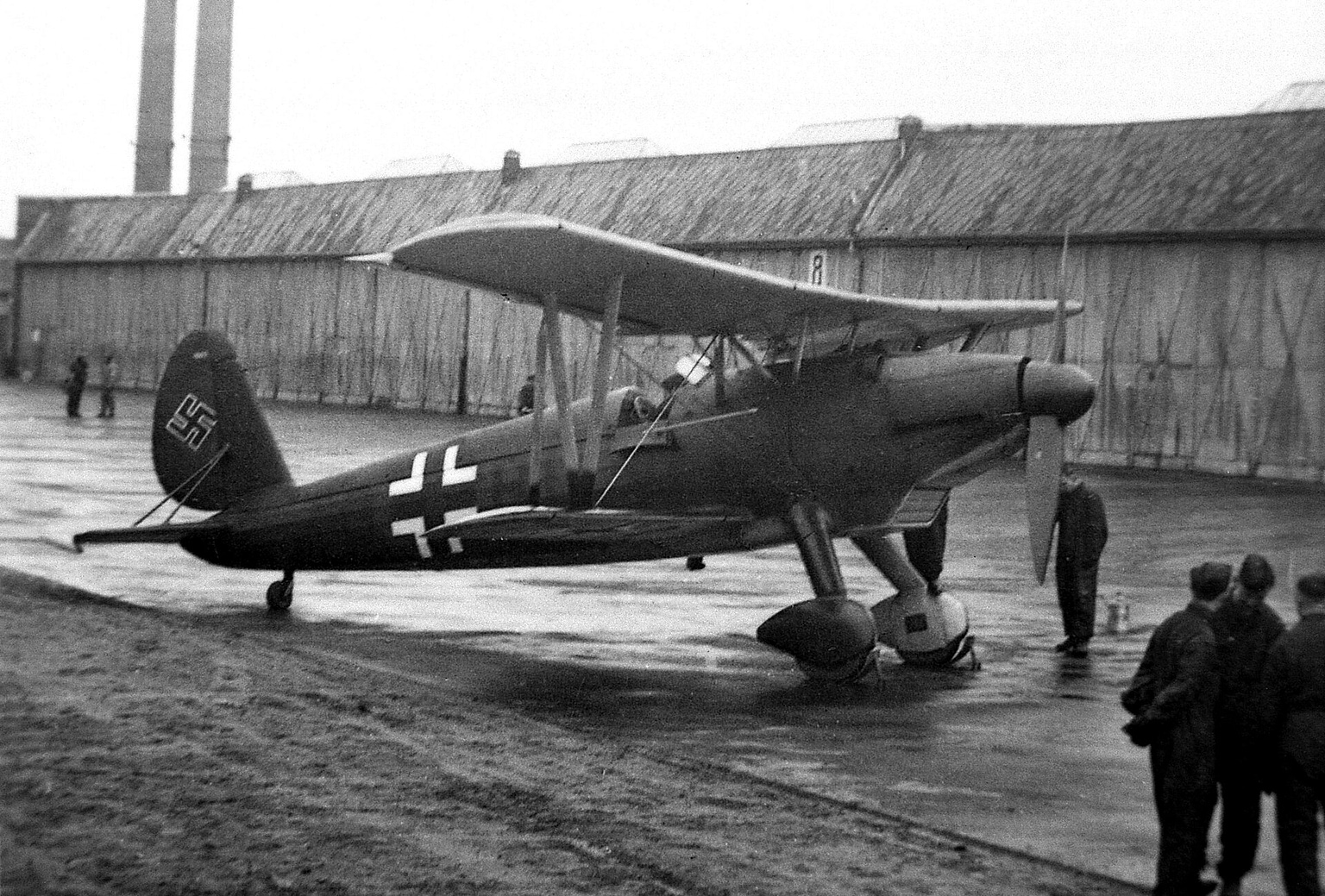
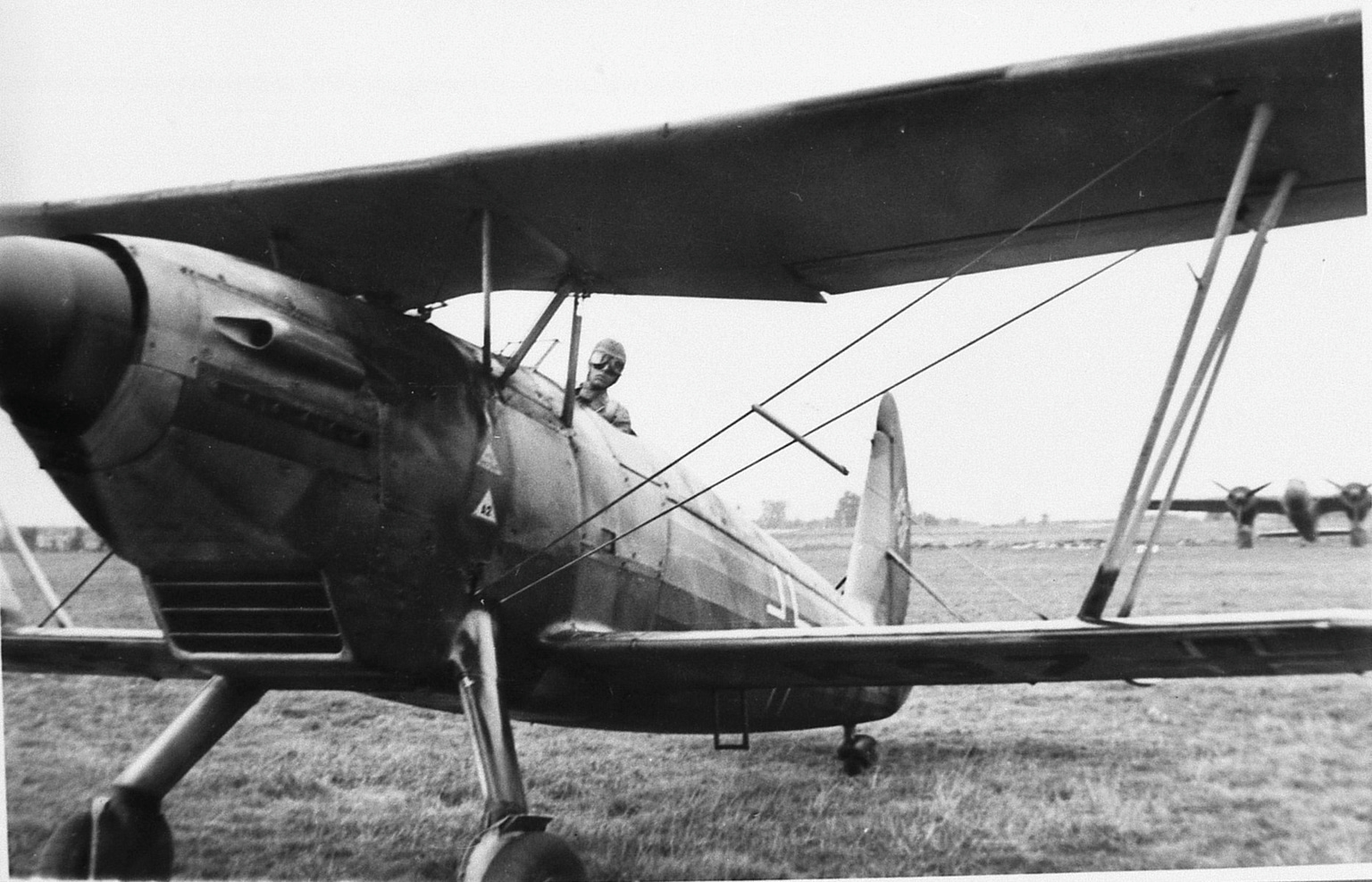
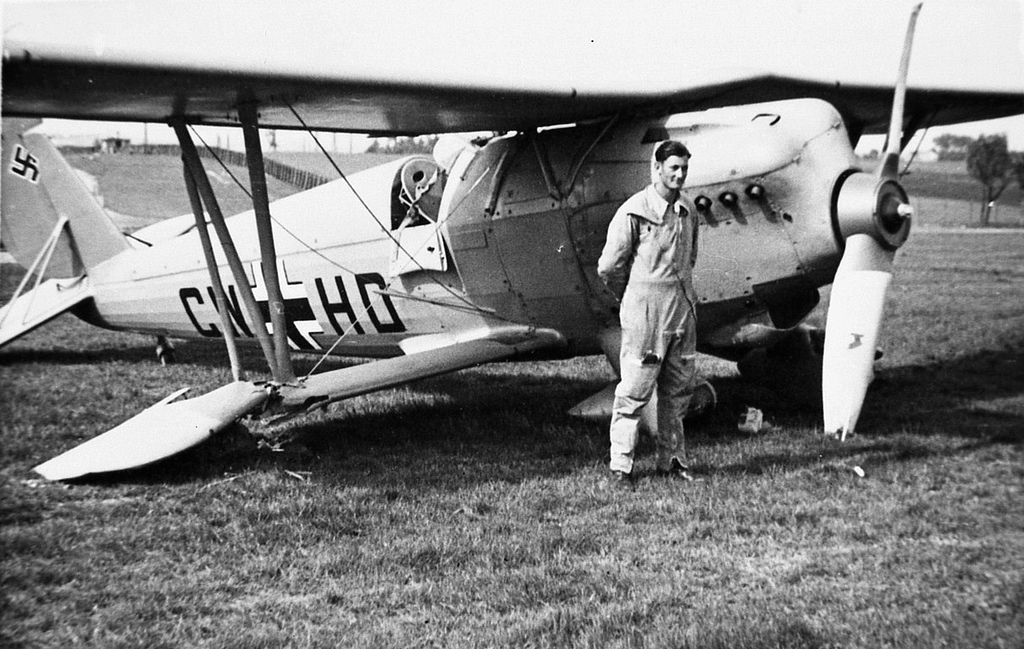
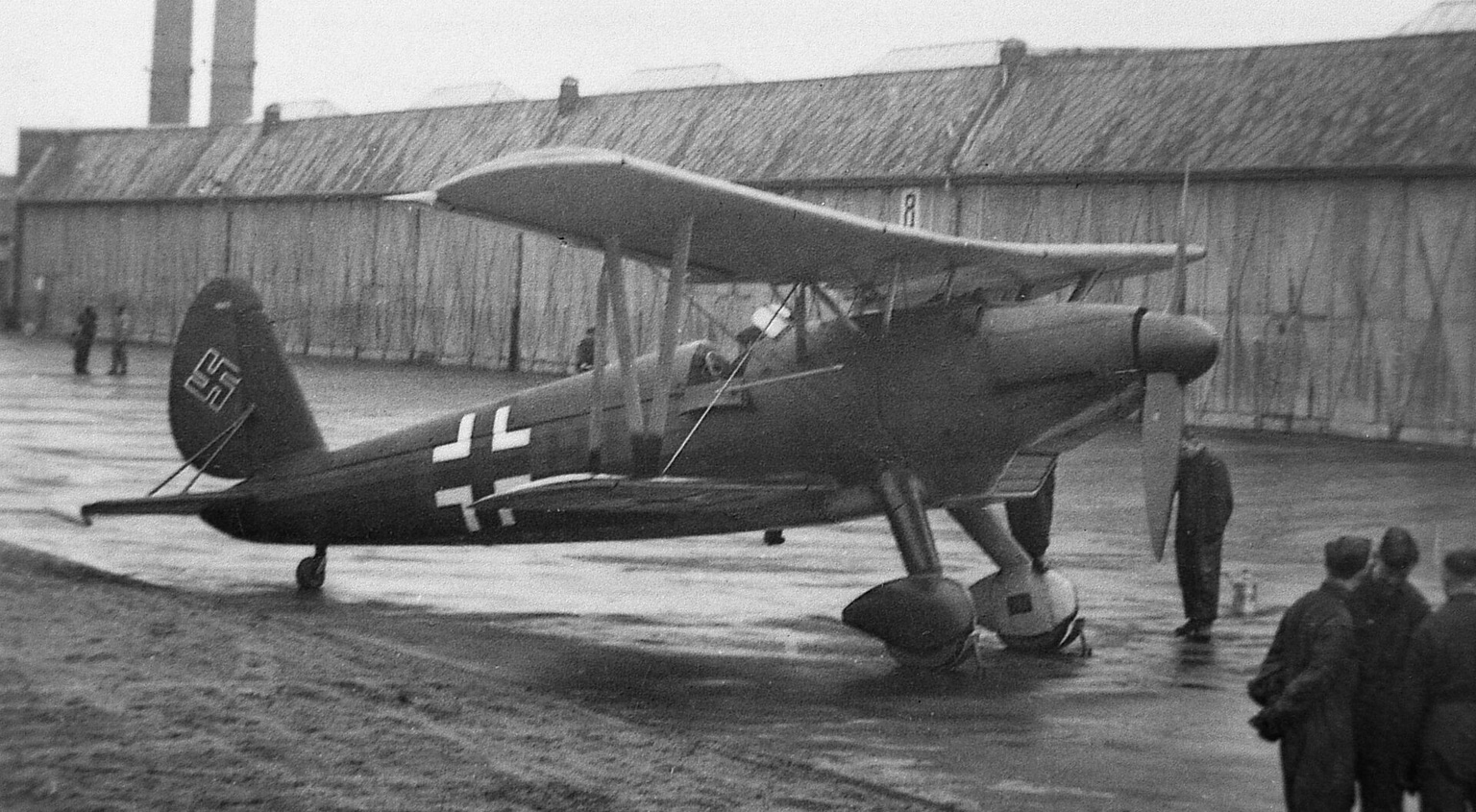
The Arado Ar 68 in photographs
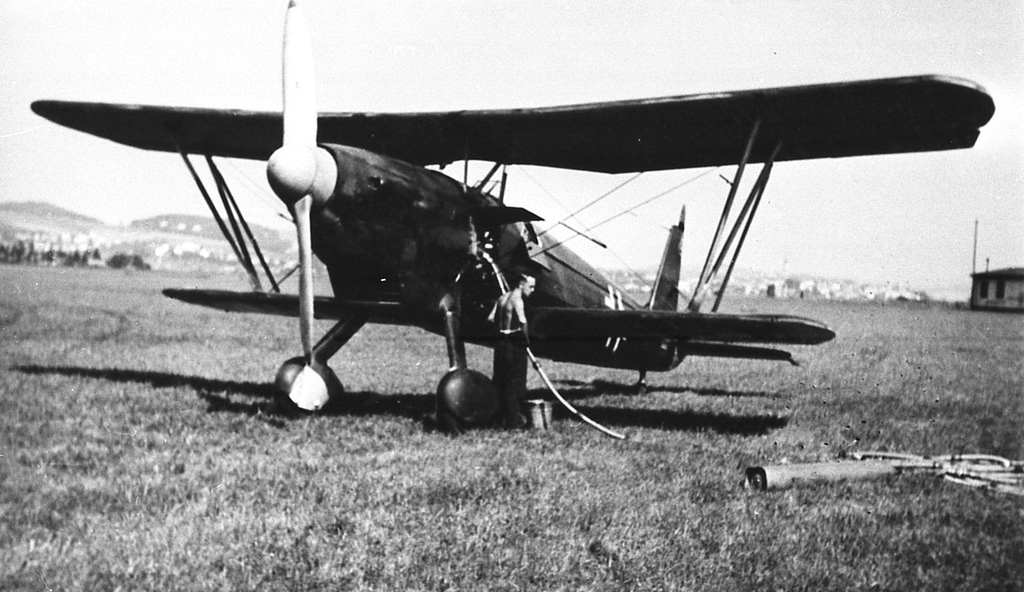
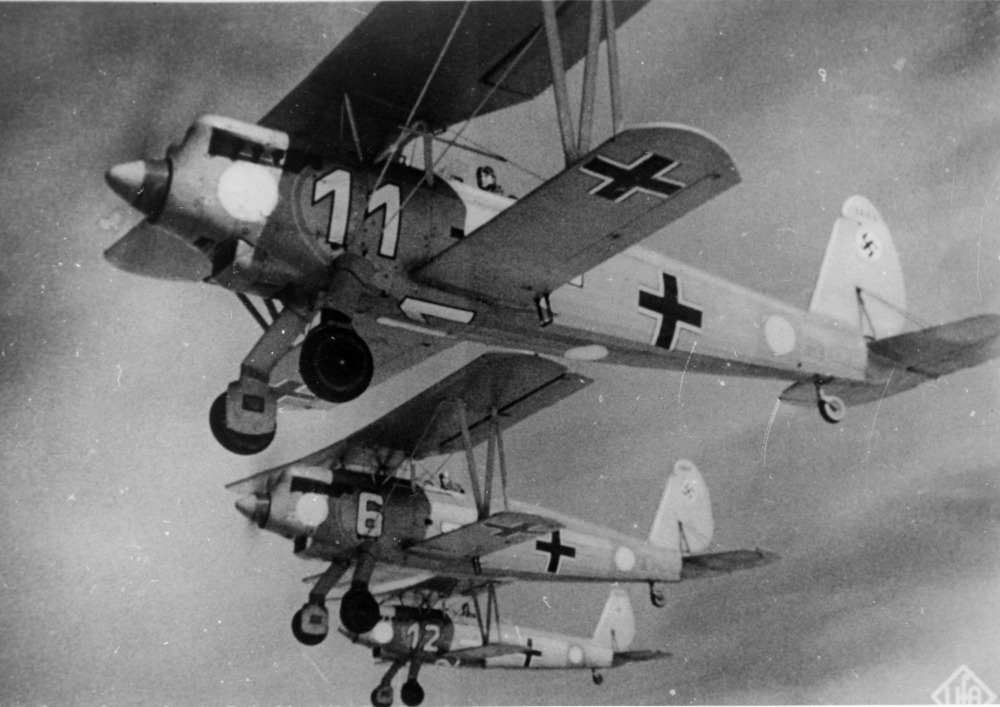
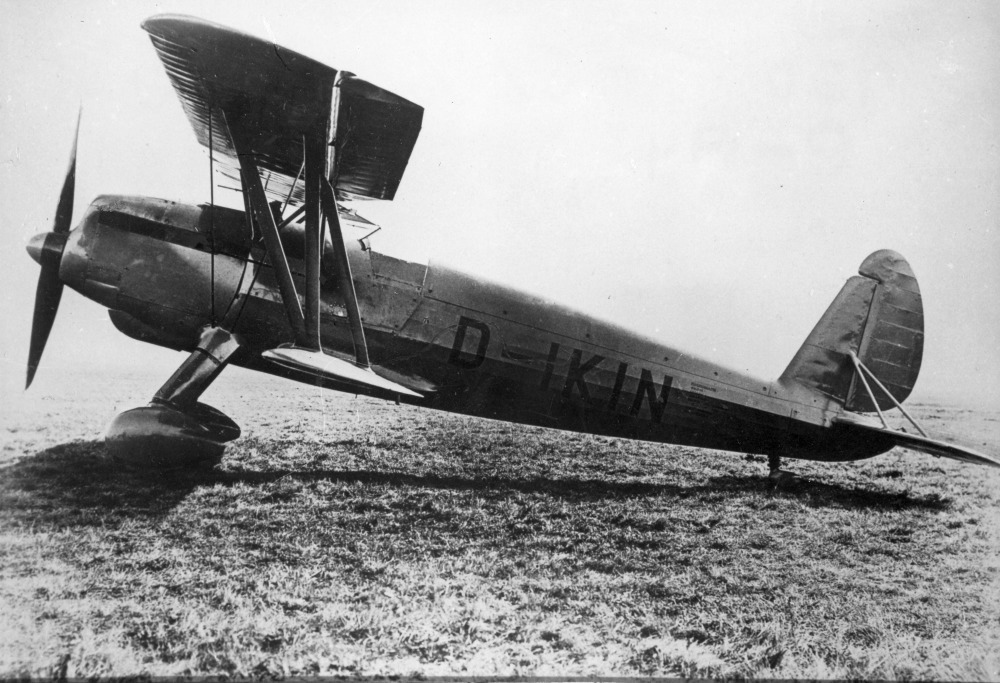
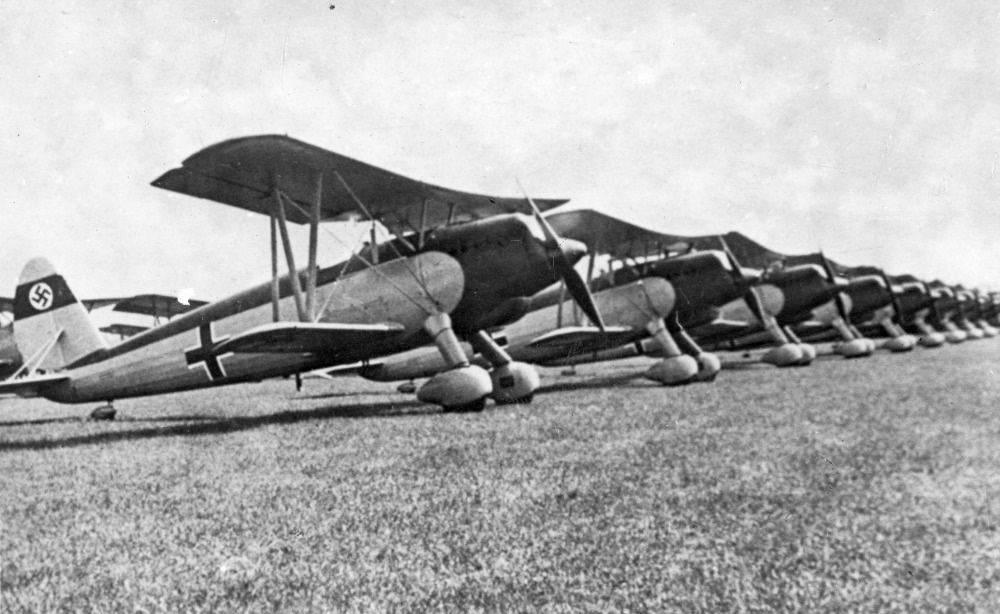
Archival and period photographs of the Arado Ar 68, each credited to its source and licence. Click any photo to enlarge.
On Film
The Arado Ar 68 on video: the Luftwaffe’s early biplane fighter
A look at the Arado Ar 68 — the strong, sweet-handling biplane rated above the He 51, and one of the reborn Luftwaffe’s first fighters.
“Arado Ar 68, the end of an era” — a short profile of the Luftwaffe’s early biplane fighter. Source: Aviation Footage Archive on YouTube.
Operations Overview
Where the Arado Ar 68 flew: an operator map
The Ar 68 was designed, built and flown by Germany, as one of the reborn Luftwaffe’s first fighters. It was not a significant export, and it served essentially only with the Luftwaffe — as a front-line fighter, then a trainer and early-war night-fighter stop-gap. This is therefore a single-country map. Hover or tap for detail.
Category: Design, Manufacture & Operator (Germany) — the Luftwaffe designed, built and flew the Ar 68; there were no significant foreign operators.
Service Record
The Ar 68’s record: a brief prime and a useful second life
The Ar 68’s significance lies in its place as an early Luftwaffe fighter rated above the He 51, its rapid eclipse by the Bf 109, and its long second career as a trainer and night-fighter stop-gap.
Questions & Answers
Arado Ar 68: your questions answered
Can I fly in an Arado Ar 68?
No — there is no bookable Ar 68 flight experience, and MiGFlug does not offer one. The type retired during the early war years, and it is extremely rare today, with no widely known airworthy original survivor. If what you actually want is the real thing — strapping into a genuine military aircraft and flying it — you very much can do that today in other types. MiGFlug arranges flights in real fighter jets and warbirds around the world. Start here: migflug.com/flights-prices.
Why is the Arado Ar 68 historically important?
The Ar 68 was one of the first fighters of the reborn German Luftwaffe of the mid-1930s, serving alongside the Heinkel He 51. It is historically interesting as a high-quality biplane fighter — rated in several respects above the He 51 — that was made obsolete almost immediately by the monoplane Messerschmitt Bf 109. It then had a valuable second life as a fighter-trainer and an early-war night-fighter stop-gap, and its designer, Walter Rethel, went on to work on the Bf 109 that replaced it.
How did the Ar 68 compare with the Heinkel He 51?
The two were direct contemporaries and served side by side as the early Luftwaffe’s first fighters. The Ar 68 was generally regarded as the better aircraft in several respects — notably in the climb and at altitude, especially in its Junkers Jumo 210-powered form. The famous story that Ernst Udet flew the two against each other and preferred the Ar 68 captures this general verdict, though the exact details are best treated with caution. Both were sound biplanes; the Ar 68 arguably had the edge.
What engine did the Arado Ar 68 use?
The Ar 68 used a liquid-cooled inline V-12 engine, and it was built with two different ones. The earlier Ar 68F used the older BMW VI; the later and definitive Ar 68E used the more modern Junkers Jumo 210, an inverted-V engine that also powered early Bf 109s. The Jumo-powered version offered noticeably better climb and altitude performance, and is generally considered the best of the family.
Did the Arado Ar 68 see combat?
Very little. Unlike the He 51, which was sent to Spain and fought with the Condor Legion, the Ar 68 was largely retained in Germany and saw little or no significant combat as a day fighter. Its front-line career was brief and entirely in peacetime. Its only real operational role in wartime was as a short-lived, improvised night-fighter stop-gap in 1939–40. Its importance rests on its place as an early Luftwaffe fighter and trainer, not on a combat record.
Why did the Ar 68 have such a short front-line career?
Timing. The Ar 68 was a fully developed biplane fighter that entered service in the mid-1930s, just as the all-metal monoplane arrived. The Messerschmitt Bf 109, entering service from 1937, was faster, climbed better and was comprehensively more modern, making every biplane fighter obsolete almost overnight. The Luftwaffe re-equipped with the Bf 109 as fast as it could, and the Ar 68 was quickly displaced — through no fault of its own design, but simply because the future had arrived.
How many Ar 68s were built, and do any survive?
Something over five hundred were built across the several variants, essentially all for the Luftwaffe. Survivors, however, are very rare. Like most early Luftwaffe aircraft, the majority were worn out in training or lost in the war, and no widely documented airworthy or fully complete original example is generally recognised today. It is a historically interesting but rarely-seen aircraft.
Who operated the Arado Ar 68?
Essentially only Germany. The Ar 68 was not a significant export and served overwhelmingly with the Luftwaffe — first as a front-line fighter, then as a widely used advanced trainer, and finally as an early-war night-fighter stop-gap. Its story is almost entirely a German one, tied to the specific circumstances of the reborn Luftwaffe of the 1930s.
Fly For Real
You can’t fly the Ar 68 — but these, you can
No Arado Ar 68 is a bookable ride today. The urge behind it — to strap into a real aircraft and actually fly — is very much still bookable. MiGFlug puts you in genuine fighters and warbirds around the world.
Fighter Jet Flights
Take the controls of a real ex-military jet with an experienced pilot.
Warbird experiences
Fly in a genuine piston-engined warbird from the golden age of aviation.
All flights are operated by MiGFlug’s vetted partners with professional pilots. Browse every option and current pricing at migflug.com/flights-prices. MiGFlug does not operate Arado Ar 68 flights — no bookable example exists.
Related Aircraft
If the Arado Ar 68 interests you, explore these
Sources & Further Reading
Where this Arado Ar 68 history comes from
Note on figures: dimensions, performance and production numbers for the Ar 68 vary between sources and by variant, and are hedged here as approximate; the figures given are broadly for the Jumo-engined Ar 68E. Cost fields are listed as not reliably recorded because trustworthy 1930s German procurement cost data is not available. The Ar 68 was operated essentially only by Germany (the Luftwaffe); it was not a significant export and saw little or no significant day-fighter combat, serving mainly as a fighter and then a trainer, with a brief early-war night-fighter role. The famous Udet comparison story is widely repeated but its details are hedged. Surviving original examples are very rare, and no widely documented airworthy original is known; claims of survivors are hedged accordingly.