
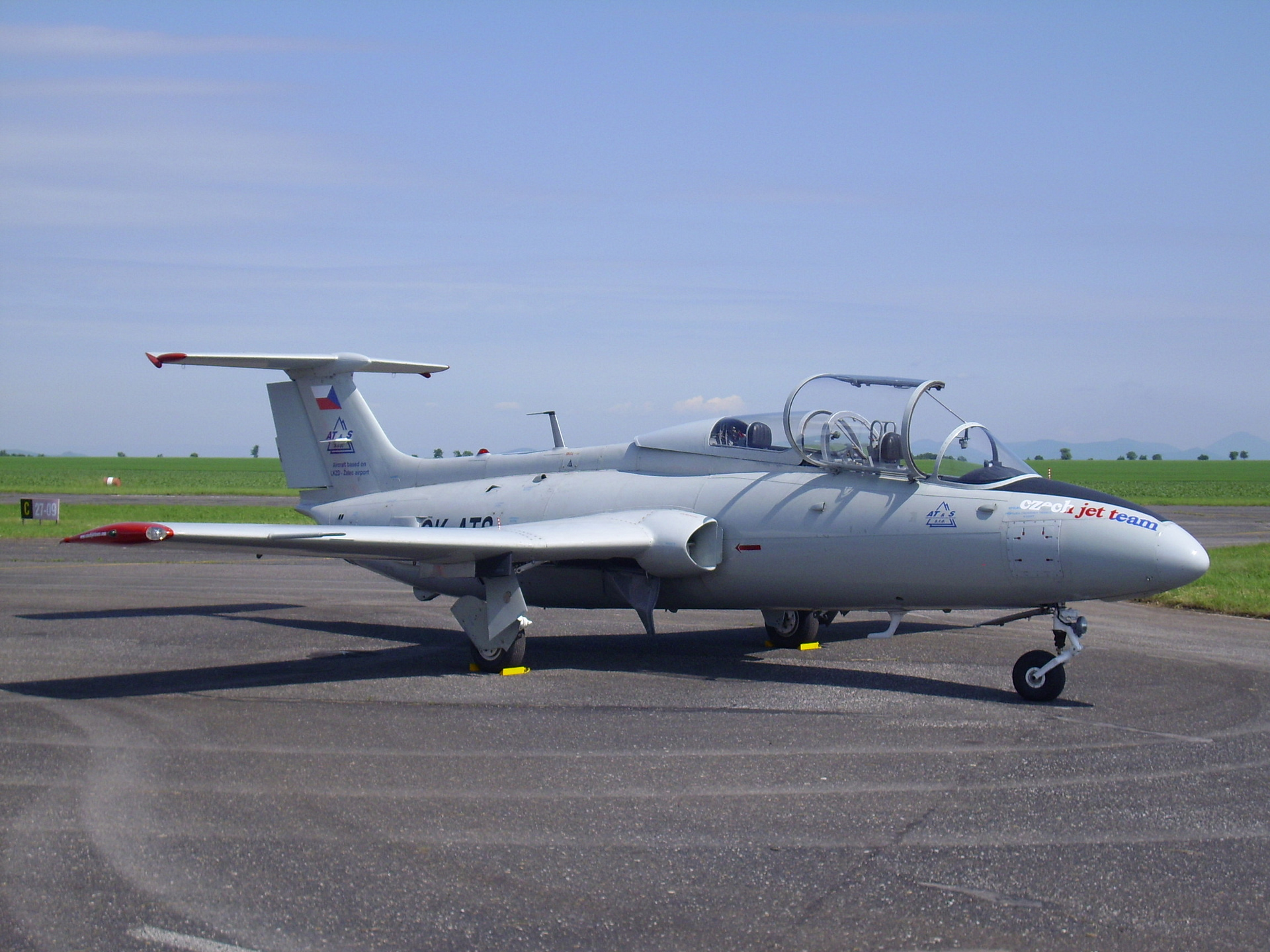
Aero L-29 Delfín
“Maya”
The rugged little Czechoslovak jet that taught most of the Warsaw Pact to fly — one of the most-produced jet trainers in history, and the forerunner of the famous L-39 Albatros.
The jet that taught the Eastern Bloc to fly
By the mid-1950s the air forces of the Soviet bloc were re-equipping with jet fighters, but their pilots were still learning on piston-engined trainers. What they needed was a simple, durable jet on which a raw cadet could safely make the leap to the jet age. In Czechoslovakia, a small Aero Vodochody design team led by Zdeněk Rublíč and Karel Tomáš set out to build exactly that — the country’s first indigenously designed and built jet aircraft.
The prototype XL-29 first flew on 5 April 1959. What emerged was deliberately conservative: a straight, mid-mounted wing, a single centrifugal-flow turbojet, tandem seats, and handling forgiving enough for a student’s first solo. In 1961 the design was pitted against Poland’s PZL TS-11 Iskra and the Soviet Yakovlev Yak-30 in a Warsaw Pact fly-off. The L-29 won and was adopted as the standard jet trainer for the Warsaw Pact — every member except Poland, which stubbornly kept its own Iskra.
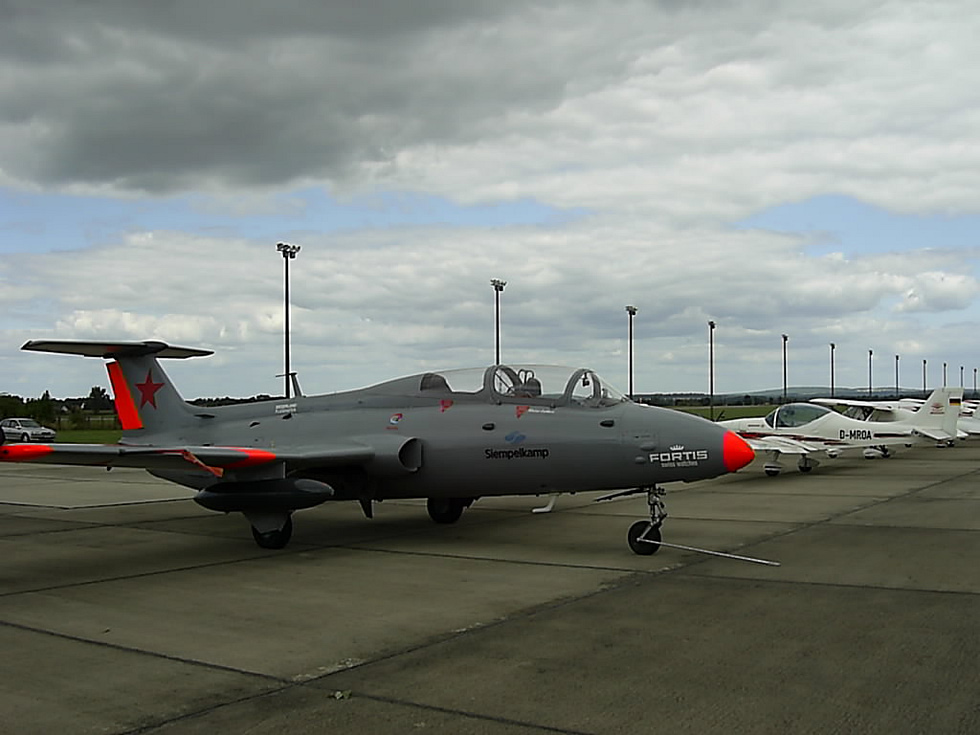
Roughly 3,600 were built between 1963 and 1974, more than 2,000 of them delivered to the Soviet Union alone. Generations of Soviet, East German, Hungarian, Egyptian and other pilots earned their wings on the Delfín. It was eventually succeeded by the swept-wing L-39 信天翁, but many L-29s soldiered on for decades — and today the type has a busy second life as an affordable civilian warbird.
01The 1961 fly-off: how the L-29 beat the Iskra and the Yak-30 — and why Poland walked away
When the Warsaw Pact went looking for a single standardised jet trainer, three designs competed: the Czechoslovak L-29, Poland’s PZL TS-11 Iskra, and Yakovlev’s Yak-30. Comparative trials held around 1961 favoured the L-29 for its docile handling and rugged, maintainable design, and it was chosen as the bloc’s common trainer.
Poland, however, declined to give up its own aircraft: it continued to develop the Iskra and operated it as its national jet trainer for decades. The result was that the “standard” Warsaw Pact trainer was standard everywhere except the country that had built one of its rivals — a small but telling exception to Soviet-bloc uniformity. The Yak-30, the third contender, never entered series production.
What makes it special
Rugged simplicity, built to forgive
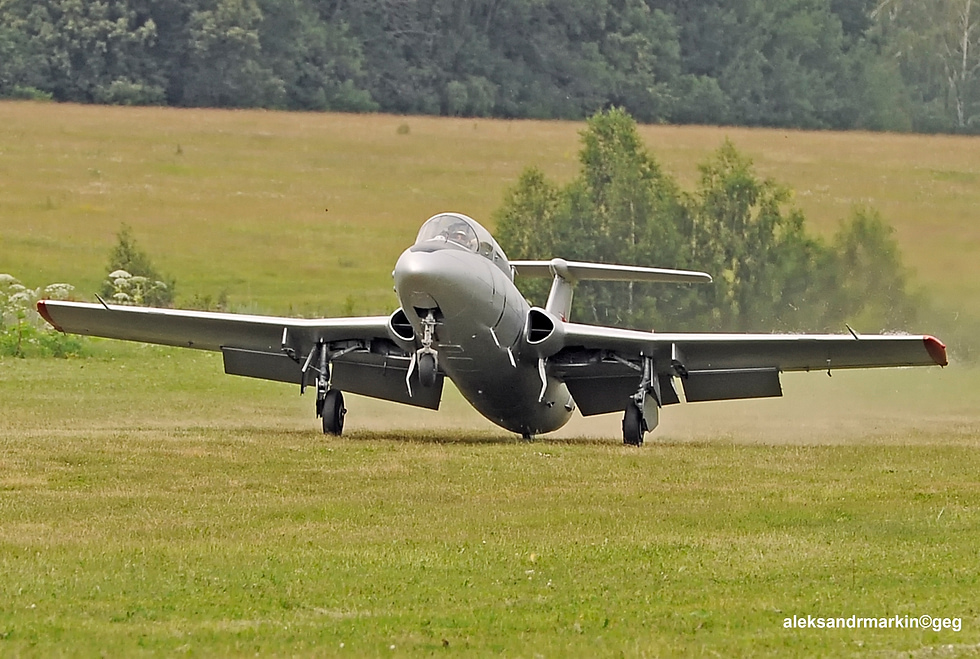
The Delfín was engineered around one idea: survive the mistakes of a first-time jet pilot. Its straight wing, gentle stall and simple systems made it stable and predictable, while a sturdy airframe and tall landing gear let it operate from the rough grass strips common across the Eastern bloc. It was a jet a nervous cadet could learn on and a conscript ground crew could keep flying.
One simple centrifugal turbojet
Power came from a single Motorlet M-701 centrifugal-flow turbojet of roughly 8.7 kN (1,960 lbf) thrust. The centrifugal design was chosen partly because it was less sensitive to swallowing dirt and debris from unpaved runways. It was praised for reliability and easy maintenance — over 9,000 M-701 engines were built, giving the type a deep, cheap spares pool that still helps keep warbirds flying.
A trainer that could go to war
Two underwing hardpoints let the Delfín carry gun pods, unguided rockets or light bombs, turning the trainer into a light attack aircraft. Specialised versions followed: the L-29R reconnaissance variant and the single-seat L-29A Akrobat aerobatic ship (only a couple built in 1967). In several countries the humble trainer ended up flying real combat missions.
02The Motorlet M-701: the little engine that outlived the aircraft
The M-701 was a modest single-shaft centrifugal turbojet, and that modesty was the point. Centrifugal compressors are bulky and less efficient than axial ones, but they are robust and tolerant of the grit and foreign objects thrown up by grass and dirt airfields — exactly the conditions a Warsaw Pact trainer had to endure. Somewhere around 9,000–9,200 examples were produced between roughly 1961 and 1989. That enormous production run left a large stock of engines and parts, which is one practical reason so many L-29s remain airworthy in civilian hands today.
03L-29R and L-29A Akrobat: the Delfín’s specialised offspring
Most L-29s were straightforward two-seat trainers, but Aero explored variants. The L-29R was a tactical-reconnaissance version fitted with cameras and a nose sensor package. The rarest was the L-29A Akrobat, a single-seat aerobatic derivative built in tiny numbers in 1967 for display flying. Combined with the wing hardpoints fitted to standard airframes for gunnery and weapons training, these versions show how a basic trainer was stretched toward reconnaissance, aerobatics and light strike.
Full specifications
Airframe & Performance
- 全体人员
- 2 (student & instructor, tandem)
- 长度
- ~10.81 m
- 翼展
- ~10.29 m
- 高度
- ~3.13 m
- 空重
- ~2,280 kg
- Max takeoff weight
- ~3,540 kg
- Max speed
- ~655 km/h
- 设备天花板
- ~11,500 m
- 范围
- ~900 km (with tanks)
Propulsion & Systems
- 引擎
- 1 × Motorlet M-701
- 推力
- ~8.7 kN (~1,960 lbf)
- 硬点
- 2 underwing
- Armament (optional)
- Gun pods, rockets, light bombs
- NATO reporting name
- “Maya”
- First flight
- 5 April 1959
- Built
- ~3,600 (1963–1974)
- Unit / hourly cost
- No reliable public figure
04What did an L-29 cost — and what does it cost to fly one today?
As a state product of the Soviet-bloc economy, the L-29 was never sold on an open dollar market during its service life, so no reliable original flyaway price exists in the public record. Its value today is far easier to gauge: on the civilian warbird market, airworthy L-29s have traded for roughly the price of a nice light aircraft — often cited in the low hundreds of thousands of dollars — which, combined with the huge stock of cheap M-701 engines, is exactly why it became one of the most accessible jet warbirds to own. Any precise operating-cost figure you see should be treated as an estimate, not an official number.
From cadet trainer to civilian warbird
The requirement
The Soviet bloc needs a modern jet trainer to bridge piston trainers and its new jet fighters. Aero Vodochody begins design work.
First flight
The XL-29 prototype flies for the first time on 5 April — Czechoslovakia’s first home-designed jet aircraft.
The fly-off
The L-29 beats Poland’s TS-11 Iskra and the Yak-30 and is chosen as the standard Warsaw Pact jet trainer — Poland aside.
Into production
Series production begins; over the next decade some 3,600 are built, more than 2,000 going to the Soviet Union.
The Akrobat
Aero builds the rare single-seat L-29A Akrobat for aerobatic display flying.
Egypt at war
Egyptian L-29s are reported flying light-attack sorties during the Yom Kippur War — a trainer pressed into combat.
End of the line
Production ends after ~3,600 aircraft; the swept-wing L-39 Albatros takes over as the bloc’s next-generation trainer.
Nagorno-Karabakh
Azerbaijan uses L-29s for ground attack in the First Nagorno-Karabakh War, reportedly suffering losses to air defences.
Second life as a warbird
Retired from most air forces, the cheap, reliable Delfín becomes a popular civilian jet warbird across the US and Europe.
Twelve stories from the Delfin’s long life
Czechoslovakia’s first jet
The L-29 was the first jet aircraft designed and built in Czechoslovakia.
Read the full story
Why “Delfín”?
The name means “Dolphin” — NATO instead called it “Maya.”
Read the full story
Beating the competition
In 1961 the L-29 won a three-way Warsaw Pact trainer contest.
Read the full story
The one that said no
Every Warsaw Pact air force adopted the L-29 — except Poland.
Read the full story
More than three thousand
Around 3,600 Delfíns were built — one of the most-produced jet trainers ever.
Read the full story
Made for the mud
A centrifugal engine and tough gear let it fly from grass strips.
Read the full story
A trainer at war
Egyptian L-29s reportedly flew light-attack missions in the 1973 war.
Read the full story
Over Biafra
Nigeria used L-29s during the Biafran civil war of the late 1960s.
Read the full story
Nagorno-Karabakh
Azerbaijan flew L-29s in ground attack in the 1990s — and lost several.
Read the full story
The kind first solo
Instructors valued the L-29 for its forgiving, honest manners.
Read the full story
Making way for the Albatros
The L-29 handed the trainer role to the swept-wing L-39.
Read the full story
The affordable jet warbird
Cheap, plentiful and reliable, the L-29 became a favourite civilian warbird.
Read the full story
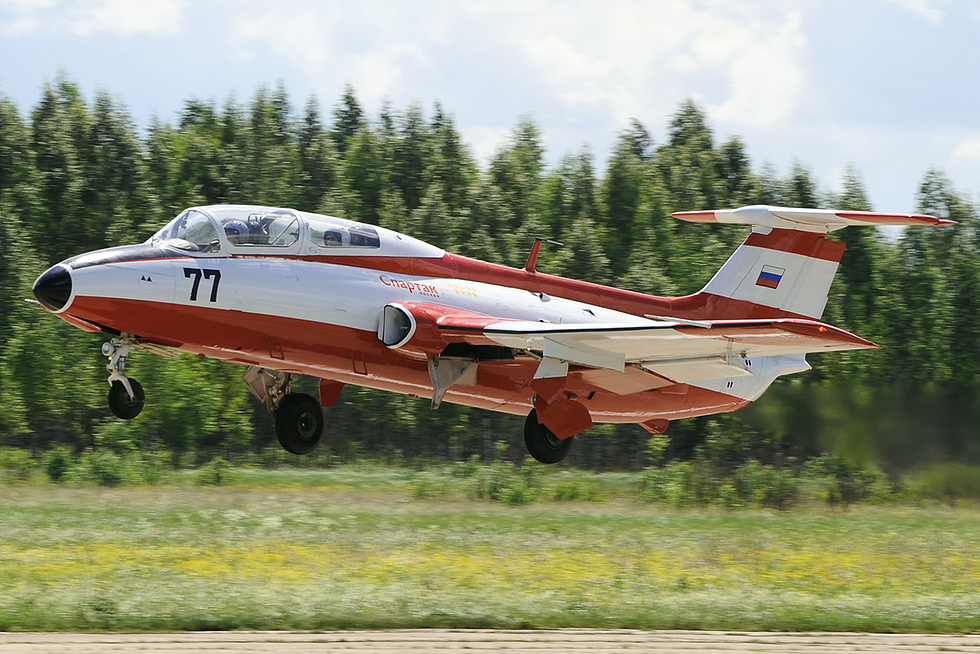
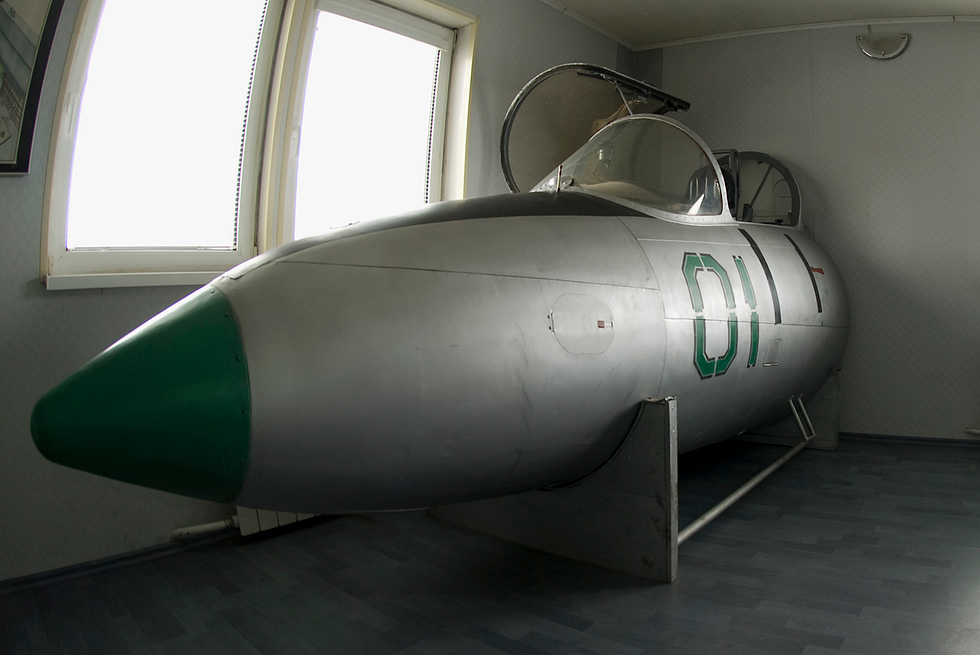
The Delfin in pictures


The Delfín in motion
A hand-picked L-29 Delfín video is coming soon. In the meantime, explore the photo gallery above — and if you want to fly the type’s direct successor, the L-39 Albatros is bookable with MiGFlug.
The L-29 Delfín in motion
MojoGrip — one of the most-watched L-29 Delfín films on YouTube.
Where the Delfin flew
The trainer that went to war
The L-29 was built to teach, not to fight — but with rockets and bombs on its two hardpoints, several air forces sent it into combat anyway. Its war record is scattered and hard to verify, spread across a handful of conflicts where a cheap, available airframe mattered more than performance. These figures should be read as indicative rather than precise.
Compare the combat record of every military aircraft. Figures as of July 2026.
Everything people ask about the L-29 Delfín
Can I fly in an L-29 Delfín?
What does “Delfín” and “Maya” mean?
How many L-29s were built?
Was the L-29 used in combat?
What is the difference between the L-29 and the L-39?
Why did every Warsaw Pact country use it except Poland?
Is the L-29 still flying today?
You can’t fly the L-29 Delfín.
These, you can.
Some legends only live in museums — others are fuelled and waiting. MiGFlug has put civilians in real military jet cockpits since 2004.
 Fly the L-39 AlbatrosThe world’s most-flown jet trainer — aerobatics included
 Fly the F-104 Starfighter“The missile with a man in it”
 Fly the MiG-21The Cold War’s most-produced jet
 驾驶T-33流星战斗机America’s first jet trainer
 Fly the DH VampireA piece of early jet history
 Fly the S.211Agile Italian jet trainer
 Fly the MB-326The classic Aermacchi jet
 Fly the MiG-15The Soviet legend of the Korean War
Continue the tour
Every fact, checked
- Vintage Aviation News — First Flight of the Aero L-29 DelfinFirst-flight date, production totals and export/combat operators.
- Pickled Wings — The Little Trainer that CouldThe 1961 fly-off, Poland’s exception, the M-701 engine and the Akrobat variant.
- Global Military — L-29 Delfin Specs & OperatorsOperator list and combat use in Egypt, Nigeria and Nagorno-Karabakh.
- flugzeuginfo.net — Aero L-29 technical dataDimensions, weights, engine thrust and performance figures.
- Planes of Fame Air Museum — Aero L-29 DelfinMuseum reference on the type’s design and service history.
- Palm Springs Air Museum — L-29 DelfinBackground on the Delfín’s civilian warbird life in the United States.
- Airforce Technology — L-29 Delfin TrainerOverview of the trainer’s role, variants and operators.