
Sukhoi Su-33
“Flanker-D”
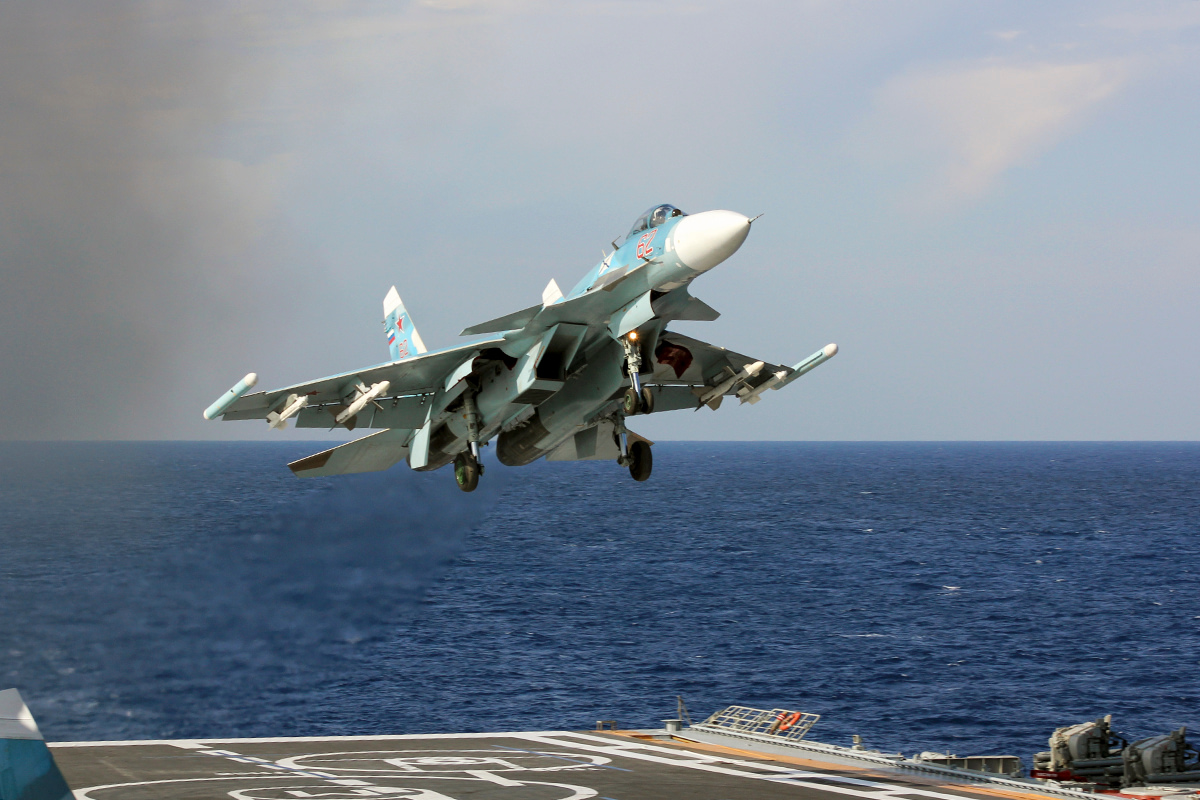
The navalised Flanker — folding wings, canards and an arrestor hook — built to fly heavy air-superiority missions from Russia’s only aircraft carrier, launching off a ski-jump ramp instead of a catapult.
How the Su-33 took the Flanker to sea
The Sukhoi Su-27 “Flanker” is one of the great fighters of the late Cold War — big, long-legged and superbly agile. But the Soviet Navy wanted one thing the land-based Flanker could not do: operate from the deck of an aircraft carrier. The answer was the Su-27K (“Korabelny,” meaning ship-borne), navalised so heavily that it earned its own NATO reporting name — Flanker-D — and eventually the service designation Su-33.
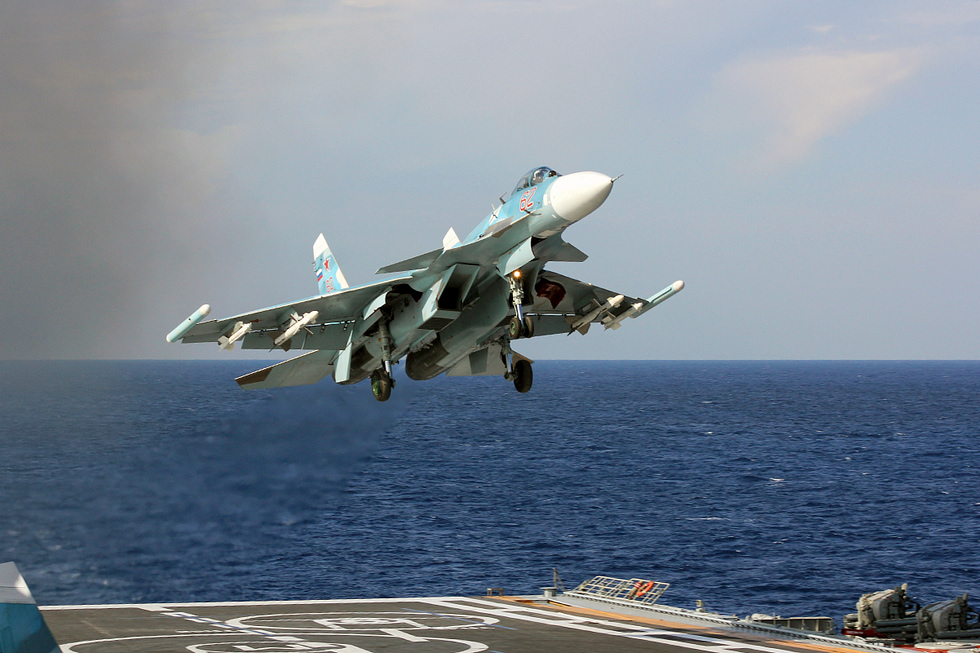
Turning a heavy land fighter into a carrier aircraft meant rebuilding it around the deck. Sukhoi added folding wings and folding tailplanes so the big jet could be packed below a crowded deck, small canard foreplanes for the lift and pitch control needed at slow approach speeds, a strengthened structure, a beefed-up twin-wheel nose leg, and an arrestor hook to catch the wires on recovery. A retractable refuelling probe extended its already long reach.
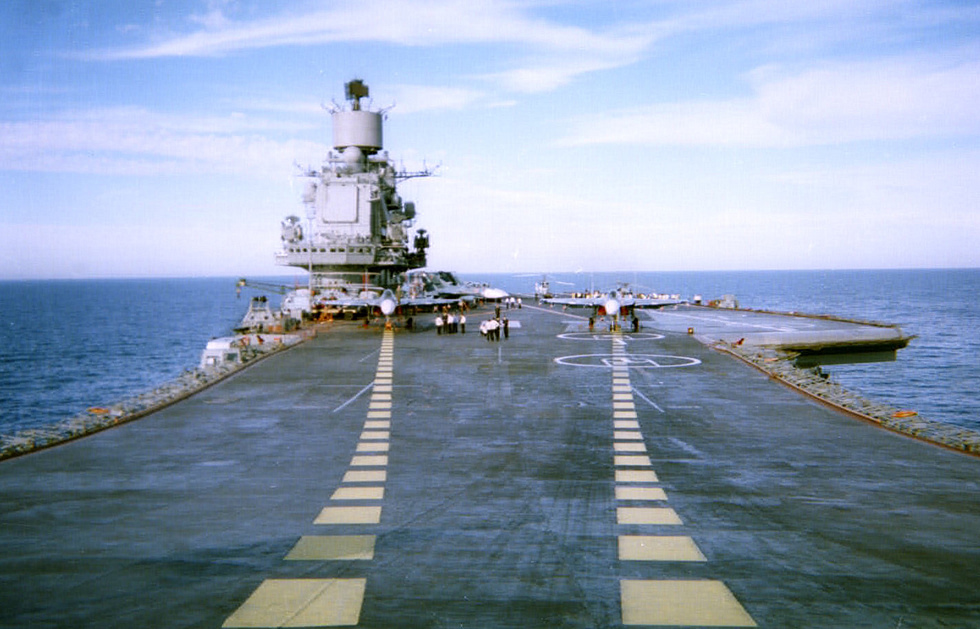
Russia’s carrier, Admiral Kuznetsov, has no steam catapults. Instead the Su-33 uses a STOBAR method — Short Take-Off But Arrested Recovery — sprinting up a 14-degree ski-jump ramp at the bow and trapping on wires when it lands. First flown in 1987 and formally adopted in 1998, the Su-33 remains in limited service today, the heaviest fighter routinely flying from a ski-jump carrier.
01Why the Su-33 exists: giving the Soviet Navy a real carrier fighter
For most of the Cold War the Soviet Navy flew short-ranged vertical-takeoff jets like the Yak-38 from its small carriers — useful for show, marginal in combat. When the larger Admiral Kuznetsov-class ship was designed with a full-length flight deck and a ski-jump, the Navy finally had room for a proper fighter. Rather than start from scratch, Sukhoi navalised its excellent Su-27, producing the Su-27K / Su-33.
The result gave the fleet, for the first time, a carrier aircraft with the range, radar and missile load of a front-line air-superiority fighter. It was never built in large numbers — only around two dozen production airframes — and it remains a niche type tied to a single ship. But as an engineering exercise it proved the heavy Flanker could be adapted to the punishing world of carrier flying.
What makes the Su-33 special
Navalised from nose to tail
Turning the Su-27 into the Su-33 meant far more than adding a hook. Sukhoi fitted folding wings and folding horizontal tails for deck stowage, added canard foreplanes behind the cockpit for extra lift and control at slow approach speeds, strengthened the airframe, and reinforced the landing gear with a twin-wheel nose leg. An arrestor hook and a retractable refuelling probe complete the carrier fit.
Ski-jump launch, no catapult
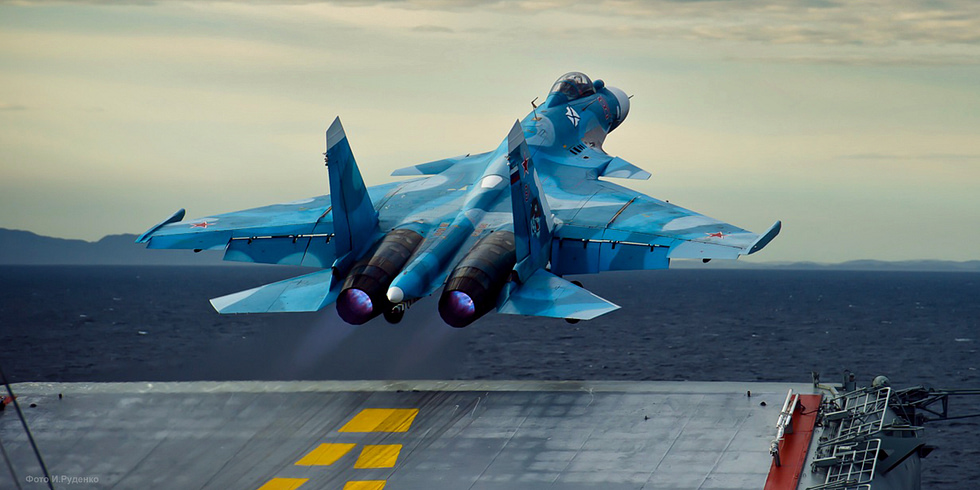
Admiral Kuznetsov has no catapults, so the Su-33 launches using a STOBAR technique: it accelerates along the deck and up a 14-degree ski-jump ramp that flings it into the air at low speed. That limits the fuel and weapons it can carry off the deck compared with a catapult launch — a real constraint of Russia’s carrier design, not of the aircraft itself.
A big Flanker’s reach at sea
Beneath the carrier kit, the Su-33 keeps the Flanker’s strengths: two AL-31F3 afterburning turbofans, a large internal fuel load giving roughly 3,000 km of range, a refuelling probe, and up to 12 hardpoints. For fleet air defence far from home, that combination of range, endurance and missile load is exactly what a navy wants overhead.
02The Su-33’s canards: why a carrier Flanker grew foreplanes
Landing on a carrier means flying a stable, controllable approach at low speed and thumping the deck hard enough to catch a wire. To give the heavy Flanker better behaviour in that regime, Sukhoi added canard foreplanes ahead of the wing. They increase lift and improve pitch authority at high angles of attack, letting the Su-33 fly a slower, more precise approach than the tail-only Su-27. The same foreplanes also sharpen its agility — a side benefit of a change made mainly for the deck.
03STOBAR vs catapult: the ski-jump’s hidden cost
Western supercarriers use steam or electromagnetic catapults to fling aircraft off the deck at flying speed regardless of weight. Kuznetsov instead uses a ski-jump: the Su-33 must generate its own takeoff speed along a limited deck run. That works, but it caps the weight the jet can lift off — so in practice a ski-jump-launched Su-33 often trades fuel or weapons for the performance to get airborne safely. It is one reason the type is regarded as a capable fighter tied to a limited launch system.
Full Su-33 specifications
Airframe & Performance
- 全体人员
- 1
- 长度
- ~21.19 m
- 翼展
- 14.70 m (folded ~7.40 m)
- 高度
- ~5.9 m
- 空重
- ~18,400 kg
- Max takeoff weight
- ~33,000 kg
- Max speed
- Mach 2.17 · ~2,300 km/h at altitude
- 设备天花板
- ~17,000 m
- 范围
- ~3,000 km (at altitude)
- Launch/recovery
- STOBAR — ski-jump & arrestor wires
Propulsion & Systems
- Engines
- 2 × Saturn/Lyulka AL-31F3
- Thrust (each)
- ~125 kN with afterburner
- Radar
- N001K (Flanker-family)
- Cannon
- 1 × GSh-30-1 30 mm (150 rounds)
- 硬点
- 12 · up to ~6,500 kg
- Missiles
- R-27, R-73, R-77 air-to-air
- First flight
- 17 August 1987 (T-10K)
- Built
- ~24 production aircraft
- Unit cost
- No reliable public figure
04The Su-33’s cost: why no firm price exists
The Su-33 was a Soviet, then Russian, state product built in tiny numbers for a single customer and never offered on an open export market. As a result there is no reliable public flyaway price or cost-per-flight-hour for the type. With only around two dozen aircraft ever built, unit costs would have been high by fighter standards simply because the development bill was spread across so few airframes — but any specific dollar figure you see attached to a Su-33 should be treated as an estimate, not a sourced number.
From carrier prototype to combat deployment
Navalisation begins
Sukhoi starts adapting the Su-27 into the carrier-capable Su-27K, with folding wings, canards and an arrestor hook.
First flight
The T-10K prototype of the navalised Flanker makes its maiden flight on 17 August 1987.
First carrier landing
Test pilot Viktor Pugachyov makes the first arrested landing aboard the carrier (then named Tbilisi) on 1 November 1989.
Enters service
The type is formally adopted by the Russian Navy as the Su-33, equipping the Northern Fleet’s carrier air regiment.
First combat
Su-33s deploy aboard Admiral Kuznetsov off Syria — the type’s combat debut — striking ground targets with bombs.
A jet lost at sea
In December a Su-33 is lost on approach after an arrestor cable reportedly snapped; the pilot ejects safely.
Upgrades
Surviving Su-33s receive avionics and targeting upgrades to extend their air-to-ground capability.
Still flying, in small numbers
The Su-33 remains in limited Russian naval service, tied to the fortunes of a single, often-refitting carrier.
Twelve stories about the Su-33
From land Flanker to sea Flanker
The Su-27K was the Soviet Navy’s bid to put a heavy, capable fighter on a carrier deck.
Read the full story
No catapult, so a ramp
Admiral Kuznetsov has no steam catapults, so the Su-33 sprints up a 14-degree ski-jump.
Read the full story
Foreplanes for the deck
Small canards behind the cockpit give the Su-33 the lift and control it needs on a slow approach.
Read the full story
A Flanker that folds
Wings and tailplanes fold so the big fighter fits below a crowded carrier deck.
Read the full story
The T-10K takes off
The navalised Flanker prototype first flew on 17 August 1987.
Read the full story
Trapping aboard for the first time
Test pilot Viktor Pugachyov made the first arrested carrier landing on 1 November 1989.
Read the full story
Officially a Su-33
The type was formally adopted by the Russian Navy in 1998.
Read the full story
The Flanker goes to war
The Su-33 saw its first combat during the 2016 Admiral Kuznetsov deployment off Syria.
Read the full story
A snapped arrestor cable
One Su-33 was lost on approach in December 2016 when a wire reportedly failed; the pilot ejected safely.
Read the full story
The J-15 question
China’s J-15 is derived from a Su-27K prototype — but it is not a Su-33.
Read the full story
A very small fleet
Only around two dozen production Su-33s were ever built.
Read the full story
Flanker or Fulcrum at sea?
Russia selected the lighter MiG-29K as the future carrier fighter.
Read the full story
The Su-33 in pictures
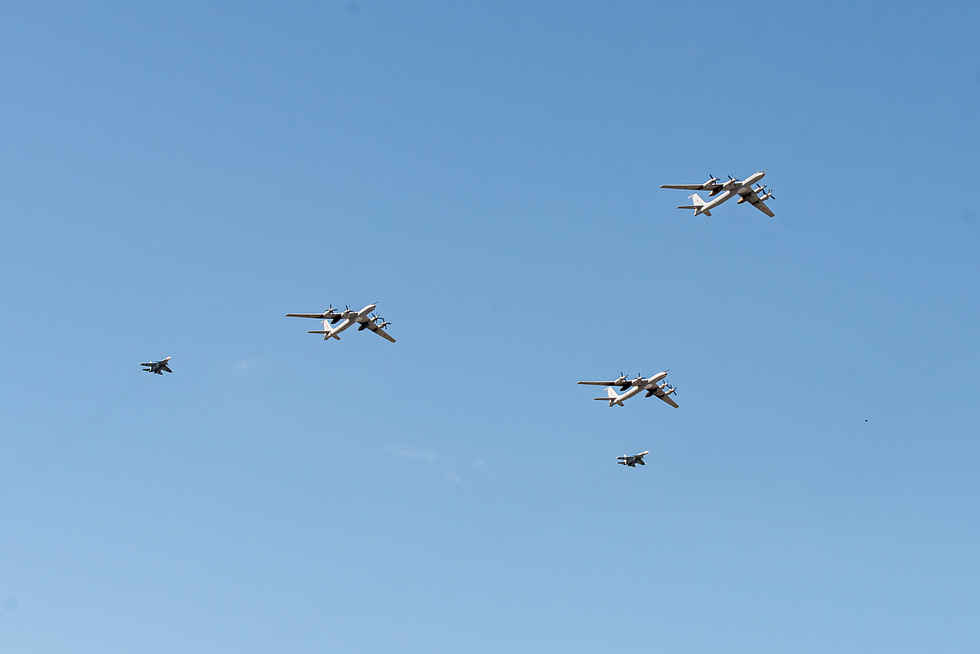
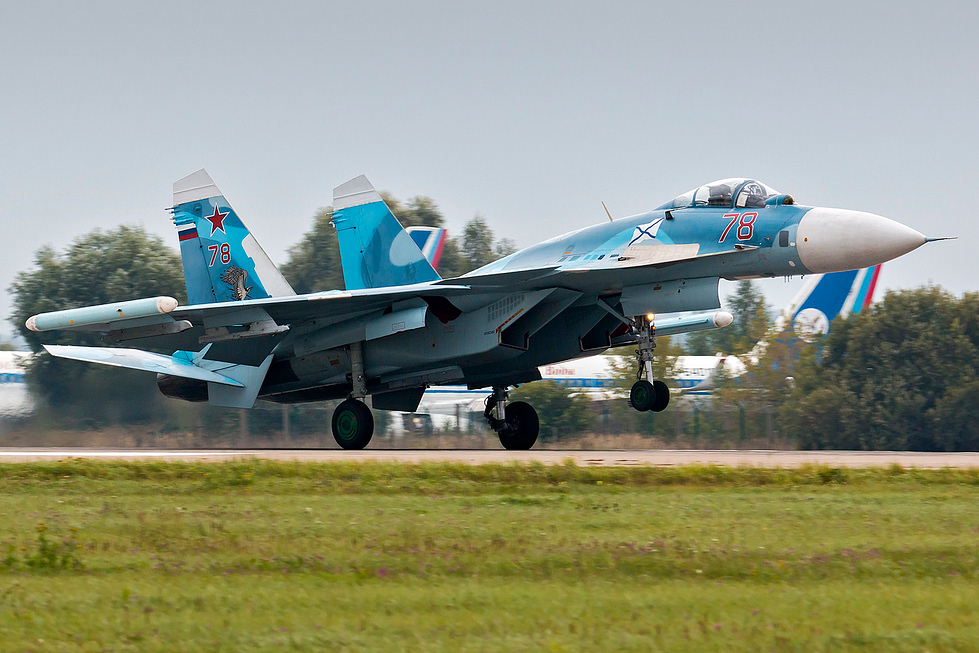
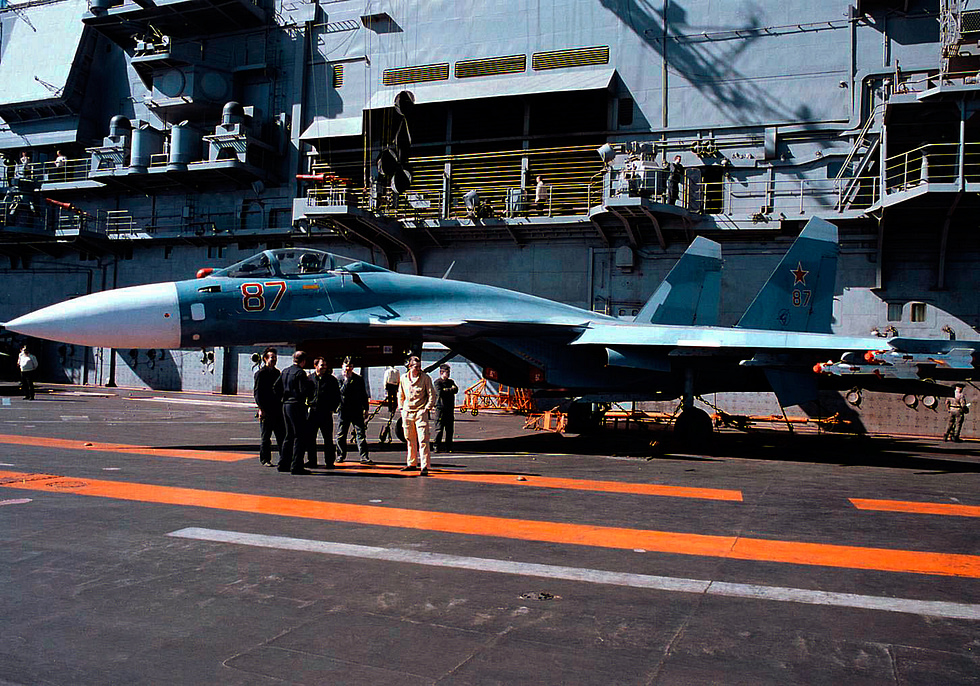
The Su-33 in motion
A hand-picked Su-33 video feature is coming soon. In the meantime, explore the photo gallery above and the stories from the deck of Admiral Kuznetsov.
The Su-33 in motion
yolkhere — one of the most-watched Su-33 films on YouTube.
Where the Su-33 flies
A brief, single deployment
The Su-33 has fought in only one campaign. During the 2016–17 Admiral Kuznetsov deployment off Syria, its jets flew the type’s first-ever combat missions, striking ground targets. It has no confirmed air-to-air combat record. These figures are best read as a record of a small fleet on a single, difficult cruise rather than a sustained combat history — and casualty and sortie claims from that deployment should be treated with caution.
Compare the combat record of every military aircraft. Figures as of July 2026.
Everything people ask about the Su-33
Can I fly in a Su-33?
What is the Su-33 and how is it different from the Su-27?
How does the Su-33 take off from a carrier without a catapult?
Is the Su-33 the same as the Chinese J-15?
How many Su-33s were built?
Did Russia lose a Su-33 in Syria?
Is the Su-33 still in service?
You can’t fly the Su-33.
These, you can.
Some legends only live in museums — others are fuelled and waiting. MiGFlug has put civilians in real military jet cockpits since 2004.
 Fly the L-39 AlbatrosThe world’s most-flown jet trainer — aerobatics included
 Fly the F-104 Starfighter“The missile with a man in it”
 Fly the MiG-21The Cold War’s most-produced jet
 驾驶T-33流星战斗机America’s first jet trainer
 Fly the DH VampireA piece of early jet history
 Fly the S.211Agile Italian jet trainer
 Fly the MB-326The classic Aermacchi jet
 Fly the MiG-15The Soviet legend of the Korean War
Continue the tour
Every fact, checked
- The AviationistContemporary reporting on the December 2016 arrestor-cable landing loss off Syria.
- USNI NewsUS Naval Institute coverage of the Kuznetsov carrier-fighter losses in 2016.
- The National InterestAnalysis of Su-33 production numbers, navalisation and STOBAR limitations.
- Global MilitaryReference specifications and operator summary for the Su-33 Flanker-D.
- Military FactoryAirframe dimensions, weights and armament reference data.
- TASSRussian official statement on the December 2016 carrier landing accident.
- Russia BeyondContext on Russian carrier operations and the 2016 deployment losses.