

Sopwith 1½ Strutter
The 1916 Sopwith that gave British air power its first synchronised gun in service — then handed its greatest chapter to France.
The Sopwith 1½ Strutter: Britain’s 1916 all-rounder and its long, surprising afterlife
In the spring of 1916 the Sopwith 1½ Strutter looked like the future: a clean two-seat tractor biplane that could fight, scout and bomb, and the first British aeroplane to go to war with a gun synchronised to fire through its own propeller. Within a year newer German fighters had caught and passed it. Yet the Strutter’s story did not end there — it simply moved abroad, above all to Francie, where it was licence-built in numbers that dwarfed British output.
The design grew out of Sopwith’s experimental “Sigrist Bus” of 1915 and was refined by the company’s gifted designer Herbert Smith into the Land Clerget Tractor. The first prototype was flying by the end of 1915, and deliveries to the RNAS began in February 1916. By late April, No. 5 Wing RNAS was using it for escort and bombing; the RFC, its own supply delayed, pressed Sopwith-built Navy machines into service in time for 70 Squadron to support the opening of the Battle of the Somme that July.
Contemporaries were impressed. The type’s long endurance and comprehensive armament let it patrol deep into German-held airspace, and for a few months in 1916 it was one of the most capable aircraft over the Western Front. Reconnaissance crews valued the observer’s wide field of fire; bomber crews valued the load and the range. It could look after itself in a way that the RFC’s older two-seaters simply could not.
That season was short. The arrival of the Albatros D.I and its successors from the autumn of 1916 exposed the Strutter’s weaknesses: it was lightly built, very stable — a virtue for a camera platform but a handicap in a dogfight — and the wide gap between the pilot’s and observer’s cockpits made crew communication awkward at exactly the moments it mattered most. By early 1917 it was outclassed, and during “Bloody April” 1917 losses were severe; 43 Squadron alone recorded 35 casualties from an establishment of 32 officers. A more powerful 130 hp Clerget 9B helped, but arrived too late to restore superiority, and RFC Strutters were largely replaced by Sopwith Camels by late October 1917.
Britain built perhaps 1,500 Strutters. France built many times that number. Recognising the type’s value as a bomber and observation machine — and short of good tractor two-seaters of its own — the French ordered it in bulk as the SOP.1A2 two-seater and SOP.1B2 bomber, equipping dozens of escadrilles, and passed hundreds on to the American Expeditionary Force. Russia licence-built it; Belgium, Romania, Japan, Greece and others flew it; and after the war it soldiered on from Poland and the Baltic to Mexico and Afghanistan.
Total production is usually put at somewhere north of 5,000 — figures vary widely between sources, and the true number is effectively unknowable — with the large majority made in France. Judged honestly, the Sopwith 1½ Strutter was important rather than dominant: a milestone British warplane whose combat prime was brief, but whose influence — through its firsts, its shipboard experiments, and above all its enormous French service — was out of all proportion to the months it spent as a front-line fighter.
Part of what makes the Strutter so interesting is precisely this mismatch between reputation and reality. In the popular memory of the air war it is overshadowed on one side by the doomed pusher two-seaters that preceded it and on the other by the glamorous single-seat scouts — the Pup, the Camel, the SE5a — that followed. It lacks the tragic aura of the former and the ace-making glory of the latter. Yet it did more, over a longer period and in more places, than most of the aircraft that are better remembered.
It is also a reminder of how international the “British” air war really was. An aeroplane designed in a factory beside the Thames at Kingston ended up being built in far greater numbers in France, flown by Americans learning their trade, licence-produced in Russia and Japan, and fought over in the civil wars that convulsed eastern Europe after 1918. The Strutter’s serial-number ledger reads like a gazetteer of a world at war — and then of a world still at war with itself after the Armistice.
For all these reasons the Sopwith 1½ Strutter rewards a closer look than its modest fame suggests. The sections that follow trace its design and engineering, its specifications, its service across a dozen air forces, its combat record, and the handful of originals and airworthy reproductions that keep it in the public eye today — throughout, hedging the contested figures and separating the genuine milestones from the myths.
01The Sopwith 1½ Strutter’s name: what “one-and-a-half struts” actually means
The nickname is pure engineering shorthand. Where a conventional two-bay biplane braced its upper wing with pairs of equal-length struts, the Strutter used a splayed arrangement in which each side of the centre-section was carried by a pair of long (full) cabane struts and a pair of short (half) struts, meeting in a shallow “W” when viewed head-on. Aircrew looked at that mix of one full and one half strut on each side and christened it the “one-and-a-half strutter”.
Sopwith never used the name officially. To the company it was the Land Clerget Tractor, or Sopwith LCT; to the Admiralty it was the Type 9400 (two-seater) and Type 9700 (single-seat bomber); to the RFC it was simply the “Sopwith Two Seater”. But the pilots’ name is the one history remembers, and it has completely eclipsed every official designation.
The odd bracing was not decoration. The short struts helped carry the centre-section loads while keeping the pilot’s upward and forward view relatively open — an unusual courtesy in a 1916 design, and one that mattered a great deal to a crew trying to spot an enemy before he spotted them.
02Why the Sopwith 1½ Strutter mattered in 1916: firsts that shaped British air power
The Strutter arrived as a genuinely modern warplane at a moment when much of the Royal Flying Corps was still flying pusher two-seaters and unarmed scouts. It bundled together several advances at once: a synchronised, forward-firing Vickers gun for the pilot, an observer’s Lewis gun on a Scarff ring for all-round defence, an adjustable-incidence tailplane the pilot could trim in flight, and air brakes beneath the lower wing to steepen the approach and shorten the landing. For a British aeroplane entering service in early 1916, that combination was close to the state of the art.
It is commonly described as the first British aircraft to enter service with a synchronised machine gun firing through the propeller arc — a capability the Germans had fielded months earlier with the Fokker Eindecker. Hedged honestly, the milestone is about British service entry, and the early synchronising gears were not wholly reliable; shot-through propellers were not unknown, and some early machines flew without the pilot’s gun at all because gears were in short supply.
But the direction of travel was unmistakable. Within a year the synchronised gun would be universal, and the two-seat tractor biplane with a fixed forward gun and a flexible rear gun would be the template for a generation of reconnaissance and light-bomber aircraft. The Strutter did not invent those ideas, but it was the aeroplane that carried them into British squadron service.
03The Sopwith 1½ Strutter as a shipboard pioneer: flying off warships and early carriers
The Royal Naval Air Service took the type to sea. Strutters flew from platforms built over the gun turrets of capital ships and from the decks of the Royal Navy’s first flush-deck carriers, and a two-seat “Ship’s Strutter” was operated from vessels including the Australian battlecruiser HMAS Austrálie. These were among the earliest routine take-offs of a two-seat aeroplane from a warship — a thread that runs directly to modern carrier aviation.
Getting airborne was the achievable half of the problem. Landing back aboard a moving ship, with no arrester gear worth the name, was another matter entirely; many shipboard sorties ended with the crew ditching alongside to be fished out, or flying on to a shore base. That the Navy persevered says a great deal about how valuable even a short-ranged pair of eyes over the fleet could be.
The experiments were not glamorous, and they cost airframes, but they were part of the long, halting road from “can an aeroplane fly off a ship?” to the fleet carrier. The humble Strutter has a modest but real place on that road.
04The Sopwith Aviation Company and Herbert Smith: where the Strutter came from
Sopwith Aviation, founded by the aviator and yachtsman Thomas Sopwith, was already one of Britain’s most inventive aeroplane firms by 1915. The Strutter’s lines owe much to the company’s chief designer Herbert Smith, who would go on to shape the Pup, the Camel and the Snipe — arguably the finest run of fighters produced by any single design office in the war.
The type began life as an experimental machine, the so-called “Sigrist Bus”, named after Sopwith works manager Fred Sigrist, powered by an 80 hp Gnome and first flown in mid-1915. Smith enlarged and militarised the concept around a more powerful Clerget rotary, producing the aeroplane that would become the 1½ Strutter. It was, in effect, the first of the classic Sopwith warplanes — the design that proved the formula the company would perfect over the next three years.
05The Sopwith 1½ Strutter and the RFC–RNAS supply tangle
Britain’s two air arms — the Army’s Royal Flying Corps and the Navy’s Royal Naval Air Service — competed for the same aircraft and engines throughout 1916, and the Strutter sat squarely in the middle of that competition. The type was designed to an Admiralty requirement and first equipped RNAS units, but the War Office wanted it too, and orders were placed with contractors such as Ruston Proctor and Vickers to supplement Sopwith’s own line.
Production could not keep pace with demand. When the RFC needed Strutters at the front for the Somme offensive, it was partly equipped with machines originally laid down for the Navy. The muddle is a small illustration of a much larger problem — Britain’s aircraft industry racing, and often failing, to match the appetite of a war that was consuming aeroplanes faster than anyone had imagined.
How the Sopwith 1½ Strutter was built: guns, brakes and a very stable airframe
Three ideas define the Strutter as a piece of engineering: a synchronised forward gun that made the pilot a fighter, an observer’s gun that made the aeroplane a defensible camera and bomb platform, and a set of refinements — air brakes, adjustable trim, the splayed “1½ strut” bracing — that reveal an unusually thoughtful design office. The weakness was structural: it was light, and it was stable to a fault.
What is striking, looking back, is how many of these features were genuinely ahead of their time for a 1916 service aeroplane. Air brakes would not become commonplace for years; an in-flight adjustable tailplane was a real refinement; and a properly integrated forward gun, firing through the propeller, was the single most important tactical advance of the early air war. That Sopwith bundled them into one airframe — and then into thousands of airframes — is what makes the Strutter more than a footnote. The cards and expanders below take each element in turn.
A synchronised gun for the pilot
One .303-in Vickers firing through the propeller via the Vickers-Challenger, Scarff-Dibovsky or Sopwith-Kauper gear — the first such installation to enter British service, even if the early gears were imperfect.
A defended observer
A .303-in Lewis gun on a Scarff ring gave the rear cockpit a wide arc of fire, turning a reconnaissance two-seater into a target that could bite back.
Brakes, trim and the “W” bracing
Under-wing air brakes to shorten the landing, an in-flight adjustable tailplane, and the distinctive one-and-a-half strut centre-section that gave the type its name.
06The Sopwith 1½ Strutter’s guns: synchronisation gear, the Scarff ring and the “Comic”
The pilot’s single .303-inch Vickers was synchronised to fire between the propeller blades. Several gears were used as they became available — the Vickers-Challenger (ordered for the RFC in December 1915), the Scarff-Dibovsky (for the RNAS), and later the Ross a Sopwith-Kauper gears. None of the early mechanical gears was fully reliable, and gear or gun shortages meant some early airframes flew with only the observer’s weapon — a reminder that the “first synchronised gun” milestone was as much an industrial struggle as a design triumph.
The observer’s .303-inch Lewis gun sat on a Scarff ring — the rotating, elevating mount devised by Warrant Officer F. W. Scarff that became the standard British flexible-gun fitting of the war. Production of the ring lagged at first, forcing improvised and older Nieuport-pattern mountings onto early machines. The combination of a fixed forward gun and a ring-mounted rear gun would define the armed two-seater for decades.
For Home Defence against airships and night raiders, many Strutters were converted to single-seaters — some as the “Sopwith Comic“, with the cockpit moved aft and Lewis guns on Foster mounts angled to fire upward, outside the propeller arc. It was a crude but effective way to attack a Zeppelin or Gotha from below, and it turned an outdated day two-seater into a useful night fighter.
07The Sopwith 1½ Strutter’s air brakes and adjustable tailplane: clever ideas, fragile airframe
Two features stood out for 1916. Beneath the lower wing were air brakes — surfaces the pilot could deploy to increase drag and shorten the landing run, a rare refinement on a wartime aeroplane and a real help on the small, rough fields of the Western Front. And the tailplane incidence was adjustable in flight, letting the pilot trim out the changing loads of a long patrol as fuel burned off. Both point to a design office thinking hard about how the machine would actually be flown and operated, not just how it would perform on a test card.
Against that sophistication sat a hard limitation: the Strutter was lightly built and, in the words of later assessments, its structure “did not stand up very well to arduous war service.” Airframes tired quickly under the stresses of front-line flying, and the type earned a reputation for needing careful handling in any violent manoeuvre.
Combined with its inherent stability, that fragility made it a poor dogfighter once nimble German scouts arrived — safe and steady, but unable to throw itself around the sky like an Albatros or, later, a Camel. The very qualities that made it a superb reconnaissance platform made it vulnerable in a turning fight.
08The Sopwith 1½ Strutter’s engines: Clerget rotary and the search for more power
The Strutter was a rotary-engined aeroplane, its whole engine spinning with the propeller in a haze of castor oil. Early machines used a 110 hp Clerget; the production standard became the 130 hp Clerget 9B, and other rotaries (Le Rhône and Gnome types among them) appear across the type’s sprawling production history, especially in French and other foreign service.
Even with 130 hp the performance gain was modest — enough to keep the type useful as a bomber and trainer, not enough to make it competitive against 1917’s fighters. The rotary’s gyroscopic effects and its all-or-nothing throttling (often managed by “blipping” the ignition) demanded a particular flying technique, and its thirst for castor oil was legendary among ground crews and, less happily, among pilots who breathed the fumes.
Power figures in the sources cluster around 110–135 hp depending on engine and variant; treat any single number as nominal. The essential point is that the Strutter was always slightly under-powered for the fighter role — adequate in 1916, out of its depth by 1917.
09Inside the Sopwith 1½ Strutter: construction, cockpits and the crew-communication problem
Construction was conventional for its day: a wire-braced wooden structure of spruce and ash, fabric-covered, with a plywood-skinned forward fuselage around the engine and cockpits. It was straightforward to build — a virtue that helps explain how it could be produced in such numbers by so many different contractors and countries.
The two cockpits were set well apart, the pilot forward under the centre-section and the observer some distance behind. That layout gave the gunner a superb field of fire but made talking to each other in a roaring, wind-blasted open cockpit almost impossible — a genuine tactical handicap when a crew needed to coordinate quickly against an attacker. It is one of the small design compromises that looked reasonable on the drawing board and proved costly in combat.
Sopwith 1½ Strutter specifications: dimensions, weights, performance and armament
Figures below are for a representative 130 hp Clerget 9B two-seater; they vary between variants, engines and sources, and period performance data should be read as nominal rather than exact.
A word on how to read these numbers. First World War performance data were gathered without modern instrumentation, often from individual aircraft in varying states of tune, and different sources quote different values for the same type — sometimes because they are describing different variants, sometimes simply because the measurements were rough. The single-seat bomber, the early 110 hp machines and the late 130 hp two-seaters all differed in weight and performance. Treat the table as a fair portrait of a typical Strutter rather than a precise datasheet for every example.
| Posádka | Two (pilot + observer/gunner); single-seat as a bomber |
| Délka | 25 ft 3 in (7.70 m) |
| Rozpětí křídel | 33 ft 6 in (10.21 m) |
| Výška | 10 ft 3 in (3.12 m) |
| Plocha křídla | ~346 sq ft (32.1 m²) |
| Prázdná hmotnost | ~1,305 lb (592 kg) |
| Gross weight | ~2,150 lb (975 kg) |
| Pohonná jednotka | 1 × Clerget 9B rotary, ~130 hp (early: 110 hp Clerget; other rotaries used) |
| Maximální rychlost | ~100 mph (~160 km/h) at 6,500 ft |
| Servisní strop | ~15,500 ft (4,700 m) |
| Endurance | ~3 hr 45 min |
| Vyzbrojení | 1 × synchronised .303-in Vickers; 1 × .303-in Lewis on Scarff ring |
| Bomb load | Up to ~130 lb (e.g. 4 × 25 lb or 2 × 65 lb; internal bay on the bomber) |
| Cost per flight hour | Not reliably recorded (WWI) |
10Sopwith 1½ Strutter variants: two-seater, single-seat bomber, “Comic” and Ship’s Strutter
The family tree is broad. British designations included the Sopwith LCT (Land Clerget Tractor), the Admiralty Type 9400 (two-seater) and Type 9700 (single-seat bomber), the RFC’s “Sopwith Two Seater”, the Home-Defence “Sopwith Comic“, and the shipboard “Ship’s Strutter”.
French licence variants were the SOP.1A2 (two-seat reconnaissance), SOP.1B2 (two-seat bomber) and SOP.1B1 (single-seat bomber), with Lioré et Olivier building a variant sometimes styled the LeO 1. Japan produced the So-shiki Model 1 (bomber) and Model 2 (reconnaissance) under licence. The sheer number of sub-types across so many countries is part of why total-production figures are so hard to pin down.
11The Sopwith 1½ Strutter’s operating costs: not reliably recorded
Unit and hourly operating costs for First World War aircraft were never captured the way modern programmes record them, and the Strutter — built across at least four countries by many different contractors in wartime conditions — is an especially poor candidate for a firm figure. Any “cost per flight hour” for a 1916 rotary-engined biplane would be an invention.
We therefore record it honestly as not reliably recorded (WWI), and note only that the type was cheap enough, and useful enough, to be produced in the thousands and kept in service — as bomber, trainer and hack — well after it was outclassed as a fighter. In an age before life-cycle costing, “value” was measured in aircraft delivered and missions flown, and by that rough yardstick the Strutter more than earned its keep.
Where the Sopwith 1½ Strutter served: France, America, Russia and a world of operators
The Strutter’s combat prime was measured in months, but its service life stretched for years and spanned the globe. Britain designed it and took it to war first; France built and flew it in overwhelming numbers; America trained on it; Russia and the new states of eastern Europe fought their civil wars in it; and Belgium, Romania, Japan, Greece and others added their own chapters. The expanders below trace that spread.
It is worth dwelling on just how unusual that reach was. Most aircraft of the First World War served with one or two air forces and were scrapped soon after the Armistice. The Strutter served with something like a dozen, on at least three continents, and went on fighting in the post-war conflicts of 1918–21 long after the type was considered obsolete on the Western Front. If you wanted a single aeroplane to illustrate how a good design could outgrow its origins and become a shared tool of a whole era, you could do a great deal worse than the Sopwith 1½ Strutter.
12France and the Sopwith 1½ Strutter: the licence-production giant
The single most important fact about the Strutter’s career is that it became a French aeroplane. By mid-1916 France’s own tractor two-seaters were disappointing and its pusher bombers were obsolete, so the Aéronautique Militaire ordered the Sopwith design in enormous quantity from French manufacturers, in reconnaissance (SOP.1A2), two-seat bomber (SOP.1B2) and single-seat bomber (SOP.1B1) forms.
French output is commonly put at somewhere between 4,200 and 4,500 aircraft — several times British production — and the type equipped on the order of seventy escadrilles, wholly or in part. As a bomber and artillery-observation machine it did solid work; as a fighter it suffered against German scouts, and French crews took real losses for relatively few victories. The last French front-line examples were withdrawn in early 1918, but training units flew them past the Armistice.
It is no exaggeration to say the Strutter’s greatest impact was French. Strip away the French factories and squadrons and the aeroplane becomes a footnote of 1916; add them back and it is one of the most-produced Allied aircraft of the war.
13The Sopwith 1½ Strutter in American service: the AEF’s French-built stopgap
When the United States entered the war in 1917 it had almost no combat aircraft of its own, and it bought heavily from France. Among those purchases were Sopwith Strutters — around 384 two-seat observation machines and 130 single-seat bombers, all French-built, acquired in 1917–18.
Most served as trainers, helping to turn raw American volunteers into military aviators, but they were not purely schoolhouse aircraft: the 90th Aero Squadron flew Strutters operationally as an interim type while better aeroplanes were awaited. After the war the US Navy even used examples in early shipboard trials, flying them from platforms built over battleship turrets alongside Nieuports and Hanriots — a small American echo of the RNAS’s earlier experiments.
14Russia, the Baltic and the Sopwith 1½ Strutter’s long civil-war afterlife
Imperial Russia both imported Strutters and built them under licence at the Duks and Lebedev works — over a hundred, by the usual estimates, on top of direct Allied deliveries. When the Russian Empire collapsed, those aircraft did not stop flying; they were swept into the Russian Civil War, flown by Red and White forces alike, and into the Polish-Soviet War of 1919–21.
From that churning conflict, examples spread across the new states of eastern Europe. Poland operated ex-Soviet machines; Estonia, Latvia and Lithuania each took over a handful; the Czechoslovak Legion flew several. For a design already considered obsolete on the Western Front, the Strutter had a remarkably busy second life in the wars that followed the First World War.
15Taking the Sopwith 1½ Strutter to sea, and defending the home sky
Two strands of British service deserve their own note. At sea, the RNAS flew “Ship’s Strutters” from turret platforms on capital ships and from early carriers — pioneering, if precarious, work that helped prove naval aviation was possible. The battlecruiser HMAS Austrálie was among the ships involved.
At home, squadrons such as Nos. 37, 44 and 78 used Strutters for Home Defence against German airships and Gotha bombers. Many were converted locally to single-seaters to improve performance, and some became “Sopwith Comics” with relocated cockpits and upward-firing Lewis guns for attacking a raider from beneath. It was unglamorous, exhausting night work, but it was part of the first sustained air defence of a nation’s cities.
16Belgium, Romania, Japan, Greece and the smaller Sopwith 1½ Strutter operators
The Strutter’s operator list is a tour of the era’s air forces. Belgie flew French-built examples in several escadrilles on the Western Front. Rumunsko equipped several aviation groups. Japonsko built the type under licence as the So-shiki and deployed examples with its Siberian expedition. Řecko used Strutters in the Asia Minor campaign of 1918–21.
Smaller numbers reached the Nizozemí (interned and purchased), Brazílie, Argentina, Mexiko and even Afghánistán, which received a single aircraft from Soviet Russia in 1921. A design conceived for the skies over the Somme ended up flying, in ones and twos, on four continents.
17Surviving Sopwith 1½ Strutters and modern reproductions
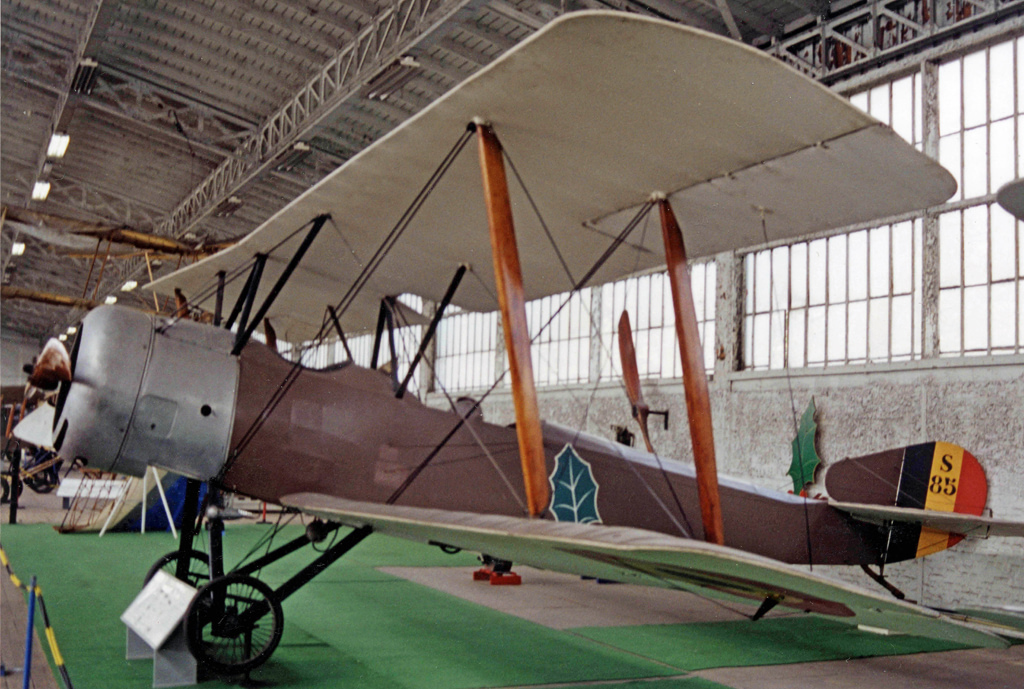
A handful of originals survive. France’s Musée de l’Air et de l’Espace at Le Bourget holds a preserved SOP.1A2, and an airworthy French-built 1B2 is associated with the Memorial Flight association at La Ferté-Alais. Belgium’s Royal Museum of the Armed Forces in Brussels displays an original Belgian-operated example.
Airworthy reproductions keep the type flying. The Great War Flying Museum in Ontario, Canada operates one; specialists in New Zealand have built and restored examples; and in September 2024 an all-new Strutter constructed to original plans by the Aviation Preservation Society of Scotland — affectionately nicknamed “Sophie” — made its first flight, letting modern audiences once again hear a 1½ Strutter in the air. Exact survivor counts vary as aircraft change hands and restorations progress, so treat any tally as a snapshot.
The Sopwith 1½ Strutter at war: from Somme patrols to Bloody April and beyond
The Strutter’s combat story is really two stories — a promising summer in 1916 and a punishing spring in 1917 — wrapped around a great deal of unglamorous, genuinely important work as a bomber, a reconnaissance platform and, finally, a trainer. The expanders below follow that arc honestly.
It is a story worth telling without flinching in either direction. There is a temptation to over-sell the Strutter because of its firsts, and an equal temptation to write it off because of Bloody April. Neither does it justice. The truth is that it was, for a while, among the most useful aircraft in the sky; that it was then caught and badly beaten by faster machines; and that it kept on doing valuable, if less glamorous, work long after its moment as a fighter had passed. That full arc — rise, reckoning and long afterlife — is the honest measure of the type.
18The Sopwith 1½ Strutter over the Somme: the good months of 1916
The Strutter reached the RFC just as the Battle of the Somme opened in July 1916, and for a few months it was one of the best aircraft the British had. With a synchronised forward gun, a defended rear cockpit and genuine endurance, it could be sent on offensive patrols far behind the German lines — the kind of deep, aggressive work that lighter or less-armed types could not sustain.
Reconnaissance and photographic crews used its stability as an asset, holding steady lines over enemy positions while the observer worked camera or gun. Escort and bombing sorties made use of its reach. For that summer and autumn, before the new German scouts arrived in numbers, the Strutter helped the RFC contest the air over the battlefield on something like equal terms — a contribution easily forgotten given what came next.
19“Bloody April” 1917 and the Sopwith 1½ Strutter’s hard reckoning
By April 1917 the picture had reversed completely. German Albatros and Halberstadt scouts, faster and more agile, hunted the RFC’s reconnaissance and artillery machines over the Arras front, and the Strutter — stable, lightly built, hard to manoeuvre in a hurry — was cruelly exposed. The month the RFC came to call “Bloody April” saw appalling losses across its two-seater squadrons.
The figure often quoted for the Strutter is 43 Squadron’s record of 35 casualties from an establishment of 32 officers — a complete turnover of aircrew, and then some, in a matter of weeks. It is a stark reminder that in the First World War the margin between a useful aeroplane and a death-trap was often just a few months of enemy development. The Strutter had not got worse; the opposition had got much better.
20Bombing and reconnaissance: the Sopwith 1½ Strutter’s real day job
For all the attention paid to air-to-air combat, the Strutter spent most of its war doing other things. As a bomber — single-seat in its dedicated form, or two-seat with a light load — it struck at railheads, supply dumps, airfields and, for the RNAS, targets in France, the Aegean and Macedonia. The loads were modest by later standards, but the ability to reach a target and return was itself valuable in 1916–17.
As a reconnaissance and artillery-observation machine it was arguably more important still. Directing artillery fire and bringing back photographs of enemy positions was unglamorous but decisive work, and the Strutter — steady, well-armed, long-legged — was well suited to it. Much of the type’s genuine contribution to the war lies in these routine missions rather than in dogfights.
21The Sopwith 1½ Strutter as a trainer: the aeroplane that taught a generation
When the Strutter was withdrawn from front-line fighting it did not disappear — it went to the training schools. Its very stability, a liability in combat, made it a forgiving mount for pupils, and thousands of British, French and American airmen took some of their instruction on the type. It also became a popular “hack” and personal aircraft for senior officers, valued for its docile handling.
This second career mattered. The pilots who flew Camels, SPADs and SE5as into battle in 1917–18 often learned their trade on gentler machines, and the Strutter was one of them. An aeroplane’s worth is not measured only in victories; the Strutter’s long service as a teacher is a real, if quiet, part of its legacy.
Flying the Sopwith 1½ Strutter and weighing its legacy
What was it actually like to fly, where does it sit in the Sopwith story, and how should we judge it a century on? The expanders below take the Strutter out of the specification table and put it back in the air — and try to give an obscure but genuinely important aeroplane its fair due.
There is a particular pleasure in doing this for an aeroplane that most people have never heard of. The famous fighters of the war have been written about endlessly; the Strutter has not, and that neglect leaves room to see it clearly. Freed from the weight of legend, it turns out to be one of the more revealing aircraft of its generation — a machine whose strengths and flaws both teach you something about how the air war was actually fought, and about how quickly the technology of 1914–18 was changing under everyone’s feet.
22Flying the Sopwith 1½ Strutter: what pilots found in the cockpit
By the standards of 1916 the Strutter was a pleasant, honest aeroplane to fly — and that was precisely its problem in a fight. Its natural stability, so prized in a reconnaissance or bombing machine that had to hold a steady course over a target or a camera run, meant it was reluctant to be thrown about. A pilot had to work to make it manoeuvre hard, and time spent wrestling the controls was time an Albatros pilot spent lining up a shot.
The rotary engine demanded its own discipline. There was no smooth throttle in the modern sense; power was managed largely through the mixture and by “blipping” the ignition with a switch on the control column, cutting and restoring the spark. The whole engine spun with the propeller, so its gyroscopic effect pulled the nose one way in a turn and the other way in the opposite turn — a quirk every rotary pilot learned in the muscles of his hands and feet. Castor-oil lubricant sprayed back over the cockpit, and its effects on the digestion of aircrew who breathed it all day were the stuff of grim squadron humour.
None of this was unusual for the era, and a competent pilot got on with it. But it underlines the gap between a well-mannered patrol aircraft and a thoroughbred fighter — a gap the Camel, for all its own vices, would close.
23The Sopwith 1½ Strutter in the Sopwith lineage: the first of the greats
It is easy to overlook the Strutter because the aircraft that followed it were so famous. But the 1½ Strutter was the first of the classic Sopwith warplanes — the design in which Herbert Smith’s team worked out the formula they would refine into the Pup, the Triplane, the Camel and finally the Snipe. The clean tractor layout, the neat structure, the emphasis on a good field of view and a practical gun installation: all of it starts here.
Seen that way, the Strutter’s brief front-line prime matters less than its role as a foundation. Sopwith learned, on the 1½ Strutter, how to build a war-winning fighter — and then went and built several. The Pup took the Strutter’s virtues and made them nimble; the Camel took that nimbleness to a lethal extreme. The two-seater that began the run deserves more credit than its modest combat record alone would suggest.
24Colours, markings and the many faces of the Sopwith 1½ Strutter
Because so many nations flew the type, the Strutter wore an unusually wide range of markings. British machines carried the familiar RFC/RNAS roundels in the doped linen and, later, PC10-drab finishes of the period. French SOP.1A2s and 1B2s wore French cockades and unit insignia, sometimes with the vivid personal and escadrille markings that made French aircraft so distinctive. American, Belgian, Russian, Romanian, Japanese and Greek examples each added their own national colours.
For modellers, restorers and historians, that diversity is part of the appeal: a single airframe design provides a window onto the air forces of a dozen nations at a pivotal moment. It also complicates any tidy account of the type — the “Sopwith 1½ Strutter” was less a single aeroplane than a shared platform that a whole generation of air arms adapted to their needs.
25Was the Sopwith 1½ Strutter a success? An honest verdict
It depends on the yardstick. As a war-winning fighter, no: its superiority lasted months, and in 1917 it was an outclassed and vulnerable machine that cost the lives of many crews. As a milestone, an industrial product and a workhorse, emphatically yes. It carried the synchronised gun into British service, pioneered shipboard flying, defended Britain at night, and — through its vast French production — did more sustained war work than its short combat prime would ever suggest.
The fairest verdict is that the Strutter was a genuinely important aeroplane whose importance is easy to misread. It was not one of the great fighters, and it is a mistake to remember it as one. But it was one of the great enabling designs: the aeroplane on which several air forces, and one legendary manufacturer, learned how to do something new. That is a different kind of success, and by that measure the Sopwith 1½ Strutter succeeded handsomely.
26The Sopwith 1½ Strutter’s designation maze: LCT, Type 9400, 1A2 and more
Few aircraft carry as tangled a set of names. To Sopwith it was the Land Clerget Tractor (LCT). To the Admiralty it was the Type 9400 (two-seater) and Type 9700 (single-seat bomber), numbers drawn from the serial ranges of the first examples ordered. To the RFC it was the plain “Sopwith Two Seater”. To Home-Defence crews the single-seat night-fighter conversion was the “Comic”, and at sea it was the “Ship’s Strutter”.
Cross the Channel and the names multiply again: the French SOP.1A2, 1B2 and 1B1, the Lioré et Olivier LeO 1, the Japanese So-shiki Models 1 and 2. All describe versions of the same basic Sopwith design. The confusion is a direct consequence of the type’s spread — when a dozen air forces adopt an aeroplane, each brings its own naming system, and the humble “1½ Strutter” nickname is the only label that cuts across them all.
27The Sopwith 1½ Strutter and the idea of the two-seat multi-role aircraft
Step back from the specifics and the Strutter looks like an early answer to a question air forces are still asking: can one airframe do several jobs well enough to be worth building in bulk? The Strutter fought, scouted, directed artillery, bombed, defended the homeland and went to sea — sometimes in dedicated variants, sometimes in the same basic machine. That multi-role flexibility, as much as any single capability, is why it was produced in such numbers.
It was not the first multi-role aeroplane and it would be far from the last, but it is an unusually clear early example of the type: a practical, adaptable platform that earned its place not by excelling at one thing but by being useful at many. In that sense the Strutter prefigures a whole philosophy of military-aircraft procurement that would dominate the century to come.
The Sopwith 1½ Strutter: a timeline from Kingston to the last survivors
From an experimental machine of 1915 to a new-build reproduction that first flew in 2024, the Strutter’s timeline stretches across more than a century. The dates below mark the type’s rise, its hard reckoning in 1917, its enormous French and foreign service, and its long survival as a museum piece and airworthy reproduction.
Sopwith’s experimental “Sigrist Bus” flies; Herbert Smith develops the larger Land Clerget Tractor, with a prototype flying by the end of 1915.
Deliveries to the Royal Naval Air Service begin; the type carries a synchronised Vickers into British service — a first for a British aeroplane.
No. 5 Wing RNAS uses the Strutter for escort and bombing over the Western Front.
RFC 70 Squadron flies Sopwith-built machines in support of the Battle of the Somme, patrolling deep behind the German lines.
The Albatros D.I and its successors begin to outclass the Strutter as a fighter.
France orders the type in bulk; SOP.1A2 and 1B2 licence production ramps up across French factories.
“Bloody April”: heavy RFC losses; the Strutter is now outmatched in air combat.
The American Expeditionary Force buys ~514 French-built Strutters, mostly for training.
Sopwith Camels largely replace RFC Strutters on the Western Front.
RNAS/RAF “Ship’s Strutters” fly from warship platforms and carriers; Home-Defence “Comics” hunt raiders over Britain.
Widespread post-war use: the Russian Civil War, the Polish-Soviet War, Greece in Asia Minor, the Baltic states, and Japan in Siberia.
Civil registrations appear in France, Argentina, Sweden and Switzerland; the last military examples fade away.
A new Scottish-built reproduction, “Sophie”, makes its first flight — proof of the type’s enduring appeal.
Originals survive in France and Belgium; airworthy reproductions fly in the UK, Canada and beyond.
Sopwith 1½ Strutter stories: from the Somme to a Scottish first flight
The Somme debut
When 70 Squadron reached France in July 1916 with Navy-pattern Strutters, the RFC finally had a two-seater that could shoot forward and defend its own tail. Crews used the type’s long legs to patrol deep behind the German lines during the Somme fighting, at a moment when a well-armed reconnaissance machine was worth its weight in gold — even if the advantage would not last the year.
First through the propeller
Contemporaries recognised the Strutter as the first British aeroplane to reach the squadrons with a gun synchronised to fire through the airscrew. It was the technology that turned the two-seater’s pilot from a passenger with a pistol into a genuine fighter — though the early gears were temperamental, and more than one propeller came home with a bullet through it.
The observer’s arc
On the Scarff ring, a good gunner could sweep a wide cone of fire behind the aircraft. Crews learned to fly as a team, the pilot manoeuvring to give the Lewis its best shot at an attacker. When it worked, a Strutter was a surprisingly prickly target; when the crew could not hear one another over the engine and slipstream, it was a great deal less so.
Braking to the deck
Pilots used the under-wing air brakes to steepen an approach into the small, rough fields of the Western Front — a refinement few 1916 aeroplanes could match. Combined with the adjustable tailplane, it made the Strutter unusually considerate of a tired pilot at the end of a long patrol, even if it asked for respect in the air.
Bloody April
By the spring of 1917 the Strutter was prey rather than predator. Squadrons took punishing casualties as Albatros scouts caught the stable, lightly built two-seaters over Arras. One unit, 43 Squadron, recorded 35 casualties from an establishment of 32 officers — a grim illustration of how fast air superiority could change hands in the First World War.
France takes over
As British squadrons re-equipped with Camels, French factories poured out SOP.1A2s and 1B2s by the thousand. The Strutter’s centre of gravity shifted decisively across the Channel, and for the rest of its front-line life it was, in practice, a French aeroplane wearing a British pedigree.
Bombs over the lines
French and RNAS crews flew the single-seat bomber on raids against railheads, ammunition dumps and airfields, trading the observer’s guns for fuel and ordnance. It was never a heavy bomber, but in 1916–17 a machine that could reliably find a target and drop a useful load was a valuable thing.
Guarding the home sky
Home-Defence Strutters — some rebuilt as single-seat “Comics” with upward-firing Lewis guns — climbed after Gothas and Zeppelins in the dark over England. It was cold, dangerous, often fruitless work, chasing raiders that were hard to find and harder to catch, and it was part of the first sustained defence of a country from the air.
American wings
The US Air Service bought hundreds of French Strutters. Most trained a generation of American airmen who would fly better types into battle; the 90th Aero Squadron flew them operationally as a stopgap. For many of the first American military aviators, a Sopwith design was where their flying careers began.
Off the turret tops
RNAS “Ship’s Strutters” lifted off short wooden platforms built over the gun turrets of Royal Navy warships, proving that a two-seat aeroplane could go to sea with the fleet. Recovering them was another matter — but the point had been made, and the road to the aircraft carrier ran on.
Civil-war skies
From the Russian Civil War to the Polish-Soviet War and the fighting in the Baltic, ex-military Strutters flew on for years after the Armistice, on every side of a tangle of conflicts. A design written off as obsolete in 1917 was still going to war in 1921, a continent away from the Somme.
“Sophie” takes flight
In September 2024 an all-new Strutter reproduction — built to original plans in Scotland and nicknamed “Sophie” — took to the air, the product of years of volunteer effort. For the first time in a very long while, crowds could once again watch and hear a Sopwith 1½ Strutter fly.
A gun that shot its own propeller
The early synchronising gears were a work in progress, and every so often the mechanism let a round through at the wrong instant. Pilots came home with splintered airscrews and, occasionally, no propeller at all — a hazard that faded only as the gears matured. It was the price of being first, and the squadrons paid it while the technology caught up.
The observer’s lonely war
The gunner sat well aft of the pilot, unable to shout over the engine, trusting his officer to fly the aeroplane while he watched the sky. In a two-seater, air combat was a partnership conducted almost in silence, each man reading the other’s intentions from the aircraft’s movements — a peculiar intimacy of war that the Strutter’s wide-set cockpits made harder than most.
SPAD by another name
French crews knew the Sopwith as one of several “Sopwith” types in their inventory, licence-built and adapted to French methods as the SOP.1A2 and 1B2. To a French escadrille in 1917, the British origin was almost incidental; it was simply one of the aeroplanes that flew the daily grind of bombing and observation over the lines.
Siberian intervention
Japanese licence-built Strutters travelled a very long way from Kingston upon Thames, some accompanying Japan’s expeditionary force into Siberia during the Allied intervention. Few aeroplanes of the era had a geographic spread to match — a British design, built in Japan, flying over Russia.
The last civil flyers
Long after the guns fell silent, surplus Strutters turned up on the civil registers of France, Argentina, Sweden and Switzerland, flown by early aviation enthusiasts and businesses. It was a gentle retirement for a warplane, and a sign of just how many had been built that so many outlived the war.
Kept alive by volunteers
Today the Strutter survives because people choose to keep it alive — museum conservators in Paris and Brussels, restorers in New Zealand, and the volunteers of the Aviation Preservation Society of Scotland who built a flying example from original plans. The type’s afterlife is a story of enthusiasm as much as engineering.
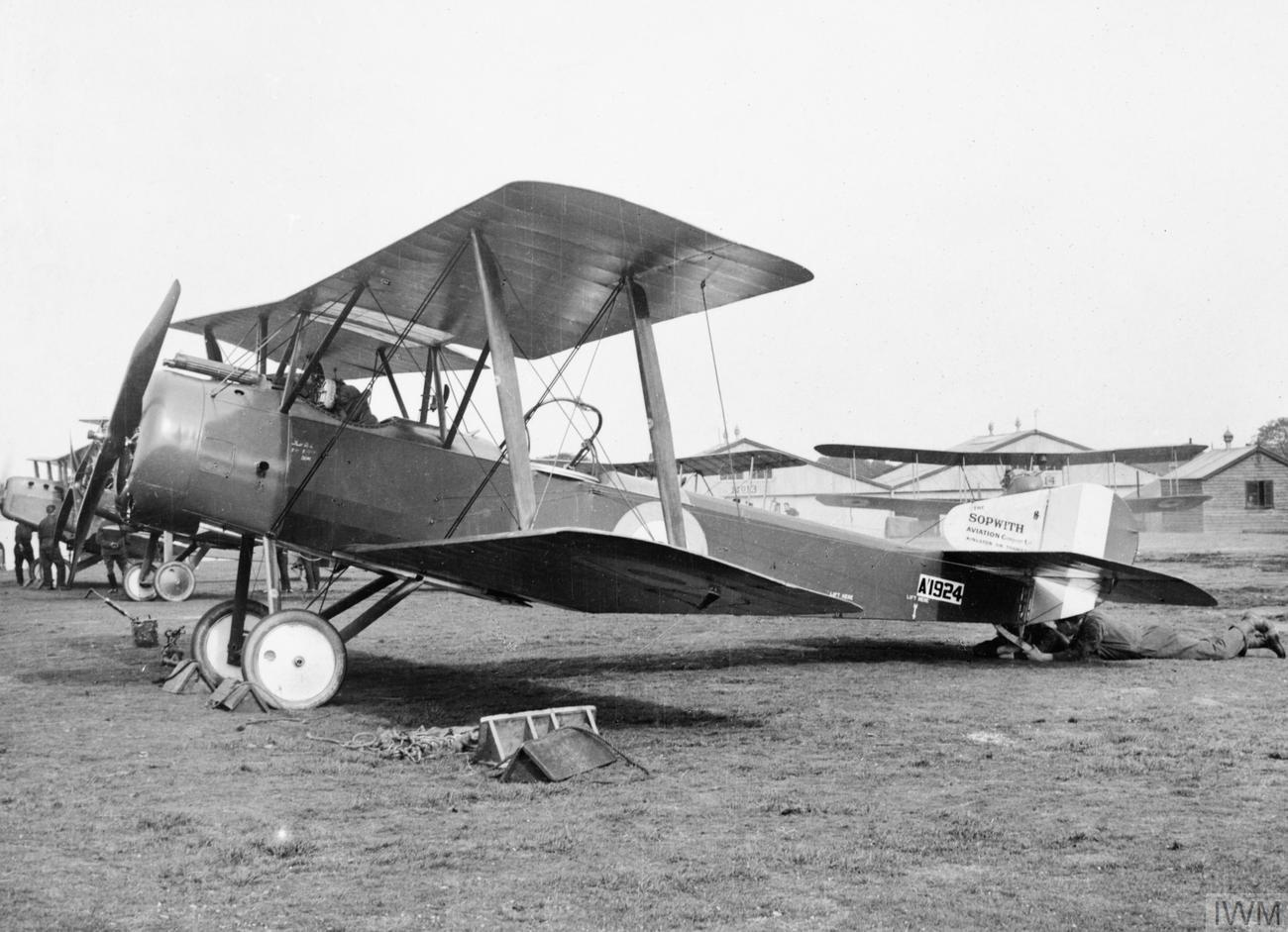
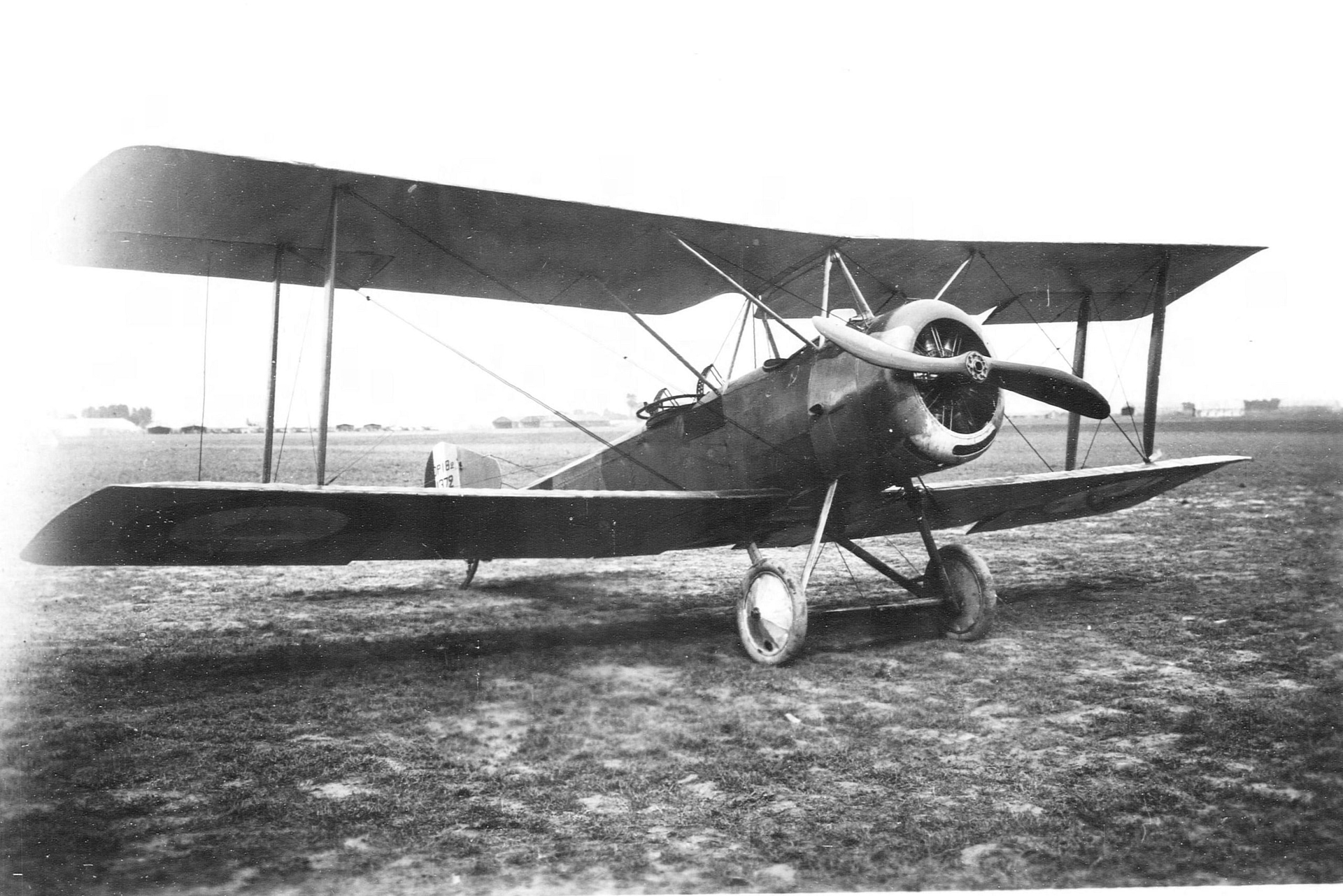
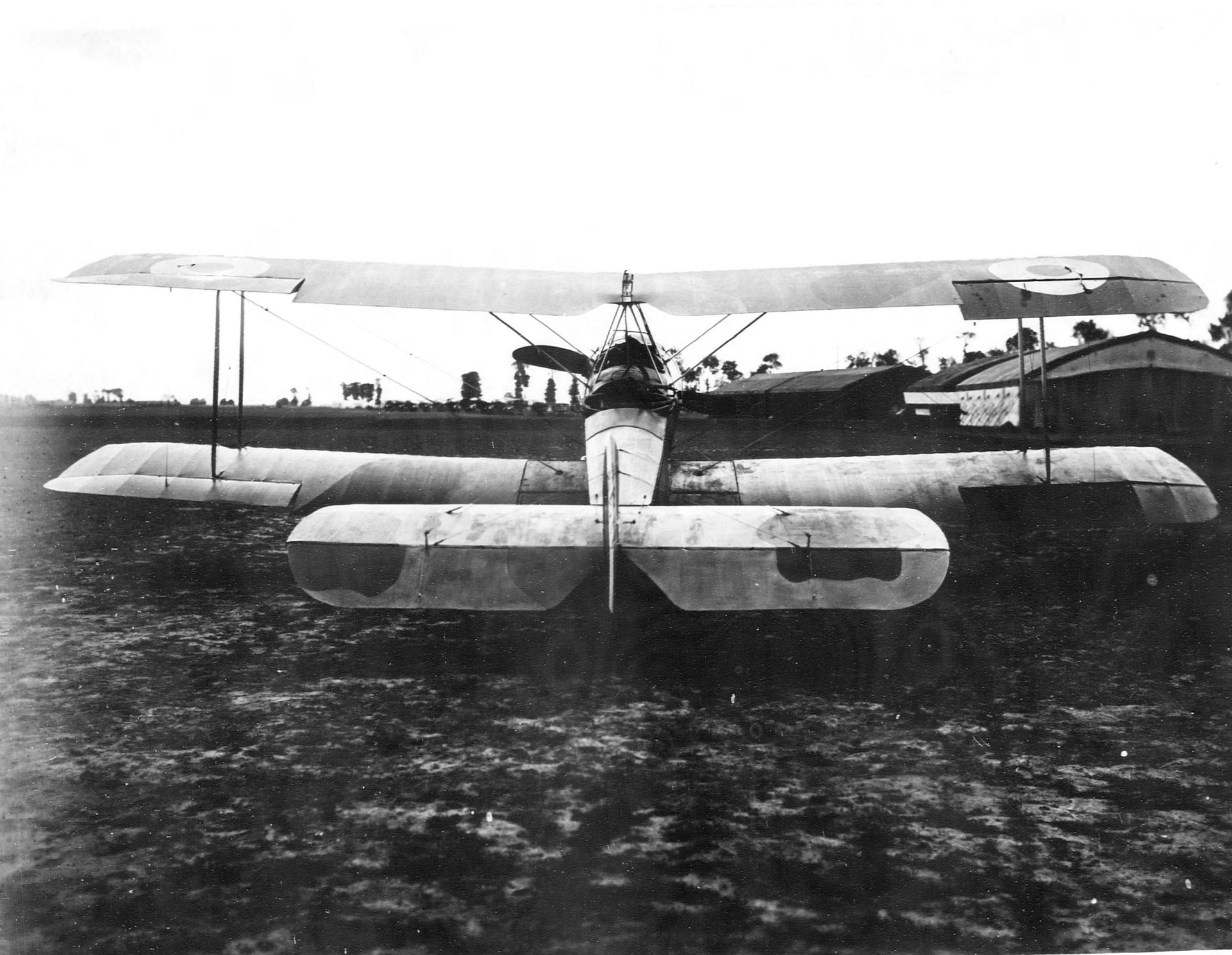
Sopwith 1½ Strutter in photographs: period machines, survivors and replicas
Click any image to enlarge. All photographs are credited to their authors and used under public-domain or Creative Commons licences via Wikimedia Commons.
The gallery spans the type’s whole life: period Royal Flying Corps and French-pattern machines photographed during the war, preserved originals in the museums of Paris and Brussels, and an airworthy reproduction caught in the air. Together they show both the aeroplane as it was — a workmanlike, slightly ungainly two-seater — and the aeroplane as it is now, a cherished piece of aviation heritage kept flying and displayed by people determined that it should not be forgotten.
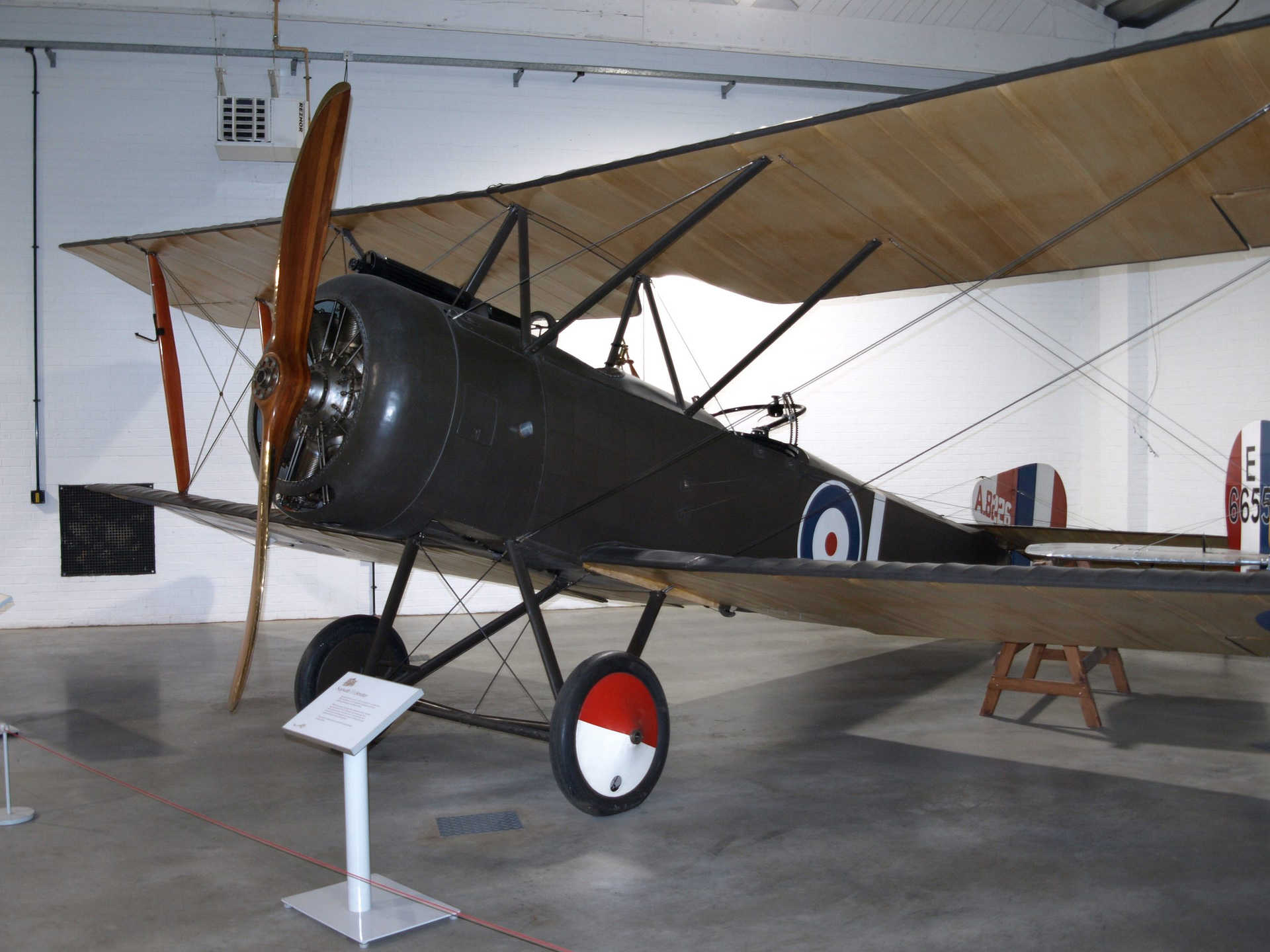
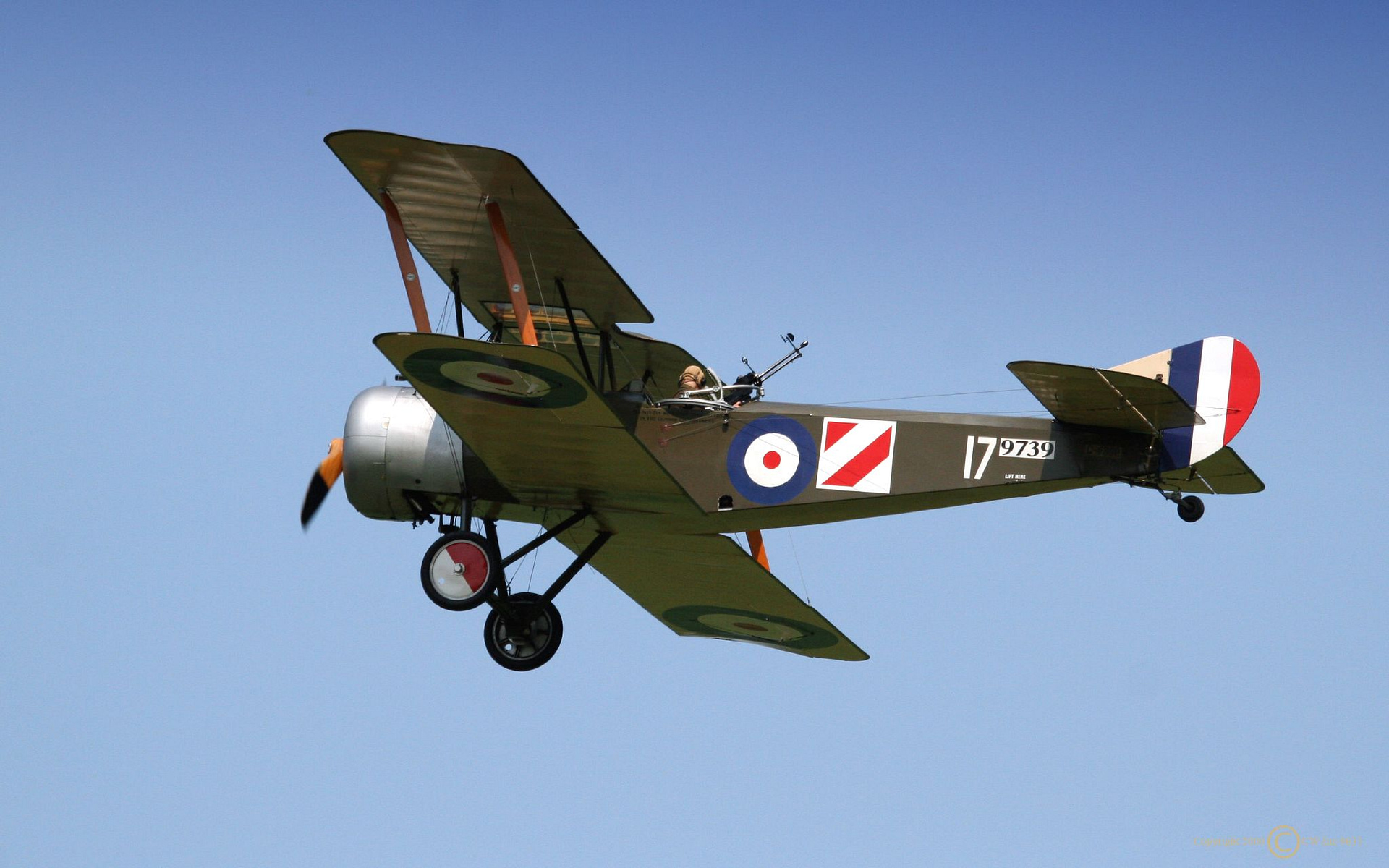
The Sopwith 1½ Strutter on film: a working replica of a WWI aeroplane
British Forces Broadcasting Service (BFBS) Forces News follows enthusiasts who painstakingly recreated a working Sopwith 1½ Strutter — a rare chance to see the type built, rigged and run, and to hear a rotary-engined Sopwith come to life.
There is no shortage of dramatic aerial footage of famous fighters, but a genuinely authoritative film focused on the 1½ Strutter is a rarer thing — the type is simply too obscure to have attracted millions of views. We have chosen quality of provenance over quantity of views: a piece from an established broadcaster, about a real reconstruction of this exact aeroplane, rather than a viral clip of something more glamorous. It is the honest way to illustrate a machine that history has largely overlooked.
Source: BFBS Forces News (the official British Forces broadcaster), “Working replica of WWI plane painstakingly recreated by enthusiasts,” 2022. Verified on YouTube; roughly 10,000+ views. Chosen for its authoritative provenance and its direct focus on the Strutter — a type too obscure to have generated high-view viral footage — rather than for raw popularity.
Where the Sopwith 1½ Strutter flew: origin, fronts, licence production and survivors
A British design that became, above all, a French aeroplane. Toggle the categories to see the Strutter’s home and manufacturer, the fronts on which it served, the many nations that licence-built or operated it, and where originals and replicas survive today. Hover (or tap) a country for detail.
The map deliberately separates four things that are easy to run together: where the Strutter came from, where it fought, who operated it, and where it survives. Read together, they tell the type’s whole story at a glance — a single blue point of origin in Britain, a cluster of front-line service across the Western Front, a broad spread of operators reaching from the Americas to Japan, and a scattering of survivors and reproductions that keep the aeroplane alive today. Toggle the layers on and off to follow each thread on its own.
The Sopwith 1½ Strutter’s war record, in numbers to read with care
Numbers like these are the best guide we have, but they demand humility. Wartime record-keeping was uneven, contractors and countries counted differently, and the same airframe could be rebuilt, re-engined and re-designated more than once in its life. The one figure that is not in doubt is the shape of the story: a modest British production run, a vast French one, and a long tail of foreign and post-war service that kept the type in the air for the best part of a decade.
Production and casualty figures for 1916–18 aircraft are inconsistent between sources; the numbers above are the commonly cited estimates and should be treated as indicative, not definitive.
Sopwith 1½ Strutter: frequently asked questions
Can I fly in a Sopwith 1½ Strutter?
Why is it called the “1½ Strutter”?
Was it really the first British aircraft with a synchronised gun?
How good was the Sopwith 1½ Strutter in combat?
Who built and flew the most Strutters?
What engine did it use and how fast was it?
Did Sopwith 1½ Strutters really fly from ships?
What was the “Sopwith Comic”?
Do any original Sopwith 1½ Strutters still exist?
What is the difference between the SOP.1A2 and 1B2?
How many Sopwith 1½ Strutters were built in total?
When did the Sopwith 1½ Strutter enter and leave front-line service?
Why did such an advanced 1916 design become obsolete so quickly?
Fly a real fighter yourself
The Sopwith 1½ Strutter belongs to the museums now. But the thrill it gave its pilots — a real military aircraft answering your hands — is something you can still have. MiGFlug arranges flights in genuine jet fighters and warbirds, from the L-39 jet to the mighty MiG-29 at the edge of space.
More from the Sopwith stable and the Western Front
Sopwith 1½ Strutter: sources and further reading
- Royal Air Force Museum Type history and surviving-aircraft notes on the Sopwith 1½ Strutter and the Sopwith Aviation Company.
- Imperial War Museums Photographs and records of RFC/RNAS Strutter operations on the Western Front and in Home Defence.
- Musée de l’Air et de l’Espace, Paris Holds a preserved French-built SOP.1A2 Strutter; a key source on French licence production.
- Royal Museum of the Armed Forces and Military History, Brussels Displays an original Belgian-operated Sopwith 1½ Strutter.
- Memorial Flight (La Ferté-Alais, France) Operates an airworthy French-built 1B2 Strutter; restoration and flying notes.
- The Vintage Aviator Ltd (New Zealand) Reproduction Strutter engineering, rigging and rotary-engine detail.
- Fleet Air Arm and naval-aviation histories Accounts of “Ship’s Strutter” operations from warship platforms and early carriers.
- BFBS Forces News Video feature on a modern working Sopwith 1½ Strutter reproduction (2022).
- Key Aero and Vintage Aviation News Reporting on the Aviation Preservation Society of Scotland Strutter, first flown in 2024.
- MiGFlug — Afterburner magazine MiGFlug’s aviation magazine and the Book of Beasts aircraft encyclopedia.