
SPAD S.VII
France’s first great fighter: a rugged, fast, inline-engined scout that could out-dive almost anything in the sky and carried aces like Georges Guynemer into legend.
The SPAD S.VII: the fighter that traded the spinning rotary for brute inline power
By the middle of 1916, the air war over the Western Front had become a technological arms race measured in weeks. The nimble rotary-engined Nieuport scouts that had won the French air force its first real ascendancy were being caught and outfought by newer German machines. What France needed was not just another light, twitchy dogfighter but something faster, stronger and more reliable — an aircraft that could dictate a fight rather than merely survive one. The answer came from an unlikely marriage of a struggling aircraft company and a Swiss-born engine designer of genius.
The company was the Société Pour L’Aviation et ses Dérivés — SPAD — and its technical director was Louis Béchereau, one of the most inventive airframe designers of the era. The engine was the Hispano-Suiza 8, a compact, water-cooled V8 designed by Marc Birkigt that dispensed with the whirling, oil-slinging rotary engines then dominant on fighters. Where a rotary spun its entire cylinder mass around the crankshaft and topped out at modest power, Birkigt’s stationary V8 was smoother, more powerful, and — crucially — could be developed to ever-higher outputs. Béchereau built an airframe worthy of it: a compact, strongly braced biplane with a distinctive set of intermediate strut-links on the wire bracing that let him use thinner, lower-drag wings without sacrificing strength.
The result, first flown in the spring of 1916, was the SPAD S.VII C.1. It was not the most agile fighter of the war — the rotary Nieuports and the later Fokker and Sopwith triplanes could out-turn it — but it did things no rotary scout could match. It was fast in level flight, it was astonishingly strong, and above all it could dive. A SPAD pilot who found himself in trouble could push the nose down and simply leave his opponent behind, the airframe holding together at speeds that would have shed the wings of a lighter machine. That single quality — the safe, decisive dive — reshaped French fighter tactics and made the SPAD the mount of choice for pilots who preferred to attack in a slashing pass and escape rather than swirl in a turning fight.
Armament was deliberately simple: a single synchronised Vickers machine gun firing through the propeller arc, typically a .303 in (7.7 mm) weapon. It was one gun where later fighters would carry two, but it was mounted where the pilot could aim the whole aeroplane at his target, and the SPAD’s stability made it a superb gun platform. The type entered service in the late summer and autumn of 1916, first reaching elite units such as the famous escadrille N.3 — the “Cigognes”, or Storks — and quickly proved itself.
It was in the hands of those elite escadrilles that the SPAD S.VII became a legend. Georges Guynemer, France’s beloved and doomed national hero, flew a succession of SPADs he named “Vieux Charles” and ran his score into the fifties before his death in 1917. René Fonck, who would end the war as the top-scoring Allied ace of all, cut his fighting teeth on the SPAD. Across the Alps, Italy’s greatest ace Francesco Baracca scored many of his victories on licence-built S.VIIs. The type equipped not only the French but the British Royal Flying Corps and Royal Naval Air Service, the Italian and Belgian air arms, the Russians, and — once America entered the war — the fledgling United States Air Service, which used it heavily for advanced training.
The SPAD S.VII was not flawless. Early Hispano-Suiza engines suffered cooling and reduction-gear troubles that grounded aircraft and frustrated squadrons until the bugs were worked out (a point worth hedging: accounts of the severity vary). And as German fighters grew more powerful through 1917, the single-gun S.VII began to feel under-armed. Béchereau’s answer was to give the airframe a bigger, geared Hispano-Suiza and a second gun, producing the more famous SPAD S.XIII. But the S.VII was the aircraft that proved the formula. Without it there would have been no S.XIII, and the whole French — and Allied — approach to the fast, strong, inline-engined fighter might have taken a very different path.
More than three thousand S.VIIs were built — the exact figure is disputed and commonly cited at around 3,500 or more, with licence production in Britain, Russia and Italy adding to the French total. It served on every Allied front, was flown by a dozen air forces, and outlived the war in service around the world. Today a handful of genuine originals survive in the world’s great aviation museums, and airworthy reproductions still take to the air at airshows — the growl of that Hispano-Suiza V8 a reminder of the moment the fighter grew up.
To understand why the SPAD mattered so much, it helps to picture the tactical problem it solved. In 1915 and early 1916 the French had built their reputation on the Nieuport sesquiplanes — beautiful, feather-light rotary scouts that could climb and turn with anyone. But lightness came at a price. Nieuports were structurally fragile; their lower wings could twist and fail in a hard dive, and pilots learned to respect the limits of the airframe. Against an enemy who could dive faster and stronger, agility alone was not enough. The SPAD attacked that weakness head-on: it was heavier, it was stronger, and it turned the dive — the very manoeuvre that endangered a Nieuport — into a signature strength.
The aircraft’s look reflected its character. Where a Nieuport was all delicate curves, the SPAD was businesslike and purposeful: a blunt, rounded nose housing the radiator and the V8, a slab-sided fuselage, equal-span wings with that distinctive extra pair of tiny struts halfway along the bracing wires. It was not a pretty aeroplane in the way a Sopwith Camel or a Nieuport was pretty, but it looked exactly like what it was — a fast, strong, no-nonsense fighting machine built around a big engine. Pilots who flew it tended to trust it, and trust, in the deadly mathematics of air combat, was worth a great deal.
The SPAD also arrived at a moment when the French air service was professionalising its fighter arm. The great escadrilles de chasse, and above all the grouping that became known as the Cigognes, were forging a culture of aggressive, disciplined air fighting. The SPAD was the perfect instrument for that culture: it rewarded pilots who fought with their heads, who used height and speed rather than reckless manoeuvre, and who understood that the fastest way to a kill was often a single, well-judged diving pass. In that sense the SPAD did not just fit French tactics — it helped shape them.
How the SPAD S.VII was built: three ideas that made it fast, strong and deadly in a dive
The Hispano-Suiza 8: a stationary V8 in a world of rotaries
Marc Birkigt’s water-cooled V8 replaced the whirling rotary with a smooth, powerful stationary engine. Rated at roughly 150 hp early and around 175–180 hp later, it gave the SPAD level speed and, above all, the ability to be developed further — the seed of every SPAD that followed.
Béchereau’s braced biplane: thin wings that would not fold
Louis Béchereau used a tightly wire-braced structure with distinctive intermediate strut-links on the bracing wires, letting him fit thinner, lower-drag wings without losing strength. The airframe’s legendary ruggedness is why SPAD pilots could dive at speeds that terrified rivals.
One gun, perfectly aimed: the synchronised Vickers
A single .303 in (7.7 mm) Vickers gun fired through the propeller using a synchronisation gear. It was fewer guns than later fighters carried, but the SPAD’s stability made the whole aeroplane a rifle — and the slashing dive-and-zoom attack suited a single, reliable weapon.
01The SPAD S.VII’s engine story: why the Hispano-Suiza V8 changed fighter design+
The heart of the SPAD S.VII was the Hispano-Suiza 8, and understanding it explains almost everything else about the aircraft. Before it, most successful fighters used rotary engines — designs in which the crankcase and cylinders spun bodily around a fixed crankshaft, with the propeller bolted to the rotating mass. Rotaries were light and simple, but the spinning mass produced strong gyroscopic effects that made aircraft tricky to handle, they flung castor-oil lubricant everywhere, and they were fundamentally limited in how much power they could produce before the whirling cylinders became unmanageable.
Marc Birkigt’s V8 was a completely different philosophy: a stationary, water-cooled engine of aluminium construction, compact and comparatively light for its output. In the S.VII it produced somewhere around 150 horsepower in early form and roughly 175–180 hp as the design matured (figures vary between sources and sub-types, so treat them as approximate). Just as important as the raw number was the potential: the same basic engine could be geared and enlarged to well over 200 hp, which is exactly what happened with the later SPAD S.XIII. The rotary had reached its ceiling; the Hispano-Suiza had only started to climb.
The trade-offs were real. The water-cooling system added weight and complexity, and early engines — particularly the geared versions — suffered reliability problems with cooling and the reduction gear that could ground aircraft and sap squadron strength until they were resolved. But the payoff was a fighter that was fast, that vibrated less, and that handled more predictably than a gyroscope-laden rotary scout. It was, in effect, a glimpse of the future of the fighter engine.
02The SPAD S.VII in a dogfight: dive-and-zoom versus the turning fight+
The SPAD S.VII did not fight the way a Nieuport did. The light rotary Nieuports and the Sopwith and Fokker triplanes were turn-fighters: they could pull tight, slow circles and try to get onto an enemy’s tail in a swirling contest of agility. The SPAD, heavier and with thinner wings, could not out-turn them and its rate of climb was merely adequate rather than exceptional.
What it could do was fly fast and dive without limit. SPAD tactics therefore revolved around energy: climb high, dive on the enemy in a single slashing pass, fire, and use the built-up speed to zoom back up out of danger — the “boom and zoom” that would define fast fighters for decades. If a fight turned against a SPAD pilot, he had the ultimate escape: point the nose down and dive away, confident the strong airframe would take speeds that could tear a lighter machine apart. This suited aggressive, disciplined pilots and made the SPAD deadly in the hands of aces, even if it was less forgiving of a novice who let his speed bleed away in a turning fight.
03The SPAD S.VII versus the SPAD S.XIII: one gun becomes two+
It is easy to confuse the two SPADs, but the distinction matters. The S.VII came first and was the single-gun aircraft: one synchronised Vickers, an early or mid-power Hispano-Suiza 8 of around 150–180 hp, and the reputation as the type that proved the inline-engined fighter formula.
The later SPAD S.XIII took the same basic concept and scaled it up: a more powerful, geared Hispano-Suiza of roughly 200–220 hp and, crucially, a second synchronised Vickers gun for double the firepower. The S.XIII was faster and hit harder, and it became the definitive Allied fighter of the war’s last year — but it was a direct evolution of the S.VII, not a clean-sheet design. When you read that “the SPAD” was the mount of Guynemer or Fonck, it is worth remembering that much of their most famous flying was done on the earlier, single-gun S.VII.
06The SPAD S.VII versus the Nieuport 17: strength against agility+
The Nieuport 17 and the SPAD S.VII were contemporaries in French service, and comparing them shows two opposite design philosophies. The Nieuport was a rotary-engined sesquiplane — a light, nimble machine with a small lower wing that could climb quickly and turn tightly, making it a superb dogfighter in a swirling, low-speed fight. Its weakness was structural: that slender lower wing could flex and even fail under the stress of a high-speed dive, so Nieuport pilots had to treat the dive with caution.
The SPAD was the mirror image. It was heavier and could not match the Nieuport’s turn or its climb, but its rugged, wire-braced structure let it dive at speeds that would have destroyed the lighter aircraft, and its inline engine gave it more speed in level flight. Many French squadrons operated both types side by side, and pilots came to understand each machine’s strengths: use the Nieuport to turn and twist, use the SPAD to slash down from above and climb away. The two aircraft together defined the French approach to fighter combat in the middle of the war.
07How to identify a SPAD S.VII: telling it apart from a Nieuport and an S.XIII+
Spotting a SPAD S.VII takes a little practice. Against a Nieuport, look at the wings: the Nieuport is a sesquiplane with a noticeably smaller lower wing and a single V-strut on each side, while the SPAD has near-equal-span upper and lower wings joined by conventional parallel struts — plus the SPAD’s distinctive extra pair of small intermediate struts partway along the bracing. The SPAD’s nose is blunter and rounder, housing the radiator for its water-cooled V8, where the Nieuport’s rotary gives it a more open, cylindrical cowling.
Telling an S.VII from the later S.XIII is harder, because they share a family resemblance. The clearest cues are the guns and the overall size: the S.VII carries a single Vickers, the S.XIII carries two, and the S.XIII is slightly larger with a bigger engine and generally more rounded wingtips. In photographs, count the gun troughs ahead of the cockpit — one for the S.VII, two for the S.XIII.
08The SPAD S.VII’s legacy: the ancestor of the fast inline fighter+
The SPAD S.VII’s real importance is historical as much as tactical. It was the aircraft that proved a fighter could be built around a heavy, powerful, water-cooled inline engine and win — trading a measure of agility for speed, strength and, above all, growth potential. That formula ran straight through the S.XIII and, in spirit, all the way to the great inline-engined fighters of the next war: the Spitfire, the Bf 109, the Mustang. Each of those was, at heart, a strong airframe wrapped around a powerful liquid-cooled engine, exactly the recipe SPAD and Hispano-Suiza pioneered in 1916.
The Hispano-Suiza engine itself became one of the most influential aero-engines in history, built under licence in several countries and evolving through decades of development. The SPAD S.VII, then, sits at a genuine turning point: the moment the fighter stopped being a light, twitchy rotary scout and became the fast, strong, engine-led weapon it would remain for the rest of the piston era.
SPAD S.VII specifications: dimensions, performance and cost
Figures are for a representative SPAD S.VII C.1 with the ~180 hp Hispano-Suiza 8Ab; individual sources and sub-types vary, so values are approximate and flagged where contested.
| Multitud | 1 (pilot) |
|---|---|
| Longitud | ~6.08 m (19 ft 11 in) |
| Envergadura | ~7.82 m (25 ft 8 in) |
| Altura | ~2.1 m (6 ft 11 in) |
| Área del ala | ~17.9 m² (193 sq ft) |
| Peso vacío | ~500 kg (1,100 lb) — approx. |
| Loaded weight | ~740 kg (1,630 lb) — approx. |
| Configuration | Single-bay braced biplane, tractor |
| Motor | Hispano-Suiza 8Aa/8Ab water-cooled V8 |
|---|---|
| Power | ~150 hp early; ~175–180 hp later (varies) |
| Velocidad máxima | ~192 km/h (119 mph) — approx. |
| Techo de servicio | ~5,500 m (18,000 ft) — approx. |
| Endurance | ~1.5–2.5 hours (varies) |
| Armamento | 1 × synchronised .303 in (7.7 mm) Vickers gun |
| First flight | Spring 1916 |
| Number built | ~3,500+ (estimates vary widely) |
| Unit cost (new, 1916–18) | Not reliably recorded (WWI) |
|---|---|
| Cost per flight hour | Not reliably recorded (WWI) |
| Programme / fleet cost | Not reliably recorded (WWI) |
| Licence production | Britain (Mann Egerton; Blériot & SPAD), Russia (Duks), Italy |
04The SPAD S.VII’s variants and licence production: who built it and where+
The S.VII was built in enormous numbers for its day, and not only in France. Béchereau’s design was licensed to British manufacturers — Mann Egerton and the Blériot & SPAD Aircraft Works among them — to equip the Royal Flying Corps and Royal Naval Air Service. In Russia the type was built under licence at the Duks factory in Moscow, and Italy produced its own S.VIIs for the Corpo Aeronautico Militare. Alongside the standard C.1 single-seat fighter, the airframe appeared with the early ~150 hp engine and the later ~180 hp version, the more powerful engine improving speed and climb.
Total production is genuinely uncertain: figures around 3,500 are commonly quoted for French-built machines, with licence production abroad pushing the grand total higher. Because wartime records were incomplete and sub-contracting was widespread, any single number should be treated as an estimate rather than a firm total.
05The SPAD S.VII’s operating costs: what a WWI fighter actually cost to run+
Unlike modern jets, the SPAD S.VII has no reliably documented cost-per-flight-hour figure. First World War military accounting did not track aircraft the way modern air forces do, unit prices were quoted in wartime francs, pounds and dollars whose values shifted rapidly, and much production was folded into broader war budgets. What can be said is qualitative: the SPAD was more expensive and more complex to build and maintain than a simple rotary scout, largely because of its water-cooled Hispano-Suiza V8 and its cooling system. That extra cost bought speed, strength and development potential — a trade the French air force judged well worth making. Any specific monetary figure quoted today should be treated with caution.
09The Cigognes: how the Storks squadron made the SPAD legendary+
No unit is more closely associated with the SPAD than the Cigognes — the Storks — the informal grouping of elite French escadrilles whose pilots painted stork emblems on their aircraft. Among the first to receive the S.VII, the Cigognes gathered an extraordinary concentration of talent: Guynemer, and around him a constellation of high-scoring aces who turned the squadron into a symbol of French fighting spirit at a time when the nation desperately needed heroes.
The Storks’ culture was aggressive and professional. Its pilots hunted in a disciplined, calculating way that suited the SPAD perfectly — climbing high, striking fast, and using the aircraft’s speed and strength rather than throwing it into risky turning fights. The emblem became so famous that it outlived the war, and the stork endures in French military aviation heraldry to this day. When people speak of “the SPAD aces”, it is very often the Storks they mean.
10Georges Guynemer and the SPAD: the making of a national myth+
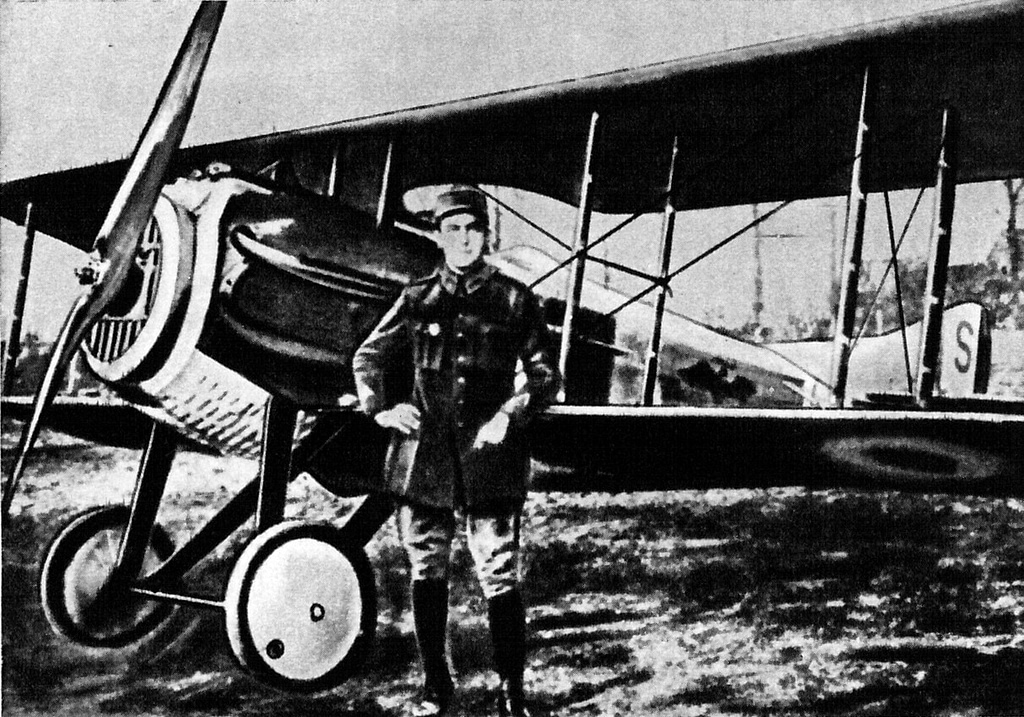
Georges Guynemer was, on paper, the least likely of warriors — slight, sickly, repeatedly rejected by the army before he talked his way into aviation. In the air he was transformed. Flying his succession of “Vieux Charles” SPADs, he became France’s most celebrated pilot, his victory tally climbing into the fifties and his name a household word. He flew with a reckless intensity, pressing attacks to point-blank range, and the strong, fast SPAD was the machine that let him fight the way he wanted to.
His death in September 1917 — shot down over Belgium, his body and aircraft never recovered — turned a hero into a myth. French schoolchildren were told that he had “flown so high he could not come back down.” The legend attached itself firmly to the SPAD, the aircraft in which he had lived and died, and it is a large part of why the type occupies such a special place in French national memory.
11SPAD S.VII colours and markings: reading a First World War fighter+
Most French SPAD S.VIIs wore a scheme of clear-doped linen and pale factory finishes early on, giving way to more varied camouflage and unit markings as the war went on. National roundels — the French cockade of blue, white and red — appeared on the wings and often the fuselage, with rudders frequently painted in vertical bands of the national colours. Individual pilots and squadrons added their own emblems, from the Cigognes’ storks to a menagerie of personal insignia.
Licence-built and exported aircraft wore the markings of their operators — the roundels of the British RFC and RNAS, the Italian tricolour, the Belgian cockade, and later the insignia of the many post-war air forces that flew surplus SPADs. For enthusiasts and modellers, the sheer variety of SPAD S.VII markings is part of the type’s enduring appeal.
The SPAD S.VII timeline: from drawing board to living legend
Béchereau and Birkigt join forces
At SPAD, technical director Louis Béchereau begins designing a fighter around Marc Birkigt’s new Hispano-Suiza 8 water-cooled V8 — a decisive break from the rotary engines then dominating fighter design.
First flight of the S.VII prototype
The prototype SPAD S.VII takes to the air, demonstrating high speed and remarkable structural strength for its size.
Into service with the escadrilles
The S.VII reaches front-line French units, including the elite N.3 “Cigognes” (Storks), and quickly earns a reputation as a fast, rugged scout.
Guynemer and the aces make it famous
Georges Guynemer flies his “Vieux Charles” SPADs to a mounting score; René Fonck begins his rise; the type’s legend grows across the Western Front.
Allied air forces adopt the S.VII
Britain’s RFC and RNAS, Italy, Belgium, Russia and — after America’s entry — the US Air Service take the SPAD into service; licence production spreads to Britain, Russia and Italy.
Baracca and the Italian Front
Italy’s leading ace Francesco Baracca scores heavily on licence-built S.VIIs over the Italian Front, cementing the type’s international reputation.
The S.XIII supersedes it
Béchereau’s more powerful, twin-gun SPAD S.XIII enters production, gradually replacing the single-gun S.VII in first-line French service — but the S.VII soldiers on.
Wartime service to the Armistice
The S.VII continues in training and second-line roles and with several Allied air arms right through to the end of the war in November 1918.
Post-war and export service
Surplus S.VIIs serve on with air forces from Belgium and Poland to Greece, Romania, Brazil, Portugal and beyond, and see action in conflicts across the former Russian Empire.
Survivors and flying reproductions
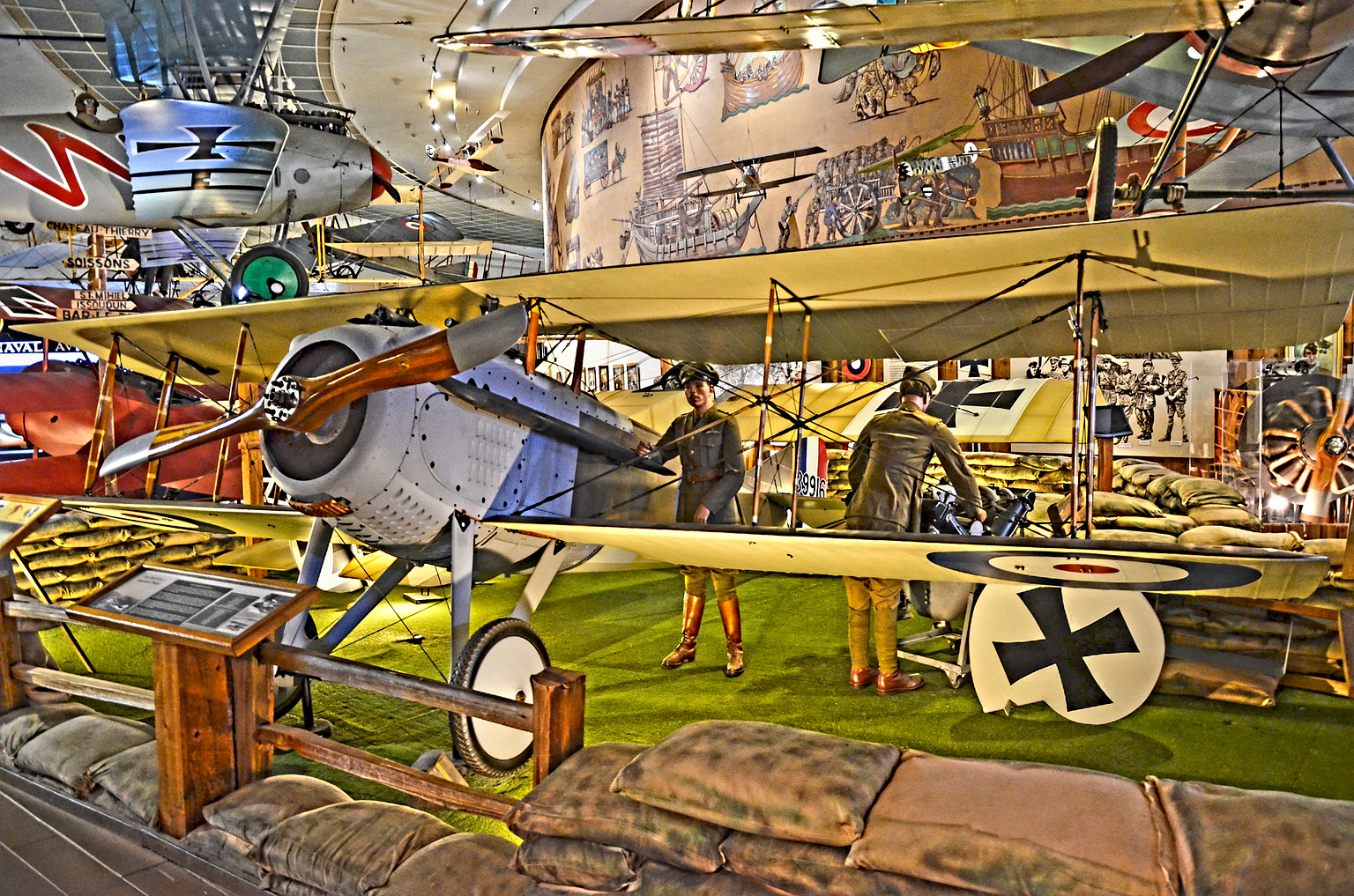
Genuine originals are preserved in museums including the Smithsonian, the Musée de l’Air, San Diego and Brussels, and airworthy reproductions still fly at airshows.
The SPAD S.VII beyond France: a fighter that fought on every Allied front
Although it was a French design flown to fame by French aces, the SPAD S.VII was very much an Allied aircraft. On the Western Front it served not only with the French escadrilles but with the British Royal Flying Corps and Royal Naval Air Service, whose pilots flew it alongside their own Sopwiths and S.E.5s and who built it under licence at home. Belgian aviators flew it on the war’s northern sector, defending the last unoccupied corner of their country.
Over the mountains of the Italian Front, licence-built S.VIIs equipped the squadrons of the Corpo Aeronautico Militare, and it was here that Francesco Baracca rose to become Italy’s national air hero. Far to the east, the Imperial Russian Air Service received SPADs and built them at the Duks factory in Moscow; when Russia collapsed into revolution and civil war, those aircraft flew on with a bewildering variety of factions across the former empire.
When the United States entered the war in April 1917 with almost no modern combat aircraft of its own, it turned to proven European designs. The SPAD S.VII became a mainstay of American pilot training in France and served on the front line with the young US Air Service, helping to school the airmen who would carry the fight into 1918. In this way a single French fighter touched almost every Allied air arm of the war.
The SPAD’s story did not end at the Armistice. Surplus aircraft were cheap, rugged and available, and in the chaotic years after 1918 they found their way into the fledgling air forces of newly independent and reorganising nations — Poland, Czechoslovakia, the Baltic states, Greece, Romania, Serbia and others — and as far afield as Brazil, Portugal, Peru and Siam. For a decade after the guns fell silent, the growl of the Hispano-Suiza could still be heard over half the world.
SPAD S.VII stories: the aces, the machines and the moments
Twelve short stories from the SPAD S.VII’s career. Tap any card to read.
Read the story
Georges Guynemer, frail in health but relentless in the air, named a succession of his fighters “Vieux Charles” (“Old Charles”). Flying SPAD S.VIIs and later S.XIIIs with the Cigognes, he became France’s idolised air hero, his victory tally climbing into the fifties before he was lost over Belgium in September 1917. His SPADs made the type a national symbol.
Read the story
René Fonck, who would finish the war as the highest-scoring Allied ace of all with 75 confirmed victories, honed his ruthless, marksman’s style of air fighting on the SPAD. He prized economy — a handful of rounds, precisely aimed — and the stable SPAD suited him perfectly as a gun platform.
Read the story
Francesco Baracca, Italy’s greatest ace with 34 victories, scored many of them flying licence-built SPADs over the Italian Front. His prancing-horse emblem — later adopted by Ferrari — flew on Italian SPADs before his death in 1918.
Read the story
Escadrille N.3, the “Cigognes”, was among the first units to receive the S.VII. Its pilots’ stork emblems became famous across France, and the squadron produced a cluster of leading aces who made the SPAD’s reputation in the war’s middle years.
Read the story
Time and again, SPAD pilots caught at a disadvantage simply pushed the nose down and dived away — a manoeuvre that would have torn the wings off lighter scouts. The SPAD’s structural strength turned the dive into both a weapon and an escape, and reshaped French fighter tactics around energy rather than agility.
Read the story
The British Royal Flying Corps and Royal Naval Air Service flew the S.VII on the Western Front and built it under licence at home. British pilots valued its speed and strength, even as they wrestled with the early Hispano-Suiza’s teething troubles.
Read the story
When the United States entered the war in 1917 with almost no combat aircraft of its own, it leaned on French types. The SPAD S.VII became a key advanced trainer and front-line fighter for the fledgling US Air Service, schooling a generation of American pilots.
Read the story
Marc Birkigt’s decision to build a light, water-cooled aluminium V8 was a gamble against the entrenched rotary. It paid off spectacularly: the Hispano-Suiza 8 not only powered the SPADs but became one of the most important aero-engines of the war, built by the tens of thousands.
Read the story
The SPAD’s water-cooled engine was more demanding than a rotary. Ground crews contended with cooling problems and, on geared versions, reduction-gear failures that could ground aircraft. Accounts of how serious this was vary, but squadrons certainly felt it before the design matured.
Read the story
Where later fighters carried two guns, the S.VII made do with one synchronised Vickers. Its steadiness in the air compensated: a disciplined pilot could put a short, accurate burst into an enemy in a single diving pass. The demand for more firepower, however, pointed straight to the twin-gun S.XIII.
Read the story
Béchereau’s clever wire-bracing, with its intermediate strut-links, let the SPAD use thin, low-drag wings that nonetheless held together under punishing loads. It is the single most important reason the SPAD could dive where others dared not.
Read the story
A handful of genuine S.VIIs survive in the Smithsonian, the Musée de l’Air at Le Bourget, San Diego and Brussels, while airworthy reproductions bring the Hispano-Suiza’s growl back to airshow skies — the closest most of us will ever get to seeing a SPAD in its element.
SPAD S.VII in photographs
Genuine period and museum photographs. Click any image to enlarge. Credits and licences below each picture.
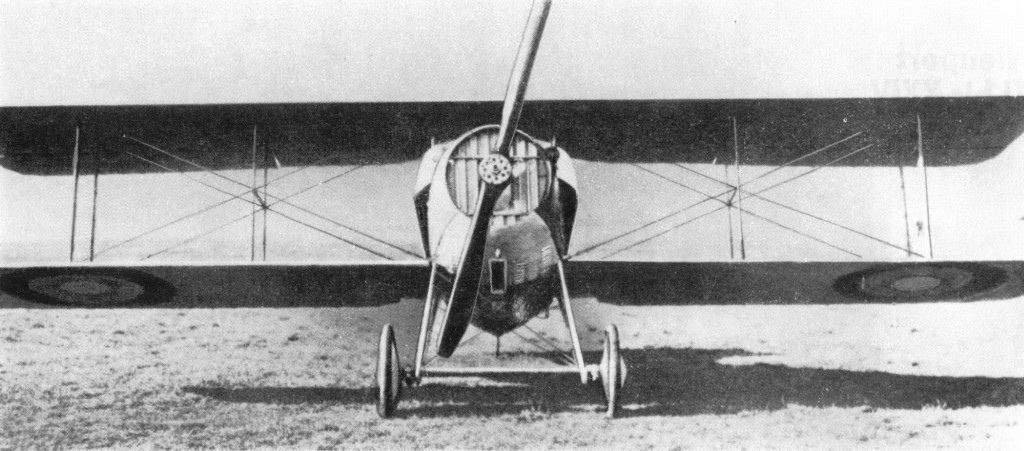
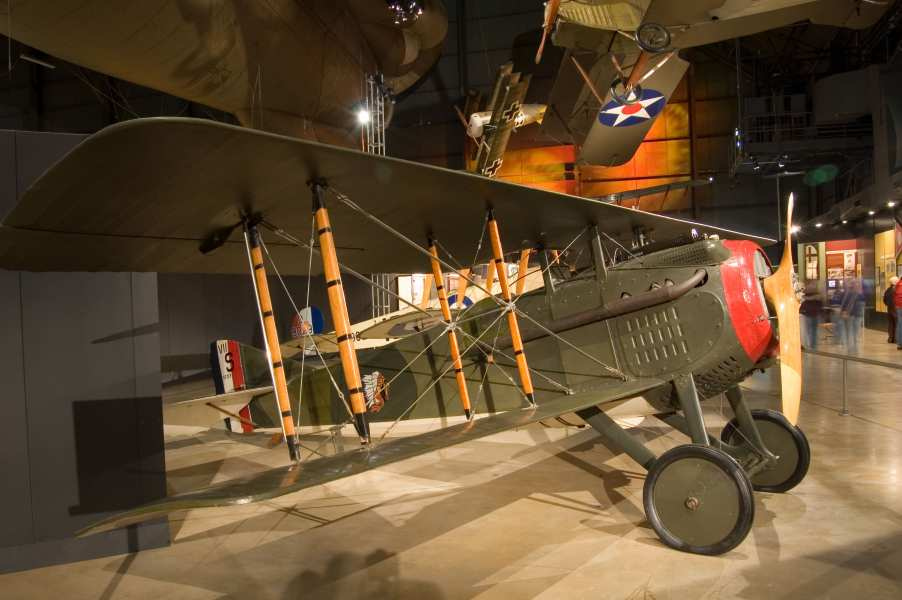
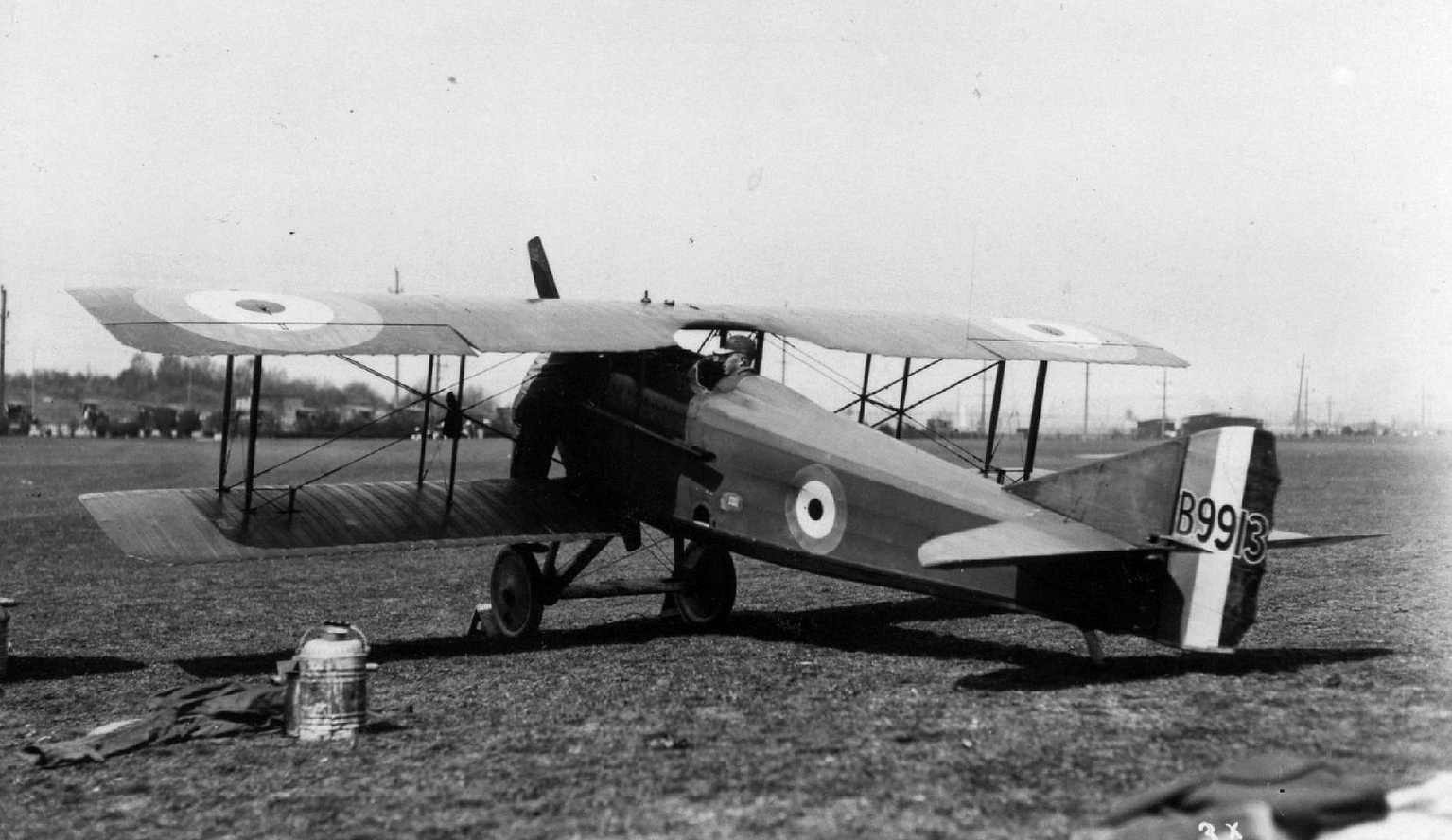
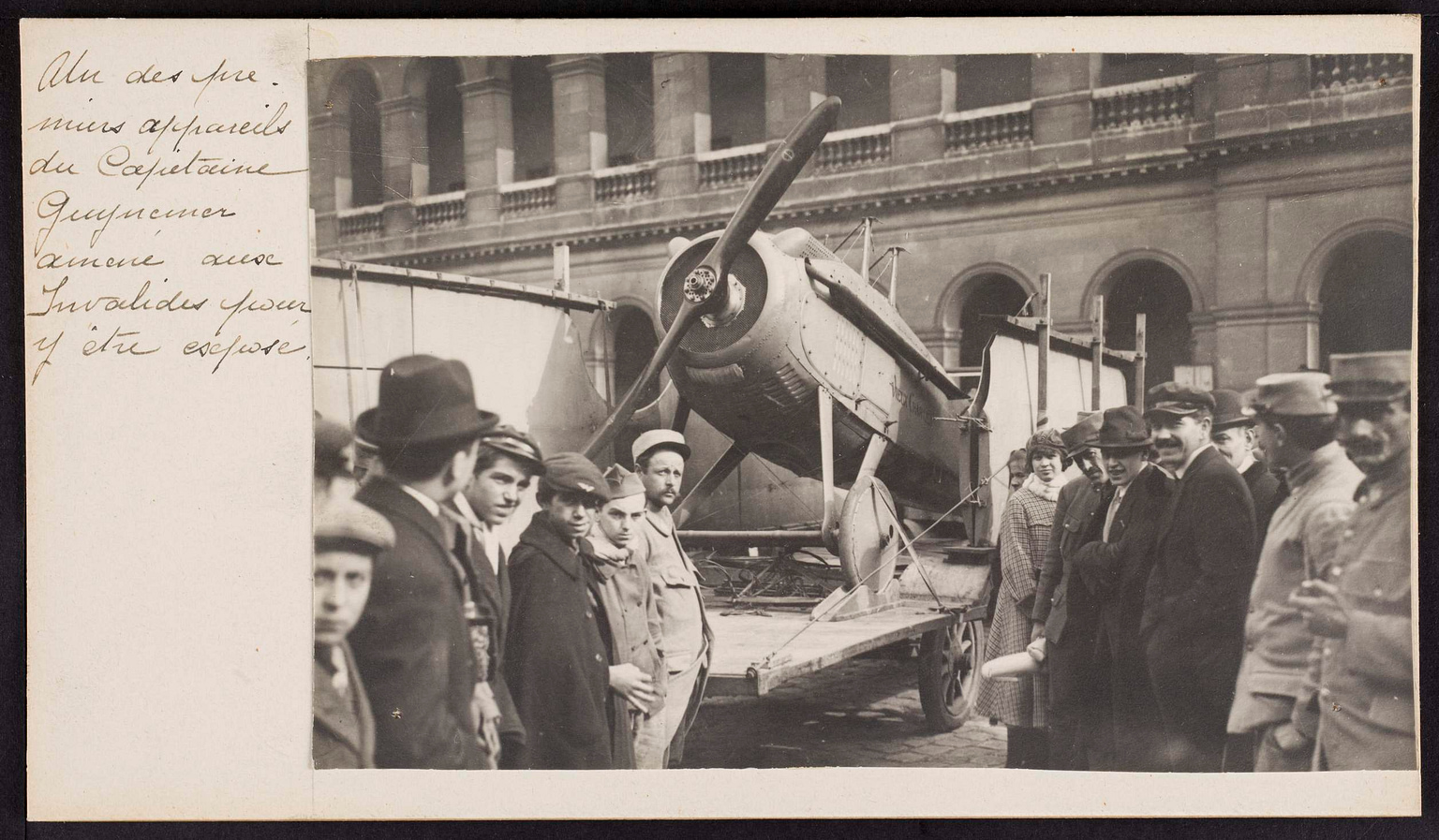
The SPAD S.VII on video
One verified, high-authority film. See the type and its Hispano-Suiza engine brought to life.
“The Spad VII: One Of The Best Aircraft Of The Great War” — Not A Pound For Air To Ground (~46,800 views, verified). An 11-minute history of France’s first great fighter.
Where the SPAD S.VII flew: origin, operators, licences and survivors
France designed and built it; the Allies flew it on every front, licensed it abroad, and preserve it still. Toggle the categories to explore. Combat fronts and operators are shown together for this WWI type.
The SPAD S.VII by the numbers
Approximate, historically contested figures — the SPAD was a war-winning fighter flown by the Allies’ greatest aces.
SPAD S.VII: your questions answered
Can I fly in a SPAD S.VII?+
Not as a passenger — the SPAD S.VII is a single-seat First World War fighter. A number of genuine originals survive in museums such as the Smithsonian National Air and Space Museum, the Musée de l’Air et de l’Espace at Le Bourget, the San Diego Air & Space Museum and the Royal Military Museum in Brussels, and a handful of airworthy reproductions still fly at airshows. But it is a static museum piece and a rare collector’s flyer, not a bookable ride, and MiGFlug does not offer SPAD S.VII flights.
If what you want is the real experience of flying in a fast military aircraft, you absolutely can. MiGFlug flies members of the public in genuine ex-military jets — from the L-39 Albatros to the Hawker Hunter and more. Explore what’s available at migflug.com/flights-prices.
What made the SPAD S.VII different from other WWI fighters?+
Its engine. While most fighters of 1916 used spinning rotary engines, the SPAD used the stationary, water-cooled Hispano-Suiza 8 V8. That gave it high level speed, tremendous structural strength and — famously — the ability to dive away from almost any opponent. It traded some agility and climb for speed, ruggedness and reliability, and pointed the way to the modern inline-engined fighter.
How was the SPAD S.VII different from the SPAD S.XIII?+
The S.VII came first and is the single-gun aircraft: one synchronised Vickers machine gun and a Hispano-Suiza 8 of roughly 150–180 hp. The later S.XIII was an evolution with a more powerful, geared Hispano-Suiza of around 200–220 hp and a second Vickers gun — faster and harder-hitting, but a direct descendant of the S.VII rather than a new design. They are frequently confused; this page is about the earlier, single-gun S.VII.
Which aces flew the SPAD S.VII?+
Many of the greatest. Georges Guynemer flew his famous “Vieux Charles” SPADs; René Fonck, the top-scoring Allied ace of the war, began his fighting career on the type; and Italy’s leading ace Francesco Baracca scored heavily on licence-built S.VIIs. Note that several of these aces flew both the S.VII and the later S.XIII during their careers.
How fast was the SPAD S.VII?+
Roughly 192 km/h (about 119 mph) in level flight for the ~180 hp version — very fast for 1916–17 — though exact figures vary between sources and sub-types. Its diving speed was far higher, and the strength of the airframe let pilots exploit it fully.
How many guns did the SPAD S.VII carry?+
Just one: a single synchronised .303 in (7.7 mm) Vickers machine gun firing through the propeller arc. The demand for more firepower was one of the drivers behind the twin-gun SPAD S.XIII.
How many SPAD S.VIIs were built?+
The figure is genuinely uncertain. Around 3,500 or more is commonly cited for French production, with additional licence-built aircraft in Britain, Russia and Italy pushing the grand total higher. Wartime records were incomplete, so any number is an estimate.
Did the SPAD S.VII have any weaknesses?+
Yes. It was less manoeuvrable than the rotary-engined Nieuports and its rate of climb was only adequate. Early Hispano-Suiza engines also suffered cooling and, on geared versions, reduction-gear troubles that could ground aircraft until the design matured — though accounts of how serious this was vary. And with a single gun it eventually felt under-armed against newer German fighters.
Where can I see a real SPAD S.VII today?+
Genuine originals are preserved at the Smithsonian National Air and Space Museum in the USA, the Musée de l’Air et de l’Espace at Le Bourget in France, the San Diego Air & Space Museum, and the Royal Military Museum in Brussels, among others. Airworthy reproductions also appear at airshows.
Who designed and built the SPAD S.VII?+
It was designed by Louis Béchereau and built by the Société Pour L’Aviation et ses Dérivés (SPAD) in France, around the Hispano-Suiza 8 engine created by Marc Birkigt. It was the first truly successful fighter from SPAD and the direct ancestor of the famous S.XIII.
Why did the SPAD S.VII use a water-cooled engine instead of a rotary?+
Because it offered more power and, crucially, room to grow. Rotary engines were light and simple but had reached the practical limits of their power output and produced awkward gyroscopic handling. Marc Birkigt’s stationary, water-cooled Hispano-Suiza V8 was smoother, could be developed to much higher outputs, and gave the airframe the speed and strength that defined the SPAD. The cost was added weight and complexity — and some early cooling and reduction-gear reliability troubles.
Did the SPAD S.VII serve after the First World War?+
Yes. Surplus S.VIIs served for years after 1918 with the air forces of Poland, Czechoslovakia, the Baltic states, Greece, Romania, Serbia and others, and as far afield as Brazil, Portugal, Peru and Siam. Some saw action in the conflicts that followed the collapse of the Russian Empire.
Is the SPAD S.VII related to the car maker Hispano-Suiza?+
Indirectly, yes. The SPAD’s engine was the Hispano-Suiza 8, designed by Marc Birkigt for the Spanish-Swiss firm Hispano-Suiza, which is best known today for its luxury cars. The same company’s aero-engine work in the First World War was hugely influential, and the Hispano-Suiza 8 became one of the most important engines of the era.
The SPAD S.VII is a museum piece. A real military-jet flight is not.
You’ll never book a seat in a single-seat WWI SPAD — but you can strap into a genuine ex-military jet and feel the speed, the g-force and the horizon rolling for yourself. MiGFlug makes it happen.
Explore related fighters in the Book of Beasts
Sources & further reading