
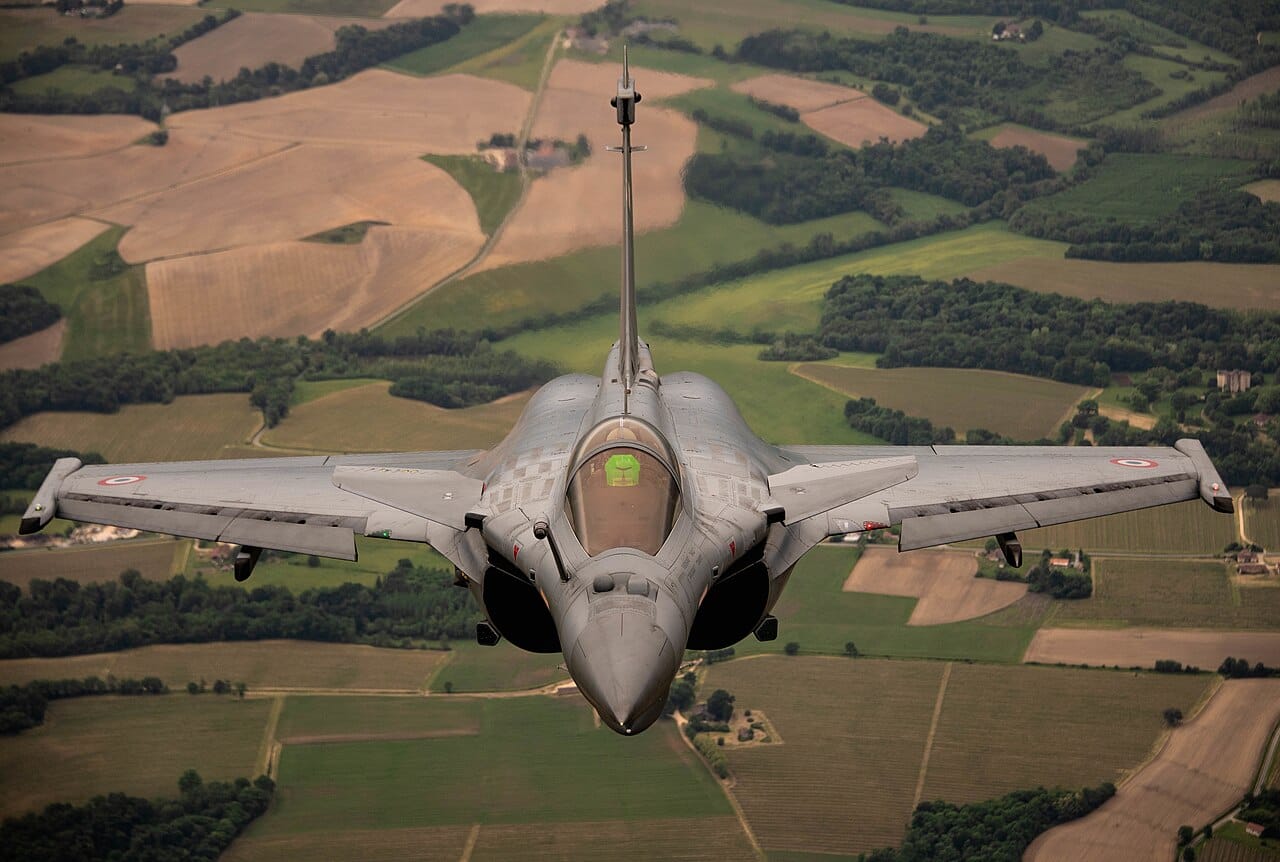
At five minutes past ten on the morning of 8 June, the quiet farmland around Bērzgale, a village in eastern Latvia barely thirty kilometres from the Russian frontier, became the site of a first for the Atlantic Alliance. A French Air Force Rafale, scrambled from Šiauliai air base in Lithuania, locked up an intruding drone and fired. The aircraft destroyed it over open country. No one was hurt; the National Guard was sent to gather the debris.
It was the first time a NATO fighter has ever shot down an unmanned aircraft over Latvian soil — and only the latest sign that the war next door no longer respects the border. For the French detachment flying the Baltic Air Policing mission, it was the kind of intercept the alliance has rehearsed for years and, until now, never had to complete in anger this far north.
• When: 10:05 local time, 8 June 2026
• Where: Near Bērzgale, Rēzekne municipality, eastern Latvia (~30 km from the Russian border)
• Who: French Air Force Rafale, NATO Baltic Air Policing, flying from Šiauliai, Lithuania
• What: First-ever NATO shoot-down of a drone over Latvian territory
• Cause: Latvia says the drone was pushed into its airspace by Russian electronic warfare
A first for the Baltic skies
Latvia’s National Armed Forces issued public air-threat warnings across several eastern municipalities that morning before the Rafale was cleared to engage. The drone, the military said, had crossed into sovereign Latvian airspace from the direction of Russia. The pilot identified it, followed it over an uninhabited area, and shot it down with an air-to-air missile.
The choice of weapon is itself revealing. Using a multi-million-euro fighter and a guided missile to kill a single drone is the lopsided arithmetic that has come to define air defence in this war. It works, but it cannot scale — a problem every European air force is now wrestling with.
That single sentence carries the whole ambiguity of the incident. Latvian and allied officials have generally assessed that the drones drifting west into the Baltic states are Ukrainian long-range strike aircraft knocked off their programmed course by Russian jamming — not deliberate attacks on NATO. The electrons that send them astray, however, are unmistakably Russian.
Why France was holding the alert
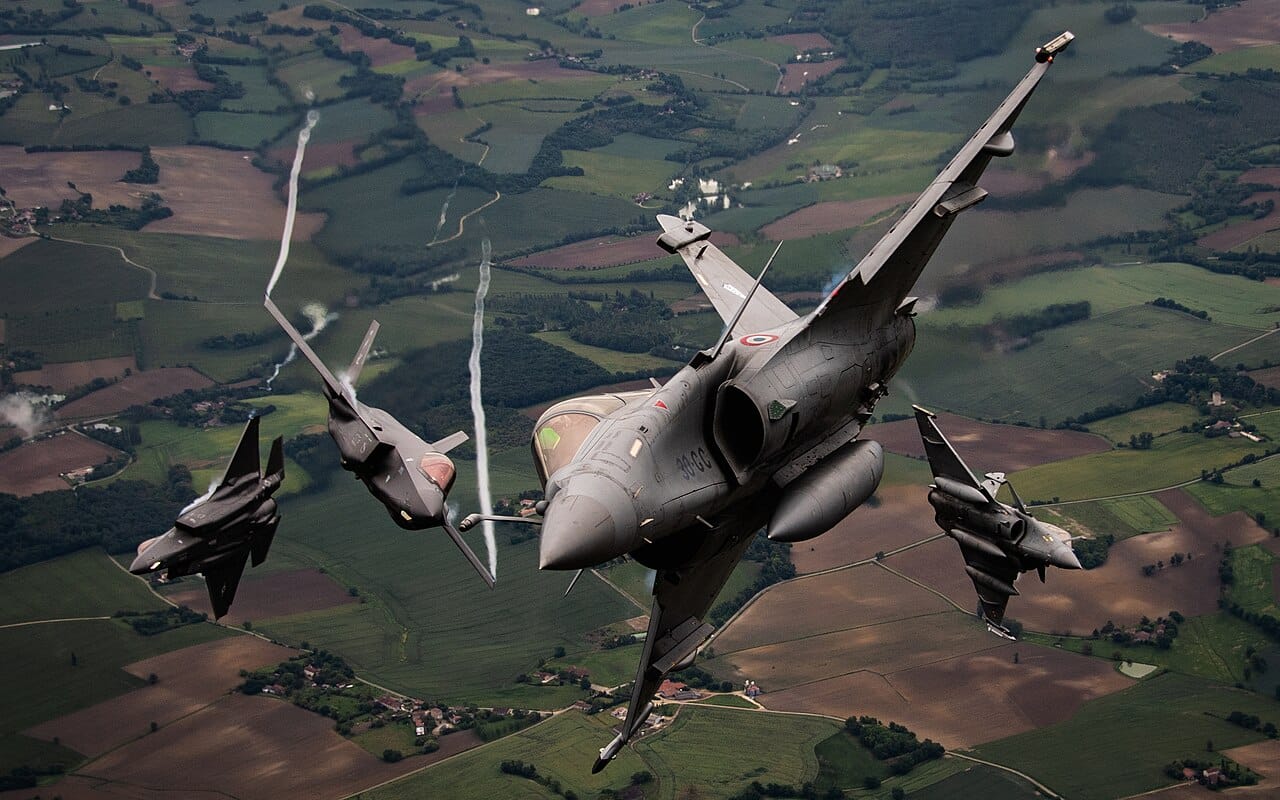
The Rafale belongs to the rotating Baltic Air Policing detachment based at Šiauliai, the Lithuanian airfield that has anchored NATO’s quick-reaction posture in the region since 2004. France has been one of the mission’s most consistent contributors, and the deployment of the Rafale — an aircraft built to fight alone, far from home, with its own sensors and weapons — fits the Baltic mission precisely.
For Paris, the intercept is also a statement of intent. As Europe debates how to harden its eastern flank, a French jet firing the first NATO shot over Latvia is a reminder that continental air defence is no longer an abstraction drawn on a map in Brussels. It is being flown, at dawn, over the wheat fields of Latgale.
The bigger worry
NATO has spent the past year watching drones and missiles stray into the airspace of Poland, Romania and now Latvia. Each incident is small in isolation; together they describe a frontier that is steadily fraying. The alliance’s answer so far has been vigilance and the occasional missile — effective, expensive, and unsustainable if the trickle becomes a flood.
For now, the message from Bērzgale is simple. The drones are reaching NATO territory. And NATO, for the first time over Latvia, is shooting back.
Sources: Al Jazeera, CBS News, Bloomberg, AeroTime, Euronews, The War Zone.

 English
0 Comments