
On 11 June 1940, the people of Malta looked up at a sky suddenly full of Italian bombers and saw, rising to meet them, a handful of fabric-and-wire biplanes that looked like relics from the last war. They were relics. And for ten desperate days, they were all the island had.
The story that grew from those days — three little fighters named Faith, Hope and Charity holding off an entire air force — became one of the most beloved legends of the Second World War. Like most legends, it is part truth, part beautiful embroidery. Both parts are worth knowing.
Quick Facts
- Where & when: Malta, June 1940
- Defenders: obsolete Gloster Sea Gladiator biplanes (top speed ~257 mph)
- The legend: three fighters named Faith, Hope and Charity
- The reality: six assembled from crates, three flyable at once; the names came later
- Adversary: Italy’s Regia Aeronautica (Macchi C.200, Savoia-Marchetti SM.79)
- Reinforcements: Hurricanes arrived late June 1940
- Legacy: Malta received the George Cross in 1942; survivor “Faith” is preserved in Valletta
A island with nothing to fight back
Malta sat squarely across the Mediterranean sea lanes, a tiny British possession between Sicily and North Africa. When Mussolini took Italy into the war on 10 June 1940, the island was suddenly vital — and virtually defenceless. Every modern fighter Britain owned was needed over England or Egypt. Malta had, on paper, nothing.
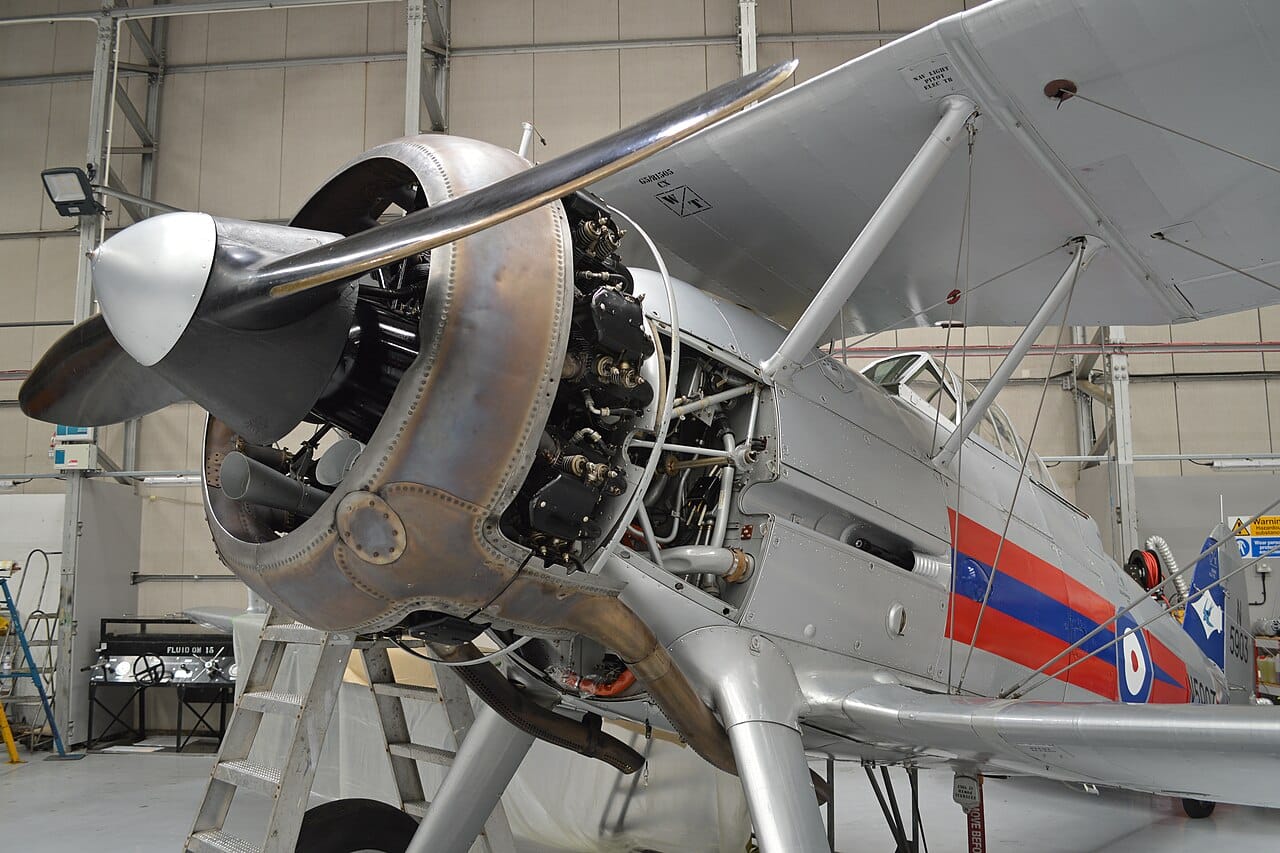
Then someone remembered the crates. An air commodore, Forster Maynard, had found packing cases left behind by a passing aircraft carrier. Inside were disassembled Gloster Sea Gladiators — single-seat biplanes of a 1934 design, already obsolete, with a top speed of barely 257 mph. Ground crews bolted them together. They managed to make six airworthy, enough to keep three in the air at any one time while the others gave up their parts.
Obsolete, outnumbered, airborne anyway
What they faced was genuinely modern: Macchi C.200 monoplane fighters some 55 mph faster than the Gladiators, and Savoia-Marchetti SM.79 bombers that could outrun them outright. To touch the Italians at all, the Maltese-based pilots — volunteers, most of whom had never flown a Gladiator — had to fly with cunning and nerve rather than performance.
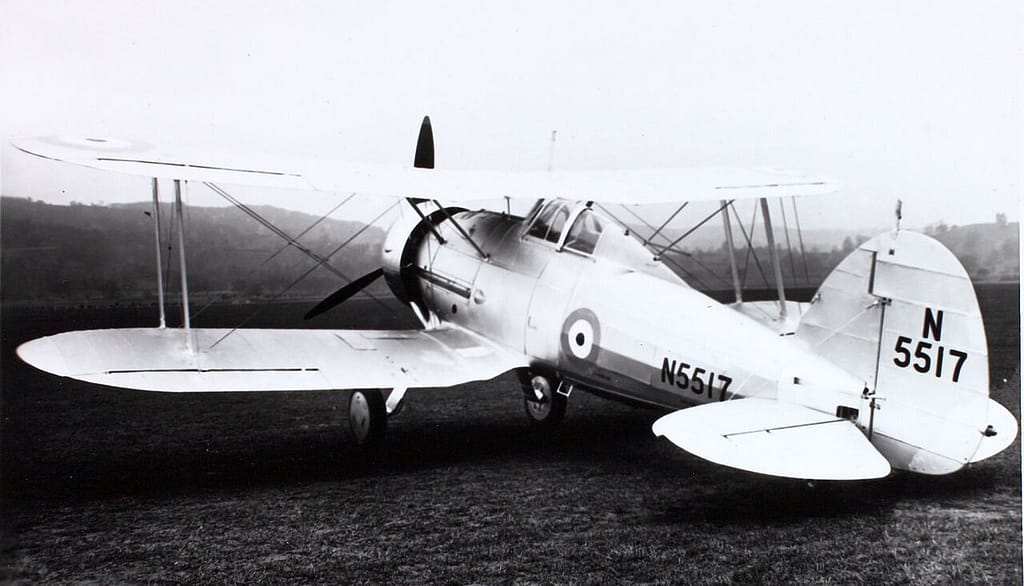
They flew anyway, day after day, as Maltese civilians watched from the streets and rooftops. And here is where legend and fact meet: the biplanes really did disrupt the raids, forcing bombers to scatter and drop off-target, and they really did shoot down several Italian aircraft over the following weeks for the loss of just one Gladiator, at the end of July.
Where the legend bends
The tidy story of exactly three aircraft is the embroidery. There were never neatly three — six were assembled and used interchangeably — and the names Faith, Hope and Charity were not painted on in the heat of battle. They were attached later, by a Maltese newspaper, by which time two of the biplanes had already been lost and only one remained. Hurricanes, faster and better armed, arrived to help before June was out.
None of that diminishes what happened. The real achievement of the Gladiators was not a kill tally — it was hope. In the first terrifying days of the siege, they proved to a bombed island that someone was fighting back. Malta would need that faith badly: by 1942, Valletta was the most heavily bombed place on Earth, and King George VI awarded the George Cross to the entire island.
One survivor, still standing
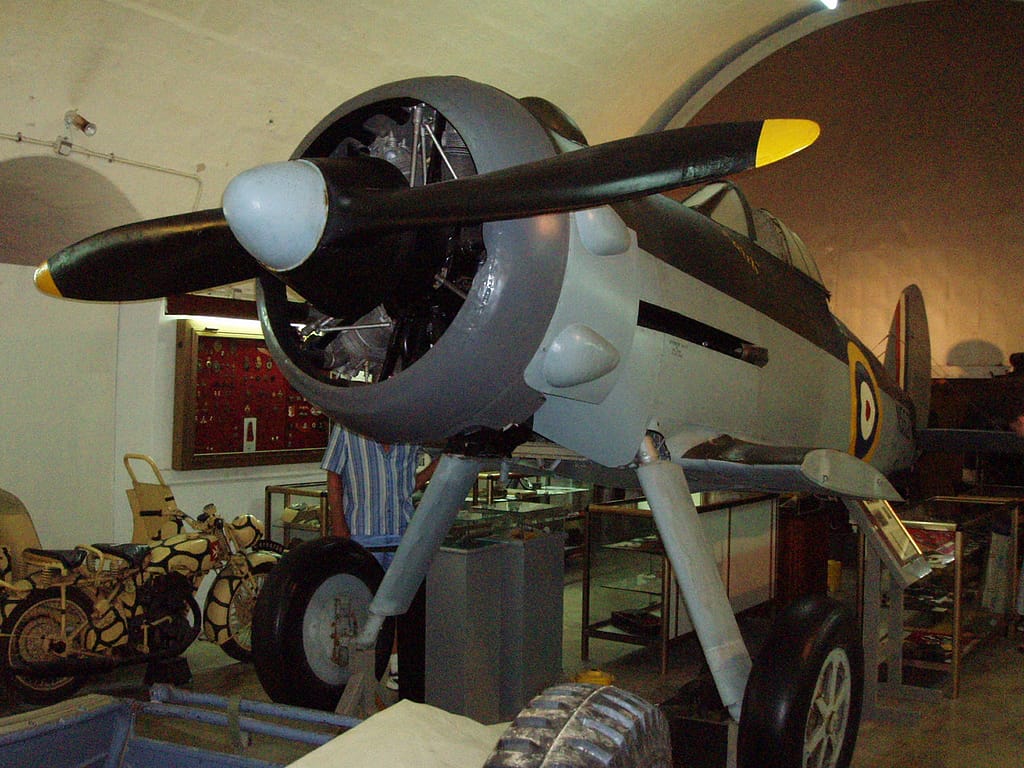
Of the biplanes that flew that summer, one endures. “Faith” — the fuselage that carried the legend’s name — was presented to the people of Malta and sits today in the National War Museum in Valletta, a battered, beloved reminder that courage sometimes flies in on obsolete wings. The 2007 dramatisation below brings the summer of 1940 back to life:
Sources: The National WWII Museum (Ed Lengel), key.aero, WW2Wrecks, University of Malta.
0 Comments